
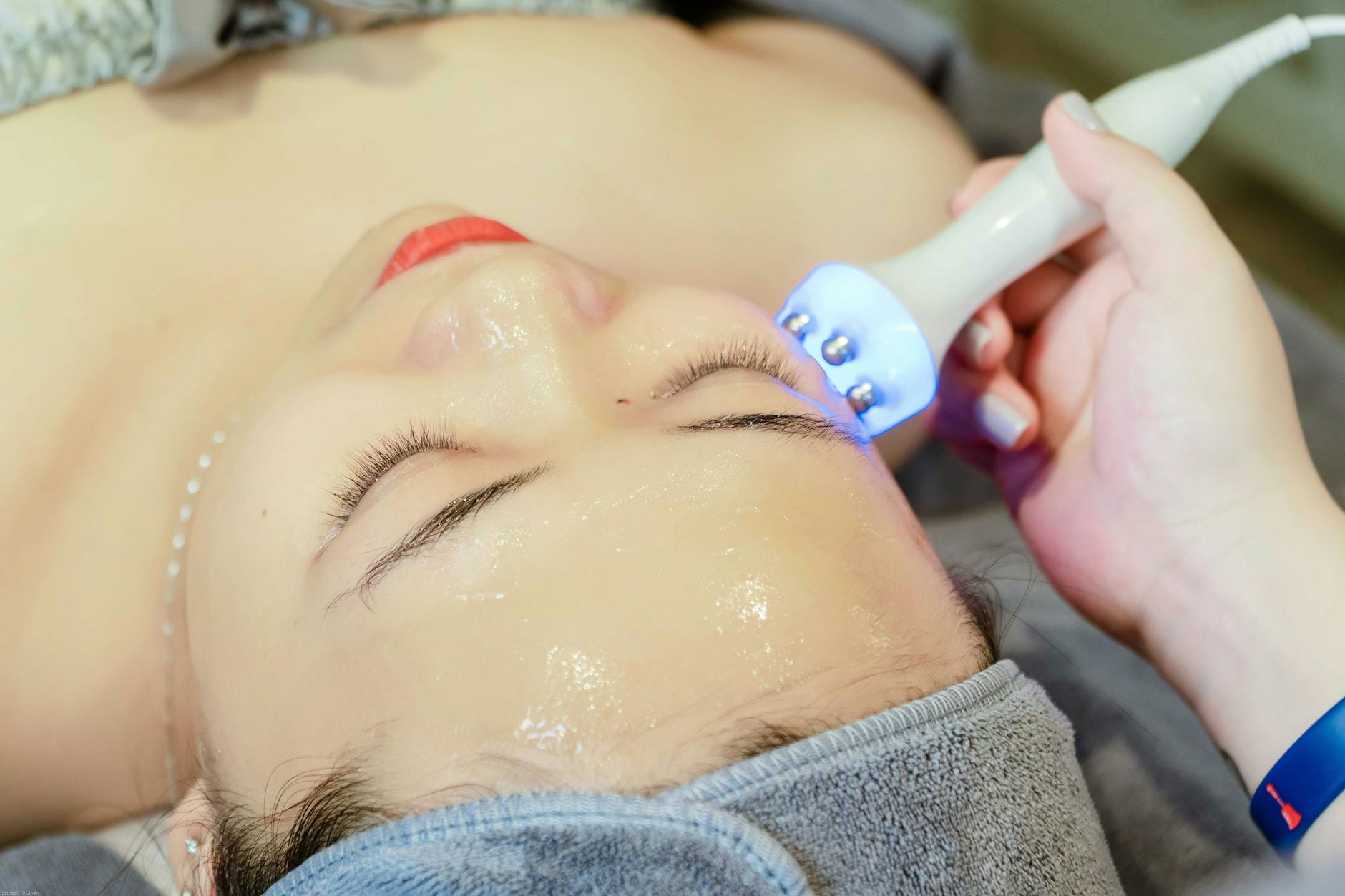
Celluma LED panels work for mild acne treatment because they use FDA-cleared blue light (465 nm wavelength) that directly targets and kills P. acnes bacteria—the primary pathogen responsible for inflammatory acne breakouts. When the blue light is absorbed by porphyrins within the bacteria, it generates singlet oxygen and reactive free radicals that destroy the cell walls of acne-causing organisms. A typical user with mild inflammatory acne might apply a Celluma panel for 8–20 minutes twice weekly for four weeks and see a 60–70% reduction in inflammatory lesion count, making it one of the most evidence-backed at-home acne treatments available.
This article explores the clinical science behind Celluma devices, how their multi-wavelength approach outperforms single-light systems, practical usage guidelines, limitations for non-inflammatory acne, and what the latest 2025 research reveals about LED light therapy as an alternative to conventional acne medications. Celluma is not a new or unproven technology. The company’s devices hold FDA clearance as Class II medical devices with nine separate indications for use, including acne, aging skin, pain management, hair restoration, and body contouring. This regulatory status means Celluma panels have undergone rigorous testing and must meet the same safety and efficacy standards as prescription and over-the-counter acne treatments. The advantage is that LED therapy offers acne reduction without the skin irritation, antibiotic resistance concerns, or systemic side effects that can accompany benzoyl peroxide, salicylic acid, or oral medications.
Table of Contents
- How Does Blue Light Kill Acne-Causing Bacteria?
- Why Celluma Uses Three Wavelengths Instead of Just Blue Light
- What the Latest Clinical Research Shows About LED Acne Treatment
- How to Use a Celluma Panel Effectively for Mild Acne
- What Celluma Panels Cannot Fix—Limitations and Caveats
- Recent FDA-Cleared Devices and the 2025 Celluma Product Expansion
- The Future of LED Light Therapy—Why This Technology Matters
- Conclusion
How Does Blue Light Kill Acne-Causing Bacteria?
The mechanism is straightforward biochemistry. P. acnes bacteria produce protoporphyrins—naturally occurring compounds that absorb light in the blue wavelength range (415 nm is the peak). When Celluma’s blue light (465 nm) penetrates the skin and reaches bacteria in the pilosebaceous unit, it activates these porphyrins. The activation process generates singlet oxygen and free radicals as byproducts, essentially creating an oxidative stress environment inside the bacterial cell that the bacteria cannot survive. This process does not require the bacteria to develop resistance (as they can to antibiotics) because the mechanism is a direct chemical reaction, not a metabolic pathway the bacteria can adapt around.
The clinical data supports this mechanism. A meta-analysis published in 2025 examining at-home LED devices for acne found that blue light therapy achieved significant efficacy with minimal adverse effects compared to conventional treatments like benzoyl peroxide. For inflammatory acne lesions specifically, blue light therapy achieves that 60–70% reduction in lesion count when applied consistently. However, blue light shows less dramatic results on noninflammatory lesions (blackheads and whiteheads without visible inflammation). If your acne is primarily comedonal rather than inflammatory, blue light alone may disappoint—this is a critical distinction. Celluma’s newer multi-wavelength panels address this limitation by combining blue light with red and near-infrared wavelengths.
Why Celluma Uses Three Wavelengths Instead of Just Blue Light
Celluma devices use three distinct wavelengths: blue (465 nm), red (640 nm), and near-infrared (880 nm). The evidence shows superior acne reduction when these wavelengths are combined rather than blue alone. Red light provides significant anti-inflammatory effects by modulating cytokine release—reducing the inflammatory cascade that makes acne painful and visible—and by addressing hyperkeratinization, a process where dead skin cells fail to shed normally and clog pores. Red light also increases ATP production within skin cells and boosts intracellular calcium, promoting healing and skin repair. When blue and red light work together, studies show combined blue-red light therapy reduces inflammatory acne by 69–77%, exceeding blue-only outcomes.
The practical implication: if your mild acne involves both inflammatory pustules and some redness or post-inflammatory marks, the three-wavelength approach is more effective than a blue-light-only system. The near-infrared wavelength (880 nm) penetrates deeper into the skin than visible light, supporting collagen remodeling and circulation. However, this multi-wavelength advantage comes with a tradeoff—devices like Celluma NOVA that offer multiple modes cost more than single-wavelength devices. For someone with purely inflammatory acne lesions and no sensitivity to the standard treatments, blue-only systems may be sufficient and cheaper. But for realistic acne pictures (which often include inflammation, redness, and some texture), the full spectrum justifies the investment.
What the Latest Clinical Research Shows About LED Acne Treatment
A 2025 expert consensus from leading dermatologists and photomedicine specialists confirmed that red, blue, and yellow light therapy have gained widespread clinical acceptance for acne treatment and are increasingly recognized by board-certified dermatologists and cosmetic surgeons. The publication of a 2025 systematic review in PubMed specifically examining at-home LED devices for acne represents a turning point: these consumer-grade devices now have peer-reviewed evidence backing their efficacy, not just professional systems used in clinics. The research was clear: at-home LED devices significantly reduce acne lesions with minimal adverse effects. What surprised many practitioners is how consistent the results are across different user populations.
The clinical trials included people with varying skin types and acne severity, and the 60–70% lesion reduction for inflammatory acne held across most demographics. The key variable was adherence: people who used devices as directed (typically twice weekly for 4-8 weeks) saw the results reported; those who used them sporadically or abandoned treatment early saw minimal improvement. If you’re considering a Celluma panel, understand that this is not a product where sporadic use delivers results. The science assumes consistent, twice-weekly application, not occasional use when you notice a breakout.
How to Use a Celluma Panel Effectively for Mild Acne
Treatment protocol matters enormously. The clinical evidence underlying Celluma’s FDA clearance was based on 8–20 minute sessions, twice weekly, for at least 4 weeks. Many users see initial improvement (fewer new lesions forming) within 2–3 weeks, but the most substantial reductions in lesion count appear between weeks 4–8. Celluma’s current product line includes several options: the original Celluma PRO (three wavelengths, handheld), the Celluma NOVA (launched 2025, five-mode panel for acne, aging, pain, body contouring, and hair restoration), and specialized versions. For mild acne, the PRO or NOVA can be used on the face or targeted body areas, and the treatment is painless—users typically feel a warm, gentle glow.
A practical example: a person with mild breakouts on the cheeks and forehead might use a Celluma panel twice weekly—say, Monday and Thursday mornings—for 10–15 minutes per session. This regularity allows consistent bacterial suppression and anti-inflammatory effects. If you skip two weeks or use it only once weekly, you’ll lose the cumulative benefit. Celluma panels are small enough to integrate into most routines, but the time commitment is real. Compared to taking an oral antibiotic (which requires daily pills and carries risks of photosensitivity and gut dysbiosis) or applying topical benzoyl peroxide (which causes redness and irritation), the twice-weekly panel treatment is a simpler regimen with fewer systemic effects. However, it does require a device purchase ($300–$800 depending on the model) and ongoing time investment.
What Celluma Panels Cannot Fix—Limitations and Caveats
Celluma LED therapy works best for mild inflammatory acne. If your acne is severe, cystic, or deeply embedded in the dermis, LED light alone is unlikely to resolve it fully—you may need to combine it with topical or oral medications, or consider professional dermatological treatments like chemical peels or laser therapy. The light penetrates well to the pilosebaceous unit in the upper-to-mid dermis, but severe nodular acne or cysts below that zone are not optimally treated by light therapy. Additionally, LED panels are less effective for comedonal acne (blackheads and whiteheads without inflammation). If your acne is primarily closed comedones, you would benefit more from a retinoid, salicylic acid, or niacinamide-based skincare regimen alongside—or instead of—light therapy. Another important limitation: Celluma panels require consistent use and discipline.
Unlike an antibiotic that you take daily with minimal thinking, LED therapy requires you to remember to schedule sessions twice weekly and sit still for 10–20 minutes. Some users find this lifestyle adjustment difficult, especially if they travel frequently. If you have a history of not adhering to skincare routines, invest in a device only if you can realistically commit. Finally, results take time. If you’re looking for dramatic improvement within a few days, you’ll be disappointed; the clinical evidence shows meaningful changes after 4 weeks, with peak results by week 8. For mild acne where a few extra breakouts are manageable, this timeline is reasonable. For severe acne affecting confidence, waiting 4–8 weeks may feel unacceptable.
Recent FDA-Cleared Devices and the 2025 Celluma Product Expansion
In 2025, Celluma launched five new FDA-cleared devices, expanding its clinical toolkit beyond the original acne-focused offerings. The Celluma NOVA represents the flagship new product—a multi-mode panel offering five distinct treatment modes: acne, aging skin, pain management, body contouring, and hair restoration. This consolidation means one device can address multiple skin concerns. For someone with mild acne who is also interested in reducing fine lines or improving skin texture (both common concerns in mild acne cases, especially post-inflammatory hyperpigmentation), the NOVA provides flexibility.
The additional FDA indications also underline the breadth of Celluma’s clinical evidence: these devices aren’t one-trick ponies designed only for acne; they’re versatile photomedicine tools. The expansion reflects a broader trend: LED light therapy has moved from a niche, unproven technology to a mainstream dermatological tool supported by thousands of peer-reviewed studies from prestigious institutions. Cellumaendorsements include clinical validation from board-certified dermatologists, dermatological associations, and photomedicine researchers. The company’s decision to launch multiple new devices in 2025 signals confidence in the market and ongoing clinical validation. For potential users, this means the technology is not disappearing or being abandoned; it’s becoming more sophisticated and accessible.
The Future of LED Light Therapy—Why This Technology Matters
LED light therapy for acne represents a shift in dermatological thinking: moving away from chemicals (antibiotics, retinoids, benzoyl peroxide) that can have systemic or irritative side effects, and toward physics-based treatments that leverage the skin’s own photobiological responses. As antibiotic resistance in P. acnes becomes more widespread, non-antibiotic bacterial control methods like LED blue light become increasingly valuable. The 2025 expert consensus confirms this trajectory—dermatologists and cosmetic surgeons are incorporating red, blue, and yellow light therapies into treatment protocols as first-line or adjunctive options, not as experimental add-ons.
Looking ahead, the combination of LED light therapy with other modalities—such as topical niacinamide, retinoids, or professional treatments—is likely to become the gold standard for mild-to-moderate acne. Rather than choosing between LED therapy and conventional treatments, evidence suggests combining them offers superior outcomes with fewer side effects. For mild acne, Celluma panels offer a scientifically validated, side-effect-minimal option that can prevent progression to moderate acne while improving skin health. As the technology matures and new FDA-cleared devices expand clinical indications, LED light therapy will likely become as routine in acne management as benzoyl peroxide was in the 1990s.
Conclusion
Celluma LED panels work for mild acne treatment because their FDA-cleared blue light directly kills P. acnes bacteria through a photochemical mechanism that bacteria cannot develop resistance to, combined with red light’s anti-inflammatory properties that reduce the redness and swelling characteristic of inflammatory acne. The clinical evidence is robust: 60–70% reduction in inflammatory acne lesions with consistent use (twice weekly for 4–8 weeks), with newer multi-wavelength devices achieving even higher reductions (69–77% with combined blue-red light). The technology is proven, accessible, and requires no systemic medications or antibiotics.
If you have mild inflammatory acne, understand that Celluma panels work best as a consistent, long-term regimen—not as a quick fix. Choose a device (PRO or NOVA based on your budget and multi-indication needs), commit to twice-weekly 10–20 minute sessions for at least 4–8 weeks, and combine with standard skincare (cleanser, moisturizer, sunscreen) and possibly topical retinoids or niacinamide for accelerated results. LED light therapy is increasingly recognized by dermatologists as a first-line option for mild acne, especially for people who want to avoid oral antibiotics or are frustrated with irritating topical medications. With FDA clearance and 2025 expert consensus backing, Celluma represents one of the most evidence-supported non-pharmacological acne treatments available today.