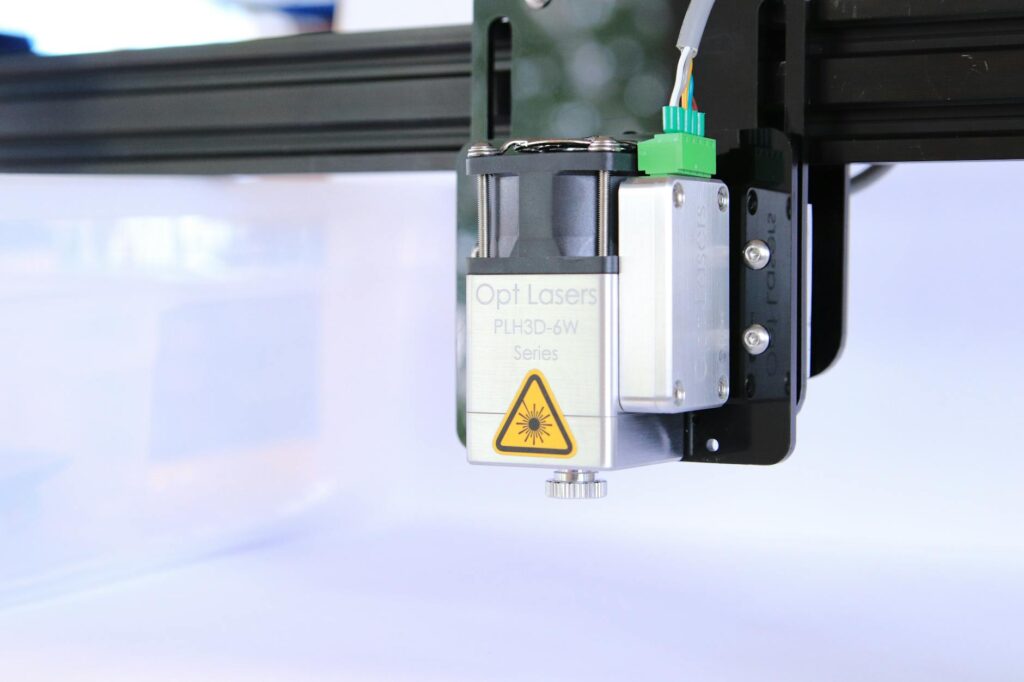
The Enlighten III picosecond laser works by using ultra-short energy pulses to trigger your skin’s natural healing response, effectively remodeling acne scar tissue and stimulating collagen production. Unlike older laser technologies that rely on heat damage, the Enlighten III delivers acoustic (non-thermal) energy that breaks up scar tissue while sparing healthy skin, making it one of the more advanced options available for treating acne scars, especially deeper indented or rolling scars that haven’t responded well to other treatments.
This laser system uses three different wavelengths (1064 nm, 532 nm, and 670 nm) in picosecond and nanosecond pulses, which means the energy is delivered in trillionths of a second. When equipped with the Micro Lens Array (MLA) attachment, it fractionates the beam into thousands of microscopic treatment zones, creating controlled micro-injuries that force your skin to rebuild itself more smoothly. In this article, we’ll walk through how the technology actually works, what the clinical studies show about real-world results, what your treatment timeline looks like, and whether this laser is the right choice for your acne scarring.
Table of Contents
- How Does the Enlighten III Picosecond Laser Work on Acne Scars?
- Clinical Results: What Science Shows About Picosecond Laser Efficacy
- Treatment Timeline: When You’ll See Results
- What to Expect: Sessions, Downtime, and Recovery
- Safety Profile and Possible Side Effects
- How Enlighten III Compares to Other Laser Treatments
- Who Is the Right Candidate for Enlighten III Treatment?
- Conclusion
How Does the Enlighten III Picosecond Laser Work on Acne Scars?
The Enlighten III works through a mechanism fundamentally different from traditional ablative lasers. Instead of burning away layers of skin with heat, it uses ultra-short pulses of energy that create an acoustic or mechanical effect—think of it as using sound waves to shatter scar tissue at a microscopic level. This acoustic energy causes the collagen in scarred areas to fragment and reorganize, while the surrounding healthy tissue remains relatively undamaged. The 1064 nm wavelength, which is FDA-cleared specifically for acne scar treatment on Fitzpatrick skin types II through V, penetrates deep enough to reach the dermal layer where acne scars form.
When the Micro Lens Array attachment is used, the single laser beam is split into thousands of tiny, focused points. Instead of treating your entire face uniformly, only about 10-20% of the skin receives direct energy in each pass, while the surrounding skin remains untreated. This fractional approach is crucial—it creates enough injury to trigger wound healing and collagen remodeling, but the untreated zones between the treatment spots speed up recovery. The result is that your skin heals faster with less risk of complications like hyperpigmentation or prolonged redness.

Clinical Results: What Science Shows About Picosecond Laser Efficacy
Clinical studies on picosecond lasers for acne scars show measurable, consistent improvements. A recent study using a 755-nanometer picosecond laser showed a 24.3% mean improvement in scar volume after a single treatment, with that improvement maintained and even slightly increased at the 3-month follow-up (27.2% improvement). Importantly, 100% of subjects in that study showed clinical improvement on the Global Aesthetic Improvement Scale, and 94.1% of patients reported satisfaction with their results—numbers that reflect real people seeing visible changes in their scars.
Research on the 1064-nanometer picosecond laser with fractional delivery shows favorable improvements in acne scars with documented improvements in both skin texture (measured by profilometry) and skin elasticity. The consistency across different wavelengths suggests that the picosecond technology itself—not just one specific type—is what drives the results. However, it’s important to note that these studies typically involved 2-3 treatment sessions spaced 6 weeks apart, not just a single treatment. One session can show noticeable improvement, but getting to those higher satisfaction rates usually requires multiple sessions and patience as your skin continues remodeling for up to a year after your last treatment.
Treatment Timeline: When You’ll See Results
Visible improvements from Enlighten III treatment typically appear after your first session, though they’re often subtle at first. Many patients see their scars look slightly less deep and the skin texture appearing smoother even immediately after treatment, though this initial improvement is partly from temporary swelling and will settle over the first few days. The real changes begin as your body ramps up collagen production in the weeks following treatment—this is when you’ll notice progressive softening of scar edges and overall improvement in skin texture and tone.
The standard protocol calls for 2-3 sessions spaced 6 weeks apart, with treatment sessions typically lasting 20-30 minutes depending on the area being treated. Between sessions, your skin continues healing and remodeling, which is why spacing matters—you need time for the wound-healing cascade to complete before triggering it again. Even after your final session, improvement continues for up to a year as collagen remodeling is an ongoing process. If you’re considering this treatment, realistic expectations mean setting aside 4-6 months for the full protocol plus continued improvement afterward.
What to Expect: Sessions, Downtime, and Recovery
The Enlighten III is known for minimal downtime, which is one of its major advantages over ablative lasers. Most people experience some redness, mild swelling, and possibly small red or purple spots (petechiae) that typically fade within a few hours to a couple of days. You can usually return to normal activities immediately—many people schedule treatments during lunch and go back to work afterward. Itching is a common side effect in the first few days as your skin heals, and you’ll want to use gentle cleansing and moisturizing during this period.
The fractional technology keeps downtime minimal because much of your skin isn’t being treated in each pass. Compare this to older non-ablative fractional laser treatments, which can leave you red and peeling for days—with the Enlighten III, most people are camera-ready within 24 hours. However, you should avoid sun exposure and use broad-spectrum SPF 30+ for several weeks after treatment, as your skin is more vulnerable to UV damage while healing. If you have a history of keloids or very dark skin with a tendency toward post-inflammatory hyperpigmentation, discuss this with your provider, as picosecond lasers have a lower hyperpigmentation risk than older technologies, but it’s still possible.
Safety Profile and Possible Side Effects
Clinical studies on picosecond lasers for acne scars report a favorable safety profile with no serious or unexpected adverse effects. The most common side effects are mild and temporary: itching (pruritus) and small red or purple spots (petechiae) that appear during or shortly after treatment. These side effects typically resolve within days and aren’t concerning—they’re actually a sign that the treatment is working. Because picosecond pulses are so short, they cause less thermal (heat) damage to surrounding tissue, which is why this technology has a lower risk of hyperpigmentation, especially compared to longer-pulse nanosecond lasers or traditional non-ablative fractional systems.
The shorter pulse duration is the key to the safety advantage. Longer-pulse lasers deposit more heat into the skin, which can trigger melanin production and lead to darkening—a particular concern for darker skin tones. The Enlighten III’s picosecond technology minimizes this thermal effect, making it suitable for Fitzpatrick types II-V. That said, people with active acne, cold sores, or certain medications (like isotretinoin) should wait or discuss timing with their provider. If you’re prone to excessive scarring or keloids, this should be discussed beforehand, as the laser works by creating controlled micro-injuries that your body heals.

How Enlighten III Compares to Other Laser Treatments
When compared head-to-head with other acne scar treatments, the Enlighten III picosecond laser shows advantages in both efficacy and safety. Research comparing 1064-nanometer picosecond laser with diffractive optical elements (the MLA technology) to non-ablative fractional lasers found that the picosecond approach delivered better clinical results and fewer side effects, particularly in Asian patients. Non-ablative fractional lasers are gentler and have less downtime, but they typically require more sessions and show more modest results. On the other end of the spectrum, ablative fractional lasers (like CO2) can produce dramatic results but come with significant downtime, redness for weeks, and higher risk of complications.
Subcision and filler injections are other common approaches to acne scars—subcision mechanically breaks up scar tissue beneath the skin, while fillers plump the skin to make scars less visible. These work well for certain scar types (particularly rolling scars) and have minimal downtime, but the results are temporary with fillers and subcision alone doesn’t address the scar tissue remodeling that lasers achieve. Many dermatologists use a combination approach: perhaps subcision followed by laser, or laser plus filler for immediate improvement. The Enlighten III fits well into this spectrum as a lower-downtime option that still delivers meaningful structural remodeling, especially for atrophic (indented) scars.
Who Is the Right Candidate for Enlighten III Treatment?
The Enlighten III picosecond laser is FDA-indicated for acne scar treatment on Fitzpatrick skin types II through V, which represents most of the population. If you have mild to moderate atrophic acne scars (the indented type), you’re an ideal candidate. Rolling scars, boxcar scars, and ice-pick scars can all improve, though ice-pick scars (very deep, narrow holes) might benefit from combination treatment with subcision first. Realistic expectations are essential—the Enlighten III will improve your scars measurably and make them significantly less noticeable, but it won’t erase them completely, especially if they’re very severe.
You’re not a good candidate if you’re currently experiencing active acne—you should resolve the active acne first, since new breakouts will create new scars and undermine your results. If you have active cold sores, keloid tendencies, or very sensitive skin prone to adverse reactions, discuss this carefully with a dermatologist beforehand. Pregnant women and people taking isotretinoin (Accutane) should wait, as should anyone with unrealistic expectations of perfection. The best candidates are people with stable acne who’ve seen their breakouts resolve and now want to address the scarring left behind—people ready to invest 4-6 months and multiple sessions for gradual, lasting improvement.
Conclusion
The Enlighten III picosecond laser represents a meaningful advance in acne scar treatment, offering measurable results (with studies showing 24-27% improvement in scar volume and 94%+ patient satisfaction) combined with minimal downtime and a favorable safety profile. The technology works by using ultra-short energy pulses to trigger your skin’s natural healing and collagen-remodeling processes, and when equipped with fractional technology, it achieves this while preserving much of your healthy skin. Most people see visible improvement after the first session, with optimal results after 2-3 treatments spaced 6 weeks apart.
If you’re dealing with acne scars that haven’t responded to topical treatments or that bother you enough to consider professional help, the Enlighten III is worth discussing with a board-certified dermatologist. Be honest about your skin type, scarring severity, and expectations, and ask your provider about their experience specifically with this laser and whether your particular scar pattern would benefit from combination treatments like subcision or filler alongside the laser. The key is committing to the full protocol rather than expecting dramatic results from a single session—patience, multiple treatments, and realistic expectations are what separate people who see transformative results from those who are disappointed.