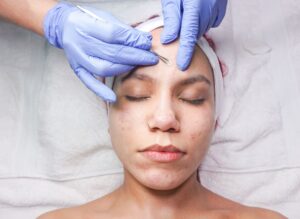
Ellacor micro-coring offers a new approach to acne scar removal by using specially designed hollow needles to extract tiny cores of skin—up to 8% of the treatment area—without creating new scars. Unlike ablative lasers or chemical peels that damage deeper layers, Ellacor works through a precise mechanical process where the needle’s internal diameter stays below 0.5mm, below the threshold where scarring occurs.
This makes it one of the few acne scar treatments that removes damaged skin while avoiding the paradox of treating one scar by creating another. If you have moderate to severe rolling or atrophic acne scars and haven’t found success with microneedling, dermal fillers, or laser treatments, Ellacor represents a genuinely different mechanism that’s gaining traction in dermatology practices. This article explains how the technology works, what clinical results show, what recovery looks like, and how it compares to other scar revision options.
Table of Contents
- How Does Ellacor Micro-Coring Remove Acne Scars More Effectively Than Traditional Methods?
- What Does Clinical Evidence Show About Ellacor for Acne Scars?
- What Happens During an Ellacor Micro-Coring Treatment?
- What’s the Recovery Timeline and Downtime?
- How Much Does Ellacor Cost and How Many Treatments Do You Actually Need?
- Is Ellacor Safe for All Skin Types and Acne Scar Patterns?
- How Does Ellacor Compare to Emerging Acne Scar Treatments and What’s Next?
- Conclusion
How Does Ellacor Micro-Coring Remove Acne Scars More Effectively Than Traditional Methods?
The core innovation of Ellacor is mechanical extraction rather than thermal ablation. The device uses hollow needles to puncture and remove thin vertical columns of skin, literally extracting scar tissue. For acne scars specifically, this matters because many atrophic scars involve fibrotic tissue trapped below the skin surface. By removing those damaged microcolumns, the treatment creates controlled micro-injuries that trigger collagen remodeling as the skin heals. The body then fills those microscopically thin channels with fresh collagen, gradually improving the appearance of the scar. This is distinctly different from laser treatments, which rely on heat to trigger collagen production.
With lasers, you’re trying to indirectly stimulate collagen by damaging deeper layers—effective, but also riskier for side effects like hypopigmentation or post-inflammatory hyperpigmentation, especially in darker skin tones. Ellacor removes the guesswork by directly extracting the problematic tissue. Because no heat is involved, there’s no thermal injury risk, and the procedure works equally across all skin types. Another advantage over traditional scar treatments like punch excision or surgical revision: Ellacor treats large areas relatively quickly without requiring local anesthesia in every single scar. A dermatologist can cover a full face or treat multiple scars in one session. For someone with widespread acne scarring across the cheeks or forehead, this efficiency is a major upgrade from older techniques that require individual incisions for each scar.
What Does Clinical Evidence Show About Ellacor for Acne Scars?
The FDA initially cleared Ellacor in 2021 for treating moderate to severe wrinkles in the mid and lower face. Since then, FDA clearance has expanded to include skin laxity treatment on areas beyond the face, including arms, knees, and abdomen. While most published data focuses on wrinkle and skin laxity outcomes rather than specifically acne scars, the mechanism—collagen remodeling through controlled micro-core removal—is equally applicable to scar tissue. In the pivotal clinical trial, 51 subjects received 2-3 Ellacor treatments with 7-8% skin removal per session. Results showed 90% of patients experienced improvement in skin appearance and 86% reported satisfaction with results overall.
The timeline matters here: results develop over 3-6 months as collagen rebuilds, not immediately. This slow timeline can be frustrating if you’re expecting instant results, but it also reflects genuine tissue remodeling rather than temporary swelling or filler effects. However, the existing clinical data doesn’t include a specific subset analysis of acne scar outcomes. Dermatologists are extrapolating from the general skin remodeling results and the mechanism of action. If you have acne scars, you’re adopting a technology that works through proven tissue remodeling, but you’re also participating in the real-world expansion of its applications. Ask your provider whether they have treated acne scars specifically and what results they’ve seen.
What Happens During an Ellacor Micro-Coring Treatment?
An Ellacor procedure takes less than 30 minutes for most treatments. A 10mm square area can be treated in less than 3 seconds, which means a full-face session progresses relatively quickly. Your dermatologist will apply topical anesthetic or use local numbing—exact protocols vary by practice—and then systematically apply the Ellacor handpiece across scarred areas. You’ll feel pressure and vibration but not pain when anesthetic is properly applied. The device creates a visible micro-pattern of extraction sites across the treatment area. Your skin will look slightly pocked or dimpled immediately after, which is normal—that micro-pattern reflects the tiny holes the needle array creates.
During the procedure itself, most patients describe the experience as tolerable, similar to aggressive microneedling in terms of sensation. Because no heat is involved, you won’t feel the burning sensation that some people report with laser treatments. Providers typically recommend 2-3 sessions spaced 6-8 weeks apart for optimal results with acne scars. The spacing allows time for collagen remodeling and healing between treatments. After the first session, you’ll have a better sense of how your skin responds and whether additional sessions will help. Some people see significant improvement after two treatments; others benefit from a third. Your provider can assess progress at each follow-up and adjust the plan.

What’s the Recovery Timeline and Downtime?
Swelling begins immediately and typically lasts several days, similar to intense microneedling or light chemical peels. Many patients describe puffy, irritated skin for 3-5 days post-treatment. Bruising can appear and may last up to 1 week. The micro-pattern marks created by the needle array usually fade within 1-3 weeks as the microscopic holes close. Most patients resume normal activities within several days, and about 70% of participants in the clinical trial reported being able to return to work within 3 days. However, “return to work” doesn’t mean your skin looks normal—it means you can function in your job. If your work involves client-facing meetings or you’re uncomfortable being seen with visible swelling and bruising, plan for at least one week of downtime.
If you work from home or have a flexible schedule, 3-4 days is realistic. For the first week, your skin will be sensitive, so strict sun protection (SPF 30+) and gentle skincare are essential. Avoid strenuous exercise, saunas, and swimming until swelling subsides. By week two, swelling is mostly gone and you can resume normal skincare routines, though the micro-pattern marks may still be visible. By week three, most marks have faded enough that makeup covers them easily. The actual collagen remodeling that improves scarring happens over the following months, so patience is required. Plan your treatment schedule around events—getting Ellacor a month before a wedding, for example, gives time for visible recovery while results are still developing.
How Much Does Ellacor Cost and How Many Treatments Do You Actually Need?
Ellacor treatments typically cost between $2,000 and $5,000 per session, with pricing varying by provider and geographic location. Major metropolitan areas and highly experienced providers tend toward the higher end. Since most people benefit from 2-3 sessions spaced 6-8 weeks apart, total investment for acne scar treatment can range from $4,000 to $15,000 depending on the extent of scarring and your skin’s response to initial treatments. This pricing puts Ellacor in the mid-to-premium range of acne scar treatments. Laser resurfacing runs $1,500-$4,000 per session with similar session requirements.
Dermal fillers cost $500-$1,500 per treatment but require touch-ups every 6-12 months indefinitely. Surgical scar revision (punch excision or subcision) might be $1,000-$3,000 per scar but is a one-time procedure for individual scars. Ellacor bridges these options: more expensive than fillers per session but potentially more permanent than filler, less invasive than surgery, and applicable to large scar-covered areas. Before committing, confirm with your provider whether your specific scarring pattern is suitable for Ellacor or whether combination treatment (Ellacor plus fillers, for example) might be recommended. Some acne scars involve both atrophic pitting and pigmentation changes; Ellacor addresses the textural component but not discoloration. Insurance typically doesn’t cover Ellacor for acne scars since it’s categorized as cosmetic, so expect out-of-pocket costs.

Is Ellacor Safe for All Skin Types and Acne Scar Patterns?
The safety profile of Ellacor is strong, particularly the fact that no heat is involved. This eliminates thermal injury risk and makes it safer across diverse skin types compared to ablative lasers, which carry higher risks of hyperpigmentation or hypopigmentation in darker skin tones. The mechanical extraction approach is less dependent on skin tone than heat-based treatments, making Ellacor potentially more equitable for broader populations with acne scarring. That said, Ellacor works best on certain scar types. Rolling scars—those with sloped, soft edges—respond well because the mechanism remodels tissue and encourages collagen fill. Ice-pick scars—those deep, narrow, V-shaped pits—may also improve but sometimes require combination treatment with fillers or surgical revision for optimal results.
Boxcar scars—those with sharper, defined edges—similarly benefit from the collagen remodeling but might not fully resolve with Ellacor alone. Your dermatologist should assess your specific scar morphology and explain realistic expectations. Contraindications include active acne (you should have clear skin before treatment), certain skin conditions like severe eczema or psoriasis, and unrealistic expectations about results. Pregnant or nursing patients typically postpone treatment. If you’re on isotretinoin (Accutane), discuss timing with your dermatologist; some recommend waiting several months post-treatment, though this varies by practice guidelines. Be upfront about your medical history, medications, and past skin reactions—these factors influence whether you’re a good candidate and how your provider customizes treatment.
How Does Ellacor Compare to Emerging Acne Scar Treatments and What’s Next?
Ellacor isn’t the only new option for acne scars. Radiofrequency microneedling, fractional laser resurfacing, and combination approaches using multiple modalities are all advancing. What sets Ellacor apart is the mechanical extraction mechanism and the absence of heat—a meaningful difference if you’ve had adverse effects from thermal treatments or if you have darker skin.
It’s also relatively fast for treating large areas, which matters if you have extensive scarring. The future of acne scar treatment is increasingly combination-based: Ellacor for textural improvement, targeted fillers for deeper ice-pick scars, and perhaps topical treatments or injectables to address residual discoloration. As Ellacor becomes more widely used and more dermatologists gain experience, expect refinement in technique, treatment protocols, and expected outcomes for acne scars specifically. Right now, you’re adopting a relatively new application of the technology, which carries both the advantage of enthusiasm from forward-thinking providers and the uncertainty of less extensive long-term data in this specific indication.
Conclusion
Ellacor micro-coring represents a genuinely different approach to acne scarring by mechanically extracting damaged tissue rather than relying on heat or stimulation to trigger indirect collagen remodeling. With 90% of patients showing improvement and 86% reporting satisfaction in clinical trials, the technology has proven outcomes. The trade-off is that results develop over 3-6 months, multiple sessions are usually needed, and costs range from $2,000 to $5,000 per treatment.
If you’ve struggled with acne scars and other treatments haven’t delivered results, Ellacor is worth discussing with a dermatologist experienced in the technology. Come prepared with photos of your scars, realistic expectations about timeline and outcomes, and clarity about your skin type and scar patterns. The procedure offers reasonable downtime, strong safety profile across skin types, and a mechanism that actually addresses the underlying tissue rather than just camouflaging scars.