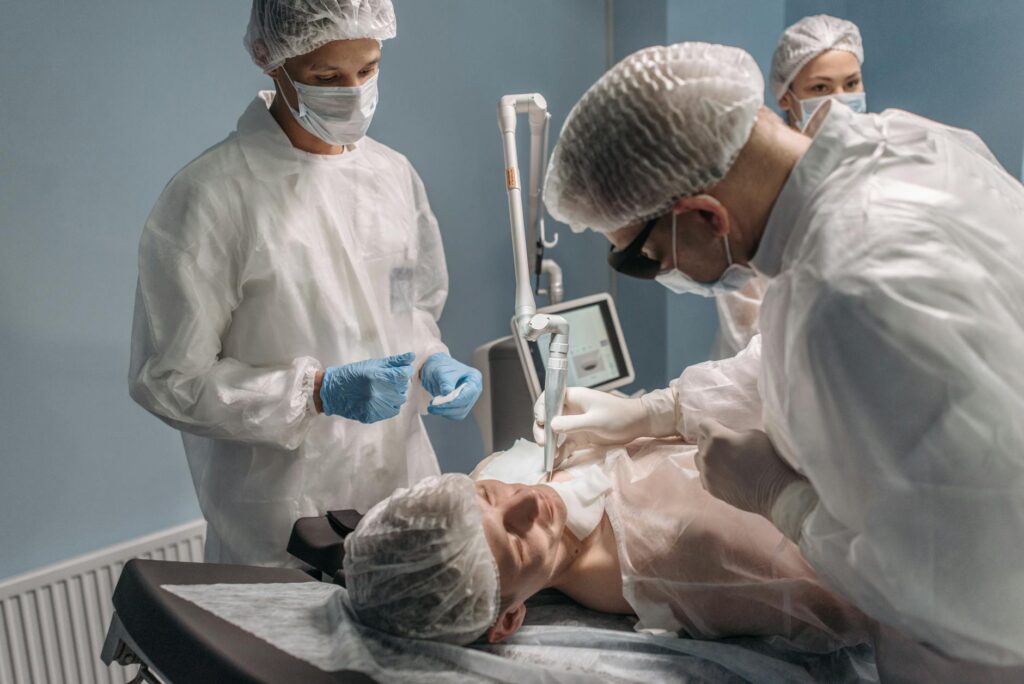
Subcision before laser treatment fundamentally changes how scars respond to therapy by mechanically releasing the fibrous strands that tether scars to deeper tissue structures. When a scar pulls downward, it’s typically held in place by scar tissue that extends into the subcutaneous layer. Subcision cuts these fibrotic attachments, allowing the scar to release and creating space for new collagen to form. After this mechanical disruption, fractional CO2 laser can penetrate more effectively into the deeper skin layers and stimulate more robust collagen remodeling than laser treatment alone can achieve.
A patient with rolling acne scars across the cheeks might see minimal improvement from laser alone—perhaps a 20-30% reduction in scar depth. The same patient treated with subcision followed by laser can realistically expect a 50-75% improvement in scar appearance. This article explores why combining these two approaches produces superior results, what the clinical evidence shows, and how the treatments work together to reshape scarred skin. The combination of subcision with fractional CO2 laser has become the gold standard for treating atrophic (depressed) acne scars because each procedure addresses different aspects of the scarring problem. This article covers the mechanical basis of why subcision enhances laser effectiveness, the clinical trial evidence supporting combination treatment, treatment timing options, what realistic outcomes look like, and who is the best candidate for this approach.
Table of Contents
- How Does Subcision Release Scars and Improve Laser Penetration?
- Why Laser Alone Reaches a Plateau in Scar Treatment
- What Do Clinical Studies Show About Combined Treatment Results?
- Should Subcision and Laser Be Done at the Same Time or Separately?
- Are There Risks or Limitations to Combined Subcision and Laser Treatment?
- What Can You Realistically Expect in Terms of Results and Timeline?
- Are New Developments Improving Scar Treatment Further?
- Conclusion
- Frequently Asked Questions
How Does Subcision Release Scars and Improve Laser Penetration?
subcision works by identifying the fibrous septum—the network of scar tissue that anchors depressed scars to the muscle and fascia underneath the skin. A dermatologist uses a small blade or needle passed horizontally under the scar to sever these connections. Once separated from the underlying structures, the scar tissue can shift upward and the newly created space allows fresh collagen deposition to occur. The healing response after subcision triggers the body’s natural remodeling processes, which continue for months or even years. This mechanical disruption is the key to understanding why subcision alone produces some improvement, but combining it with laser therapy produces dramatically better results.
The reason laser works so much better after subcision is one of basic physics: the laser energy now penetrates to deeper tissue layers without the scar being held down. Fractional CO2 laser creates microscopic columns of heat injury that stimulate collagen synthesis and remodeling. When a scar is tethered down, the laser has to work around and through those strong adhesions. Once subcision has released the scar from below, the laser energy reaches the dermal-subcutaneous junction more effectively and triggers more comprehensive collagen reorganization. Studies show that scar remodeling doesn’t reach a stable state for at least 2 years after subcision, meaning the improvement continues gradually over an extended period rather than plateauing immediately.
Why Laser Alone Reaches a Plateau in Scar Treatment
Fractional CO2 laser is an effective tool for resurfacing scarred skin, but it has an inherent limitation: if the scar is held down by subcutaneous fibrosis, the laser energy cannot fully penetrate to where it needs to work. The laser will smooth the surface and stimulate some collagen remodeling in the superficial dermis, but the deep structural problem—the scar tissue tethering—remains untreated. A patient might see 30-40% improvement from laser alone, which is meaningful but falls short of what many people hope for. The plateau occurs because the scar’s fundamental structure is never really addressed; the laser is essentially trying to sand down a depression that’s actively being held in place by deeper adhesions. However, if a scar is purely superficial or caused by textural damage rather than tethering, laser alone can be sufficient.
The distinction matters for treatment planning. An ice-pick scar—narrow and deep with sharp edges—typically has strong tethering and benefits tremendously from subcision before laser. A boxcar scar with wider depressed areas may respond better to laser alone if the edges aren’t sharply defined. A rolling scar with gentle slope and widespread tethering is almost always a candidate for combined treatment. This is why a dermatologist’s assessment of scar type is crucial before recommending a treatment plan.
What Do Clinical Studies Show About Combined Treatment Results?
Recent clinical evidence strongly supports combining subcision with fractional CO2 laser for superior scar reduction. A 2025 study published in the Journal of Cosmetic Dermatology evaluated subdermal laser-assisted scar subcision (SLASS) combined with fractional CO2 laser and found a mean reduction of 92.6 ± 34.3 points on the ECCA grade scale—a standardized measurement of scar severity. The same study showed a mean improvement of 1.67 points on the SCAR-S scale, with no severe adverse effects reported in any patient. These numbers represent a substantial improvement in scar appearance and demonstrate that this combination approach is both effective and safe when performed by trained dermatologists.
Comparative studies make the benefit of combination treatment even clearer. Research comparing combined subcision with fractional CO2 laser versus subcision alone showed statistically significant improvements across multiple measures (p < 0.001). When researchers looked at the percentage of patients achieving excellent improvement, the combined treatment group had significantly higher rates than subcision alone (p = 0.031). After 6 months of combination therapy, the recovery rate reached 54.7% with higher patient satisfaction compared to single-modality treatments. A 2024 split-face study compared simultaneous treatment (both procedures done together) versus sequential treatment (subcision first, then laser later) and found that simultaneous treatment had comparable effectiveness with shorter total downtime, suggesting flexibility in how these procedures can be scheduled depending on individual circumstances.

Should Subcision and Laser Be Done at the Same Time or Separately?
The timing of these two procedures affects both the treatment experience and outcomes. Simultaneous treatment means subcision and fractional CO2 laser are performed in the same session. This approach reduces total downtime because recovery happens once instead of twice, and patients complete their treatment more quickly. The 2024 clinical study found that simultaneous treatment produced comparable scar improvement to sequential treatment, making it an attractive option for patients with limited time flexibility. The main downside is that downtime is more intense when combined—expect 7-10 days of visible redness, swelling, and potential crusting as the skin recovers from both procedures at once.
Sequential treatment spaces the procedures apart, typically with subcision done first and laser added 2-4 weeks later. This allows the initial inflammation and swelling from subcision to resolve before adding laser treatment. Some dermatologists prefer this approach because it allows them to assess how the subcision alone has improved the scar before deciding on laser intensity or additional sessions. Sequential treatment spreads out downtime over two periods, which some patients find easier to manage around work or social schedules. The clinical data suggests that efficacy is comparable between simultaneous and sequential approaches, so the choice can be based on practical considerations and personal preference after discussing options with your dermatologist.
Are There Risks or Limitations to Combined Subcision and Laser Treatment?
Combined treatment is generally safe when performed by experienced dermatologists, but it’s not appropriate for everyone. The 2025 study reported no severe adverse effects, which is reassuring, but minor side effects are common and expected. Patients should anticipate redness, swelling, and crusting that typically resolve within 7-14 days. More significant risks, though rare, include infection, excessive scarring from the treatment itself, or temporary hyperpigmentation in darker skin types. Certain antibiotics can increase photosensitivity and interact poorly with laser treatment, so medication review is important before scheduling.
Patients with active acne in the treatment area should have their acne controlled first, as active inflammation complicates both procedures. If you have very thin skin, a history of keloid formation, active infection in the treatment area, or are pregnant, this combination treatment is not appropriate. Similarly, patients taking isotretinoin (Accutane) for severe acne cannot have these procedures during treatment or for 6-12 months afterward, as the medication affects wound healing. People with unrealistic expectations—expecting complete scar erasure rather than substantial improvement—often experience disappointment even though the treatment is working as intended. The treatment is also an investment of time and money, typically requiring 2-3 sessions spaced 4-6 weeks apart, with costs ranging from several hundred to several thousand dollars depending on scar extent and geographic location.

What Can You Realistically Expect in Terms of Results and Timeline?
Improvement from combined subcision and laser treatment is gradual, not immediate. Immediately after treatment, the skin will be noticeably red, swollen, and in some cases crusted. Over the first week, the most visible inflammation subsides, but redness typically persists for 2-4 weeks. The actual scar improvement begins during this initial healing phase and continues for months afterward. Most patients see meaningful improvement—usually 40-50% reduction in scar depth and appearance—by 3 months after the first treatment session.
Additional improvement continues to develop over the subsequent months as collagen remodeling progresses. Because scar remodeling doesn’t reach a stable state for 2 years after subcision, the final result emerges gradually. Many dermatologists recommend spacing treatment sessions 4-6 weeks apart, with most patients receiving 2-3 sessions total. After completing all sessions, continued gradual improvement occurs over the following year. For someone with severe rolling scars across the cheeks, the trajectory might look like: 15-20% improvement after session one, 35-45% improvement after session two, and 50-70% improvement by 6 months after the final session. These numbers vary based on scar severity, skin type, and how the individual’s skin heals, but they represent typical outcomes seen in clinical practice.
Are New Developments Improving Scar Treatment Further?
The field of scar treatment continues to evolve, with researchers exploring ways to enhance results beyond current standard approaches. Recent evidence syntheses highlight that combined subcision with laser remains the gold standard for atrophic acne scars, but ongoing research is examining whether adding other modalities—such as topical treatments to enhance collagen remodeling, or different laser wavelengths—might further improve outcomes. Microfocused ultrasound and radiofrequency technologies are being studied as potential adjuncts to traditional laser therapy, though long-term efficacy data is still accumulating.
The integration of personalized treatment planning based on individual scar characteristics and skin type represents another area of advancement, potentially allowing dermatologists to tailor combination protocols to specific patients rather than using a one-size-fits-all approach. Looking forward, understanding the biology of scar formation and the mechanisms driving scar remodeling continues to inform treatment development. The fact that scar remodeling extends for 2 years after subcision suggests that optimizing this natural healing process—perhaps through targeted wound care or adjunctive treatments during the remodeling window—might yield even better outcomes. For now, the combination of subcision with fractional CO2 laser represents the most evidence-supported approach for patients with atrophic acne scars seeking significant improvement.
Conclusion
Subcision before laser treatment works because it mechanically releases the fibrous attachments holding depressed scars in place, allowing the laser to penetrate deeper tissue layers and stimulate more comprehensive collagen remodeling. Clinical evidence from 2024-2025 studies demonstrates that this combination approach produces 50-75% improvement in scar appearance with high patient satisfaction and low rates of severe complications.
Whether performed simultaneously or sequentially depends on practical considerations and individual preference, with both approaches producing comparable efficacy. If you’re considering this treatment for acne scars, the next step is a consultation with a board-certified dermatologist who can assess your specific scar types, discuss realistic expectations, and recommend a personalized treatment plan. Combined subcision and laser treatment requires an investment of time and money across multiple sessions, but for people with significant depressed scars, the results justify the commitment.
Frequently Asked Questions
How much downtime should I expect from combined subcision and laser?
Expect 7-14 days of visible redness, swelling, and potentially crusting if treatments are done simultaneously. You can usually return to normal activities after the first week, though full resolution of redness takes 2-4 weeks. Sequential treatment spreads downtime across two separate recovery periods.
Will combined treatment completely erase my scars?
No treatment completely erases scars. The goal is substantial improvement—typically 50-75% reduction in scar depth and visibility. The scars become much less noticeable, but some texture or mild indentation usually remains. Realistic expectations are crucial for satisfaction with results.
How many treatment sessions will I need?
Most patients require 2-3 sessions spaced 4-6 weeks apart. Some patients see sufficient improvement after two sessions, while others benefit from a third. Your dermatologist will assess after each session and recommend additional treatments if needed.
Why can’t I get this treatment if I’m taking Accutane?
Accutane (isotretinoin) affects wound healing and significantly increases risk of excessive scarring. Most dermatologists require waiting 6-12 months after completing Accutane before performing these procedures to allow normal healing capacity to return.
Is this treatment suitable for all skin types?
The procedure can be performed on all skin types, but darker skin has higher risk of temporary or permanent hyperpigmentation. Dermatologists adjust laser settings for darker skin and may recommend different timing or additional protective measures. Discussion with your dermatologist about your specific skin type is important.
How much does combined subcision and laser treatment cost?
Costs vary significantly by geographic location and scar extent, typically ranging from $1,500 to $5,000+ for a complete series of 2-3 sessions. Most insurance plans do not cover cosmetic scar treatment, though some may cover procedures if scars are causing functional impairment.