Dermatologists still recommend Vaseline after laser treatments because it actively speeds healing and reduces complications—not as an outdated relic, but as proven clinical practice. When laser treatments create controlled micro-injuries to treat acne scars, sun damage, or other skin conditions, the skin needs protection and moisture to heal properly. Vaseline does this by creating a barrier that locks in hydration and maintains the optimal moist environment that modern wound-healing science shows actually reduces scabbing, minimizes scar formation, and cuts recovery time. This article explains why dermatologists universally prescribe petroleum jelly after laser resurfacing, how to use it correctly for the best results, and what you need to avoid during the critical healing window.
Table of Contents
- What Makes Vaseline the Gold Standard After Laser Treatment?
- How Petrolatum Speeds Healing and Prevents Complications
- Scar Prevention Through Optimized Wound Healing
- Proper Application Protocol for Maximum Benefit
- What to Avoid During the Healing Window
- Choosing the Right Petrolatum Product
- The Evolution of Post-Laser Care and Evidence-Based Practice
- Conclusion
What Makes Vaseline the Gold Standard After Laser Treatment?
Vaseline succeeds where the old “let it air dry” approach fails because it reduces transepidermal water loss—the evaporation of moisture from treated skin. after a co2 laser, fractional laser, or other resurfacing treatment, your skin’s barrier is compromised and it loses water rapidly. According to research on post-laser-resurfacing topical agents, petrolatum creates a seal that keeps treated areas moist, which accelerates healing from 5 to 21 days depending on the laser type and depth of treatment. This moist wound-healing environment is now standard across dermatology practices because human studies have proven petrolatum reduces inflammation and speeds barrier recovery—a finding that directly contradicts older advice to keep treated skin dry.
The American Academy of Dermatology explicitly recommends keeping skin moist with petroleum jelly to prevent scabbing and scar formation. Skin heals faster when kept moist, not when desiccated and crusted. This is especially critical in the first 24 to 48 hours after treatment, when the risk of infection and excessive scarring is highest. Many patients expect to see “raw” healing, but dermatologists know that visible crusting actually signals slower, more scar-prone healing.
How Petrolatum Speeds Healing and Prevents Complications
The mechanism behind Vaseline’s effectiveness lies in its occlusive properties—it seals the skin and supports new skin growth during the post-operative period. Unlike lightweight lotions that evaporate, petrolatum creates a physical barrier that not only retains moisture but also minimizes infection risk. after laser resurfacing, skin is open to bacterial colonization; a barrier protection layer reduces that risk significantly. This is why dermatologists don’t recommend light moisturizers or makeup primers for the first week—they’re not occlusive enough.
However, if your skin becomes overly macerated (waterlogged), or if you’re in a humid climate where moisture accumulation could trap bacteria, you may need to reduce application frequency slightly. The goal is moist, not wet. Additionally, some people develop contact dermatitis or sensitivity to occlusive products immediately post-procedure, though this is rare with pure petrolatum. If you notice increased redness, itch, or a rash developing under the Vaseline layer, discontinue and notify your dermatologist immediately—you may need a different post-care approach.
Scar Prevention Through Optimized Wound Healing
One of the most compelling reasons dermatologists insist on Vaseline after laser is its direct impact on scar formation. Scars develop when skin heals too quickly or with excessive inflammation; keeping the area moist with petroleum jelly slows the healing process just enough to minimize these risk factors. Clinical evidence shows that moist healing environments reduce fibroblast activity and collagen overgrowth, the underlying mechanisms of hypertrophic scarring.
For someone treating deep acne scars with fractional laser, this difference can mean the outcome is smooth and blended versus raised and visible. A real-world example: a patient treating severe boxcar scars on the cheeks applies Vaseline liberally after their first fractional laser session. Six weeks later, they see improvement with minimal new scarring at the treatment edges. Had they skipped the Vaseline and let the skin dry naturally, crusts would have formed within 48 hours, extending healing time and increasing inflammation—both risk factors for iatrogenic scarring (scarring caused by the treatment itself).
Proper Application Protocol for Maximum Benefit
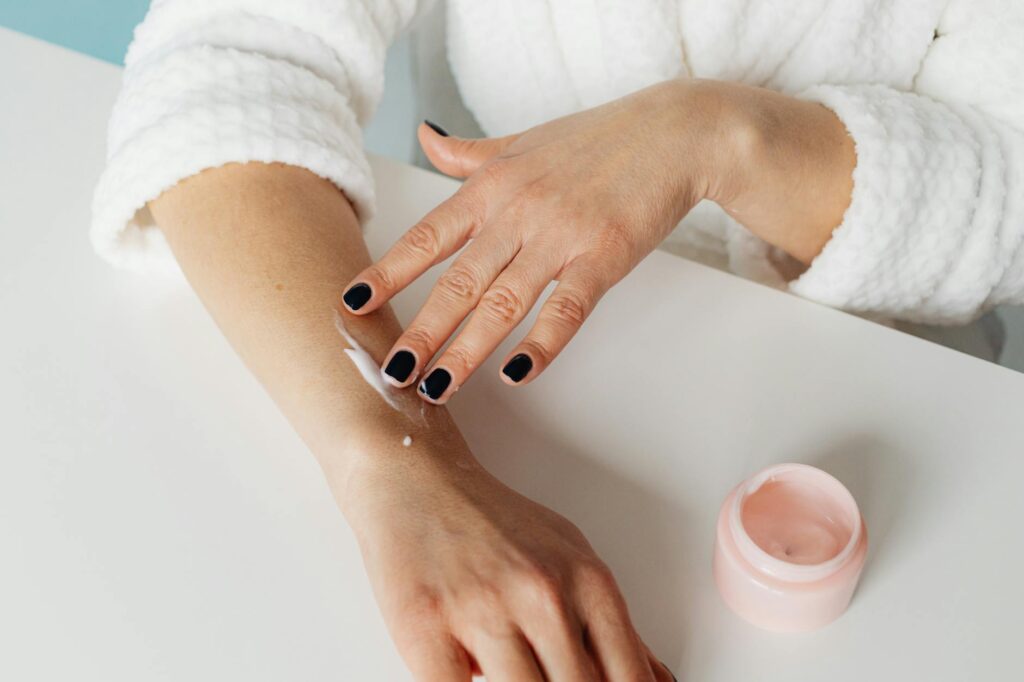
The standard post-procedure protocol across dermatology practices is to apply Vaseline or a prescribed ointment liberally and frequently. In the first 24 hours, reapplication every few hours is recommended—typically 5 to 8 times daily or whenever the skin begins to feel dry. This isn’t excessive; it reflects the intensity of water loss in the immediate post-operative period. Many dermatologists instruct patients to apply Vaseline after gentle soaking with cool water, as the moisture helps the petrolatum spread and absorb into damaged skin more effectively.
For comparison, using Vaseline twice daily is significantly less effective than every few hours in the first day. The difference in scarring risk and healing speed between conservative and liberal application is measurable. After 48 to 72 hours, you can often reduce frequency to 3 to 4 times daily, and after one week, many dermatologists clear you to transition to a lighter moisturizer if the skin is visibly healing well. However, always follow your specific dermatologist’s timeline—deeper treatments like CO2 resurfacing require longer petrolatum coverage than gentler options like light fractional laser.
What to Avoid During the Healing Window
While Vaseline itself is well-tolerated, several mistakes commonly derail post-laser healing. Never combine Vaseline with active ingredients like retinoids, vitamin C serums, or acids during the first one to two weeks—these can irritate already-damaged skin and compromise barrier repair. Many patients think they’re accelerating healing by layering “beneficial” products, but this actually increases inflammation and scarring risk.
Vaseline alone is sufficient. Additionally, avoid anything that increases heat or sweating in treated areas, such as strenuous exercise, hot showers, or saunas, for at least 24 to 48 hours. Sweating under an occlusive Vaseline layer can trap bacteria and increase infection risk. Sun exposure is the other critical limitation—even with Vaseline applied, never skip broad-spectrum SPF 30+ sunscreen (after the initial healing phase when your dermatologist clears it) or sun protection, as UV exposure can trigger hyperpigmentation or dyspigmentation in freshly treated skin, especially in deeper skin tones.

Choosing the Right Petrolatum Product
Pure Vaseline—100% white petrolatum—is the most commonly recommended option because it’s inert, fragrance-free, and hypoallergenic. However, some dermatologists prescribe medicated ointments containing antibiotics (like bacitracin or Aquaphor mixed with zinc oxide) if infection risk is high or if the patient has a history of delayed healing. For routine laser treatments in healthy patients with no contraindications, plain Vaseline is equally effective and costs a fraction of the price.
One caveat: some patients find standard Vaseline from a jar difficult to apply cleanly or hygienically post-procedure, especially if their hands are bandaged or they’re dealing with oozing. In these cases, Vaseline comes in tube form (like Vaseline Lip Therapy in larger tubes), which is easier to dispense. Whichever format you choose, make sure it’s pure petrolatum, not a lotion-based “healing jelly” variant that isn’t occlusive enough.
The Evolution of Post-Laser Care and Evidence-Based Practice
The persistence of Vaseline recommendations reflects a shift in dermatology toward evidence-based wound care rather than tradition. Decades ago, dermatologists advised patients to let laser wounds “air out” and scab over, an approach we now know delays healing and increases scarring. Modern post-operative protocols are grounded in human studies showing that moist environments accelerate reepithelialization (new skin growth) and reduce inflammation markers.
Vaseline became the standard because it’s effective, affordable, accessible, and scientifically validated—not because it’s an old standby. As laser technology evolves and resurfacing treatments become more aggressive and precise, the principles behind Vaseline’s role remain unchanged: maintain hydration, protect the barrier, reduce inflammation, and minimize infection risk. Whether you’re undergoing CO2 resurfacing for deep scars or subtle fractional laser for texture, the fundamental post-operative biology is the same.
Conclusion
Vaseline is still recommended by dermatologists after laser treatment because clinical evidence unambiguously shows it speeds healing, reduces scarring, and lowers infection risk. The moist wound-healing environment it creates is the opposite of outdated advice, and it remains the gold standard across dermatology practices. The key is to apply it liberally and frequently—especially in the first 24 to 48 hours—and to resist the urge to layer other active ingredients or expose treated skin to heat, sweat, or sun.
If you’re scheduled for laser treatment, ask your dermatologist for specific post-care instructions and confirm the Vaseline protocol before you leave the office. Have a jar on hand before your appointment, and don’t skip applications in the critical early healing window. The difference between diligent Vaseline use and skipping it can be visible in your final results months down the line.