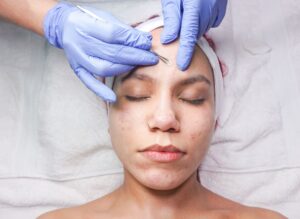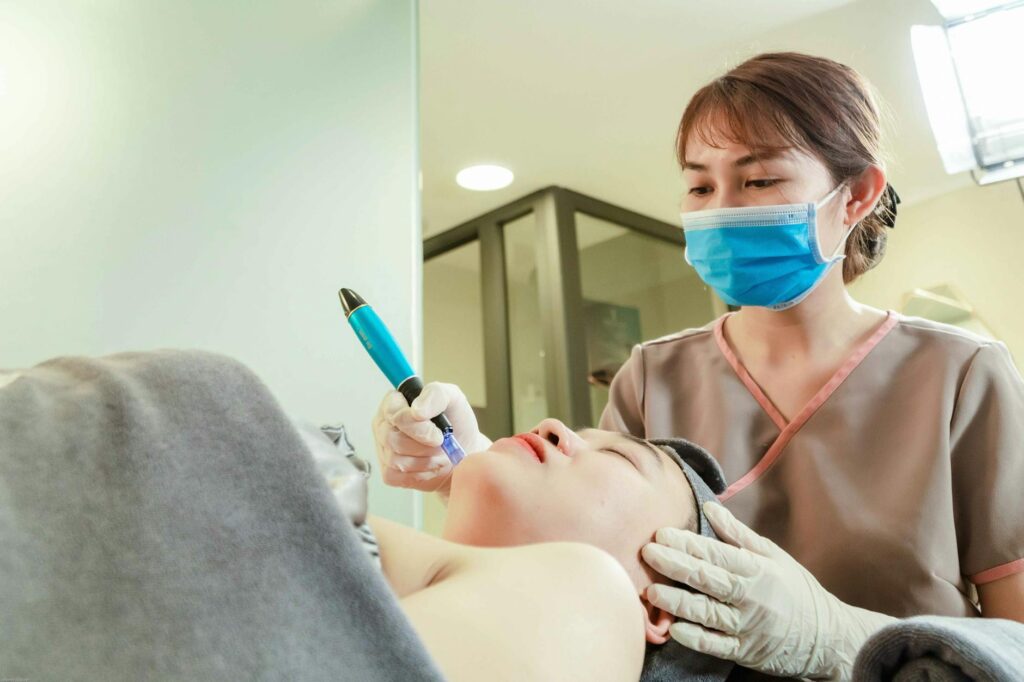
RF microneedling has significantly less downtime than ablative laser treatments because it avoids removing the skin’s surface layer. While RF microneedling requires only 1–3 days of mild redness and swelling—with most patients resuming normal activities within 24–48 hours—ablative laser treatments like CO₂ or Er:YAG lasers involve 5–14 days of peeling, crusting, and visible redness, with full healing taking about two weeks. For someone with a busy work schedule or social calendar, this difference is the critical distinction: RF microneedling lets you get results without the prolonged downtime that ablative treatments demand. This article explores exactly why these two treatments have such different recovery timelines, what happens during each procedure, and how to decide which is right for your skin.
The core reason comes down to how each technology works. RF microneedling stimulates deep collagen production in the dermis using radiofrequency heat delivered through tiny needles—leaving the skin surface intact. Ablative lasers, by contrast, intentionally vaporize the epidermis and parts of the outer dermis, creating a controlled wound that triggers aggressive skin healing and remodeling. Both approaches work, but the ablative method’s surface damage is what drives the extended recovery period.
Table of Contents
- How Do These Treatments Actually Differ in Their Approach?
- Why Does RF Microneedling Preserve Your Skin Surface While Ablative Lasers Don’t?
- What Exactly Happens to Your Skin During Recovery From Each Treatment?
- Which Treatment Provides Better Results, and Is Downtime Worth the Trade?
- Can You Speed Up Recovery, and What Complications Should You Watch For?
- What About Effectiveness on Different Acne Scar Types?
- The Bigger Picture: Which Trend Is Growing, and Why?
- Conclusion
- Frequently Asked Questions
How Do These Treatments Actually Differ in Their Approach?
RF microneedling and ablative laser resurfacing couldn’t be more different in their fundamental strategy, even though both improve skin texture, reduce acne scars, and stimulate collagen. RF microneedling uses radiofrequency energy delivered through micro-needles that penetrate the dermis—the deeper layer of skin responsible for structural support and elasticity. The needles create controlled micro-injuries, and the RF heat amplifies the skin’s natural healing response without removing the protective epidermis. This means the skin barrier remains largely intact, which is why recovery is so quick. Ablative lasers take an opposite approach: they vaporize skin layer by layer, removing dead skin cells and damaged tissue on purpose.
The CO₂ laser and Er:YAG laser are the two most common ablative options, and both create a visible wound on the surface. The body then must re-epithelialize—grow new skin to cover the treated area—which takes considerably longer. This deeper, more aggressive remodeling explains why results are often more dramatic, but it also explains why you’ll look noticeably treated for days afterward. The practical consequence is stark. With RF microneedling, you might see pinpoint marks or minor bleeding immediately after treatment, but these resolve within hours. With ablative lasers, you’re looking at crusting and peeling that will be visible if you leave your house, which is why many dermatologists recommend scheduling these treatments around vacation time or when you can work from home.
Why Does RF Microneedling Preserve Your Skin Surface While Ablative Lasers Don’t?
The answer lies in the precision of each energy delivery method. RF microneedling targets the dermis directly—the layer where collagen lives—while the epidermis (the thin, outer protective layer) stays relatively untouched. The radiofrequency heat bypasses the surface entirely, stimulating fibroblasts and triggering collagen synthesis at depth. Think of it like a carefully targeted heating element that wakes up the deeper layers without scorching the neighborhood. Ablative lasers work by vaporizing tissue. The laser beam is absorbed by water in the skin cells, causing rapid heating that turns cell contents into vapor.
This is extremely effective at removing damaged skin, but it’s also inherently non-selective at the surface—the laser removes whatever it touches, layer by layer. Dermatologists control the depth by adjusting settings and making multiple passes, but the ablative action always means surface removal. However, this preservation of the epidermis is also why RF microneedling may require multiple treatments for the most severe scarring or advanced photoaging. Because ablative lasers remove more skin at once, they can address deeper damage in a single session. If you have severe ice-pick acne scars or extensive sun damage, your dermatologist might recommend an ablative approach despite the downtime, or suggest RF microneedling followed by a lighter ablative treatment later. The choice depends on how aggressive your goals are versus how much downtime you can tolerate.
What Exactly Happens to Your Skin During Recovery From Each Treatment?
The recovery trajectories are completely different, and understanding this helps explain why the downtime gap exists. With RF microneedling, your skin experiences micro-trauma from the needles plus controlled heat, triggering inflammation that peaks within 24 hours. You’ll see redness and mild swelling during this period, and you may notice pinpoint marks where the needles entered—these are tiny bleeding points that look like the skin was gently pricked. By day two or three, most people see light flaking as dead skin cells shed, and the redness fades significantly. By day four, many patients look mostly normal, though some residual pinkness can linger another day or two. Ablative laser recovery is more complex because you’re managing an actual wound. Immediately after treatment, the skin is red and raw.
Over the next 3–5 days, a golden or tan crust forms—this is dead skin and debris that must shed before new skin is fully revealed. During this crusting phase, the area is sensitive to sunlight and prone to picking, and you cannot wear makeup over the treated zone without risking infection. Around days 5–7, the crust begins flaking away, but new skin underneath is still pink and delicate. Many people experience residual redness for 3–4 weeks after the visible crusting stops, and some see redness persist even longer. For someone scheduled a wedding, important presentation, or client meeting, this distinction is everything. RF microneedling patients can typically return to work or public events within 48 hours with minimal makeup. Ablative laser patients need at least a week of downtime, and another week or two before they’re fully comfortable in public without heavy coverage or explanation.
Which Treatment Provides Better Results, and Is Downtime Worth the Trade?
This is where the practical tradeoff emerges. Ablative lasers generally deliver more dramatic, visible results in a single treatment because they remove more skin and trigger more aggressive remodeling. If you have severe boxcar or rolling acne scars, significant photoaging, or deep wrinkles, an ablative laser may be your best option—though you’ll need to plan around the recovery. Some patients see 50–70% improvement in scars after a single CO₂ laser session, with final results visible 3–6 months later as collagen continues to build. RF microneedling produces excellent results, but they’re often more gradual and may require a series of treatments. Most protocols call for 3–6 sessions spaced 4–6 weeks apart.
By the end of the series, results rival ablative treatments for many conditions, particularly moderate scarring and texture issues. The advantage is that you never have more than a few days of visible downtime per treatment, so you can maintain your normal life throughout the entire process. The decision often comes down to your schedule and scar severity. If you can take two weeks off work and your scars are deep or extensive, one ablative laser treatment might be your fastest path to results. If you need to keep working, or if your scars are moderate, RF microneedling’s minimal downtime makes it far more practical—especially since series results are competitive with single ablative treatments. Some dermatologists recommend starting with RF microneedling and escalating to ablative only if results plateau.
Can You Speed Up Recovery, and What Complications Should You Watch For?
While RF microneedling recovery is naturally fast, you can support it further through aftercare. Gentle cleansing, moisturizing with fragrance-free products, and strict sun protection are essential. Most dermatologists recommend avoiding active skincare ingredients (retinoids, vitamin C, glycolic acid) for at least 3–5 days post-treatment to avoid irritation. Some clinics apply nourishing serums or post-procedure masks immediately after treatment to minimize swelling and speed healing. Ablative laser aftercare is more involved because you’re managing actual wounds. For the first week, you’ll typically apply antibiotic ointment and keep the area covered or protected from sun. Some dermatologists recommend ointment-based moisturizers rather than lotions, and strict avoidance of anything that might introduce bacteria.
Picking at crusts is a major temptation but dramatically increases scarring risk. If crusts feel uncomfortable, applying a hydrating mask or damp compress is safer than manual removal. Complications are rare with both treatments but more likely with ablative lasers due to the larger wound surface. Infection, persistent redness (post-inflammatory erythema), and temporary hyperpigmentation can occur. RF microneedling carries minimal infection risk due to the intact epidermis, though some people experience temporary pinpoint scabs or mild irritation if they have very sensitive skin. Never undergo either procedure if you have active herpes simplex virus (cold sores), as the skin trauma can trigger a flare. If you’re prone to keloid scars or hypertrophic scarring, discuss this with your dermatologist before any treatment.

What About Effectiveness on Different Acne Scar Types?
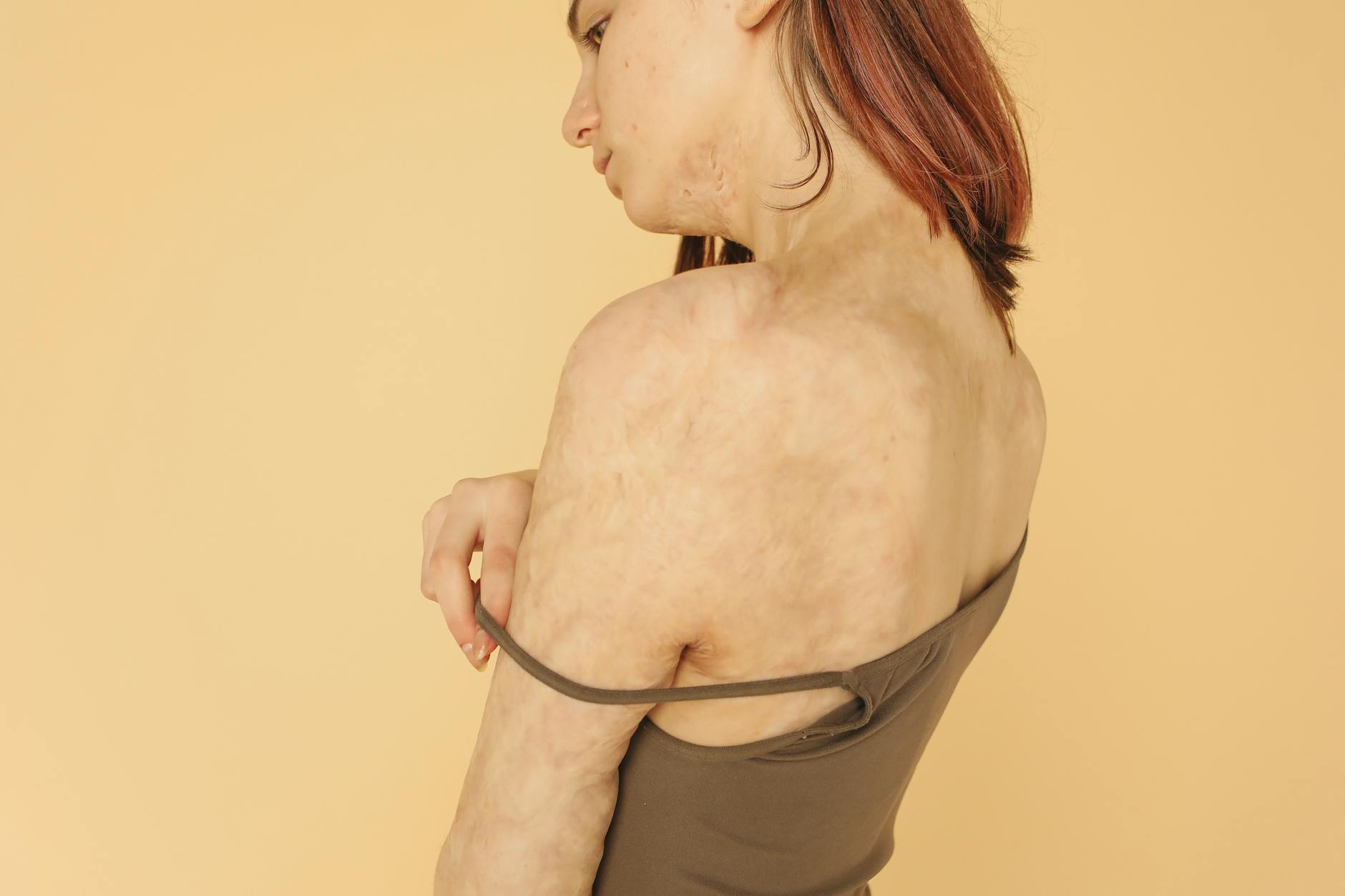
Both treatments work on different scar morphologies, but timing and type matter. Atrophic scars—the depressed pits most common after acne—respond well to both RF microneedling and ablative lasers because both stimulate collagen fill-in. However, ice-pick scars (deep, narrow pits) and boxcar scars (wider depressions with sharp edges) sometimes require ablative treatment or a combination approach for optimal results, since the depth and shape may need more aggressive remodeling.
Hypertrophic or atrophic erythematous scars (red or purple scars) respond beautifully to RF microneedling because the radiofrequency can reduce inflammation and stimulate remodeling without the surface trauma that might irritate these sensitive scars further. If you have red post-acne scars, starting with RF microneedling is often ideal because you get texture improvement without the risk of triggering additional inflammation. A dermatologist can assess your specific scar pattern and recommend the right tool—or suggest sequencing both treatments.
The Bigger Picture: Which Trend Is Growing, and Why?
Over the past decade, RF microneedling and similar non-ablative or fractional approaches have gained significant market share, largely because downtime is a major barrier for real people. Dermatologists and aestheticians have learned that you can achieve impressive results without asking patients to disappear for two weeks, which has broadened access to skin rejuvenation treatments. This shift reflects a maturation in the field: the goal isn’t always to be the most aggressive; it’s to be smart about matching treatment intensity to the patient’s life and goals.
That said, ablative lasers remain the gold standard for severe damage or patients willing to invest downtime for maximum results in fewer treatments. The choice between RF microneedling and ablative treatment isn’t about one being objectively better—it’s about alignment with your schedule, scar severity, and how quickly you need to see results. Understanding the downtime difference helps you make that choice with confidence.
Conclusion
RF microneedling has less downtime than ablative laser resurfacing because it stimulates collagen deep in the skin without removing the protective surface layer. Most RF microneedling patients experience only 1–3 days of redness and swelling, with normal appearance returning by day 3–4, while ablative laser patients face 5–14 days of crusting, peeling, and visible redness, followed by weeks of residual pinkness. The ablative approach works faster on severe damage because it’s more aggressive, but RF microneedling’s gentle efficiency makes it realistic for people who cannot take extended time off work or social life.
If you’re considering treatment for acne scars or skin texture, consult a dermatologist to assess your scar type and discuss your schedule. For moderate scarring and minimal downtime, RF microneedling is likely ideal. For severe damage and willingness to recover, ablative laser may deliver faster results. Either way, understanding this downtime difference ensures you choose the treatment that truly fits your life.
Frequently Asked Questions
Can I wear makeup after RF microneedling?
Not immediately. Most dermatologists recommend waiting 24–48 hours before applying makeup, and even then, use only mineral or non-comedogenic products on treated skin. Makeup can trap bacteria in the micro-punctures and slow healing.
How many RF microneedling treatments do I need to see results similar to one ablative laser session?
Results vary, but most patients need 3–6 treatments spaced 4–6 weeks apart. By the end of a series, many achieve improvements comparable to a single ablative treatment, without the extensive downtime.
Is ablative laser too aggressive for mild acne scars?
For mild surface scars or texture issues, ablative treatment is often overkill. RF microneedling or even gentler fractional laser options may be sufficient and certainly carry less downtime risk.
Can I combine RF microneedling and ablative laser treatments?
Yes, some dermatologists use a two-stage approach: RF microneedling first for general collagen stimulation and texture, followed months later by targeted ablative treatment on the deepest remaining scars. Discuss this strategy with your provider.
What happens if I pick at crusts after an ablative laser treatment?
Picking removes protective scabs and exposes healing skin to infection and irritation. It significantly increases the risk of permanent scarring and hyperpigmentation. If crusts feel uncomfortable, apply a hydrating mask instead.
Will RF microneedling or ablative laser cause permanent redness?
Both can cause temporary post-inflammatory erythema lasting weeks. Permanent redness is rare with proper sun protection and aftercare, though risk is slightly higher after ablative treatment due to the larger wound surface.