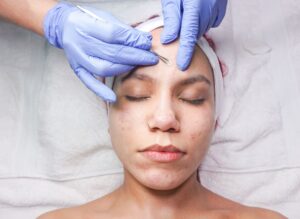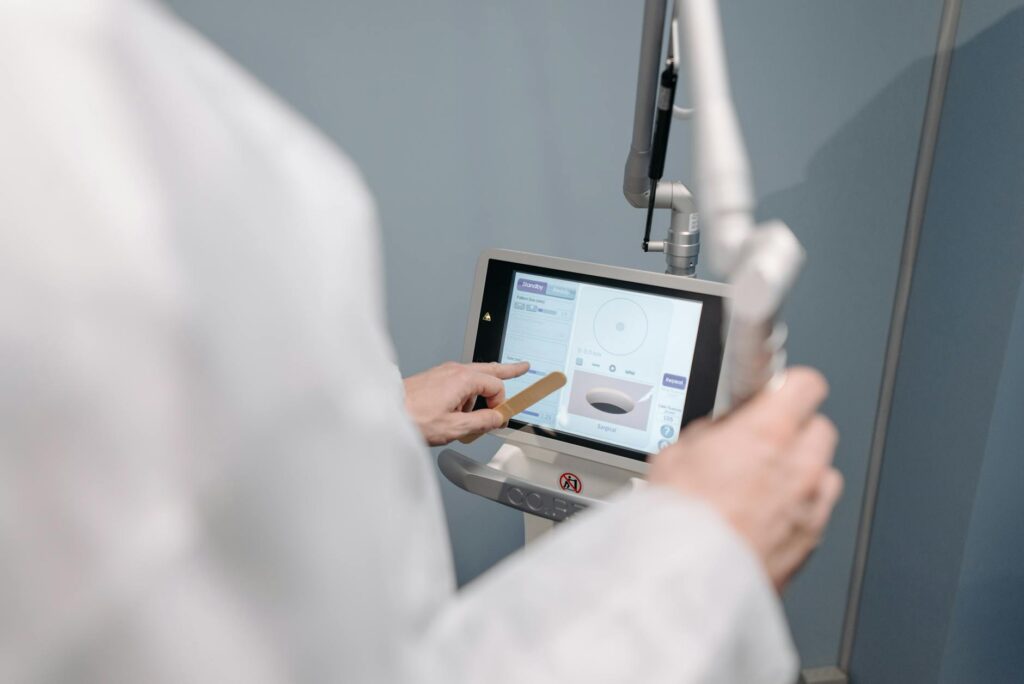
Under-eye hollowing worsens after laser treatment for acne scars because laser energy damages the delicate collagen structure beneath the thin eye area skin, causing accelerated collagen loss in a region that already has minimal structural support. When lasers heat the skin to stimulate collagen remodeling for acne scars on the cheeks and face, that thermal energy diffuses into adjacent under-eye tissue, triggering inflammation and collagen breakdown that manifests as increased hollowing rather than the skin tightening seen elsewhere on the face. A patient with mild under-eye shadows after a fractional CO2 laser session for cheek scarring might notice pronounced hollows developing over the following weeks as the treated area contracts and the eye region loses additional volume support. This article explains the anatomical and physiological reasons behind this complication, how to assess your risk before treatment, strategies to minimize hollowing during laser sessions, and realistic treatment options if it does occur.
Table of Contents
- How Laser Energy Affects the Under-Eye Anatomy
- The Volume Loss Problem and Dermal Remodeling Mismatch
- Laser Type and Settings Matter—But Under-Eye Risk Remains Consistent
- Preventing Under-Eye Hollowing Before and After Laser Treatment
- Timeline of Under-Eye Hollowing and When to Seek Treatment
- Treating Established Under-Eye Hollowing After Laser
- Learning From Under-Eye Complications—The Future of Acne Scar Lasers
- Conclusion
- Frequently Asked Questions
How Laser Energy Affects the Under-Eye Anatomy
The under-eye region is fundamentally different from the rest of the face in ways that make it vulnerable to hollowing after acne scar lasers. The skin here is only 0.5mm thick—roughly half the thickness of cheek skin—with minimal underlying collagen and fat padding compared to other facial areas. When fractional CO2, erbium, or pulsed-dye lasers target acne scars on the cheeks and lower face, some thermal energy inevitably spreads to the orbicularis oculi muscle and the delicate tissue beneath it, triggering an inflammatory response that breaks down existing collagen fibers faster than new ones form. This is not a failure of the laser or the dermatologist; it’s a byproduct of how heat energy disperses through tissue. For example, a patient undergoing fractional CO2 treatment for rolling scars on the cheeks typically experiences a temporary tightening effect across the entire lower face—but six to eight weeks later, the under-eye area appears progressively more hollowed as collagen continues remodeling beneath the surface.
The dermal remodeling process after laser treatment follows a specific timeline that makes the under-eye area particularly susceptible. In the first two weeks, inflammation causes immediate swelling and edema, temporarily plumping the eye area. But as that inflammation resolves and type III collagen (the weaker, initial collagen deposited during healing) matures into type I collagen, the skin contracts and tightens. In thicker facial skin, this contraction is offset by new collagen deposition and by the robust fat pads that sit beneath the skin. Under the eyes, however, the fat pad is smaller and separated from the skin by a thin membrane, so any contraction pulls the overlying skin inward without adequate volume replacement, creating a hollow appearance.
The Volume Loss Problem and Dermal Remodeling Mismatch
A critical limitation of laser treatments is that they stimulate collagen remodeling but don’t add new volume—a distinction that becomes obvious when treating near the eyes. The laser creates controlled micro-injuries that activate fibroblasts to produce fresh collagen, but the total collagen produced is typically less than what was there before the treatment, especially in fragile tissue. Meanwhile, the eye region’s orbital fat pad doesn’t regenerate; it only shrinks with age or inflammatory damage. When a laser session accelerates collagen loss in the under-eye area without the offsetting volume that a dermal filler would provide, patients see progressive hollowing over the weeks and months following treatment. However, if patients are aware of this risk beforehand and opt for preventive strategies—such as concurrent or immediate post-laser filler injections—the hollowing can be prevented or minimized.
A dermatologist experienced with laser treatment near the eyes will often apply lower laser settings to the under-eye zone, or avoid the innermost under-eye area entirely, preserving the tissue that maintains volume. The inflammatory response itself can accelerate the problem. Fractional lasers create controlled columns of ablated or coagulated skin, leaving surrounding tissue to remodel. But in the under-eye area, this inflammation can trigger additional collagen breakdown through matrix metalloproteinase (MMP) activity—enzymes that break down collagen as part of normal tissue remodeling. In patients with naturally thin skin, previous cosmetic procedures, or a history of under-eye hollowing, this collagen degradation can outpace collagen synthesis, resulting in a net loss of structural support that manifests as deepening hollows.
Laser Type and Settings Matter—But Under-Eye Risk Remains Consistent
Different laser modalities carry different risks for under-eye complications, though all can contribute to hollowing if used with inadequate caution. Fractional CO2 lasers deliver the most aggressive remodeling and carry the highest risk because they ablate (vaporize) skin directly, creating more intense inflammation than non-ablative options. Fractional erbium lasers are somewhat gentler but still pose a hollowing risk. Pulsed-dye and Nd:YAG lasers, which target vascular components and subsurface collagen, carry lower risk because they spare the epidermis entirely, but they still generate heat that can diffuse to under-eye tissue.
A patient treated with fractional CO2 for cheek scars might experience moderate under-eye hollowing, while the same treatment with a fractional erbium laser or a non-ablative radiofrequency device would pose less risk—but the acne scar improvement would also be less dramatic. This is the fundamental tradeoff: more aggressive lasers = better scar improvement and more under-eye risk; gentler lasers = less scar improvement and less under-eye damage. The laser settings (power, spot size, pulse duration) and the number of passes over the treatment area directly correlate with the intensity of collagen remodeling and, by extension, the risk of under-eye hollowing. A conservative single-pass fractional CO2 treatment applied only to visible scars, with avoidance of the immediate under-eye area, is far safer than an aggressive three-pass treatment that extends into the orbital rim. However, conservative settings also mean less dramatic scar improvement, which is why many patients feel pressured to accept higher-risk protocols.

Preventing Under-Eye Hollowing Before and After Laser Treatment
The most practical strategy to prevent post-laser under-eye hollowing is preventive dermal filler placed immediately after the laser session or within one to two weeks of treatment. Hyaluronic acid fillers like Restylane or Juvederm add structural support and volume to the under-eye tear trough (the depression running from the inner eye outward), offsetting the collagen loss that will occur during healing. A patient might receive 0.5 to 1mL of filler under each eye immediately after CO2 laser treatment for acne scars; the filler provides volume scaffolding while the laser stimulates collagen remodeling in the treated acne scar areas. This combination approach—laser for scars, filler for under-eye support—produces better aesthetic outcomes than laser alone, though it does increase treatment cost and requires expertise in both modalities.
Another prevention strategy is aggressive limitation of laser exposure to the under-eye zone. An experienced dermatologist will use lower energy settings or skip the immediate under-eye area entirely, preserving that delicate tissue and reducing inflammation. Some practitioners apply a protective white-out cream or even aluminum foil to shield the under-eye area during treatment, though this limits the scar-treating laser reach. The tradeoff is acceptance: if you want aggressive acne scar improvement and you want to avoid under-eye hollowing, you may need to accept that residual scars near the eye will be undertreated or left alone. Post-treatment care also matters—strict sun protection (SPF 50+), avoiding heat exposure, and minimizing facial swelling in the first two weeks can reduce inflammatory collagen breakdown, though it won’t eliminate the risk.
Timeline of Under-Eye Hollowing and When to Seek Treatment
Under-eye hollowing typically becomes noticeable two to four weeks after a laser session, peaks around eight weeks, and can persist or worsen over months if left untreated. This timeline corresponds with the transition from acute inflammation to collagen remodeling and maturation. Some patients experience temporary improvement after the first three to six months as collagen synthesis catches up, but in many cases, the hollowing remains stable or progresses, especially if the patient is over 40 (when natural collagen production is already declining) or has a history of under-eye hollowing. A critical warning: not all under-eye hollowing after laser treatment is reversible.
If significant volume loss has occurred and the surrounding tissue is damaged, even aggressive dermal filler can only partially restore the appearance; fat transfer or other surgical options may be necessary for optimal results. This is why prevention is far superior to treatment after the fact. The psychological impact of post-laser under-eye hollowing is significant because the eye region is the first thing people notice in a face. A patient thrilled with scar improvement may feel devastated by new or worsened hollowing, creating buyer’s remorse even though the overall facial aesthetic may be improved. For this reason, setting realistic expectations before treatment—specifically discussing under-eye risk and preventive strategies—is essential.
Treating Established Under-Eye Hollowing After Laser
If under-eye hollowing has already developed after acne scar laser treatment, several options can address it, though none will restore the tissue to its pre-treatment state. Dermal fillers remain the first-line treatment, with immediate results; a skilled injector can place 1 to 2mL of hyaluronic acid or calcium hydroxyapatite filler under each eye to restore volume and smooth the tear-trough depression. Results are visible immediately and last 9 to 18 months depending on the product and the patient’s metabolism.
A patient with noticeable hollowing three months after CO2 laser treatment might receive tear-trough filler and see a dramatic improvement in a single session, though repeat treatments will be needed for maintenance. For deeper or more persistent hollowing, autologous fat transfer offers a semi-permanent solution; the surgeon harvests fat from the abdomen or thighs, processes it, and injects it under the eyes, where a percentage of the grafted fat survives and integrates. Fat transfer results are subtler than filler initially but can last years. More aggressive approaches—like platelet-rich plasma (PRP) injections or regenerative treatments—show promise for stimulating new collagen formation in the under-eye area, though evidence is still emerging and results are variable.
Learning From Under-Eye Complications—The Future of Acne Scar Lasers
The under-eye hollowing problem has prompted dermatologists and laser manufacturers to develop more sophisticated approaches to acne scar treatment. Newer fractional laser systems now include settings specifically designed to minimize collateral damage to adjacent tissue; some machines allow for targeted energy delivery that spares the periorbital region.
Combination approaches—stacking multiple gentler modalities (e.g., fractional laser + radiofrequency + microneedling with growth factors) rather than relying on a single aggressive laser—may offer better safety profiles. Advances in resurfacing technology, like hybrid CO2-erbium systems, attempt to balance scar improvement with reduced thermal diffusion to surrounding tissue. Long-term, the trend is toward treating acne scars with a multidisciplinary approach: lasers for textured scars, injectables for volume loss, microneedling for collagen remodeling, and ancillary treatments to optimize results while minimizing complications.
Conclusion
Under-eye hollowing worsens after acne scar laser treatment due to the unique anatomy of the eye area—thin skin with minimal collagen and a small fat pad that cannot compensate for thermal-induced collagen loss. The laser’s heat triggers collagen remodeling that results in net collagen loss rather than gain, and the resulting skin contraction and volume loss create a hollow appearance.
Prevention through preventive dermal filler, conservative laser settings, and protective measures is far more effective than treating hollowing after it develops. If you are considering laser treatment for acne scars and are concerned about under-eye hollowing, discuss your specific anatomy and risk factors with a dermatologist before scheduling treatment, and ask about preventive filler or alternative approaches that might spare the under-eye zone.
Frequently Asked Questions
Can under-eye hollowing from laser treatment be reversed?
Partial reversal is possible with dermal fillers or fat transfer, but the tissue damage cannot be fully undone. Prevention before treatment is far more effective than correction afterward.
How much does preventive under-eye filler cost if I’m already getting acne scar laser treatment?
Preventive tear-trough filler typically costs $400 to $800 per eye, depending on the amount of filler needed and your geographic location. Many dermatologists offer package pricing if filler is combined with a laser session.
Is under-eye hollowing after laser treatment permanent?
It can be, especially if significant collagen loss has occurred. Fillers last 9 to 18 months and require repeat treatments. Fat transfer can last longer but is a more invasive procedure.
Will my dermatologist prevent under-eye hollowing automatically, or do I need to ask?
Ask explicitly. Some dermatologists routinely use lower settings near the eyes or offer preventive filler; others may not prioritize this unless you bring it up beforehand.
What’s the difference between under-eye hollowing and normal under-eye shadows?
Shadows are surface-level pigmentation or fine lines; hollowing is a loss of volume beneath the skin, creating a physical depression. Laser treatment can worsen both, but hollowing is more difficult to treat and more permanent.