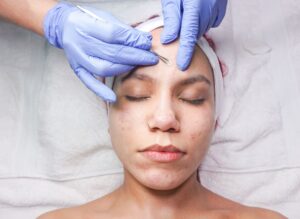
Experts are highlighting a fundamental shift in acne treatment toward personalized, combination-based approaches that address multiple mechanisms of breakout formation simultaneously. Rather than relying on single-agent antibiotics or topical treatments in isolation, dermatologists now emphasize strategies like pairing retinoids with benzoyl peroxide or combining oral antibiotics with targeted topicals to tackle acne from multiple angles. This multi-mechanism approach reflects a growing understanding that acne—which affects approximately 20.5% of the global population over age 16, and as much as 28.3% of young adults aged 16 to 24—is far more complex than previous treatment models suggested.
The acne treatment market itself is expanding rapidly, projected to grow from USD 10.24 billion in 2025 to USD 16.91 billion by 2034-2035, driven by both new drug approvals and rising consumer demand. Google searches for “acne treatment” surged 19% in 2025 alone, reaching 424,000 average monthly searches. This article explores the expert-endorsed trends reshaping acne care: the dominance of combination therapies, the rise of gut-friendly antibiotics, emerging clinical breakthroughs in the pipeline, and the growing focus on skin microbiome health over quick fixes.
Table of Contents
- What Are Experts Saying About Today’s Acne Treatment Landscape?
- The Clinical Data Supporting Combination and Personalized Treatment
- Novel Treatments and Breakthrough Therapies on the Horizon
- Recent Regulatory Approvals and What They Mean for Treatment Options
- The Microbiome Shift—Why Skin Health and Gut Health Matter More Than Ever
- The Reproductive-Age Women Acne Epidemic and Hormonal Treatment Advances
- Market Growth and What It Means for Treatment Accessibility and Innovation
- Conclusion
- Frequently Asked Questions
What Are Experts Saying About Today’s Acne Treatment Landscape?
Dermatologists view the current acne treatment environment as one defined by precision and personalization rather than one-size-fits-all prescribing. Antibiotics remain the backbone of acne management, accounting for 42.7% of the global treatment market. However, experts emphasize that antibiotic monotherapy—relying solely on oral or topical antibiotics—is becoming outdated. The shift reflects both improved clinical evidence and growing concern about antibiotic resistance and disruption to the skin’s protective microbiome.
A critical trend experts highlight is the move toward sarecycline, a narrow-spectrum antibiotic that specifically targets *Cutibacterium acnes* (formerly known as *Propionibacterium acnes*) while sparing most beneficial gut bacteria. This contrasts sharply with older broad-spectrum antibiotics like doxycycline and minocycline, which disrupt the entire microbiome and increase the risk of secondary infections like yeast overgrowth. For patients taking sarecycline, the tradeoff is clear: slightly less collateral damage to the microbiome in exchange for comparable acne efficacy. Dermatologists also recommend combination therapies—such as adding benzoyl peroxide to antibiotic regimens—to prevent resistance development and improve treatment outcomes.

The Clinical Data Supporting Combination and Personalized Treatment
The expert consensus on combination therapy is grounded in clinical evidence showing that multi-mechanism approaches yield superior results compared to monotherapy. When dermatologists prescribe a topical retinoid alongside benzoyl peroxide, for example, the retinoid addresses cell turnover and reduces comedone formation while benzoyl peroxide targets bacterial proliferation and inflammation. Together, they address two distinct pathways of acne pathogenesis. However, this approach requires careful patient management: topical retinoids can cause significant irritation and photosensitivity in the first 4-8 weeks, and combining them with benzoyl peroxide amplifies dryness. Patients who discontinue treatment prematurely often miss the window when the regimen becomes effective.
Personalization is increasingly powered by artificial intelligence. MDacne and similar AI-based platforms now allow patients to upload selfies, which the system analyzes to assess acne severity, identify predominant lesion types (comedonal vs. inflammatory), and recommend tailored skincare kits and prescription options. This technology shifts acne management away from generic treatment templates toward individualized protocols based on a patient’s specific skin phenotype, age, and hormonal profile. The limitation, however, is that AI-assisted recommendations still require dermatologist oversight; the technology is a diagnostic aid, not a replacement for clinical judgment.
Novel Treatments and Breakthrough Therapies on the Horizon
The acne treatment pipeline contains several therapeutic innovations that experts expect to reshape the market over the next 2-3 years. DMT 310, derived from freshwater sponges, met its primary endpoints in Phase 3 clinical trials and is scheduled for over-the-counter release in the second half of 2026. This represents a novel mechanism—a naturally derived compound with antimicrobial and anti-inflammatory properties—that falls outside traditional retinoid or antibiotic categories. For consumers seeking alternatives to conventional prescriptions, DMT 310 could offer a new option, though its long-term safety profile and efficacy compared to established treatments remain to be demonstrated in real-world use. Denifanstat, an oral therapy being developed by Sagimet Bioscience, targets a different mechanism: it modulates lipid metabolism in sebaceous glands, reducing sebum production at the source.
In Phase III trials, denifanstat achieved a 33.2% treatment success rate after 12 weeks, compared to only 14.6% with placebo. This is a meaningful improvement, particularly for patients with severe nodular or hormonal acne driven by sebum excess. However, the drug is still in development and not yet approved; dermatologists view it as a future tool for patients who have failed or developed resistance to antibiotics and retinoids. A third frontier is Sanofi’s mRNA acne vaccine, designed to educate the immune system to tolerate *Cutibacterium acnes* while dampening excessive inflammatory responses. Results are expected by 2029, and if successful, this approach could fundamentally reframe acne from an infection to be killed to an inflammatory condition to be immunologically rebalanced.

Recent Regulatory Approvals and What They Mean for Treatment Options
In November 2025, the European Medicines Agency approved Winlevi (clascoterone cream 1%), a first-of-its-kind topical androgen receptor inhibitor from Glenmark Pharmaceuticals. This approval signals a major regulatory shift: for the first time, a topical medication specifically blocks androgen signaling in the skin. Androgens are the primary driver of acne in adolescence and young adulthood, particularly in males and in reproductive-age women with hormonal acne. By applying a localized androgen blocker directly to affected skin, Winlevi offers a mechanism that neither retinoids nor antibiotics provide.
The advantage is potent efficacy for androgen-driven acne without systemic hormonal effects; the limitation is that it addresses hormonal acne specifically, so patients with purely bacterial or inflammatory acne may see less benefit. This approval fills a treatment gap, especially for women with polycystic ovary syndrome (PCOS) or other conditions that amplify androgen-mediated acne. Previously, these patients were often prescribed oral contraceptives or spironolactone—systemic medications with potential side effects. A topical option provides an alternative with potentially fewer systemic effects, though dermatologists often still combine Winlevi with other agents for comprehensive control. The regulatory landscape continues to evolve, with stricter scrutiny on antibiotic overuse and a growing emphasis on non-antibiotic, mechanism-specific therapies.
The Microbiome Shift—Why Skin Health and Gut Health Matter More Than Ever
A major expert trend emerging in 2026 is the recognition that acne treatment should prioritize long-term skin and systemic health over rapid symptom resolution. For decades, dermatology focused on killing bacteria and clearing lesions as quickly as possible. Experts now emphasize that overly aggressive antibiotic regimens, while effective in the short term, can deplete beneficial skin microbes and disrupt the gut barrier, potentially increasing susceptibility to future acne recurrence, yeast infections, and other complications.
This shift is reflected in the rising interest in postbiotic therapies—products containing metabolites from beneficial bacteria—and microbiome-supportive skincare ingredients like prebiotics and polyphenols. The warning here is critical: many over-the-counter “microbiome-friendly” skincare products are lightly researched, and their long-term efficacy compared to proven retinoids and benzoyl peroxide remains unclear. A patient who abandons a proven antibiotic-retinoid regimen in favor of an unproven microbiome-balancing cream may experience acne flare-ups while waiting for the new approach to work. Experts recommend a balanced approach: use antimicrobials when necessary (particularly for severe or resistant acne), but opt for narrow-spectrum agents like sarecycline rather than broad-spectrum antibiotics, and concurrently introduce skin-strengthening ingredients (ceramides, niacinamide) and consider probiotic supplements to mitigate microbiome disruption.

The Reproductive-Age Women Acne Epidemic and Hormonal Treatment Advances
Acne burden among reproductive-age women has risen significantly over the past decade, with projections indicating further increases by 2040. This demographic shift reflects both hormonal factors (stress-induced androgen spikes, menstrual cycle fluctuations, PCOS prevalence) and possibly environmental contributors like endocrine-disrupting chemicals in personal care products. Experts highlight that acne in adult women is often underdiagnosed and undertreated because it’s frequently dismissed as a cosmetic issue rather than a dermatological condition warranting clinical management. This gap in care is narrowing as the market recognizes that reproductive-age women represent a growing, high-value customer base for acne solutions.
The treatment options for hormonal acne are expanding. Beyond oral contraceptives and spironolactone, newer agents like Winlevi offer localized hormonal control. AI-personalized skincare kits increasingly account for hormonal patterns, adjusting ingredient strength and treatment intensity based on where a patient falls in her menstrual cycle. For example, some women experience acne flares in the luteal (post-ovulation) phase when progesterone is elevated; a personalized kit might recommend lighter doses of retinoid during this phase to minimize irritation while maintaining efficacy. This nuanced approach recognizes that hormonal acne is not a static condition but one that fluctuates and requires adaptive management.
Market Growth and What It Means for Treatment Accessibility and Innovation
The acne treatment market’s projected growth from USD 10.24 billion in 2025 to USD 16.91 billion by 2034-2035—a compound annual growth rate of 4.9-5.24%—reflects sustained investment in both pharmaceutical innovation and consumer demand. North America alone represented USD 4.75 billion in market value in 2024, underscoring the regional prevalence and spending on acne care. This growth is fueling a competitive landscape where dermatology companies are racing to bring novel treatments to market faster and at lower cost.
Experts view this expansion as a net positive for patients: increased competition typically drives down prices, improves access, and incentivizes innovation in underserved areas like hormonal acne and acne-prone skin in non-white populations (which is historically underrepresented in acne clinical trials). The forward-looking outlook is one of precision medicine dominating by 2030, with AI-guided diagnosis, combination therapies tailored to individual biology, and a full pipeline of non-antibiotic options. The caveat is that not all emerging treatments will be accessible or affordable to everyone; novel therapies like DMT 310 and denifanstat may initially carry premium price tags, widening disparities between well-resourced and under-resourced patients.
Conclusion
Experts are converging on a new model of acne treatment centered on combination therapy, personalization, and long-term skin health rather than quick fixes. The dominance of antibiotics is gradually being displaced by mechanism-specific agents—topical androgen blockers, narrow-spectrum antibiotics, microbiome-supportive therapies, and emerging pipeline drugs with novel targets. This shift reflects deepening clinical evidence that acne is a multifactorial condition requiring simultaneous intervention across multiple pathways: bacterial, inflammatory, sebaceous, and hormonal.
For patients, the takeaway is clear: work with a dermatologist to develop a personalized, multi-mechanism treatment plan rather than expecting monotherapy to solve the problem. Consider the tradeoffs of available options—broad-spectrum antibiotics are fast-acting but carry microbiome risks, while novel therapies offer promise but require patience as they move through development and approval. The acne treatment landscape of 2026 and beyond will be defined by precision, choice, and a recognition that sustainable acne control demands attention to underlying biology and skin health, not just lesion count.
Frequently Asked Questions
Is combination therapy more expensive than using a single treatment?
Often slightly higher upfront cost, but potentially cheaper long-term because combination regimens may reduce the need for course corrections, additional visits, or treatment switching. Many insurance plans cover combination therapy as standard dermatology care.
Will the new treatments like DMT 310 and denifanstat replace antibiotics entirely?
Unlikely in the next 5-10 years. Antibiotics will remain essential for severe bacterial acne. However, these new agents expand options for patients who cannot tolerate or have developed resistance to existing medications.
Should I stop antibiotics to protect my microbiome?
Not without professional guidance. Halting acne antibiotics prematurely often causes flare-ups and worse scarring. Instead, discuss switching to narrow-spectrum options like sarecycline or adding microbiome-supportive measures (probiotics, supportive skincare) alongside your current regimen.
Is AI-personalized acne assessment replacing dermatologist visits?
No. AI tools are diagnostic aids that help identify patterns and recommend treatment paths, but clinical diagnosis by a dermatologist—especially for severe, treatment-resistant, or scarring acne—remains essential.
Why is acne increasing in reproductive-age women?
Multiple factors: stress-induced hormonal shifts, PCOS prevalence, possibly endocrine disruptors in the environment. Hormonal fluctuations across the menstrual cycle also make acne harder to control with static treatment regimens.
When will the mRNA acne vaccine be available?
Sanofi’s mRNA vaccine is still in development, with results expected by 2029. Even after results, regulatory approval and manufacturing scale-up will take additional years before availability.