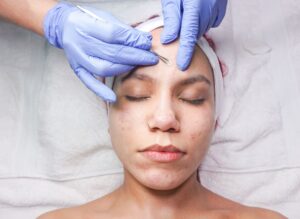
The acne treatment market is experiencing substantial expansion, driven primarily by increased global awareness of acne as a treatable condition and its psychological impact on self-esteem. The global acne treatment market was valued at USD 12.19 billion in 2025 and is projected to reach USD 17.48 billion by 2032, representing a compound annual growth rate of 5.3%—a trajectory fueled by educational campaigns, industry initiatives, and the visibility of acne discussions across digital platforms. This expansion reflects a fundamental shift: as awareness of effective acne treatments grows, more people are seeking solutions, and the market is responding with both innovation and increased accessibility.
The expansion isn’t driven by acne becoming more common alone, though prevalence has risen. Instead, heightened awareness means existing acne sufferers are now more likely to pursue treatment options they might have previously ignored or normalized. The article will examine the specific drivers behind this market growth, regional variations in demand, the products gaining traction, consumer behavior changes, and what the future holds for the acne treatment industry.
Table of Contents
- What Role Does Increased Awareness Play in Market Growth?
- Regional Market Dynamics and Growth Disparities
- Product Innovation Driving Market Expansion
- How Social Media and Consumer Consciousness Shape Acne Treatment Demand
- Challenges in Meeting Expanded Market Demand
- Post-Pandemic Acne as a Market Expansion Driver
- Future Outlook: Personalization and Precision in Acne Treatment
- Conclusion
- Frequently Asked Questions
What Role Does Increased Awareness Play in Market Growth?
Increased awareness is one of the primary catalysts for market expansion. Educational campaigns, dermatological outreach, and industry initiatives have successfully communicated that acne is a treatable condition—not something people need to accept or manage silently. As more consumers understand the range of treatment options available, from over-the-counter creams to prescription medications, they move from passive acceptance to active treatment seeking. This behavioral shift directly translates into market growth: more demand for products and services means larger revenue streams and increased investment in innovation. Social media and beauty culture have amplified this awareness effect significantly. Platforms like Instagram, TikTok, and YouTube have normalized acne discussions and made skincare routines a visible part of lifestyle content.
Influencers, dermatologists, and everyday users share before-and-after stories, treatment recommendations, and skincare routines, creating a cultural shift where clear skin is discussed as an achievable goal rather than a genetic lottery. This differs markedly from two decades ago, when acne conversations were often private and shame-laden. The example of “skin cycling” or “slugging” trends spreading virally demonstrates how awareness-raising can create waves of demand for specific product categories. However, increased awareness doesn’t uniformly benefit all segments. People with mild acne may become over-informed about treatment options and seek solutions they don’t necessarily need, while those with severe acne in resource-limited regions may become aware of treatments they cannot access—creating frustration rather than positive market impact. Awareness without access can actually harm market sentiment.

Regional Market Dynamics and Growth Disparities
The acne market isn’t expanding uniformly across the globe. North America leads significantly, commanding 49.14% of the global acne treatment market share as of 2023. This dominance is supported by a strong healthcare infrastructure, high consumer spending on skincare, widespread access to prescription and over-the-counter treatments, and particularly high skincare awareness driven by established beauty and wellness industries. North American consumers have been exposed to acne treatment education for longer and have the purchasing power to act on that awareness. Asia-Pacific represents the fastest-growing region, driven by urbanization, rising disposable incomes, and rapidly increasing awareness of skincare as a health and wellness priority.
As middle-class populations expand in countries like India, China, and Southeast Asia, demand for acne treatments follows. However, this region differs from North America in significant ways: traditional skincare practices coexist with Western treatments, regulatory pathways for new products vary by country, and awareness messaging often emphasizes prevention and early treatment rather than treatment of established acne. The implication is that products and marketing strategies effective in North America may require substantial adaptation for Asian markets. Europe, while not explicitly detailed in the data, represents a mature market with moderate growth, characterized by stringent regulatory standards and consumer preference for clinically-validated treatments. This regional variation means that companies expanding globally face different awareness levels, different price points, and different product preferences in each market.
Product Innovation Driving Market Expansion
The acne treatment market is expanding partly because the product landscape itself has evolved. The pharmaceutical and cosmetic sectors have introduced innovations in multiple delivery forms: retinoids and isotretinoids in various formulations, antibiotics combined with other actives, and entirely new chemical compounds designed to target acne’s multiple causes simultaneously. According to market research, creams and lotions are projected to lead the market, capturing approximately 45% of revenue share in 2026, while anti-inflammatory drugs represent the fastest-growing segment. This innovation matters because different consumers need different products.
A teenager with mild inflammatory acne may respond well to benzoyl peroxide or salicylic acid, while an adult with hormonal acne might require prescription retinoids or even oral medications. The broader the treatment arsenal, the greater the likelihood that an aware consumer will find something that works—and success stories drive further market expansion as satisfied users share their results and recommend products to others. The emergence of anti-inflammatory treatments as the fastest-growing segment suggests that consumers and dermatologists are moving toward addressing acne’s underlying inflammatory process rather than just killing bacteria, representing a shift in how the condition is conceptualized and treated. However, product innovation also increases complexity and cost. Newer treatments with better mechanisms of action often carry higher prices, meaning market expansion may correlate with widening disparities between those who can afford cutting-edge acne care and those limited to older, less effective options.

How Social Media and Consumer Consciousness Shape Acne Treatment Demand
Rising consumer consciousness about the impact of acne on mental health and self-esteem has fundamentally changed purchasing behavior. Previous generations might have accepted acne as a normal part of adolescence or adulthood; today’s consumers view it as a problem worth solving, and social media has made this shift visible and normalized. The proliferation of skincare content—from dermatologists explaining how retinoids work to creators documenting their acne journey—has created an environment where seeking treatment is seen as responsible self-care rather than vanity. This consciousness manifests in consumer demand for solutions across the entire spectrum of severity and demographics. Parents are more likely to pursue treatments for their teenage children.
Adults are more likely to seek solutions for acne that persists into their 20s, 30s, and beyond. Individuals with specific acne types—hormonal, stress-related, mask-induced—are actively seeking targeted solutions. The practical takeaway is that a skincare brand or dermatology clinic today benefits from the cultural momentum created by awareness and consciousness: there is genuine demand from informed consumers who understand what they need and are willing to invest in solutions. The trade-off is that heightened awareness can also fuel unrealistic expectations. Social media content often shows dramatic before-and-after transformations, which may not reflect typical results for the broader population. Some consumers become discouraged when their progress doesn’t match the viral success stories, potentially abandoning effective treatments prematurely.
Challenges in Meeting Expanded Market Demand
Market expansion creates opportunities, but it also surfaces supply-chain and accessibility challenges. As demand grows, especially in Asia-Pacific, pharmaceutical manufacturers must scale production to meet it. Dermatologists in high-demand regions face longer wait times, and consumers in underserved areas may struggle to access proven treatments. The alternative projection showing the acne treatment market at USD 7,812.6 million in 2025 (compared to the higher estimate of USD 12.19 billion) illustrates that measurement methodologies vary—some sources count only pharmaceutical treatments, others include cosmetics—creating uncertainty about the true market size and growth rate. Another limitation is that increased awareness doesn’t automatically translate to better outcomes if consumer education is incomplete or driven by marketing rather than clinical evidence.
Over-the-counter acne products marketed through social media may not be formulated correctly, may be applied incorrectly, or may be used in unsafe combinations. Awareness without appropriate clinical guidance can lead to unnecessary treatment failures or even adverse effects from misuse. Regulatory variation across regions creates additional complexity. A product effective and approved in the United States may require different formulations or may not be available at all in other countries, limiting the true global reach of market expansion. Companies must navigate these regulatory landscapes while scaling, which constrains how quickly market opportunities can be captured.
Post-Pandemic Acne as a Market Expansion Driver
A specific and tangible driver of market expansion has been the phenomenon of mask-induced acne during pandemic lockdowns. Prolonged mask wearing created occlusive, humid environments on the face that exacerbated acne for many people and caused new-onset acne in those previously unaffected. This cohort of mask-acne sufferers represented a new customer segment seeking solutions—they were often adults with no prior acne history who suddenly needed treatments.
The post-pandemic period captured these individuals’ ongoing demand for acne solutions even as mask-wearing normalized, contributing measurably to market growth statistics. This example illustrates how awareness of acne’s triggers (like mask-induced inflammation) creates opportunities for targeted product development and marketing. Companies have responded with products specifically formulated for sensitive, acne-prone skin and mask-acne treatment guides, demonstrating how market expansion is responsive to real-world conditions and consumer needs.
Future Outlook: Personalization and Precision in Acne Treatment
The acne market is heading toward greater personalization, driven by increased consumer awareness and advances in dermatological science. Rather than one-size-fits-all approaches, future treatment will likely involve genetic testing, microbiome analysis, and AI-driven product recommendations tailored to individual acne types, skin microbiota, and risk factors.
As awareness spreads about the complexity of acne—that hormonal acne, bacterial acne, inflammatory acne, and fungal acne require different approaches—consumers will increasingly seek customized solutions. The continued expansion of the acne market through 2032 and beyond will likely be sustained by this shift toward precision treatment, ongoing innovation in delivery mechanisms and active ingredients, and further normalization of acne management across age groups and demographics. Markets in Asia-Pacific and other developing regions are positioned for accelerated growth as awareness campaigns reach broader populations and economic development increases access to treatment options.
Conclusion
The acne treatment market expansion is fundamentally driven by increased awareness of acne as a treatable condition, supported by educational initiatives, social media visibility, and a cultural shift toward self-care and mental health consciousness. Market projections ranging from USD 12.19 billion to USD 7.8 billion in 2025 (depending on methodology) growing to USD 17.48 billion to USD 11.8 billion by 2032-2033 represent sustained, substantial expansion across diverse product categories and geographic regions, with Asia-Pacific emerging as the fastest-growing market while North America maintains the largest market share.
If you’re considering acne treatment options, this expanding market represents an opportunity: more products, more innovation, and more accessible solutions than ever before. The key is ensuring that awareness translates into informed decision-making—seeking guidance from dermatologists or qualified skincare professionals rather than relying solely on social media recommendations. As the market grows and evolves, staying informed about what treatments are clinically proven, appropriate for your acne type, and accessible to you will help you navigate the expanding landscape effectively.
Frequently Asked Questions
Why is the acne treatment market growing faster than acne prevalence?
Increased awareness of effective treatments is driving more people to seek solutions for acne they might have previously accepted or self-managed. As consumers become more conscious of acne’s impact on self-esteem and quality of life, they’re more likely to pursue professional or over-the-counter treatments.
Which region is seeing the fastest acne market growth?
Asia-Pacific is the fastest-growing region, driven by urbanization, rising disposable incomes, and increasing awareness of skincare as a health priority. North America currently leads in market share at 49.14% but grows more slowly due to market saturation.
What type of acne product is most popular?
Creams and lotions are projected to lead the market, capturing approximately 45% of revenue share. Anti-inflammatory drugs represent the fastest-growing segment, indicating a shift toward treating acne’s underlying inflammation.
How has social media influenced acne treatment demand?
Social media has normalized acne discussions and made skincare routines visible, contributing to raised awareness and consumer consciousness about skin health. However, social media can also create unrealistic expectations about treatment outcomes.
Will the acne market continue to grow?
Yes. Projections show sustained growth through 2032-2033, supported by ongoing innovation, expanding awareness in developing regions, and the shift toward personalized and precision acne treatment approaches.
Is increased awareness about acne treatments beneficial if I can’t afford them?
Awareness creates demand for solutions but doesn’t solve access or affordability challenges in resource-limited regions. While awareness can drive innovation and competition that may eventually lower costs, it can also create frustration for those aware of treatments they cannot access.