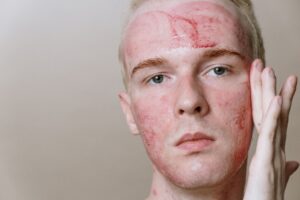
Yes, researchers have confirmed a direct link between sleep deprivation and acne. A comprehensive systematic review published in 2024 examined 18 studies on this connection and found that poor sleep quality correlates with higher acne lesion counts, particularly in people with chronic sleep deprivation or irregular sleep schedules. The mechanism is straightforward: when you don’t sleep enough, your body’s stress response system activates, flooding your skin with inflammatory chemicals that trigger breakouts and worsen existing acne. This isn’t a coincidence you’ve noticed in your own skin.
The research shows that sleep disruption actively damages your skin’s ability to repair itself, reduces protective antioxidants, and elevates the stress hormones that fuel acne-causing inflammation. Someone working overnight shifts might notice more breakouts than when they had a regular schedule. A college student pulling all-nighters before exams often sees their acne flare up alongside their sleep deprivation. This article explains the biological mechanisms behind this link, how the sleep-acne cycle becomes self-reinforcing, and what evidence-based strategies can help break it.
Table of Contents
- How Does Sleep Deprivation Trigger Acne Breakouts?
- The Biological Mechanisms Behind Sleep and Skin Health
- How Cortisol and Stress Hormones Worsen Acne
- Practical Sleep Improvements to Reduce Acne
- The Bidirectional Problem—When Acne Keeps You Awake
- Can CBT-I Help Both Sleep and Acne?
- What Future Research Shows About Sleep and Skin
- Conclusion
How Does Sleep Deprivation Trigger Acne Breakouts?
When you sleep poorly or insufficiently, your hypothalamus-pituitary-adrenal (HPA) axis—the body’s central stress response system—becomes dysregulated. This triggers elevated levels of cortisol and other stress hormones, which in turn increase proinflammatory cytokines in your bloodstream. These inflammatory molecules circulate throughout your body, including to your skin, where they activate the inflammatory cascade that creates acne lesions. Think of it like your skin’s immune system being put on high alert, responding aggressively to bacteria and sebum that it would normally handle with less inflammation.
The epidemiological evidence is clear: people with poor sleep quality have measurably more acne lesions than those sleeping adequately. This effect is particularly pronounced in individuals working shift schedules, which means your body’s circadian rhythm disruption matters just as much as the total hours of sleep you get. A healthcare worker switching between day and night shifts frequently will likely experience worse acne than someone sleeping seven to eight hours nightly, even if both average similar total sleep time. The irregularity itself—more than just the deficit—compounds the skin damage.
The Biological Mechanisms Behind Sleep and Skin Health
Beyond the stress hormone pathway, sleep deprivation directly compromises your skin‘s fundamental repair processes. During sleep, your body prioritizes collagen production, cellular regeneration, and wound healing—all critical for maintaining clear skin and repairing acne damage. Without adequate sleep, these restorative processes slow dramatically, meaning acne heals more slowly and your skin barrier weakens. This is one reason why acne often looks worse and feels more inflamed after a poor night’s sleep, even before stress hormones have their full effect.
Sleep also regulates melatonin production, a powerful antioxidant that protects skin cells from oxidative stress and maintains the balance of beneficial microbes on your skin. When sleep is disrupted, melatonin levels plummet, leaving your skin more vulnerable to bacterial overgrowth and oxidative damage. However, this mechanism is more complex than simply “sleep better, acne disappears.” Someone with severe acne due to genetics or hormonal factors may see only modest improvements from fixing sleep alone, while someone whose breakouts are stress-sensitive might see dramatic clearing. The sleep-acne link is real, but it’s one variable among several—not a complete explanation of acne’s causes.
How Cortisol and Stress Hormones Worsen Acne
Cortisol, the primary stress hormone, has specific effects on sebaceous glands (the oil-producing structures in your skin). Elevated cortisol increases sebum production while simultaneously increasing the skin’s inflammatory response, creating a double blow for acne sufferers. The glands produce more oily substrate that feeds acne bacteria, while your skin’s immune response becomes oversensitized to that bacterial presence. In practical terms, this is why people often say stress makes acne worse—and why that observation has solid biochemical backing.
Consider someone preparing for a major life event. The combination of stress-related sleep disruption and direct cortisol elevation creates a perfect storm for breakouts. A student exam week with both sleep loss and psychological stress may trigger more severe acne flares than either stressor alone. The research shows that it’s not just the physical sleep loss; the actual elevation of stress hormones during sleep deprivation is doing direct damage to skin health. This helps explain why some people can temporarily function on less sleep without major acne flares, while others experience rapid deterioration—their individual stress hormone sensitivity varies.
Practical Sleep Improvements to Reduce Acne
If you’re trying to improve your acne by fixing your sleep, the evidence supports targeted interventions. Cognitive-behavioral therapy for insomnia (CBT-I) is the gold-standard approach recommended in dermatological research because it addresses the root causes of poor sleep rather than relying on sleep medications alone. CBT-I teaches specific techniques: maintaining consistent sleep and wake times, avoiding the bed for activities other than sleep and sex, progressive muscle relaxation, and cognitive techniques to manage racing thoughts. Studies show that people using CBT-I improve both their sleep quality and their acne severity measurably.
However, there’s a practical tradeoff worth understanding. Simple sleep hygiene changes—cooler room temperature, blackout curtains, limiting screens before bed—are easier to implement than full CBT-I but also produce smaller effects. Prescription sleep aids might help you sleep more hours, but they don’t address the HPA axis dysregulation or stress hormone elevation that drives the acne connection. The more your sleep problem is rooted in poor habits rather than anxiety or insomnia, the more likely that basic sleep hygiene improvements alone will help your skin. Someone with undiagnosed sleep apnea, by contrast, might sleep seven hours nightly but still experience acne from the fragmented, poor-quality sleep—in which case they need medical intervention, not just behavioral changes.
The Bidirectional Problem—When Acne Keeps You Awake
The sleep-acne relationship isn’t one-directional. Having visible, inflamed acne causes psychological distress, anxiety, and insomnia—which then worsens the acne itself through the mechanisms described above. This creates a vicious cycle: poor sleep causes breakouts; breakouts cause poor sleep. Someone experiencing a severe acne flare may lose sleep over appearance-related anxiety, which prolongs the flare and deepens the emotional distress.
This bidirectional relationship means that addressing acne medically while simultaneously improving sleep may produce better results than focusing on either alone. A important limitation exists here: not everyone with acne will improve dramatically from sleep changes alone. If your acne is driven primarily by hormonal changes (like menstrual cycle fluctuations or PCOS) or by genetic susceptibility, fixing your sleep will help but may not clear your skin completely. The acne-sleep connection is one mechanism among many, and it’s typically most impactful for people whose acne flares with stress and sleep disruption. Someone with long-standing, treatment-resistant acne who also sleeps poorly should expect improvements from better sleep, but shouldn’t expect it to be a complete solution.
Can CBT-I Help Both Sleep and Acne?
Cognitive-behavioral therapy for insomnia has emerged as particularly valuable for acne patients because it addresses the root issue—the sleep problem itself—rather than masking symptoms. Research shows that improving sleep quality and consistency through CBT-I produces measurable improvements in acne severity alongside the expected sleep gains.
Unlike sleep medications, CBT-I doesn’t come with side effects and actually teaches sustainable, long-term sleep habits. For example, a patient with stress-triggered insomnia and acne can benefit from learning to challenge catastrophic thoughts (like “if I don’t sleep tonight, my acne will explode”), establishing a consistent schedule that regulates the HPA axis, and using relaxation techniques that lower cortisol directly. As sleep improves, the biological cascades that fuel acne begin to reverse: cortisol normalizes, melatonin rises, inflammatory markers decrease, and skin repair processes reactivate.
What Future Research Shows About Sleep and Skin
The research landscape continues expanding. A 2025 publication in the ARC Journal of Dermatology further documents the sleep-acne relationship in peer-reviewed literature, indicating this remains an active area of dermatological investigation.
As researchers continue examining the mechanisms and optimal interventions, the evidence consistently supports sleep as a modifiable factor in acne management. The direction of future research is clear: sleep will increasingly be integrated into comprehensive acne treatment plans, not just as an afterthought but as a core component alongside topical treatments, medications, and other interventions. This represents an important shift in how dermatologists view acne—not purely as a skin condition, but as one that intersects with systemic health factors like sleep, stress, and circadian rhythm.
Conclusion
The link between sleep deprivation and acne is no longer theoretical. Researchers examining 18 studies confirm that poor sleep correlates with higher acne lesion counts through multiple biological pathways: stress hormone elevation, reduced melatonin protection, impaired cellular repair, and increased skin inflammation. For many people, particularly those whose acne flares with stress and sleep disruption, improving sleep quality can produce meaningful improvements in skin clarity alongside better overall health.
The practical takeaway is that addressing sleep isn’t a replacement for other acne treatments—topical retinoids, antibiotics, or hormonal interventions may still be necessary—but it’s a crucial component of a complete approach. If you’re dealing with acne and poor sleep, prioritizing sleep improvements through consistent sleep schedules, stress management, or evidence-based interventions like CBT-I can help break the cycle where sleep deprivation worsens acne and acne worsens sleep. Start by examining your sleep patterns and addressing obvious issues, and consider discussing sleep-focused strategies with your dermatologist or sleep medicine provider.