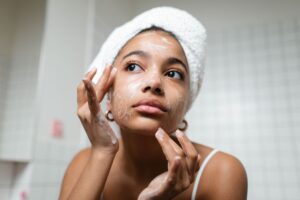
A minimal skincare routine can work better than an elaborate one because it’s easier to maintain consistently, reduces the risk of irritation from product layering, and allows your skin to respond more clearly to targeted treatments. When you strip away unnecessary steps and focus on essentials, you eliminate variables that cloud results—you can identify which products actually work and which ones are just adding complexity. For someone treating acne, this means faster clarity on what your skin truly needs versus what marketing told you to buy.
This simplicity extends beyond skincare philosophy. The research shows that minimalist approaches to habits generally stick better than complicated regimens. If you’re committed to a three-step routine instead of a ten-step one, you’re more likely to actually do it every single day, which matters far more for skin health than whether your routine is theoretically optimal. This article explores why less often wins, how to build a minimal routine that delivers real results, and when—if ever—you might need to add more.
Table of Contents
- Can a Simpler Skincare Routine Actually Deliver Full Results?
- Why Your Skin Thrives When Routines Are Simple
- How Habit Stickiness Transforms Your Skin
- Building a Minimal Routine That Actually Works
- When Minimal Routines Aren’t Enough
- Mental Energy and Long-Term Skin Health
- The Future of Minimalist Skincare
- Conclusion
Can a Simpler Skincare Routine Actually Deliver Full Results?
Yes. Minimalist skincare routines can provide complete benefits while reducing irritation risk, saving time and money, and allowing you to clearly assess how each ingredient affects your skin. The logic is straightforward: when you use fewer products, you apply fewer active ingredients, which means less potential for irritation and fewer interactions between formulations that might compromise effectiveness. Consider the difference between someone using a 10-step routine with exfoliants, serums, oils, and masks versus someone using a cleanser, targeted treatment (like a retinoid or acne medication), and a moisturizer.
The second person might actually see faster improvements because their skin isn’t overwhelmed. They can pinpoint exactly what’s working. If they introduce a retinoid and their skin clears up in eight weeks, they know the retinoid worked. In the 10-step routine, you never know which of those products actually did anything. The minimal approach is also more forgiving: if one product irritates your skin, you spot the culprit immediately instead of troubleshooting through five potential suspects.

Why Your Skin Thrives When Routines Are Simple
Simplicity reduces inflammation and barrier damage from excess product use. Many acne-prone people layer multiple treatments hoping for faster results, but this often backfires. using a prescription-strength acne medication plus a benzoyl peroxide wash plus a salicylic acid toner plus an intensive spot treatment is a recipe for a compromised moisture barrier and reactive inflammation—the opposite of what you want. However, there’s an important caveat: if your acne is severe or multifactorial (hormonal, bacterial, inflammatory all at once), you might genuinely need layered treatment approaches. A dermatologist-prescribed routine with multiple targeted medications is different from a consumer layering multiple trendy serums.
The distinction matters. What you want to avoid is unnecessary complexity—not evidence-based treatment. If a dermatologist says use salicylic acid cleanser, niacinamide, adapalene, and a gentle moisturizer, that’s a deliberate minimal stack, not undertreating. Where the minimal philosophy shines is when you’re eliminating redundancy and hype. Do you need three exfoliants? No. Do you need the expensive essence and the cheaper serum that do the same thing? No.
How Habit Stickiness Transforms Your Skin
Here’s the hard truth: the best skincare routine is the one you’ll actually use every day, and research on habit formation reveals why minimal routines win this battle. Habit formation averages 66 days, though the range is wide—anywhere from 59 to 154 days depending on the behavior’s complexity. This is crucial: simple behaviors like drinking water become automatic much faster than elaborate routines like doing 50 sit-ups. Applied to skincare, washing your face and applying one treatment is far more likely to become automatic than a seven-step process. The other advantage of minimal routines is their resilience.
Missing an occasional application of your routine doesn’t seriously impair habit formation. Life gets chaotic—you’re tired, traveling, or just forget. If your routine takes 15 seconds, you’re more likely to do it anyway or easily slip back into it the next day. If your routine takes 20 minutes every morning, one missed day can break your momentum entirely, and restarting takes longer. A minimal routine is sticky because it doesn’t depend on perfect conditions or abundant motivation.

Building a Minimal Routine That Actually Works
Start with a cleanser, one active treatment, and a moisturizer—that’s your foundation. For acne, your active treatment might be a retinoid, benzoyl peroxide, salicylic acid, or a prescription medication depending on what your skin needs. Apply treatments in this order: clean skin, treatment product, moisturizer. That’s it. Sunscreen in the morning if you’re using a retinoid or any photosensitizing ingredient.
When choosing this routine, timing matters more than you’d think. A 2025 study of executives found that those who scheduled specific time blocks for new habits were 3.2 times more likely to maintain them than those who tried to fit them in throughout the day. This applies to skincare: do your routine at the same time every morning and every night. Make it a non-negotiable anchor point in your day, like brushing your teeth. Most people find morning routines stick better than evening ones due to higher mental energy and fewer distractions early in the day—though consistency matters more than timing, so choose whichever works for your life.
When Minimal Routines Aren’t Enough
There are legitimate scenarios where a minimal routine falls short. If you have severe cystic acne combined with extreme oiliness, hormonal triggers, and sensitivity to products, you might need a more involved treatment protocol—but this should come from a dermatologist, not from internet advice. Additionally, if you have multiple unrelated skin concerns—treating acne while also addressing dryness, rosacea, and hyperpigmentation—a simple three-step routine might not address all of these simultaneously. In these cases, targeted additions are warranted.
The key warning: don’t mistake “minimal” for “neglectful.” Using no sunscreen because it’s “one less product” is a false optimization. Using an expired or mismatched treatment because buying new products feels like overcomplicating things is self-sabotage. Minimal means intentional, not cheap or lazy. Every product in your routine should serve a clear purpose for your specific skin issues. If you can’t articulate why something is there, it should probably go.

Mental Energy and Long-Term Skin Health
Simple, consistent routines reduce cognitive load and free up mental resources for other aspects of self-care and life. When your skincare routine doesn’t require decision-making—you just do the same three steps every morning and night—you conserve the mental energy that decision fatigue depletes. This matters because willpower and motivation are finite resources.
If you’re burning through them deciding which of 12 serums to use, you have less left for actually being consistent. There’s also a psychological dimension: overly complicated routines often feel like a chore, which breeds resentment and abandonment. A minimal routine feels manageable and sustainable, which builds confidence and compliance. After six months of consistently using your simple routine, you’ll have clearer data on what actually works for your skin than someone who’s constantly switching products and adding new steps hoping for the magic solution.
The Future of Minimalist Skincare
As skincare science matures, the industry is slowly shifting from “more products = more results” to acknowledging that efficacy often doesn’t improve with additional layers. The influence of dermatologists and skincare scientists prioritizing evidence over marketing is growing, and they consistently advise simple, targeted routines. If you’re investing in skincare, expect this trend to continue—fewer, more potent products rather than elaborate multi-step systems.
The minimal approach also makes your routine more adaptable to seasonal changes, travel, and life transitions. A three-step routine travels in a carry-on. A ten-step routine is logistically complicated and expensive. As people increasingly value sustainability and intentional consumption, minimal skincare aligns with both values and practicality, making it likely to remain the more durable long-term strategy.
Conclusion
A minimal skincare routine works better because it’s simpler to maintain consistently, reduces irritation from unnecessary product layering, allows you to clearly identify what’s actually working, and builds into a lasting habit far faster than complicated regimens. The research on habit formation shows that simple behaviors become automatic quicker, and missing occasional applications doesn’t derail your progress—all advantages when you’re trying to maintain daily skincare for long-term acne improvement. Start with a cleanser, one targeted treatment, and a moisturizer. Anchor it to a specific time of day so it doesn’t depend on motivation.
Give it at least six to eight weeks to work before evaluating results. Track which specific product does what so you can troubleshoot if something isn’t working. A minimal routine is not about doing the least possible—it’s about doing exactly what your skin needs and nothing else. That clarity and consistency will deliver better results than the fanciest ten-step routine abandoned after three weeks.