

Your haircare routine might be sabotaging your skin. Most people assume acne comes from their facial skincare products or diet, but the shampoo, conditioner, and styling products you use daily can directly trigger breakouts—especially if they contain oils, silicones, waxes, or sulfates that transfer to your face and hairline. If you’ve noticed persistent acne along your forehead, temples, or hairline that doesn’t respond to traditional acne treatments, your hair products could be the hidden culprit.
This article explains which haircare ingredients cause acne, how they damage your skin, why some products are deceptively problematic, and what to switch to if your hair routine is breaking you out. Hair product-related acne is far more common than most people realize. According to research published in JAMA Dermatology, approximately 70% of long-term pomade users develop recognizable acneiform eruption on the forehead and temples, consisting mainly of closed comedones with occasional pustules. This type of breakout isn’t rare or inevitable—it’s preventable once you understand which ingredients are the problem.
Table of Contents
- Which Hair Products Are Most Likely to Trigger Unexpected Acne?
- How Hair Products Transfer to Your Skin and Create Clogged Pores
- The Surprising Ingredients That Cause Unexpected Breakouts
- Where Hair Product Acne Appears on Your Body
- The Uncomfortable Timeline for Skin Recovery
- Reading Labels and Choosing Non-Comedogenic Alternatives
- Making the Switch Without Compromising Hair Health
- Conclusion
Which Hair Products Are Most Likely to Trigger Unexpected Acne?
The biggest surprise for most people is that some of the most popular haircare categories are the worst offenders. Pomades, hair oils, leave-in conditioners, and moisturizing creams designed for textured hair are the primary culprits. Pomade acne is particularly common among people with curly hair and people of African descent, not because their skin is different, but because these communities tend to use heavier oils and pomades more frequently as part of standard hair maintenance. What’s especially deceptive is that these products are often recommended for hair health—thick oils and emollients genuinely do improve hair texture and manage frizz—but they simultaneously clog pores if they contact facial skin. Research from the Journal of Drugs in Dermatology identified hair oils as the single most significant predictor of acne severity.
The study found that long-term daily use of oils and thick emollients for moisturizing ethnic hair created a direct correlation with acne severity. This means if you‘re using a heavy oil-based product daily, your risk of breakouts increases proportionally with how often you apply it and how much it comes into contact with your face. The problem escalates because these products are designed to be sticky and water-resistant—that’s what makes them work for hair. But those same properties mean they don’t wash off easily and cling to skin. Anyone using pomades, coconut oil-based conditioners, or thick leave-in treatments should be aware that their hair routine is a direct acne risk factor.
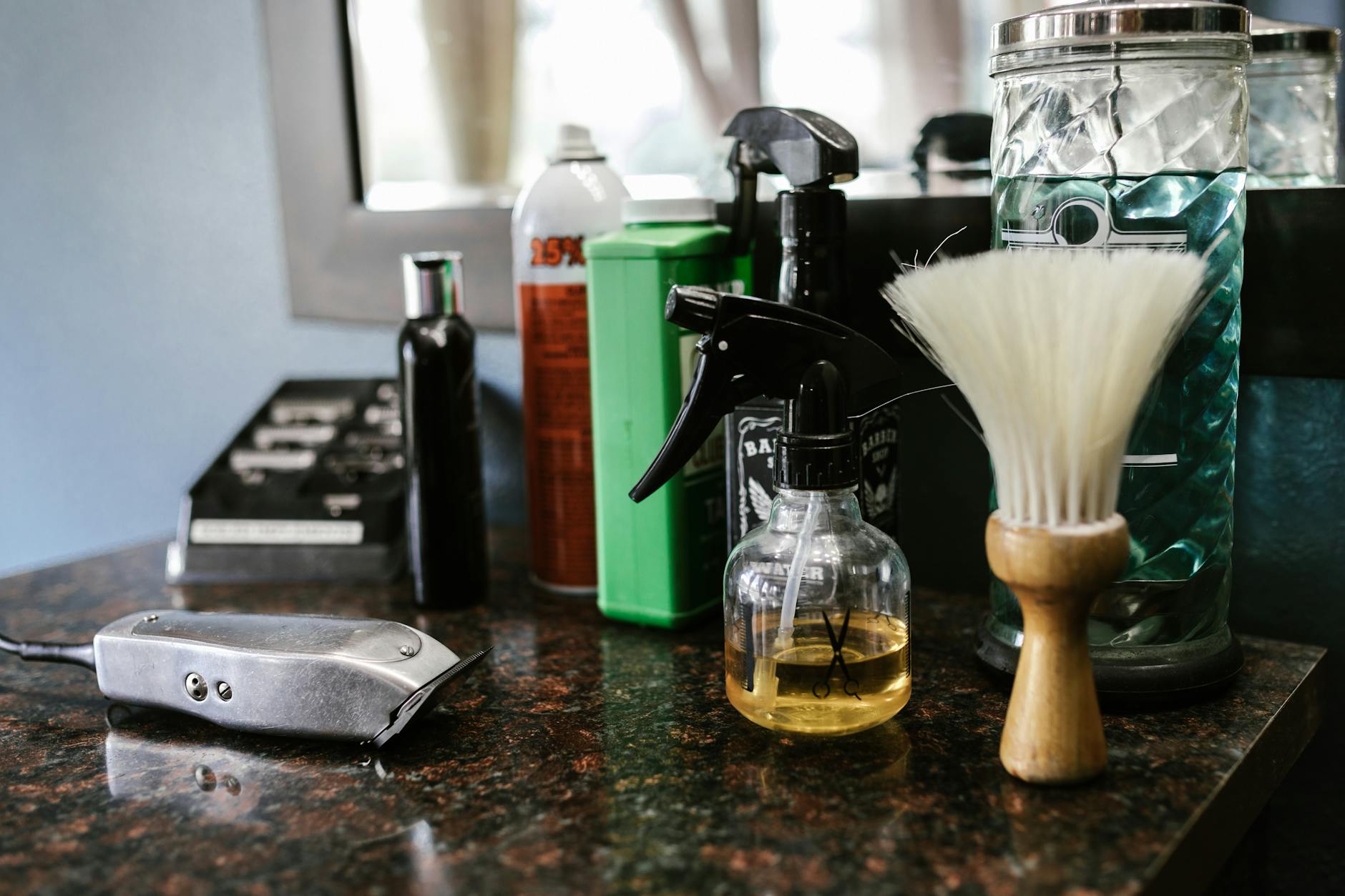
How Hair Products Transfer to Your Skin and Create Clogged Pores
Hair products don’t need to be directly rubbed onto your face to cause acne. They transfer through incidental contact, which happens constantly throughout the day. When you brush your hair away from your face, rest your head on a pillow, touch your forehead unconsciously, or even move your hair while sweating, oily residues from your hair products come into contact with facial skin. Your hairline is the primary contact zone, but oils and waxes can also transfer to your forehead, temples, cheeks, neck, back, and chest depending on hair length and styling.
The transfer mechanism is particularly problematic because it’s passive. You don’t have to actively apply hair product to your face for it to clog your pores. Unlike makeup, which you intentionally apply and can carefully remove, hair product residue builds up on skin throughout the day without your conscious awareness. This is why people sometimes fail to connect their acne with their hair routine—they don’t realize the connection is there. However, if your acne is concentrated near your hairline or temples, or if it worsens after you start using a new pomade or heavy conditioner, the connection becomes clear once you know what to look for.
The Surprising Ingredients That Cause Unexpected Breakouts
Most haircare brands don’t disclose comedogenic ratings on their labels, which means you have to decode the ingredient list yourself. Coconut oil is the most problematic because it’s highly comedogenic and appears in seemingly innocent products like hair masks, leave-in mists, and deep conditioners. Coconut oil clogs pores effectively, and its widespread presence in “natural” and “organic” hair products has fooled many people into thinking it’s a safe choice. Sulfates, found in most mainstream shampoos, present a different problem. They create irritation and trigger clogged pores, particularly in people with sensitive skin. While sulfates don’t directly clog pores like oils do, they strip the scalp of natural oils, which causes overcompensatory sebum production and scalp irritation that can manifest as acne.
Waxes used in styling products cause product buildup that coats skin, while fragrances and preservatives in hair products can irritate skin directly, creating inflammation that leads to breakouts. One major misconception is that silicones cause acne. Multiple peer-reviewed studies from the Journal of the Society of Cosmetic Chemists (1998) and Dermatologic Therapy (2005) found zero evidence that dimethicone or cyclopentasiloxane cause breakouts. Silicones are non-comedogenic with ratings of 0-1 on the comedogenic scale, meaning they don’t clog pores on their own. The misunderstanding arises because silicones can potentially trap other comedogenic substances like dirt or oils against the skin, but the silicone itself isn’t the problem. If you’re avoiding products solely because they contain silicones, you may be unnecessarily limiting your options.

Where Hair Product Acne Appears on Your Body
Hair product-related acne has a distinctive distribution pattern that makes it easier to diagnose. The primary breakout zones are the hairline, forehead, temples, neck, back, and chest—essentially anywhere that your hair regularly contacts skin or where hair product residue accumulates. Forehead and temple acne is the most common presentation because these areas directly contact your hairline and are frequent spots where people unconsciously touch or push their hair back.
Neck, back, and chest acne from hair products is often overlooked because people don’t immediately connect longer hair or a new haircare routine with breakouts in those areas. If you’ve noticed acne appearing or worsening in these locations, particularly after starting a new pomade, oil-based conditioner, or styling product, hair product transfer is a strong possibility. The chest is particularly susceptible in people with longer hair or certain hairstyles that keep hair in contact with that area throughout the day. This pattern helps distinguish hair product acne from other types—if your breakouts are randomly distributed across your face and body, the cause is likely something else, but if they cluster near your hairline or follow your hair contact pattern, your hair products are the likely culprit.
The Uncomfortable Timeline for Skin Recovery
Once you identify that hair products are causing your acne, the next question is how long it takes to clear. According to the American Academy of Dermatology, it typically takes 4 to 6 weeks after stopping the use of acne-causing hair products for acne to clear. This timeline is important because it means you won’t see improvement overnight. If you switch to a non-comedogenic hair care routine today, you should expect to wait a month to six weeks before your skin noticeably improves.
The recovery period can be frustrating because your skin may still look congested during the first few weeks, which can tempt you to return to your old products or try other treatments. Resist this urge—your skin is clearing, but the cellular turnover required to shed all the clogged pores takes time. A few people see improvement faster (within 2-3 weeks), while others need the full 6 weeks, depending on how severe the congestion is and how long they were using the problematic products. During this recovery period, continue using gentle facial skincare and avoid additional pore-clogging products, even in your makeup or other beauty routines.

Reading Labels and Choosing Non-Comedogenic Alternatives
The American Academy of Dermatology recommends specifically searching for non-comedogenic, oil-free hair care products formulated for acne-prone skin. However, not all non-comedogenic labels are equally reliable because the term isn’t strictly regulated by the FDA. A more reliable method is to check product labels and avoid products with comedogenic ingredients in the first seven ingredients listed. If coconut oil, mineral oil, castor oil, or heavy waxes appear in the first seven ingredients, the product is likely to cause problems.
Look for products labeled as “oil-free,” “silicone-free” if silicones bother your skin, and “sulfate-free” if you have a sensitive scalp. Lightweight conditioners, water-based leave-in treatments, and styling products formulated for textured hair without heavy oils are available from multiple brands. The trade-off is that non-comedogenic hair products may not provide the same level of frizz control or moisture as heavier products, particularly if your hair is very curly or dry. You may need to experiment to find a product that works for both your hair and your skin—sometimes this means using an oil-free conditioner even if it doesn’t moisturize quite as well as your previous product, or switching to a lightweight styling cream instead of a pomade.
Making the Switch Without Compromising Hair Health
Switching away from acne-causing hair products doesn’t mean resigning yourself to frizzy, dry hair. Many modern non-comedogenic products are formulated specifically for textured and curly hair and provide comparable results to traditional heavy products. Lighter oils like jojoba oil are less comedogenic than coconut or castor oil, though they still transfer to skin and can cause problems in susceptible individuals. Silicone-free alternatives and water-based conditioners can provide decent moisture without the pore-clogging risk.
The key is treating the switch as an experiment rather than a permanent sacrifice. Try one non-comedogenic product for 2-3 weeks, assess how your hair looks and how your skin responds, and adjust from there. Many people find that their hair adapts quickly to lighter products, and after a week or two, their hair looks just as good as it did with heavier products. The additional benefit is that your skin clears—a trade most people are willing to make once they understand the connection.
Conclusion
Hair products cause more acne than most people realize because the transfer of oils, waxes, and other pore-clogging ingredients from your hair to your face happens passively throughout the day. About 70% of pomade users develop acne, and hair oils are the single strongest predictor of acne severity, making this a legitimate dermatological issue rather than a coincidence. If your acne concentrates around your hairline, temples, forehead, neck, or chest, your hair routine is likely the cause—and identifying this is the critical first step toward clearing your skin.
Start by checking your hair product labels for comedogenic ingredients like coconut oil, waxes, and sulfates in the first seven ingredients. Switch to non-comedogenic, oil-free alternatives, and give your skin 4 to 6 weeks to clear. The improvement you’ll see makes the switch worthwhile, and you’ll likely discover that your hair doesn’t suffer as much as you’d expect from using lighter products.