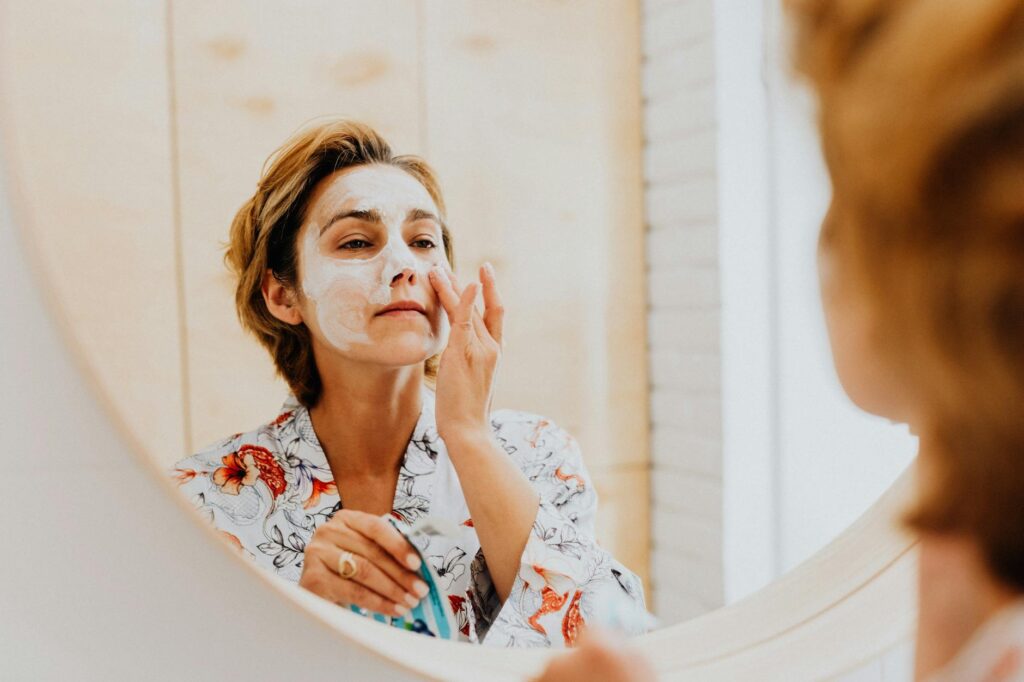
That tight, squeaky-clean feeling after washing your face might seem like a sign of effective cleansing, but it’s actually the opposite. Tight skin after cleansing indicates that your cleanser has stripped away too many natural oils (lipids) from your skin’s outer layer. This over-cleansing removes the protective barrier that keeps moisture locked in, causing dehydration and that uncomfortable tightness you feel.
Your skin then reacts by overproducing oil to compensate, and this excess oil mixes with dead skin cells and clogs pores—leading to the breakouts that follow days or even weeks later. This article explains the science behind why stripping skin leads to congestion, how to recognize barrier damage, and what you should be doing instead to keep skin clear without sacrificing its protective barrier. The tight-skin-to-breakout cycle is one of the most common skincare mistakes people make, often encouraged by marketing language promising that “squeaky clean” feeling. Understanding what’s actually happening on your skin can help you break this damaging pattern and build a sustainable routine that prevents both dryness and acne.
Table of Contents
- What Does Tight Skin After Cleansing Really Mean?
- How Lipid Stripping Triggers the Breakout Cycle
- Environmental Factors That Make Barrier Damage Worse
- How to Tell Barrier Damage Apart from Regular Acne
- The Impact of Cleansing Frequency and Technique
- Repairing Your Barrier and Breaking the Breakout Cycle
- Preventing Future Barrier Damage and Long-Term Skin Health
- Conclusion
What Does Tight Skin After Cleansing Really Mean?
Tight skin is not a sign that your cleanser is working—it’s a sign that it’s working too hard. When you feel that pulling sensation or tightness across your face after washing, your skin is experiencing what dermatologists call transepidermal water loss (TEWL). This happens because the cleanser has disrupted the lipid barrier—the layer of natural oils and fats that sits on top of your skin and acts as a seal to keep moisture in and irritants out. The mechanism is straightforward: soap molecules bind to proteins in your skin’s outer layer (the stratum corneum), causing the skin to swell with water. When you rinse the soap away, that water evaporates quickly—and since your skin has lost its oil barrier, it can’t retain moisture.
The result is the tight, dry, uncomfortable feeling you experience immediately after cleansing. This isn’t your skin being “clean”; it’s your skin being compromised. Think of it like washing a non-stick pan with harsh detergent. A gentle wash leaves the protective coating intact; aggressive scrubbing strips it away, leaving the surface vulnerable and prone to sticking. Your skin barrier works the same way. The tightness is your skin’s distress signal that it’s been over-treated.
How Lipid Stripping Triggers the Breakout Cycle
Once your skin’s barrier is compromised and oils are stripped away, your skin doesn’t stay dry for long. Instead, it panics and overproduces sebum to try to restore the lost oil. This compensatory oil production is your skin’s attempt to heal, but the timing creates the perfect storm for acne. The excess oil produced sits on top of dead skin cells that the damaged barrier isn’t shedding normally, and together they form clogs in your pores. This is why people often notice breakouts appearing 3-7 days after beginning a harsh cleansing routine, not immediately.
The tightness happens right away, but the acne develops as your skin’s oil production ramps up in response to the barrier damage. These breakouts are typically different from regular acne—they appear as reactive, rash-like texture with clusters of tender spots rather than classic individual pimples. The breakouts are fundamentally your skin overreacting to being stripped, not a sign that you need to cleanse harder or use stronger acne products. However, if you already have active acne, using a harsh cleanser will make it worse before it makes it better. The barrier damage prevents your skin from healing properly, and the excess oil production feeds existing inflammation. This is why dermatologists now emphasize that barrier repair should be the foundation of any skincare regimen, especially for sensitive skin or skin recovering from over-treatment.
Environmental Factors That Make Barrier Damage Worse
Cleansing method is only part of the equation. Several environmental factors amplify the damage and make the tight-skin-to-breakout cycle worse. Water temperature is a major culprit: hot water increases transepidermal water loss and further weakens the lipid barrier that’s already compromised by your cleanser. Even if you’re using a gentle cleanser, washing with hot water defeats the purpose. Lukewarm or cool water is significantly better for your barrier—this is one change that pays immediate dividends in how your skin feels. The pH of your cleanser matters just as much as how strong it is.
Your skin naturally sits at a slightly acidic pH (around 4.7), and this acidity is part of what protects your barrier. Using alkaline (high pH) cleansers disrupts this natural pH balance, weakening the barrier further and increasing dryness. Many traditional soaps and some bar cleansers are highly alkaline, even if they feel gentle. This is why pH-balanced facial cleansers or those designed specifically for sensitive skin tend to perform better—they work with your skin’s chemistry instead of against it. Hard water and chlorine in tap water can also contribute to barrier damage, though this is less controllable than water temperature. If you live in an area with very hard water and notice persistent tightness and breakouts despite using a gentle cleanser, installing a water filter in your bathroom can make a meaningful difference.

How to Tell Barrier Damage Apart from Regular Acne
Not all breakouts are created equal, and treating barrier-damage breakouts requires a different approach than treating traditional acne. Learning to recognize the difference can save you months of using the wrong products. Barrier damage typically causes a rash-like texture with stinging or burning when you apply skincare products. You might notice flaky patches, unexpected redness, and breakouts that form in tight clusters rather than scattered across your face. The skin feels tender to the touch, and breakouts appear more reactive and inflamed than comedonal. In contrast, regular acne (whether hormonal or bacterial) typically presents as individual pimples or comedones (blackheads and whiteheads) distributed across your problem areas.
Regular acne doesn’t necessarily cause widespread stinging when products are applied, and the skin doesn’t feel universally tight or tender. With regular acne, your skin barrier is usually intact, so moisturizers and treatments absorb normally. If you’ve recently switched to a new cleanser or started a more aggressive skincare routine and suddenly developed the rash-like texture with stinging, you’re likely dealing with barrier damage, not a worsening of baseline acne. This distinction matters because the treatment approach is completely different. For barrier damage, you need to strip your routine down to absolute basics, focus on hydration and barrier repair, and wait—usually 2-4 weeks—for your skin to recover. Adding more active ingredients or acne treatments will only deepen the damage.
The Impact of Cleansing Frequency and Technique
How often you cleanse and how you do it matters as much as which product you use. Cleansing twice daily is standard advice, but for many people with sensitive skin or a compromised barrier, once-daily cleansing (at night, when you actually have dirt and sunscreen to remove) is sufficient. Morning cleansing can be a simple splash of water or use of a hydrating micellar water instead of a traditional cleanser. This single change—reducing cleansing frequency—can dramatically reduce barrier damage. Technique also plays a role that many people overlook. Aggressive scrubbing, using a physical exfoliant while cleansing, or over-massaging your face during cleansing can all increase the stress on your barrier.
Your cleanser should do the work; your hands don’t need to. Use gentle, circular motions and rinse thoroughly but without rubbing. If you’re using a cleansing brush or device, remember that even “gentle” devices can be too much for a compromised barrier. Pause the device cleansing if you notice tightness or breakouts; your barrier might need a break. One important limitation to keep in mind: some people have skin conditions like severe seborrheic dermatitis or require twice-daily cleansing for hygiene or occupation reasons (healthcare workers, mechanics, etc.). For these individuals, the solution isn’t to cleanse less, but to use the mildest possible cleanser and follow immediately with barrier-repair moisturizers that restore hydration and lipids. Understand your skin’s actual needs before deciding on frequency.
Repairing Your Barrier and Breaking the Breakout Cycle
If you’re currently in the tight-skin-and-breakout cycle, recovery starts with stopping the damage. First, switch to a gentle, pH-balanced cleanser (ideally one specifically labeled for sensitive skin or barrier repair). Second, wash with lukewarm water and cleanse once daily or less. Third, immediately after cleansing, while your skin is still slightly damp, apply a hydrating product containing humectants like glycerin or hyaluronic acid, followed by a barrier-repair moisturizer containing ceramides, cholesterol, or fatty acids that restore the lipid layer. This repair phase usually lasts 2-4 weeks, and during this time, you should pause all active ingredients—no retinol, vitamin C serums, acids, or other potentially irritating treatments. Your goal is to let your barrier heal, not to treat acne.
The breakouts will improve as your barrier strengthens and oil production normalizes. This requires patience and trust that the root cause is barrier damage, not insufficient acne treatment. Many people sabotage their recovery by adding more “acne-fighting” products, which perpetuates the cycle. An example: a client with moderate breakouts switches to a foaming cleanser, notices tightness within days, then adds a salicylic acid treatment to combat the breakouts. Two weeks later, the skin is more inflamed, drier, and more congested than before. After stopping the harsh routine and using only gentle cleansing and barrier repair for three weeks, the breakouts clear.
Preventing Future Barrier Damage and Long-Term Skin Health
Once your barrier is repaired, the key is never returning to over-cleansing habits. The dermatological consensus in 2025-2026 is clear: barrier health is foundational to healthy skin. This doesn’t mean your skin will be fragile or that you can’t use active treatments long-term.
It means you should build your routine with barrier maintenance as a priority, and add other treatments (acne medications, anti-aging ingredients, etc.) carefully and gradually. In the future, when choosing a cleanser, prioritize pH balance and gentleness over “cleansing power.” When you’re tempted by a product promising to get your skin “squeaky clean,” remember that tightness is a warning sign, not a feature. Your skin will stay clear longer and be more resilient if you use a gentle cleanser and invest the time in barrier repair. This shift in perspective—from “cleaner is better” to “balanced is better”—is what prevents most people from falling back into the damaging cycle.
Conclusion
Tight skin after cleansing is your barrier telling you it’s been damaged by over-cleansing, not a sign of effective cleaning. When oils are stripped away, your skin overproduces sebum to compensate, leading to clogged pores and the breakouts that follow. The solution isn’t more aggressive treatment—it’s gentler cleansing, lukewarm water, barrier-repair products, and patience while your skin heals.
If you’re currently experiencing the tight-skin-and-breakout cycle, the first step is to identify whether your cleanser, water temperature, or cleansing frequency is the culprit. Once you switch to a gentle, pH-balanced routine and give your barrier 2-4 weeks to recover, you’ll likely see your breakouts improve without using any acne-fighting products at all. The goal is sustainable, clear skin built on a healthy barrier—not squeaky-clean skin that falls apart shortly after.