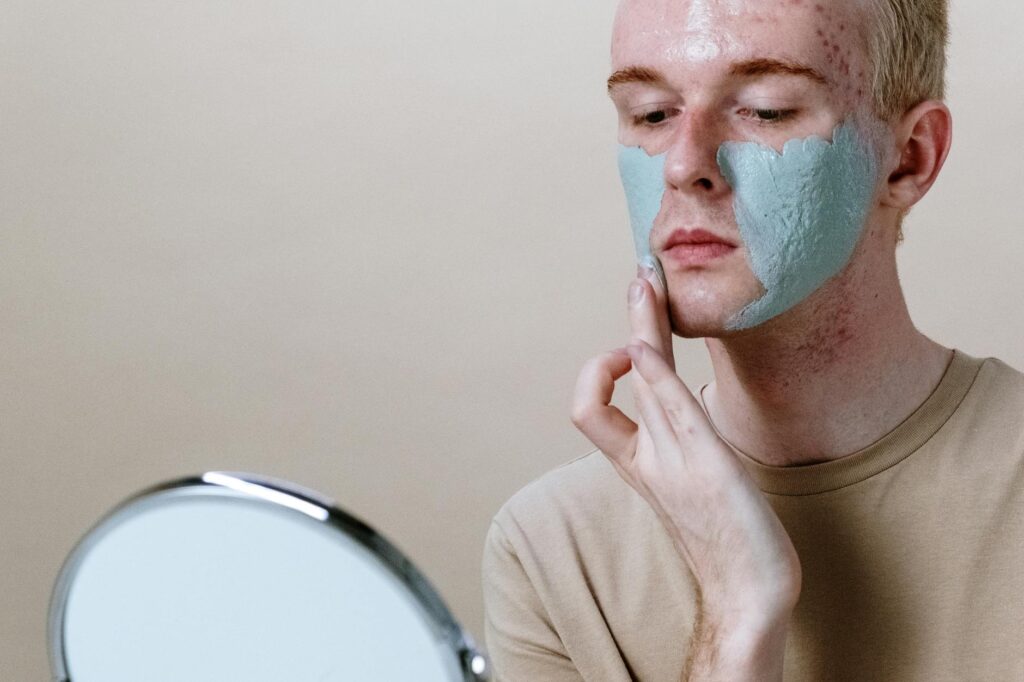
Your acne gets worse in winter primarily because cold, dry air strips moisture from your skin, triggering an overproduction of sebum as your body scrambles to compensate. That excess oil clogs pores already congested by dead skin cells that accumulate faster when skin is dehydrated and flaky. Add in hot indoor heating, which further saps humidity from the air, and you have a perfect storm for breakouts that seem to come out of nowhere right around November.
A person who manages their acne well all summer might suddenly find themselves dealing with deep, painful cystic lesions along the jawline and cheeks simply because they kept their same lightweight summer routine into December. Winter acne is frustrating because it often looks and behaves differently than the breakouts you get in warmer months. Instead of the typical whiteheads and surface-level blemishes, cold-weather acne tends to be more inflammatory, slower to heal, and concentrated in areas where skin is driest. This article breaks down the specific mechanisms behind winter breakouts, explains why common skincare habits actually make things worse during cold months, and offers practical adjustments that account for the tradeoffs between hydration and pore congestion.
Table of Contents
- Why Does Cold Weather Trigger More Breakouts Than Summer Heat?
- How Indoor Heating Sabotages Your Skin Without You Realizing It
- The Skincare Routine Mistakes That Make Winter Acne Worse
- How to Adjust Your Routine for Winter Without Causing New Breakouts
- Why Diet and Lifestyle Changes in Winter Quietly Fuel Breakouts
- The Role of Vitamin D Deficiency in Winter Skin Health
- What Dermatologists Are Learning About Seasonal Acne Patterns
- Conclusion
- Frequently Asked Questions
Why Does Cold Weather Trigger More Breakouts Than Summer Heat?
The relationship between cold weather and acne is counterintuitive. Most people assume summer is worse for breakouts because of sweat and humidity, and while summer does cause its own type of acne, winter breakouts tend to be more severe and harder to treat. The core issue is transepidermal water loss, which increases dramatically when relative humidity drops below 30 percent. Skin that loses moisture rapidly responds by ramping up sebaceous gland activity. A study published in the British Journal of Dermatology found that sebum production can increase by as much as 10 percent during winter months in temperate climates, even though the skin surface feels dry and tight. The comparison between summer and winter acne is worth understanding because it affects treatment choices. Summer acne is typically driven by excess sweat mixing with surface oils and bacteria, producing superficial pustules and blackheads.
Winter acne is more often driven by a compromised skin barrier, meaning the outermost layer of skin develops micro-cracks that let bacteria penetrate deeper. This produces inflamed, cystic-type lesions that sit under the skin for weeks. Someone who uses salicylic acid washes effectively in July might find the same product makes things dramatically worse in January because it further strips an already damaged barrier. Cold wind also plays a direct role. Exposure to wind chill causes vasoconstriction in the small blood vessels near the skin’s surface, reducing oxygen and nutrient delivery to skin cells. This slows the skin’s natural repair processes and creates a lag between when a pore gets clogged and when the body can resolve the inflammation. People living in cities with harsh winters, like Chicago or Minneapolis, often report that their worst breakouts happen not during the coldest week but about two weeks after, once the accumulated damage manifests as visible acne.
How Indoor Heating Sabotages Your Skin Without You Realizing It
Central heating is one of the most overlooked contributors to winter acne. Forced-air systems in particular push dry, heated air through enclosed spaces, dropping indoor humidity to levels comparable to a desert. The Sahara averages about 25 percent relative humidity. A heated home in the northeastern United States can drop to 15 to 20 percent during a cold snap. your skin is essentially spending eight or more hours a night in arid conditions, losing moisture constantly while you sleep.
The damage compounds because most people increase their use of hot water during winter. Longer, hotter showers feel necessary when it is freezing outside, but water above about 105 degrees Fahrenheit dissolves the natural lipid layer on skin far more effectively than lukewarm water. A person might step out of a 15-minute hot shower feeling clean and relaxed, but their skin barrier has just been significantly weakened, setting the stage for irritation and breakouts over the next 24 to 48 hours. However, if you live in a humid winter climate, like the Pacific Northwest or parts of the Gulf Coast, indoor heating is less of a factor because ambient humidity stays relatively high even indoors. People in these regions who experience winter acne flares should look at other causes, such as seasonal diet changes, reduced physical activity, or vitamin D deficiency, rather than assuming humidity is the culprit.
The Skincare Routine Mistakes That Make Winter Acne Worse
One of the most common errors is continuing to use strong acne treatments at summer-strength doses through the winter without adjusting for increased skin sensitivity. Retinoids like tretinoin and adapalene cause more irritation on compromised skin, and dermatologists frequently see patients in January who have developed retinoid dermatitis because they maintained their 0.05 percent tretinoin application every night through December without adding adequate moisturizer. The result is red, peeling, inflamed skin with acne that looks worse than before treatment. Another specific mistake is switching to heavy, occlusive moisturizers in an attempt to combat dryness without checking whether they are comedogenic. A person who starts using a rich cream containing coconut oil or shea butter because their skin feels tight might trade dryness for a different problem: closed comedones, those small skin-colored bumps that cluster across the forehead and cheeks.
Ingredients like petrolatum and dimethicone are far less likely to clog pores while still providing meaningful barrier protection. Exfoliation habits also need recalibration. Physical scrubs that work fine on resilient summer skin can create micro-tears in winter-compromised skin, introducing bacteria into the dermis. Chemical exfoliants are generally safer, but even glycolic acid at concentrations above 10 percent can cause stinging, redness, and rebound oiliness on dehydrated skin. A better winter approach is using a lower concentration, perhaps 5 percent glycolic or a gentler lactic acid, and reducing frequency from daily to two or three times per week.

How to Adjust Your Routine for Winter Without Causing New Breakouts
The tradeoff at the center of winter skincare is hydration versus pore congestion. Your skin needs more moisture, but adding too much of the wrong type of moisture creates new acne. The most effective approach for acne-prone skin is layering a lightweight hyaluronic acid serum under a non-comedogenic moisturizer that contains ceramides. Hyaluronic acid pulls water into the skin without adding oil, while ceramides reinforce the lipid barrier. CeraVe PM Lotion and Vanicream Daily Facial Moisturizer are two widely available options that accomplish this without a significant risk of breakouts. Compared to simply applying a thicker cream, the layering method gives you control over how much hydration versus occlusion you apply.
On a dry, windy day, you might add a second layer of moisturizer on top. On a milder day when indoor heating is less aggressive, one layer may be sufficient. This flexibility matters because winter conditions are not uniform. A 35-degree day with high humidity is very different from a 10-degree day with wind, and your skin responds differently to each. If you use prescription acne treatments, talk to your dermatologist about a winter modification schedule rather than stopping altogether. Many practitioners recommend dropping from nightly retinoid use to every other night, or buffering by applying moisturizer before the retinoid rather than after. Stopping a retinoid entirely can trigger a rebound breakout in several weeks, which defeats the purpose of the adjustment.
Why Diet and Lifestyle Changes in Winter Quietly Fuel Breakouts
Winter brings dietary shifts that contribute to acne in ways people rarely connect. Holiday seasons in many cultures revolve around high-glycemic foods, dairy-heavy dishes, and increased alcohol consumption. Research published in the Journal of the Academy of Nutrition and Dietetics has shown a correlation between high-glycemic diets and increased acne severity, with refined carbohydrates spiking insulin levels and subsequently increasing androgen activity, which stimulates oil production. The person who breaks out in late December may blame the cold weather when the real trigger was three weeks of cookies, hot chocolate, and rich holiday meals. Reduced physical activity also plays a role. Exercise promotes blood circulation to the skin and helps regulate stress hormones, particularly cortisol.
Cortisol directly stimulates sebaceous glands. People who exercise regularly through summer and fall but stop during winter due to cold, shorter days, or holiday schedule disruptions often see a corresponding uptick in stress-related breakouts. A limitation to keep in mind is that diet-driven acne varies enormously between individuals. Some people can eat high-glycemic foods with no skin impact whatsoever, while others break out within 48 hours of a sugar binge. If you have never noticed a clear connection between your diet and your skin, winter is not the time to overhaul your eating habits based on general advice. Focus on the topical and environmental factors first, since those have a more universal and predictable effect.

The Role of Vitamin D Deficiency in Winter Skin Health
Vitamin D has immunomodulatory properties that influence skin inflammation, and levels drop significantly during winter months when sun exposure decreases. A person living above the 37th parallel, roughly the latitude of San Francisco or Richmond, Virginia, produces essentially no vitamin D from sunlight between November and February. Some dermatological research suggests that low vitamin D levels correlate with increased severity of inflammatory skin conditions, including acne, though the evidence is not strong enough to call it a direct cause.
Supplementation is reasonable for most people during winter regardless of skin concerns, typically 1,000 to 2,000 IU daily. But do not expect a vitamin D supplement to clear your acne. Think of it as removing one potential contributing factor rather than as a treatment. Getting your levels tested with a simple blood draw before supplementing at higher doses is worthwhile, since vitamin D is fat-soluble and can accumulate to excessive levels.
What Dermatologists Are Learning About Seasonal Acne Patterns
The concept of seasonal acne management is gaining traction among dermatologists who are moving away from static, year-round treatment plans. Some clinics are now offering seasonal skin assessments where a patient’s routine is adjusted in October before winter damage begins, rather than waiting until January when the skin is already compromised. This proactive model makes more sense biologically, since it takes skin about four to six weeks to fully adjust to a new routine, meaning changes made in early fall take effect right when winter conditions arrive.
There is also growing interest in the relationship between the skin microbiome and seasonal changes. Early research suggests that the bacterial populations on facial skin shift during winter, with some protective commensal bacteria declining in cold, dry conditions while opportunistic acne-causing strains like Cutibacterium acnes become proportionally more dominant. If this line of research matures, future winter skincare protocols might include targeted probiotics or prebiotic ingredients designed to support beneficial skin flora during cold months.
Conclusion
Winter acne is not random bad luck. It is the predictable result of environmental changes, including cold air, low humidity, indoor heating, and hot showers, combined with skincare routines and lifestyle habits that were designed for different conditions. The most effective response is not to add more aggressive acne treatments but to reinforce your skin’s barrier with appropriate hydration, reduce the frequency and intensity of active treatments, and pay attention to the dietary and lifestyle shifts that quietly accompany the season.
Start by making one or two changes rather than overhauling everything at once. Adding a ceramide-based moisturizer and reducing retinoid frequency to every other night is enough for many people to see a meaningful improvement within a few weeks. If your winter breakouts are severe or do not respond to these adjustments, a dermatologist visit is worthwhile, especially in October or early November before the worst of the season hits.
Frequently Asked Questions
Does wearing a face mask in winter cause acne?
Yes, maskne is a real phenomenon. The combination of trapped breath moisture, friction, and warmth under a mask creates an environment where bacteria thrive. Using a lightweight, non-comedogenic moisturizer as a barrier layer before putting on a mask helps, and washing cloth masks after each use is essential.
Should I stop using retinoids entirely during winter?
Usually not. Stopping abruptly can cause rebound breakouts. Instead, reduce frequency to every other night or every third night, and apply moisturizer before the retinoid to buffer irritation. Talk to your prescriber before making changes to prescription treatments.
Is a humidifier actually worth buying for acne?
A humidifier in your bedroom can meaningfully help if your indoor humidity drops below 30 percent, which is common in heated homes. Aim for 40 to 50 percent relative humidity. Clean the humidifier regularly, though, because a dirty unit can disperse mold and bacteria into the air, creating new problems.
Can I use sunscreen in winter even though there is less sun?
You should. UV radiation penetrates clouds and reflects off snow, and if you are using any exfoliating acids or retinoids, your skin is even more photosensitive than usual. A lightweight, non-comedogenic SPF 30 is sufficient for daily winter use.
Why do I break out more on my jawline and neck in winter?
These areas have fewer sebaceous glands and thinner skin, making them more vulnerable to barrier damage from cold and wind exposure. Scarves and turtlenecks also create friction and trap heat against these areas. Keeping the jawline moisturized and avoiding rough fabrics in direct contact with the skin can help.