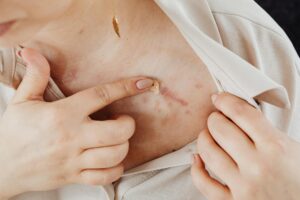
Your acne got worse after starting retinol or other actives because these ingredients accelerate your skin’s cell turnover, forcing trapped oil, bacteria, and dead skin cells to the surface much faster than they would naturally. This temporary flare is called a “retinol purge,” and it’s actually a sign that the treatment is working—not that your skin is reacting badly. If you’ve experienced this, you’re not alone: about 20-25% of people who start new acne treatments go through a purging phase. A typical example: someone starts adapalene (a prescription retinoid) to treat congestion and mild acne.
By week two, they notice more whiteheads and small pimples appearing in their T-zone and jawline—exactly where they normally break out. By week four, the breakouts have peaked and are already beginning to improve. By week six, the skin has largely cleared, and by week twelve, they see noticeably better skin texture and fewer overall breakouts. This progression feels counterintuitive, but it’s the expected path. This article covers why purging happens, what timeline to expect, how to tell if it’s actually purging or an adverse reaction, and practical strategies to get through it.
Table of Contents
- What Actually Happens When You Start Retinol or Actives
- The Timeline: When Purging Starts and How Long It Lasts
- Where the Breakouts Appear During Purging
- Managing the Purge: What Actually Helps
- When It’s NOT Purging—Warning Signs You Should Stop
- Retinal vs. Retinol—Understanding the Newer Generation
- Why Acne Worsening Is Actually Progress
- Conclusion
What Actually Happens When You Start Retinol or Actives
Retinol and other retinoids work by increasing your skin‘s cell turnover rate—essentially speeding up the natural process by which old skin cells are replaced with new ones. This increased turnover is what eventually leads to smoother texture, fewer breakouts, and reduced fine lines. However, in the short term, this faster turnover brings everything to the surface at once. Think of it like cleaning out a clogged drain: when you remove the blockage, a lot of debris comes rushing out before the pipe becomes clear. Similarly, retinol pushes through the buildup of sebum, dead skin cells, and bacteria that have accumulated in your pores.
These materials that would have taken weeks to work their way out naturally are now being expelled rapidly. The result is a temporary increase in breakouts, particularly whiteheads, blackheads, and small pimples. This is not your skin getting damaged; it’s your skin purging. The mechanism is particularly powerful with prescription retinoids like tretinoin, adapalene, and tazarotene, but it also occurs with over-the-counter retinol and other actives like salicylic acid or benzoyl peroxide. The stronger the active or the higher the concentration, the more pronounced the purge tends to be.

The Timeline: When Purging Starts and How Long It Lasts
For most people, retinol purging begins within 2-6 weeks of starting the treatment, with the breakouts typically reaching their peak around weeks 3-4. The purging phase generally lasts 4-6 weeks for most users, though some people experience it as briefly as 2 weeks, while others may deal with it for up to 8 weeks. The variation depends on factors like your skin type, the strength of the product, how frequently you’re using it, and how congested your skin was to begin with. A realistic timeline looks like this: during weeks 1-2, you’ll start noticing new breakouts appearing, primarily in areas where you typically break out. Weeks 3-4 are usually the peak of the purge—breakouts are at their worst, which is often when people give up and stop using the product.
However, this peak is actually a signal that the purge is working and is beginning to resolve. By weeks 5-6, the breakouts slow down significantly, your skin starts to look clearer, and you’ll begin to see the actual benefits of the treatment. By week 12, most people report noticeably better skin overall—fewer breakouts, smoother texture, and sometimes reduced pigmentation or fine lines. The challenge is that the timing feels demoralizing. You start a treatment to improve your acne, and it gets worse. Understanding that this is temporary and follows a predictable timeline can make the difference between pushing through and abandoning the treatment just before it would have worked.
Where the Breakouts Appear During Purging
One of the key characteristics of a true retinol purge is that breakouts appear in the areas where you normally break out. This is an important distinction that helps you differentiate between purging and an allergic reaction or sensitivity. If you typically get congestion across your forehead and chin, the purge will show up in those same areas. If your problem spots are always your T-zone, that’s where the breakouts will concentrate. The purging breakouts typically consist of whiteheads, blackheads, and small pimples—not the large, painful cystic acne that might indicate an adverse reaction.
These smaller lesions are your skin efficiently bringing impurities to the surface. Conversely, if you start seeing large pustules in brand-new locations on your face or body (areas where you’ve never broken out), that’s a red flag suggesting your skin is reacting adversely to the ingredient rather than purging. This location-based pattern is so consistent that dermatologists use it as a diagnostic tool. If a patient starts a new acne treatment and breakouts appear only in their typical problem areas within the expected 2-6 week window, it’s almost certainly purging. If the pattern is random or the lesions are in new areas, it warrants discontinuing the product and reassessing.

Managing the Purge: What Actually Helps
During a retinol purge, your instinct might be to add more treatment or switch products, but the opposite approach usually works better. The most important thing is to keep your routine simple: a gentle cleanser, a moisturizer, and sunscreen (retinoids make your skin more UV-sensitive). Adding extra actives or swapping products frequently will only extend the purge and potentially damage your skin barrier. If the breakouts are uncomfortable or inflamed, a gentle spot treatment with benzoyl peroxide or salicylic acid can help without disrupting the purge process. Some people also find that reducing the frequency of their retinol use during the first few weeks (e.g., using it every other night instead of nightly) can make the purge slightly less intense while still keeping it on track.
This is a valid tradeoff: the purge may last slightly longer, but it’s less uncomfortable. The hardest part of managing a purge is psychological. Around week 3-4, when the breakouts are worst, many people stop their treatment believing it’s not working or that their skin is reacting badly. Knowing that the timeline typically improves after week 4 can help you push through this critical window. If you can make it to week 6, you’ll usually see clear improvement.
When It’s NOT Purging—Warning Signs You Should Stop
Not every increase in breakouts after starting retinol is a purge. If your breakouts persist beyond 8 weeks, or if they’re severe, painful, or appearing in areas where you don’t normally break out, it’s time to discontinue the product and consult a dermatologist. These are signs that your skin is reacting adversely to the ingredient rather than purging. Additionally, if you experience signs of skin barrier damage—severe dryness, peeling, redness, burning, or stinging that doesn’t improve—these are not normal purging symptoms and warrant stopping the treatment. True purging causes increased breakouts and possibly some mild dryness, but it shouldn’t cause intense irritation or barrier damage.
If you’re experiencing these symptoms, your skin may be sensitive to the specific retinoid, the concentration, or the frequency of application, and a dermatologist can help you find a more appropriate option. A common mistake is confusing a true adverse reaction with a severe purge. If the breakouts are large, cystic, painful, and widespread rather than the typical whiteheads and small pimples concentrated in your usual problem areas, stop the treatment. Similarly, if pustules or inflamed lesions appear in new areas of your face or body that you’ve never broken out in before, this is likely a reaction, not a purge. The distinction matters because continuing a treatment you’re reacting to can cause real damage, while stopping during a normal purge means missing out on the benefits.
Retinal vs. Retinol—Understanding the Newer Generation
Recent research from 2025-2026 has compared retinal (the oxidized form of retinol) to traditional retinol, and the findings show meaningful differences in efficacy. Retinal achieves 25% higher skin penetration compared to standard retinol, meaning more of the active ingredient reaches the layers of skin where it can make a difference. Additionally, studies show retinal correlates with 35% greater reduction in wrinkle depth and a 22% increase in skin elasticity compared to retinol.
These improvements in penetration and results don’t necessarily mean retinal causes a worse purge than retinol—the timeline and purging mechanism remain similar. However, because retinal is more potent, it may produce a slightly more pronounced purge in some users. If you’re starting retinal for the first time, you might expect the purge to be on the more intense side of the 4-8 week range, particularly if you have congestion-prone skin. The tradeoff is worth it for many people: faster, more noticeable improvements justify a slightly more intense purge.
Why Acne Worsening Is Actually Progress
The counterintuitive reality of retinol purging is that it’s a sign of progress, not failure. Your skin is responding to the treatment by accelerating its natural renewal process and expelling the congestion that’s been trapped beneath the surface. This is exactly what you want to happen, even though it feels bad in the moment.
Looking forward, understanding the retinol purge phenomenon has become increasingly important as retinoids and other actives are now mainstream skincare options. Dermatologists are better equipped to prepare patients for purging, and users armed with this knowledge are more likely to stick with treatments long enough to see real results. The future of acne treatment lies in combination approaches—using a retinoid alongside targeted actives or other treatments—and the ability to navigate an initial purge without panic is a critical skill for anyone serious about clearer skin.
Conclusion
Your acne worsened after starting retinol or actives because these treatments accelerate cell turnover, forcing trapped impurities to the surface faster than they would naturally. This temporary flare, called a retinol purge, is not a sign that the treatment is harming your skin—it’s a sign that it’s working. The purge typically lasts 4-6 weeks, peaks around weeks 3-4, and resolves by week 6, with noticeable overall improvement visible by week 12.
About 20-25% of people experience purging when starting new acne treatments, making it a common and expected part of the process. The key is knowing how to distinguish a true purge from an adverse reaction: purges show up in your normal problem areas, consist of small whiteheads and blackheads, and resolve within 8 weeks. If your breakouts are severe, painful, appearing in new areas, or persisting beyond 8 weeks, stop the treatment and consult a dermatologist. For everyone else, the path forward is patience, a simple routine, and the knowledge that week 6 will be significantly better than week 3.