The skin microbiome has become the new frontier in acne research because scientists now understand that acne is not caused by a single “bad” bacterium, but by disruptions in the complex microbial communities living on your skin. This shift — from blaming individual pathogens to studying microbial community dynamics — has opened the door to treatments that work with your skin’s ecosystem rather than carpet-bombing it with antibiotics. A 2026 review reported by Medscape found that microbiome-modulating therapies, including prebiotics, probiotics, and postbiotics, are safe and produce “clinically meaningful” lesion reductions in acne patients, with probiotics having the strongest evidence base. That review encompassed 33 studies with 2,112 patients and reported no serious adverse events across all of them. This matters because current acne treatments are running into serious walls.
Retinoids, antibiotics, and hormonal agents are limited by adverse effects, antimicrobial resistance, and disruption of the skin microbiome itself — the very ecosystem researchers now believe holds the key to lasting treatment. Common treatments like doxycycline and benzoyl peroxide generally decrease Cutibacterium acnes but also reduce overall microbial alpha diversity, which can create new problems even as they solve old ones. The search for something better has pushed microbiome-targeted alternatives to the forefront of dermatological research. This article breaks down the science behind skin microbiome research in acne, from the specific bacterial strains that distinguish healthy skin from breakout-prone skin, to the emerging therapies — probiotics, bacteriophages, natural compounds — that could reshape how we treat acne in the coming years. We will also cover the limitations of these approaches, the role of emotional health in skin microbial balance, and what the treatment pipeline actually looks like right now.
Table of Contents
- What Is the Skin Microbiome and Why Does It Matter for Acne?
- Why Current Acne Treatments Are Pushing Researchers Toward Microbiome Solutions
- Probiotics, Prebiotics, and Postbiotics — What the Evidence Actually Shows
- Bacteriophage Therapy — A Targeted Alternative to Antibiotics
- The Gut-Skin Axis and Emotional Health — Unexpected Connections to Acne
- Natural Compounds and Advanced Delivery Systems
- Where Microbiome-Based Acne Treatment Is Heading
- Conclusion
- Frequently Asked Questions
What Is the Skin Microbiome and Why Does It Matter for Acne?
Your skin hosts trillions of microorganisms — bacteria, fungi, viruses, and mites — collectively known as the skin microbiome. For decades, dermatology treated acne as a straightforward infection problem: C. acnes was the villain, and killing it was the goal. But research published through 2024 and 2025 has fundamentally changed that picture. The key microorganisms involved in acne-related skin dysbiosis are Cutibacterium acnes, Staphylococcus aureus, and Staphylococcus epidermidis, and the critical factor is not just their presence but how they interact as a community. When that community falls out of balance — a state called dysbiosis — acne can follow. What makes this complicated is that C. acnes is not uniformly harmful. Specific ribotypes of C.
acnes — RT4, RT5, RT8, and RT10 — are more commonly found in acne lesions, while RT6 is associated with healthy skin. The phylogenetic lineage IA1 is the one most strongly linked to inflammatory acne. This means two people can both have C. acnes on their skin, but the strains they carry can determine whether they break out or not. It is a level of nuance that earlier generations of acne treatment simply could not account for. Acne pathogenesis itself involves five interconnected factors: abnormal keratinization, sebum overproduction, pilosebaceous unit inflammation, microbial colonization by C. acnes, and dietary influences. The microbiome touches nearly all of these. When microbial balance shifts, it can trigger inflammatory cascades in the pilosebaceous unit and alter how the skin handles sebum. Understanding this web of interactions, rather than isolating one variable, is what makes microbiome research so different from older approaches — and why it holds more promise for treatments that actually address root causes.

Why Current Acne Treatments Are Pushing Researchers Toward Microbiome Solutions
The standard toolkit for acne — topical retinoids, oral antibiotics, benzoyl peroxide, hormonal agents, and isotretinoin — works for many patients, but each option carries significant trade-offs. Antibiotics like doxycycline reduce C. acnes effectively, but they also reduce overall microbial alpha diversity on the skin. You are not just killing the problematic strains; you are disrupting the entire ecosystem. Isotretinoin, the heavy hitter for severe acne, has variable and unpredictable effects on the microbiome, and its well-documented side effect profile limits its use. The bigger systemic issue is antimicrobial resistance. Years of widespread antibiotic use for acne — both topical and oral — have driven resistance in C. acnes and other skin bacteria.
This is not a hypothetical future problem; it is a present clinical reality that dermatologists are dealing with now. Benzoyl peroxide does not carry the same resistance risk, but it is harsh on the skin barrier and does not discriminate between beneficial and harmful bacteria. The limitations of these approaches are a primary driver behind the push for microbiome-targeted alternatives. However, it is important to be honest about where we are. Microbiome-directed therapies are not yet replacements for established treatments. They are emerging, and in many cases they are being studied as adjuncts — additions to existing regimens rather than standalone solutions. If you have moderate-to-severe inflammatory acne right now, your dermatologist is still going to reach for proven tools first. The microbiome angle is about expanding options and, eventually, offering treatments that do not force patients to choose between clear skin and collateral damage to their skin ecosystem.
Probiotics, Prebiotics, and Postbiotics — What the Evidence Actually Shows
The most developed area of microbiome-based acne treatment involves probiotics, prebiotics, and postbiotics. The 2026 Medscape-reported review that examined 33 studies with 2,112 patients aged 18 to 33 found clinically meaningful results across all three categories. Five studies examined prebiotics, 24 examined probiotics, and 7 examined postbiotics. Probiotics had the strongest evidence base of the three. Critically, no serious adverse events were reported in any of the studies — a safety profile that most conventional acne treatments cannot match. A particularly compelling finding comes from a meta-analysis of five controlled studies, which found that adjunctive oral Lactobacillus probiotics significantly enhance the efficacy of systemic antibiotics in treating acne.
The analysis described “a large and consistent clinical benefit over antibiotic monotherapy.” In practical terms, this means that patients taking antibiotics for acne saw meaningfully better results when they added a Lactobacillus probiotic to their regimen. A separate systematic review and meta-analysis of double-blind randomized controlled trials on oral probiotics in acne, published in MDPI Medicina in December 2025, further reinforced the evidence base for this approach. The limitation worth flagging is specificity. Not all probiotics are equal, and the strains, doses, and delivery methods matter enormously. A generic probiotic supplement from a drugstore shelf is not the same as the Lactobacillus formulations used in controlled trials. The research is pointing toward specific strains for specific purposes, and we are not yet at the point where clinicians can write a precise probiotic prescription for a given patient’s acne profile. If someone tells you that any probiotic will help your acne, they are getting ahead of the science.
Bacteriophage Therapy — A Targeted Alternative to Antibiotics
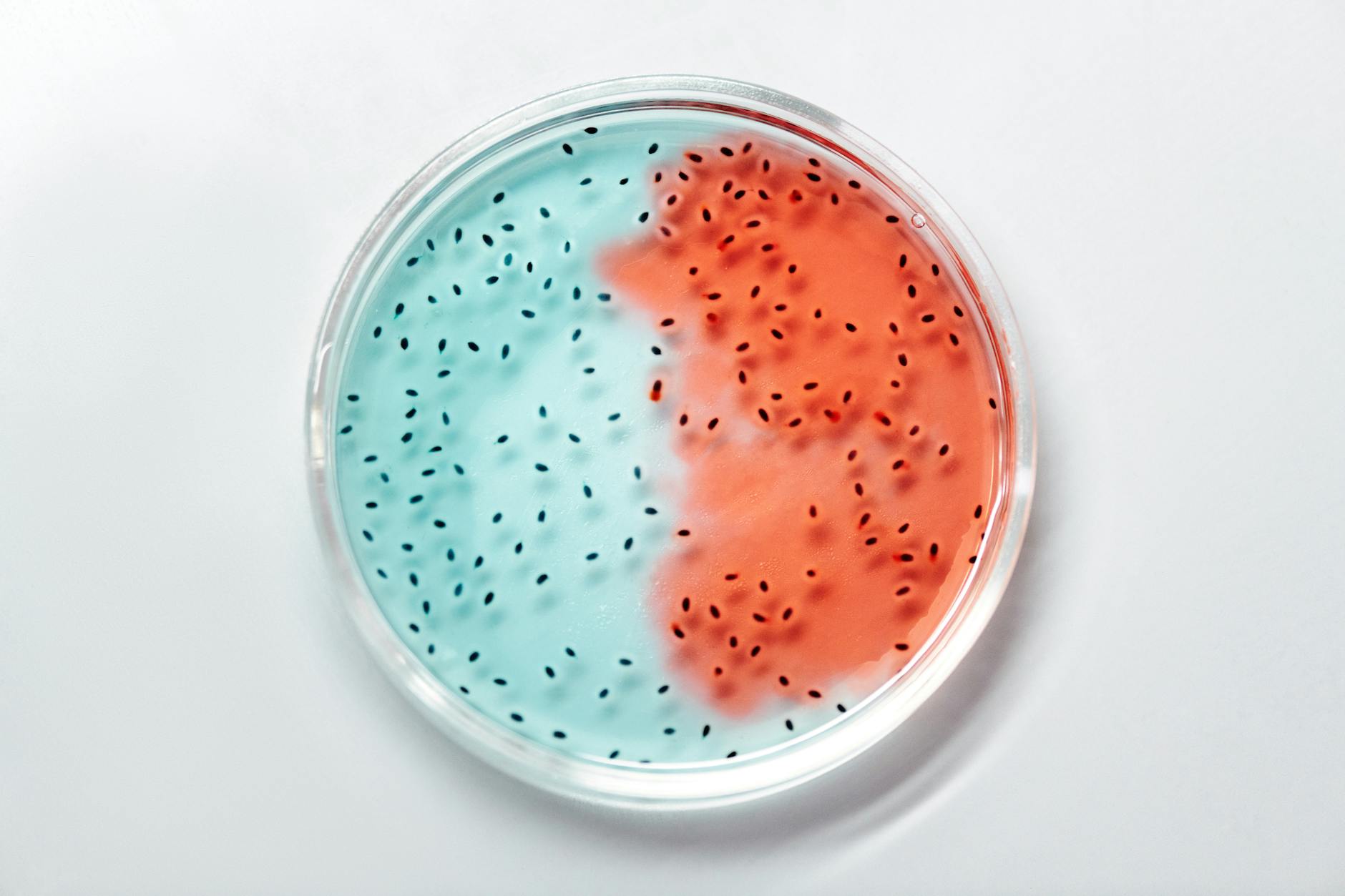
One of the most exciting developments in microbiome-based acne research is bacteriophage therapy — using viruses that specifically infect and kill C. acnes while leaving the rest of the skin microbiome intact. C. acnes-specific lytic bacteriophages demonstrate high host specificity, biofilm penetration, and preservation of beneficial skin microbiota. A 2025 paper formally characterized bacteriophage therapy as “a new frontier in acne vulgaris treatment,” driven largely by rising antimicrobial resistance concerns. The appeal of phage therapy compared to antibiotics is precision. Antibiotics are blunt instruments — doxycycline does not care whether a bacterium is helping or hurting your skin.
Bacteriophages, by contrast, target specific bacterial species or even strains. They can penetrate biofilms, which are the protective structures that C. acnes forms and that make it resistant to many topical treatments. And because phages are self-replicating at the site of infection, they concentrate their activity exactly where it is needed. The trade-off is that phage therapy for acne is still largely in preclinical and early clinical stages. Manufacturing consistency, regulatory approval pathways, and long-term safety data are all still being worked out. There is also the question of phage resistance — bacteria can evolve resistance to phages just as they can to antibiotics, though the mechanisms are different and phage cocktails can be adjusted more rapidly than new antibiotics can be developed. Dermatology Times reports that bacteriophages are part of the active acne treatment pipeline, but patients should not expect to see them at their dermatologist’s office in the immediate future.
The Gut-Skin Axis and Emotional Health — Unexpected Connections to Acne
Microbiome research has revealed that the skin is not an isolated ecosystem. A March 2025 bibliometric analysis found that skincare products targeting skin microbiome regulation and the gut-skin axis are among the hottest emerging research areas. The gut-skin axis refers to the bidirectional relationship between the gut microbiome and skin health — disruptions in gut microbial balance can manifest as skin inflammation, including acne. This is part of why oral probiotics, which primarily act in the gut, can influence skin outcomes. Perhaps more surprising is the connection between emotional states and the skin microbiome. A 2025 study published in Frontiers in Cellular and Infection Microbiology found a link between negative emotional states in adolescents and altered facial skin microbiome composition, contributing to acne.
This does not mean that stress “causes” acne in a simple, linear way, but it does suggest that psychological states can shift the microbial communities on your face in ways that promote breakouts. For anyone who has noticed their skin worsening during periods of anxiety or depression, this research offers a biological mechanism for what they have been experiencing. The warning here is against oversimplification. The gut-skin axis and the stress-microbiome connection are real phenomena supported by research, but they are not a basis for replacing dermatological treatment with meditation or yogurt. These findings add complexity to the acne picture — they do not reduce it. If you are dealing with persistent acne and also struggling with gut health or mental health issues, addressing those factors alongside conventional treatment may help. But treating them as the sole cause or cure would be a mistake.
Natural Compounds and Advanced Delivery Systems
Beyond probiotics and phages, researchers are investigating natural therapies for restoring skin microbial balance. Polyphenols, minerals, resveratrol, and various plant extracts are being studied for their ability to modulate the skin microbiome without the side effects of conventional treatments. A comprehensive literature review covering 2010 through 2025 examined both synthetic and natural microbiome-modulation approaches for acne, reflecting how broad this field has become.
The delivery of these compounds is just as important as the compounds themselves. Nanocarrier and hydrogel delivery systems can improve local bioavailability of retinoids and polyphenols while minimizing the irritation that makes so many patients abandon their treatment regimens. For example, a retinoid delivered via nanocarrier can concentrate its effects in the pilosebaceous unit where it is needed, rather than irritating the surrounding skin. These delivery innovations could make existing treatments more tolerable while also enabling new microbiome-friendly compounds to reach their targets effectively.
Where Microbiome-Based Acne Treatment Is Heading
The convergence of multiple technologies is what makes the next five to ten years particularly promising. AI combined with microbiome sequencing could enable patient-specific treatment algorithms — analyzing your skin’s microbial profile and matching it to the intervention most likely to restore balance for your particular dysbiosis pattern. This is personalized medicine applied to dermatology in a way that has never been possible before.
The treatment pipeline is active and growing. Dermatology Times reports that microbiome-directed therapies — including targeted probiotics, prebiotics, and bacteriophages — are part of current acne treatment development. The research landscape is robust, with studies spanning microbial genomics, clinical trials of probiotic adjuncts, phage therapy development, natural compound screening, and delivery system engineering. None of these are silver bullets on their own, but together they represent a fundamental shift in how dermatology approaches acne: not as a problem to sterilize, but as an ecosystem to rebalance.
Conclusion
The skin microbiome has moved from a curiosity to the central organizing principle of next-generation acne research. The evidence is clear that specific C. acnes strains — not C. acnes as a whole — drive inflammatory acne, and that treatments disrupting the broader microbial community create as many problems as they solve. Probiotics have the strongest current evidence base among microbiome-modulating therapies, with 33 studies and over 2,000 patients demonstrating clinically meaningful results and no serious adverse events.
Bacteriophage therapy offers a precision alternative to antibiotics. Natural compounds and advanced delivery systems are expanding the toolkit further. For people dealing with acne now, the practical takeaway is this: the science supports discussing probiotic adjuncts with your dermatologist, particularly oral Lactobacillus strains alongside antibiotic treatment. It supports paying attention to gut health and emotional well-being as factors that influence your skin’s microbial balance. And it supports cautious optimism that the next generation of acne treatments will be more targeted, less disruptive, and more effective than what we have today. The frontier is not hypothetical — it is being mapped right now, study by study.
Frequently Asked Questions
Can I treat my acne with probiotics alone?
The current evidence does not support probiotics as a standalone acne treatment. The strongest findings show oral Lactobacillus probiotics significantly enhancing the efficacy of systemic antibiotics — meaning they work best as an addition to conventional treatment, not a replacement. A meta-analysis of five controlled studies found “a large and consistent clinical benefit over antibiotic monotherapy” when probiotics were added.
Which probiotic strains are best for acne?
Lactobacillus strains have the most evidence for acne specifically, particularly as oral supplements taken alongside antibiotics. However, the field has not yet narrowed down to a single recommended strain or dose. The 24 probiotic studies reviewed in the 2026 Medscape-reported analysis used various formulations. Generic drugstore probiotics are not equivalent to the specific strains used in clinical trials.
Are bacteriophages available as an acne treatment right now?
Not yet for general clinical use. C. acnes-specific bacteriophages have demonstrated high host specificity, biofilm penetration, and preservation of beneficial skin microbiota in research settings, but the therapy is still in early development stages. Manufacturing, regulation, and long-term safety data are still being established. They are part of the active treatment pipeline but not yet available at a dermatologist’s office.
Does stress actually change the bacteria on my skin?
Yes. A 2025 study published in Frontiers in Cellular and Infection Microbiology found that negative emotional states in adolescents were linked to altered facial skin microbiome composition that contributed to acne. This provides a biological mechanism for the widely observed connection between stress and breakouts, though it does not mean stress management alone will clear acne.
Will microbiome testing become part of acne diagnosis?
Researchers are working toward this. AI combined with microbiome sequencing could eventually enable patient-specific treatment algorithms that match your skin’s microbial profile to the most appropriate intervention. For now, specific ribotyping of C. acnes — identifying whether you carry acne-associated strains like RT4, RT5, RT8, and RT10 versus the healthy-skin-associated RT6 — is a research tool, not a routine clinical test.
Do current acne treatments damage the skin microbiome?
Many of them do. Research shows that doxycycline and benzoyl peroxide generally decrease C. acnes but also reduce overall microbial alpha diversity on the skin. Isotretinoin has variable and unpredictable effects on the microbiome. This collateral damage to beneficial bacteria is one of the key reasons researchers are developing more targeted microbiome-preserving alternatives.