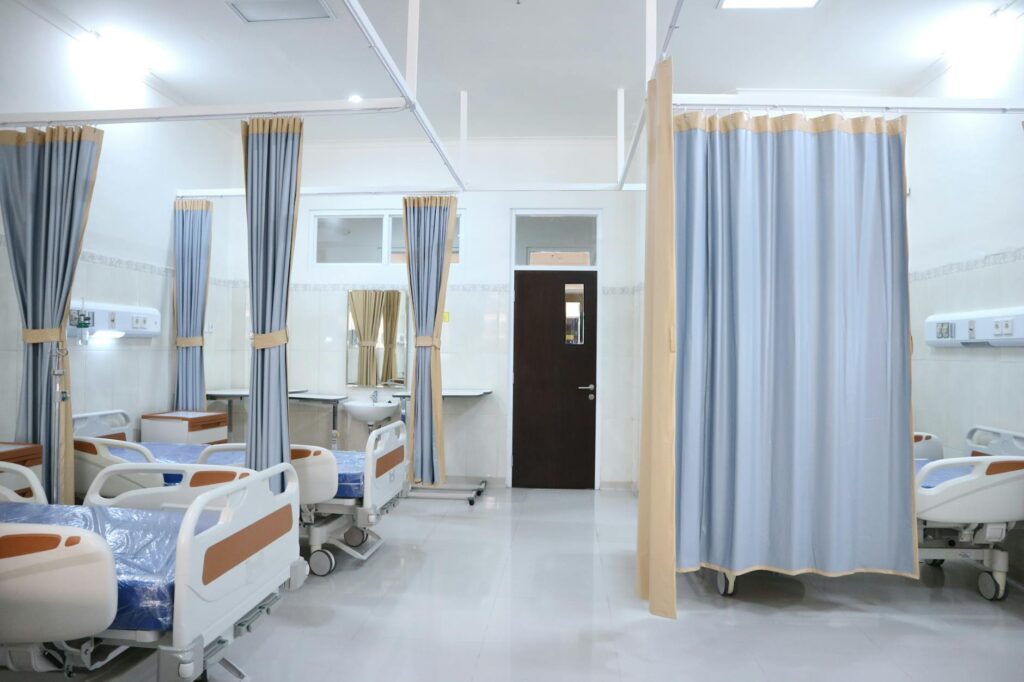
Teaching hospital clinics are underrated for acne care because they combine access to the latest research-backed treatments with significantly lower costs, all while being supervised by board-certified dermatologists who are actively publishing and studying skin conditions. If you have moderate to severe acne and have been quoted hundreds of dollars per visit at a private dermatology practice, a teaching hospital clinic affiliated with a university medical center can offer comparable or even superior care at a fraction of the price.
For example, someone dealing with cystic acne who needs isotretinoin management might pay dramatically less out of pocket at a university-affiliated clinic than at a private practice, while benefiting from a team that includes residents trained on the most current protocols. This article covers why teaching hospitals deserve more attention for acne treatment, what the actual patient experience looks like, how costs compare to private dermatology offices, and where teaching clinics fall short. We will also look at how to find these clinics, what to expect from resident-led care, and which types of acne patients stand to benefit the most from this often-overlooked option.
Table of Contents
- Why Are Teaching Hospital Dermatology Clinics Overlooked for Acne Treatment?
- How Teaching Hospital Acne Care Costs Compare to Private Dermatology
- What the Patient Experience Actually Looks Like at a Teaching Clinic
- Which Types of Acne Patients Benefit Most From Teaching Hospitals
- Limitations and Risks of Relying on Teaching Hospital Clinics for Acne
- How to Find and Evaluate a Teaching Hospital Dermatology Clinic
- The Future of Acne Treatment at Academic Centers
- Conclusion
- Frequently Asked Questions
Why Are Teaching Hospital Dermatology Clinics Overlooked for Acne Treatment?
The biggest reason teaching hospital clinics get dismissed for acne care is a perception problem. People assume that being seen by a resident or medical student means getting second-rate treatment. In reality, residents at teaching hospitals operate under the direct supervision of attending dermatologists, many of whom are leaders in their field. Every treatment plan, prescription, and procedure is reviewed and approved by a fully licensed, board-certified specialist. The resident may be the person in the room with you for most of the visit, but the attending is involved in your care in a way that is often more rigorous than a solo private practitioner working alone. Another factor is that teaching hospitals do not market themselves the way private practices do. A cosmetic dermatology office with a sleek website and Instagram presence will naturally attract more acne patients than a university clinic buried inside a large hospital system. Teaching clinics rarely advertise aggressively, and their intake process can feel more institutional.
But the clinical quality is not diminished by a less polished waiting room. Academic medical centers are where new acne treatments get studied and refined before they become standard practice elsewhere. Patients at these clinics sometimes gain access to emerging therapies and clinical trials that are simply unavailable at a typical office. The stigma around being a “teaching case” also drives people away. Some patients feel uncomfortable with the idea of a resident learning on them. But acne is one of the most common conditions in dermatology, and residents see enormous volumes of it. That repetition, combined with attending oversight, often produces thorough and methodical care. Private practitioners juggling a packed schedule may spend less time per patient than a resident who is being evaluated on the quality of their clinical reasoning.

How Teaching Hospital Acne Care Costs Compare to Private Dermatology
One of the strongest arguments for teaching hospitals is cost. University-affiliated clinics frequently operate on sliding-scale fee structures or accept a broader range of insurance plans, including Medicaid, which many private dermatologists do not. For uninsured patients, the difference can be staggering. A new patient dermatology visit at a private practice can run several hundred dollars before any procedures or prescriptions. Teaching hospital clinics, while not free, historically charge less for comparable visits because their mission includes serving the community and training physicians, not maximizing revenue per patient. However, if you have strong private insurance and a dermatologist you already trust, the cost savings may not be dramatic enough to justify switching.
Teaching hospital visits can also involve longer wait times, both to get an initial appointment and during the visit itself, since residents are learning and attendings rotate between multiple exam rooms. The tradeoff is real: you may save money but spend more time. For someone with mild acne that responds to over-the-counter products or a simple prescription, a teaching hospital visit might be more involved than necessary. These clinics tend to be most valuable for patients with stubborn, scarring, or treatment-resistant acne who need a more comprehensive approach. It is worth noting that pricing structures vary widely by institution and region, and specific numbers shift over time. Contact the billing department directly before assuming anything about your out-of-pocket costs. Some teaching hospitals also have separate faculty practice clinics where you see only the attending, which may cost more but still less than a fully private office.
What the Patient Experience Actually Looks Like at a Teaching Clinic
A typical visit to a teaching hospital dermatology clinic starts with a resident taking your history and examining your skin. They will ask detailed questions about your acne history, past treatments, family history, and lifestyle factors. This intake is often more thorough than what happens at a private practice because the resident is building a complete case to present to the attending. After the resident’s evaluation, the attending comes in, reviews the findings, examines you again, and the team discusses a plan together, sometimes right in front of you. At a place like the dermatology clinic at a major academic center, a patient with hormonal acne might see a second-year dermatology resident who spends 20 to 30 minutes on the initial evaluation, followed by a five-to-ten minute review with the attending.
Compare that to a busy private practice where the entire visit might last 10 minutes total. The depth of the teaching clinic visit means that nuances like subclinical scarring patterns, hormonal indicators, or signs that a different underlying condition is contributing to breakouts are less likely to be missed. The downside is logistical. Teaching hospitals are often in large medical complexes with confusing parking, long walks, and institutional environments that feel impersonal. Appointment availability can be limited, and you might not see the same resident at every visit if they rotate to a different service. Continuity of care can suffer in ways that matter for a condition like acne, which requires ongoing monitoring and medication adjustments over months.

Which Types of Acne Patients Benefit Most From Teaching Hospitals
If your acne is mild and responds well to a basic topical retinoid or benzoyl peroxide, a teaching hospital clinic is probably more infrastructure than you need. Where these clinics genuinely shine is with patients whose acne is complicated. That includes severe nodulocystic acne, acne that has not responded to multiple rounds of antibiotics, acne in patients who also have conditions like polycystic ovary syndrome or other hormonal disorders, and cases where significant scarring requires a multi-modal treatment plan. Patients considering isotretinoin, in particular, may find teaching hospitals advantageous. The drug requires regular blood monitoring, adherence to pregnancy prevention protocols, and careful dose management. Teaching clinics tend to have built-in systems for this kind of structured follow-up.
They also tend to be more willing to prescribe isotretinoin in cases where a private practitioner might be hesitant, simply because the academic environment normalizes its use and the supervision structure adds a safety layer. The tradeoff is that the process might move more slowly, with more appointments and more layers of approval, compared to a private practice where one physician makes all the decisions. People with skin of color also stand to benefit. Acne in darker skin tones comes with additional complications like post-inflammatory hyperpigmentation and keloid scarring, which require specific expertise. Teaching hospitals, especially those in diverse urban areas, tend to have more experience with these presentations and more awareness of how standard treatments can affect different skin tones. Private practices may not always have the same depth of experience with these nuances, though this varies significantly by location and provider.
Limitations and Risks of Relying on Teaching Hospital Clinics for Acne
The biggest practical limitation is access. Not everyone lives near a teaching hospital, and those who do may face long wait times. In some regions, the wait for a new patient dermatology appointment at an academic center can stretch to several months. If your acne is actively scarring, that delay has real consequences. A private dermatologist who can see you in two weeks may be the better choice purely based on timing, even if the teaching hospital would offer a more thorough workup. Resident turnover is another genuine concern. Dermatology residencies typically last three to four years, and residents rotate through different clinical services.
You might build a rapport with a resident who understands your skin, only to have them move on. The attending provides continuity, but they are not always the person managing the details of your visit-to-visit care. For a condition like acne that benefits from consistent monitoring, this can be frustrating. Some patients work around this by requesting to see the same attending each time, but that is not always possible. There is also the reality that teaching hospitals are training environments. Your visit may involve medical students observing, residents presenting your case in front of you, and a general atmosphere of education that some patients find uncomfortable. You always have the right to decline having students present, but the teaching element is built into the fabric of these clinics. If privacy during your dermatology visits is important to you, this is worth considering before booking.

How to Find and Evaluate a Teaching Hospital Dermatology Clinic
Start by searching for academic medical centers or university hospitals in your area and navigating to their dermatology department pages. Most will list their clinical services, including general dermatology and specific acne or cosmetic clinics.
You can also call the hospital’s main line and ask to be connected with dermatology scheduling. When evaluating the clinic, ask whether the attending dermatologist who supervises the acne clinic has a specific interest in acne or has published research on acne treatment, as this varies. A teaching clinic where the supervising physician specializes in procedural dermatology or skin cancer may not offer the same level of acne-specific expertise as one led by someone focused on medical dermatology or inflammatory skin disease.
The Future of Acne Treatment at Academic Centers
Teaching hospitals are increasingly integrating teledermatology, combination therapy protocols, and even AI-assisted diagnostic tools into their clinics. As acne treatment evolves beyond the traditional ladder of topicals, antibiotics, and isotretinoin toward more targeted therapies and personalized approaches, academic centers will likely be the first places where patients can access these advances.
Clinical trials for new acne medications almost always run through teaching hospitals, meaning patients at these clinics sometimes have the option to try treatments that are not yet available to the public. For anyone dealing with acne that has resisted conventional approaches, keeping a teaching hospital clinic on your radar is a practical long-term strategy, not just a budget-friendly alternative.
Conclusion
Teaching hospital dermatology clinics offer a combination of expert-supervised care, lower costs, access to current research, and thorough evaluations that most private practices cannot match. They are particularly well suited for patients with moderate to severe acne, treatment-resistant breakouts, or acne complicated by scarring, hormonal factors, or skin-of-color considerations. The tradeoffs are real, including longer wait times, resident turnover, and a less polished patient experience, but for many people, those downsides are outweighed by the clinical advantages.
If you are struggling with acne and feeling stuck, consider calling the dermatology department at your nearest university hospital and asking about their general dermatology or acne clinic. Come prepared with your treatment history, a list of medications you have tried, and specific questions about their approach. The care you receive may surprise you, and your wallet will likely thank you too.
Frequently Asked Questions
Do I have to let medical students observe my appointment at a teaching hospital?
No. You always have the right to decline having students present during your visit. Simply let the front desk or your resident know your preference at the start of the appointment. This will not affect the quality of your care.
Will I always see a resident instead of a fully licensed dermatologist?
At most teaching clinics, a resident performs the initial evaluation, but an attending dermatologist reviews your case and is involved in all treatment decisions. Some academic centers also offer faculty-only clinics where you see the attending directly, though these may cost more.
Are teaching hospital clinics only for people without insurance?
Not at all. Teaching hospitals accept most major insurance plans and often accept a wider range of plans, including Medicaid, than private offices. They serve patients across all income levels.
How long does it take to get an appointment at a teaching hospital dermatology clinic?
Wait times vary widely by institution and region. Some clinics can see new patients within a few weeks, while others have waits of several months. Calling early and asking to be placed on a cancellation list can help.
Can I get isotretinoin prescribed at a teaching hospital clinic?
Yes. Teaching hospitals are well equipped to manage isotretinoin treatment, including the required blood work and monitoring protocols. In some cases, they may be more experienced with the medication than solo private practitioners.
Is the quality of care lower because residents are still in training?
Residents are supervised by experienced attending dermatologists who review every significant clinical decision. The layered oversight at teaching hospitals can actually result in more thorough care than a single physician working independently.