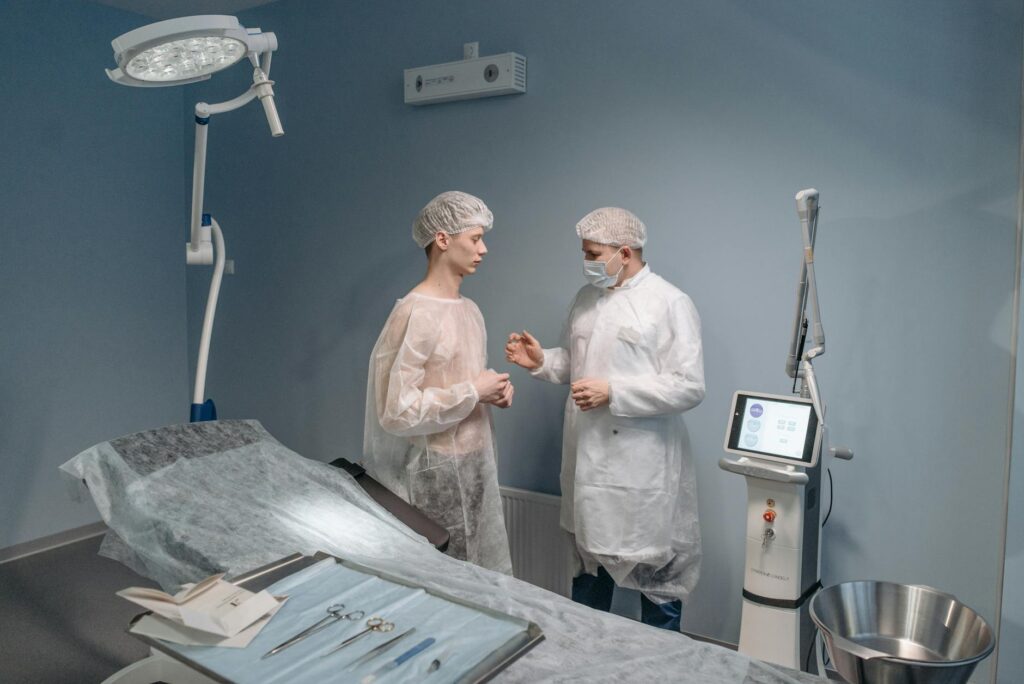
The Starlux fractional laser became one of the earliest widely adopted laser technologies specifically marketed and used for acne scar treatment in dermatology practices because it combined fractional resurfacing—a technique that treats small, separated columns of skin—with the penetrating power of a CO2 laser, allowing dermatologists to stimulate collagen remodeling beneath scarred tissue without completely resurfacing the entire face. Unlike older ablative lasers that removed outer skin layers indiscriminately, Starlux’s fractionated approach meant patients experienced less downtime while still achieving meaningful improvements in atrophic (depressed) acne scars. For example, a patient with ice-pick scars and rolling scars could undergo a single Starlux treatment session and return to light activities within a week, something that wasn’t feasible with earlier laser generations. This article covers why Starlux entered the market at a pivotal moment when dermatologists needed an acne scar solution that was more sophisticated than microdermabrasion yet more practical than full-face ablative resurfacing, how the technology actually works on scarred tissue, what clinical data showed about its effectiveness, and how it compares to both older and newer treatment options available today.
Table of Contents
- What Made Starlux an Early Leader in Fractional Acne Scar Treatment
- How Starlux Fractional Laser Actually Remodels Scarred Skin
- Clinical Evidence and Real-World Results from Starlux Treatments
- Starlux Compared to Other Acne Scar Treatment Options
- Limitations of Starlux and Why Some Patients Didn’t See Expected Results
- Timeline and Realistic Expectations After Starlux Treatment
- The Evolution of Laser Technology Since Starlux’s Peak
- Conclusion
- Frequently Asked Questions
What Made Starlux an Early Leader in Fractional Acne Scar Treatment
Starlux’s breakthrough wasn’t inventing fractional laser technology—Palomar had already pioneered fractional CO2 lasers—but rather offering a commercial system that dermatologists found practical and results-oriented for acne scarring specifically. When Starlux was introduced in the early 2000s, the dermatology market had limited effective options: microdermabrasion was superficial, TCA cross (chemical reconstruction of skin scars) was unpredictable, surgical subcision was invasive, and traditional ablative CO2 lasers left patients red and flaking for weeks. Starlux filled the gap by delivering visible scar improvement with downtime measured in days rather than weeks.
The device generated fractional columns of thermal injury at precise depths and spacing, which triggered the skin’s natural wound-healing cascade—particularly collagen deposition—without the recovery burden of full-face laser resurfacing. Dermatology practices, especially those focused on cosmetic medicine, invested in Starlux because it represented a quantifiable improvement over what had come before. The system also came with specific acne scar protocols, training, and clinical data showing efficacy, which gave practitioners confidence they were offering patients something backed by evidence rather than off-label experimentation.

How Starlux Fractional Laser Actually Remodels Scarred Skin
Starlux uses a focused co2 laser beam divided into thousands of tiny fractionated columns (typically 20-40% of the skin surface per pass) that penetrate the dermis—the structural layer beneath the epidermis—to a controlled depth. Each microscopic column heats tissue and creates a controlled injury zone that prompts fibroblasts (collagen-producing cells) to synthesize new collagen and reorganize existing scarred tissue. The untreated skin between columns remains intact, which preserves the skin barrier and dramatically accelerates healing compared to traditional ablative resurfacing.
However, the depth penetration and effectiveness depend heavily on settings, number of passes, and skin type, which means results vary considerably between practitioners. A dermatologist treating light skin with aggressive settings (higher joules, multiple passes) will see more dramatic scar improvement but also more redness and risk of temporary hypopigmentation; the same settings on darker skin can cause persistent hyperpigmentation or unintended pigment changes, which is why Starlux treatment on darker skin requires more conservative parameters and more sessions. Additionally, Starlux works best on atrophic scars (depression-type scars like ice-pick, rolling, or boxcar) and is less effective on hypertrophic or keloid scars, which actually protrude above the skin surface.
Clinical Evidence and Real-World Results from Starlux Treatments
Published dermatological studies on Starlux for acne scars documented improvement rates ranging from 50-75% at 12 weeks post-treatment, with many patients requiring 2-4 sessions spaced 4-8 weeks apart. One frequently cited study in the Journal of Cosmetic and Laser Therapy showed that patients with moderate-to-severe atrophic acne scarring achieved visible scar elevation and texture improvement, though perfection wasn’t achievable—complete scar obliteration isn’t realistic with any laser. The research consistently showed that rolling scars (which have sloped edges) improved more dramatically than ice-pick scars (which have sharp vertical edges that’re harder to remodel with laser alone).
A patient with moderate acne scarring across the cheeks and forehead might see approximately 40-60% improvement after three sessions—meaning scars become noticeably less prominent and shadow effects diminish, but subtle surface irregularities may remain visible under certain lighting. The emotional impact often exceeded the percentage numbers, because patients reported increased confidence even when objective scarring reduction was “only” 50%, suggesting that subtle improvements in appearance create meaningful psychological benefit. One limitation: patients with very deep, severe boxcar scars or ice-pick scars sometimes found that Starlux alone plateaued in effectiveness and benefited from combination treatments with subcision or dermal fillers to address the scar depth that laser resurfacing couldn’t fully correct.

Starlux Compared to Other Acne Scar Treatment Options
When Starlux was at its peak adoption in the mid-2000s to early 2010s, the main alternatives were older CO2 lasers (like traditional ablative ResurfX) that required weeks of recovery, TCA chemical peels that were unpredictable and sometimes caused post-inflammatory hyperpigmentation, and surgical options like subcision or dermal fillers. Starlux offered a meaningful middle ground: better efficacy than chemical peels, less downtime than ablative lasers, and non-invasive compared to surgery. Patients could have a Starlux session on Friday and return to work Monday with minimal visible redness if lighter settings were used.
However, newer fractional laser systems have since emerged with different advantages—for example, erbium-doped YAG (Er:YAG) fractional lasers cause less thermal damage to surrounding tissue and may have faster healing for some patients, while newer CO2 fractional systems offer even more precise energy delivery. Compared to microneedling (which became popular later as a lower-downtime alternative), Starlux delivered faster, more dramatic results in fewer sessions, but microneedling could be performed on darker skin types with less risk of pigmentation changes and cost significantly less per session. The tradeoff: choose Starlux for faster, more aggressive scar improvement; choose microneedling for safer, gentler, more budget-friendly collagen induction.
Limitations of Starlux and Why Some Patients Didn’t See Expected Results
Starlux’s effectiveness was significantly limited in patients with darker skin types (Fitzpatrick IV-VI), where aggressive settings risked post-inflammatory hyperpigmentation and conservative settings often yielded underwhelming results. This wasn’t a failure of the technology itself but rather a mismatch between the device’s thermal mechanism and the biology of darker skin, which heals with more melanin deposition in response to injury. Some dermatologists underestimated this risk in the early years and treated darker-skinned patients with inappropriate settings, leading to scarring caused by pigmentation problems rather than improvement—a significant cautionary tale.
Additionally, Starlux worked poorly on certain scar morphologies: hypertrophic scars and keloids actually worsened with laser heat, and very deep ice-pick scars sometimes required surgical elevation (subcision) before laser treatment to be addressed meaningfully. Expectations management was also critical—some patients expected complete scar elimination and were disappointed by 50-60% improvement, even though objective scar reduction was substantial. The recovery, while shorter than ablative lasers, still involved 3-5 days of noticeable erythema (redness) and some crusting, which was longer than patients using microneedling expected.

Timeline and Realistic Expectations After Starlux Treatment
A typical Starlux protocol involved an initial consultation where the dermatologist assessed scar depth, skin type, and scar type to determine appropriate settings, followed by a series of 2-4 treatments spaced 4-8 weeks apart. Immediately after each session, skin appeared red, swollen, and slightly puffy—some patients described it as a bad sunburn. By day 2-3, the epidermis began sloughing off in small fragments (a process called exfoliation), and by day 5-7, most patients had acceptably normal skin appearance, though underlying collagen remodeling continued for weeks.
Visible improvement typically emerged after the first session but plateaued at around 4-6 weeks post-treatment as collagen synthesis and remodeling reached their peak. A patient might see 15-20% scar improvement after session one, then incremental improvements from sessions two and three, with the cumulative effect being the 50-75% improvement referenced in studies. Many dermatologists recommended waiting at least 6 months after the final session before assessing final results, because late-stage collagen remodeling and natural skin aging could still produce subtle ongoing improvements. A limitation: some patients experienced extended erythema (redness) lasting 2-3 months, particularly if darker skin types were treated or if multiple aggressive passes were used.
The Evolution of Laser Technology Since Starlux’s Peak
Starlux represented a crucial evolution in acne scar treatment, but the field has continued advancing with newer technologies addressing some of its limitations. Modern fractional CO2 lasers incorporate smarter energy delivery, more consistent fractionation patterns, and post-treatment protocols that reduce downtime and adverse effects.
Simultaneously, non-laser modalities—particularly radiofrequency microneedling and newer microneedling techniques—have proven effective with less thermal risk, expanding the treatment options for darker skin types and patients unwilling to tolerate even a few days of visible downtime. The rise of combination treatments has also shifted clinical practice: dermatologists now often integrate Starlux or modern fractional lasers with subcision, dermal fillers, or chemical peels in a single treatment plan, because research showed that addressing scar depth (subcision), providing volume support (fillers), and resurfacing surface irregularities (laser) together outperformed laser alone. Starlux remains a viable and effective option in many practices, but it’s now one choice among several rather than the innovation-leading technology it was 15-20 years ago.
Conclusion
Starlux fractional laser became an early dominant acne scar treatment because it solved a real clinical problem—providing visible scar improvement with acceptable downtime—at a time when few effective alternatives existed. The technology’s fractional approach, which creates controlled thermal injury in precise columns rather than resurfacing entire face areas, allowed collagen remodeling and scar elevation with recovery measured in days rather than weeks, making it accessible to patients who couldn’t tolerate lengthy healing periods.
For anyone considering acne scar treatment today, Starlux remains a reasonable option, particularly for light-to-medium skin types with moderate atrophic scarring, though newer alternatives and combination approaches have expanded the toolkit considerably. The best choice depends on individual factors—scar morphology, skin type, downtime tolerance, and budget—so consultation with a knowledgeable dermatologist is essential to selecting the approach most likely to deliver meaningful improvement in your specific situation.
Frequently Asked Questions
Is Starlux the same as other fractional CO2 lasers?
Starlux is one brand of fractional CO2 laser, but not the only one. Other brands like Cynosure Palomar and newer systems like Lumenis UltraPulse offer similar fractional CO2 technology. The core mechanism is similar, but subtle differences in beam profile, energy delivery, and treatment parameters mean results can vary between devices and between providers.
How many Starlux sessions do I need for acne scars?
Most patients require 2-4 sessions spaced 4-8 weeks apart, depending on scar severity, skin type, and how aggressively settings are chosen. Lighter skin typically improves faster and may achieve adequate results in 2-3 sessions; darker skin often requires more conservative settings and may need 4-5 sessions to avoid pigmentation issues.
Can Starlux be used on dark skin?
Yes, but with caution. Starlux can be used on darker skin types, but requires more conservative energy settings to minimize the risk of post-inflammatory hyperpigmentation. Many dermatologists prefer microneedling or other lower-thermal-injury modalities for darker skin because they carry less hyperpigmentation risk.
What’s the difference between Starlux and microneedling for acne scars?
Starlux delivers faster, more dramatic scar improvement in fewer sessions but involves more downtime (redness/crusting for 5-7 days) and higher cost per session. Microneedling requires more sessions (8-12 or more), produces less dramatic individual results, but has minimal downtime and works safely on all skin types at lower cost.
Will my scars completely disappear with Starlux?
Unlikely. Most realistic outcomes involve 50-75% scar improvement, meaning scars become noticeably less prominent but subtle surface irregularities typically remain. Complete scar elimination is rarely achievable with any laser, and expectations should be calibrated toward meaningful improvement rather than perfection.
How long do results from Starlux last?
Results are generally permanent because collagen remodeling induced by the laser persists. However, natural skin aging and new acne breakouts can alter skin appearance over years, and some patients opt for occasional maintenance treatments to sustain results as they age.