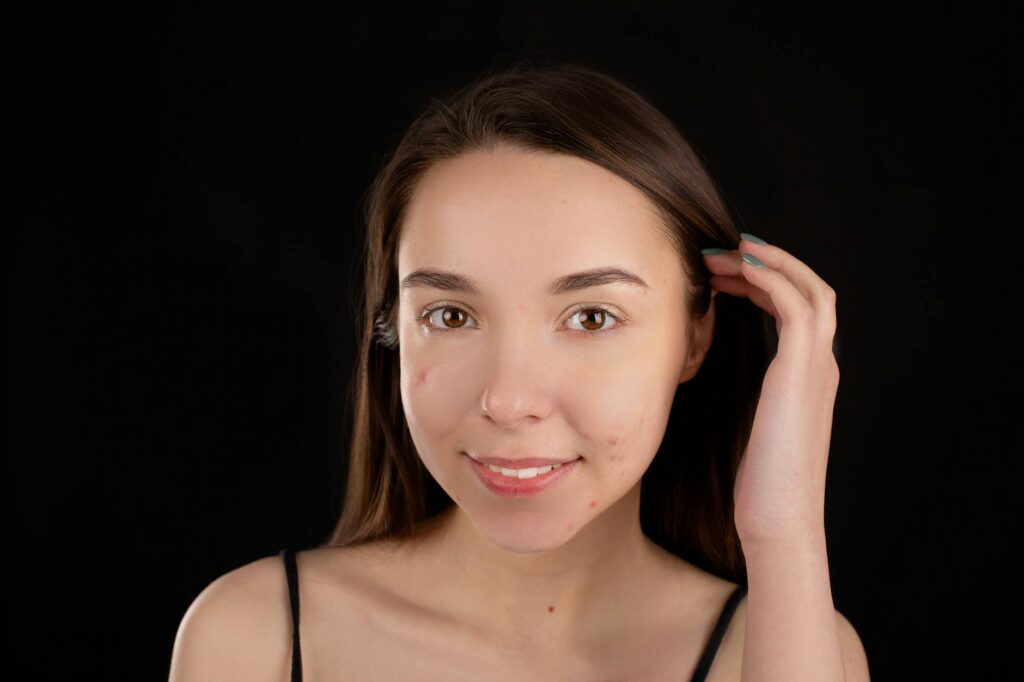
Many people perceive their acne as significantly more severe than it actually is, and the disconnect between clinical reality and personal perception is well-documented in dermatological research. Studies have found that patients routinely overestimate the severity of their breakouts by one or two grades on standard acne scales, meaning someone with mild comedonal acne may genuinely believe they have moderate inflammatory disease. This distortion is not vanity or weakness. It stems from a combination of psychological factors, including mirror-checking habits, social comparison in the age of filtered selfies, and the brain’s tendency to fixate on perceived flaws in a phenomenon closely related to body dysmorphic disorder. Consider someone who has three or four small pimples along their jawline.
A dermatologist would likely classify this as mild acne, possibly not even warranting prescription treatment. But the person living with those spots may spend twenty minutes each morning examining them under bathroom lighting, convinced their skin looks terrible. They cancel plans, avoid eye contact, and feel certain that everyone notices. This gap between objective severity and subjective suffering is one of the most underappreciated aspects of acne care, and it has real consequences for treatment decisions, mental health, and quality of life. This article breaks down why this perceptual mismatch happens, the psychological mechanisms that fuel it, how social media makes it worse, and what you can actually do to recalibrate your relationship with your own skin.
Table of Contents
- Why Do People Perceive Their Acne as Worse Than It Really Is?
- The Role of Body Dysmorphic Disorder and Skin-Focused Anxiety
- How Social Media and Filtered Images Distort Skin Perception
- Practical Ways to Recalibrate How You See Your Own Skin
- When Acne Anxiety Leads to Overtreatment and Skin Damage
- The Influence of Lighting, Magnification, and Mirror Proximity
- Shifting the Conversation From Severity to Impact
- Conclusion
- Frequently Asked Questions
Why Do People Perceive Their Acne as Worse Than It Really Is?
The core reason comes down to attentional bias, a well-studied cognitive pattern where the brain disproportionately focuses on things it considers threatening or negative. When you have acne, your brain categorizes blemishes as a social threat, and once that categorization happens, your visual attention locks onto those spots every time you look in a mirror or catch your reflection. Research published in the Journal of the American Academy of Dermatology found that acne patients spent significantly more time visually fixating on blemished areas of their face compared to control subjects viewing the same images. You are literally training your brain to see your acne as the most important feature of your face. This attentional bias gets reinforced by what psychologists call the spotlight effect, the tendency to believe other people notice your appearance far more than they actually do. In classic experiments, researchers had participants wear embarrassing t-shirts and then estimate how many people in a room noticed. Participants consistently overestimated by a factor of two or more.
The same principle applies to acne. You assume everyone in the meeting saw that cystic spot on your chin, when in reality most people were focused on what you were saying or, more likely, worrying about their own insecurities. The combination of attentional bias pulling your focus inward and the spotlight effect projecting that focus outward creates a feedback loop where acne feels omnipresent and obvious. There is also a measurement problem. Most people do not have an accurate framework for what “mild,” “moderate,” or “severe” acne actually looks like. Without clinical training, your reference point is your own past skin at its best, or the digitally smoothed faces you see online. When your baseline for “normal” is poreless, even-toned skin, a handful of papules feels like a crisis. Dermatologists use standardized scales like the Global Acne Grading System or the Leeds Revised Acne Grading System, and when patients are shown where they fall on these scales, many are genuinely surprised to learn their acne is classified as mild.

The Role of Body Dysmorphic Disorder and Skin-Focused Anxiety
Body dysmorphic disorder, or BDD, is a clinical condition where a person becomes consumed by a perceived flaw in their appearance that others either do not notice or consider minor. Acne-related BDD is one of the most common presentations, and research estimates that between 14 and 21 percent of acne patients meet diagnostic criteria for BDD, a rate far higher than the general population prevalence of roughly 2 percent. For these individuals, the distortion is not just a mild overestimation. It is a fundamentally different perception of reality. Someone with acne-related BDD may describe their skin as “destroyed” or “disgusting” while presenting with a few scattered comedones that a clinician would barely flag. However, it is important to distinguish between BDD and the more common experience of acne-related distress that does not meet clinical thresholds.
If your concern about your skin causes you to avoid social situations, spend more than an hour a day examining or covering your blemishes, or repeatedly seek reassurance from others about your appearance, those are signs worth discussing with a mental health professional. But if you occasionally feel self-conscious about a breakout and move on with your day, that falls within the normal range of human insecurity. The danger is in either direction: dismissing genuine BDD as ordinary worry, or pathologizing normal self-consciousness as a disorder. The distinction matters for treatment. Standard acne treatment, whether topical retinoids or antibiotics, can improve BDD symptoms when the acne itself resolves, but in many cases it does not, because the perceptual distortion persists even after the skin clears. Patients with acne-related BDD who undergo isotretinoin treatment and achieve objectively clear skin sometimes continue to perceive their skin as severely flawed. This is why dermatologists increasingly screen for BDD before prescribing aggressive treatments, because if the problem is primarily perceptual, a course of Accutane will not fix it, and the patient will remain dissatisfied regardless of clinical outcomes.
How Social Media and Filtered Images Distort Skin Perception
The rise of photo filters and editing apps has fundamentally changed what people expect human skin to look like. A 2021 survey conducted by the American Academy of Facial Plastic and Reconstructive Surgery found that patients increasingly presented with photos of their filtered selves as the “goal” for cosmetic procedures. This trend extends directly to acne perception. When your daily visual diet consists of smoothed, poreless faces on Instagram and TikTok, you internalize an artificial standard without even realizing it. Your five small pimples are not being compared against the actual skin of people around you. They are being compared against a digital fiction. The “skin positivity” movement on social media has attempted to counter this, with creators posting unfiltered close-ups of texture, redness, and breakouts. While well-intentioned, this trend has a limitation worth noting.
Most viral skin-positivity content comes from people who have either very photogenic “imperfections” or who have already achieved significant clearing and are showing their journey retrospectively. The person currently in the thick of a painful, widespread breakout rarely gets the same engagement, which can actually reinforce the feeling that your acne is uniquely bad. It is a partial corrective, not a full one. A specific and measurable example of this distortion: researchers at Boston University asked young adults to rate the severity of their own acne, then compared those self-ratings with ratings from dermatologists viewing standardized photographs of the same participants. The participants who reported the highest social media usage showed the greatest discrepancy between self-assessment and clinical assessment. Those who spent more than three hours daily on image-heavy platforms overestimated their acne severity by an average of 1.4 grades on a four-point scale. Less frequent users still overestimated, but by roughly half a grade. The platform you spend your time on is quietly recalibrating what you think your skin should look like.

Practical Ways to Recalibrate How You See Your Own Skin
One of the most effective strategies is structured mirror exposure, a technique borrowed from cognitive behavioral therapy for BDD. Instead of checking your skin repeatedly throughout the day under harsh lighting, you designate a single, time-limited check-in, perhaps two minutes in the morning under natural light. During this check-in, you describe your skin out loud in neutral, clinical language: “I see two red papules on my left cheek and some closed comedones on my forehead.” No judgmental language like “gross” or “terrible.” The goal is to retrain the running commentary your brain generates when you look at your reflection. This feels awkward and mechanical at first, but research supports its effectiveness in reducing the emotional intensity of skin-checking behavior. A different approach, and one that works better for some people, is photo-based tracking with standardized conditions. Take a photo of your face once a week, same lighting, same angle, same distance. Over time, this creates an objective record you can review to counter the distortion of day-to-day perception.
Many people discover that what felt like a terrible skin week looks essentially identical to the previous week’s photo. The tradeoff here is that photo tracking can become compulsive if you are not careful. If you find yourself taking daily photos or scrutinizing each image for twenty minutes, the tool has become part of the problem rather than the solution. Set a rigid schedule and stick to it. There is also value in asking a dermatologist to formally grade your acne during a visit and explain where you fall on the clinical spectrum. Hearing a professional say “this is mild acne” while pointing to your actual skin can be a powerful reality check that no amount of self-talk can replicate. It does not make your distress invalid, but it gives you an external anchor that counteracts the internal distortion.
When Acne Anxiety Leads to Overtreatment and Skin Damage
One of the most common downstream consequences of perceiving acne as worse than it is happens to be overtreatment. Someone who believes they have severe acne will often layer multiple active ingredients, benzoyl peroxide, salicylic acid, retinoids, and chemical exfoliants, sometimes all in the same routine. The result is a compromised moisture barrier, increased redness, peeling, and irritation that genuinely makes the skin look worse than the original acne did. Dermatologists have a term for this: they call it “cosmetic intolerance syndrome” when the treatment regimen causes more visible damage than the condition it was meant to address. The warning here is specific: if your skin is stinging, flaking, or persistently red, your routine is likely too aggressive regardless of what your acne looks like. Scaling back to a gentle cleanser, a single active ingredient, and a solid moisturizer will often produce better results than the five-product assault that your perception of severity is driving. This is counterintuitive.
When you believe your acne is severe, the instinct is to escalate treatment, not simplify it. But the skin barrier does not care about your self-assessment. It will rebel against overuse of actives whether your acne is mild or severe. There is also the financial dimension. People who overestimate their acne severity spend more on skincare products, are more likely to seek unnecessary cosmetic procedures, and are more vulnerable to marketing that exploits insecurity. A 2019 market analysis found that the average acne patient with self-reported “severe” acne spent roughly three times more annually on skincare than patients whose acne was clinically classified as severe by a dermatologist. The perception of severity drives purchasing behavior more than the actual severity does.
The Influence of Lighting, Magnification, and Mirror Proximity
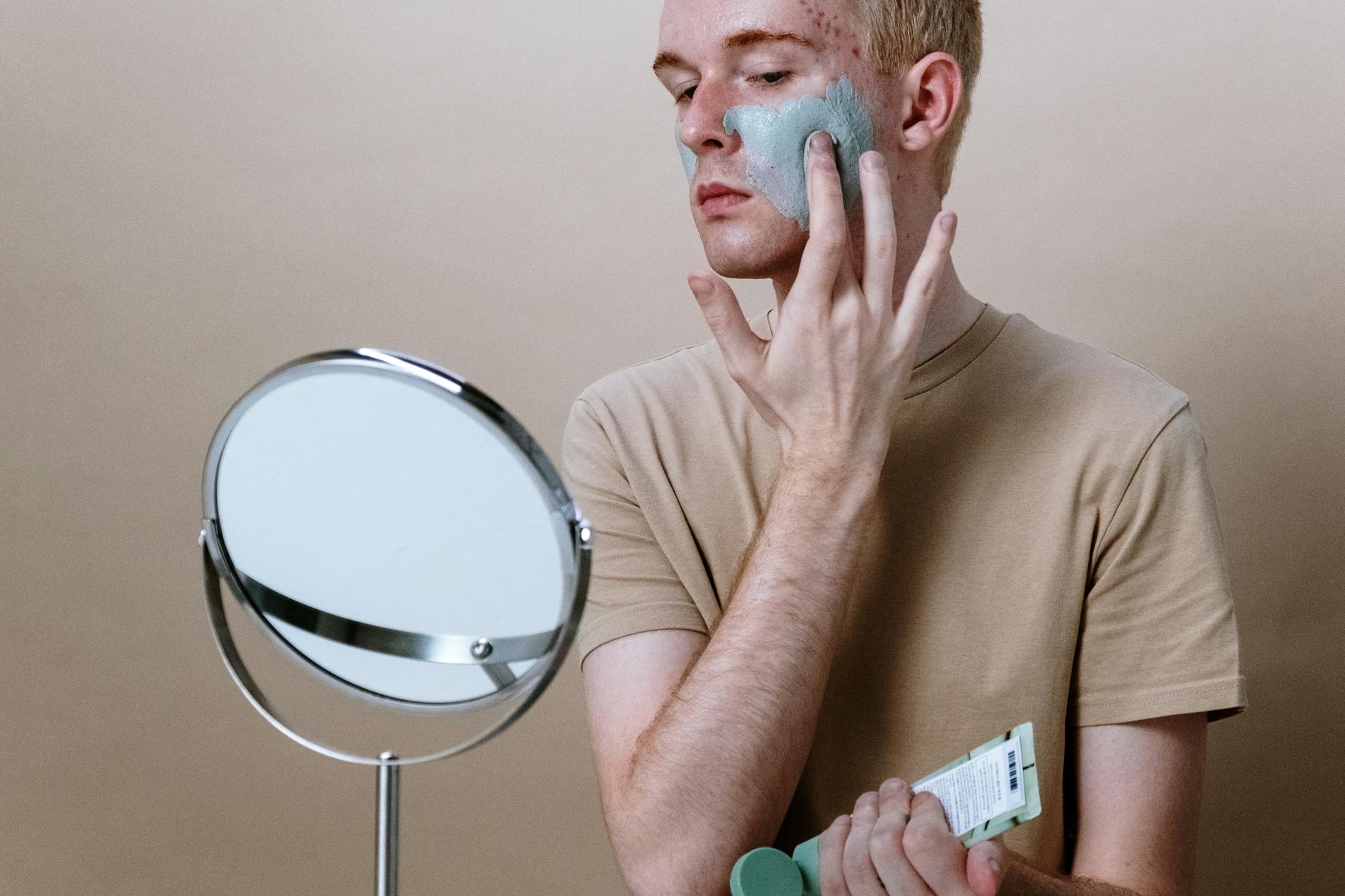
Bathroom lighting is one of the most underrated contributors to distorted acne perception. Overhead fluorescent or LED lighting casts downward shadows that exaggerate the texture of every pore, bump, and scar. Standing six inches from a magnifying mirror under that lighting will make anyone’s skin look rough, regardless of their actual acne status. Dermatologists evaluate skin under diffused, even lighting at a conversational distance of roughly two to three feet, and they will often tell patients that the skin they are treating looks nothing like the skin the patient sees in their bathroom mirror.
A practical test: look at your skin in your bathroom mirror under your usual lighting, then walk outside into natural, indirect daylight and check again with a phone camera held at arm’s length. For most people, the difference is striking. The “acne” that looked angry and obvious indoors often fades to barely noticeable texture under conditions that approximate how other people actually see your face. If you are making treatment decisions or emotional assessments based on magnified, harshly lit mirror sessions, you are working from distorted data.
Shifting the Conversation From Severity to Impact
The dermatology field is slowly moving toward a model where the psychological impact of acne carries as much weight as the clinical grade. The Acne Quality of Life scale and the Dermatology Life Quality Index are now used alongside traditional severity grading in many practices, reflecting the understanding that a patient with three pimples who cannot leave the house deserves the same clinical attention as a patient with widespread nodular acne who is unbothered by it. This is a meaningful shift, because it validates the distress without requiring the distress to be proportional to the physical presentation.
Going forward, expect more integration of mental health screening into routine dermatology visits, particularly for acne patients. Some academic medical centers have already embedded psychologists within their dermatology departments. This is not about telling people their feelings are wrong. It is about recognizing that the relationship between skin and self-perception is complex, that suffering is real even when the mirror is lying to you, and that effective treatment sometimes means treating the perception alongside the skin.
Conclusion
The gap between how bad your acne actually is and how bad you think it is can be enormous, and it is driven by real, identifiable mechanisms: attentional bias, the spotlight effect, social media distortion, harsh lighting, and in some cases, clinical body dysmorphia. None of this means your distress is not real or that you should simply “get over it.” It means that your brain is not a reliable narrator when it comes to your own skin, and understanding that unreliability is the first step toward making better decisions about treatment, self-care, and when to seek help. If you take one thing from this article, let it be this: get an objective baseline. Ask a dermatologist to grade your acne.
Take standardized photos. Step away from the magnifying mirror. You may discover that the skin you have been agonizing over is far closer to normal than you believed, and that knowledge alone can change your relationship with your reflection. If the distress persists even after that reality check, talk to someone who specializes in body image, because that is not a skincare problem and no serum will fix it.
Frequently Asked Questions
Is it normal to think my acne is worse than it is?
Yes. Research consistently shows that acne patients overestimate the severity of their skin condition compared to clinical assessments. This is a normal cognitive pattern, not a personal failing, though it becomes clinically significant when it interferes with daily functioning.
How can I tell if I have body dysmorphic disorder related to my acne?
Key signs include spending more than an hour daily examining or camouflaging your skin, avoiding social situations specifically because of perceived blemishes, frequently seeking reassurance about your appearance, and feeling that your skin is significantly worse than what others tell you. A mental health professional can provide a formal evaluation.
Does improving my acne fix the distorted perception?
Sometimes, but not always. Many people find that their self-perception improves as their skin clears, but a subset of patients continue to perceive their skin negatively even after significant clinical improvement. If clearing your skin does not relieve the distress, that is a strong signal to pursue psychological support.
Can social media actually change how I see my own skin?
Yes. Studies have demonstrated a correlation between time spent on image-heavy social platforms and the degree to which people overestimate their acne severity. Reducing exposure or consciously diversifying the content you consume can help recalibrate your perception over time.
Should I stop looking in the mirror if I think my acne perception is distorted?
Complete mirror avoidance is actually a symptom of BDD and is not recommended. Instead, structured, time-limited mirror use under natural lighting at a normal distance is the therapeutic approach. The goal is a healthier relationship with mirrors, not eliminating them entirely.