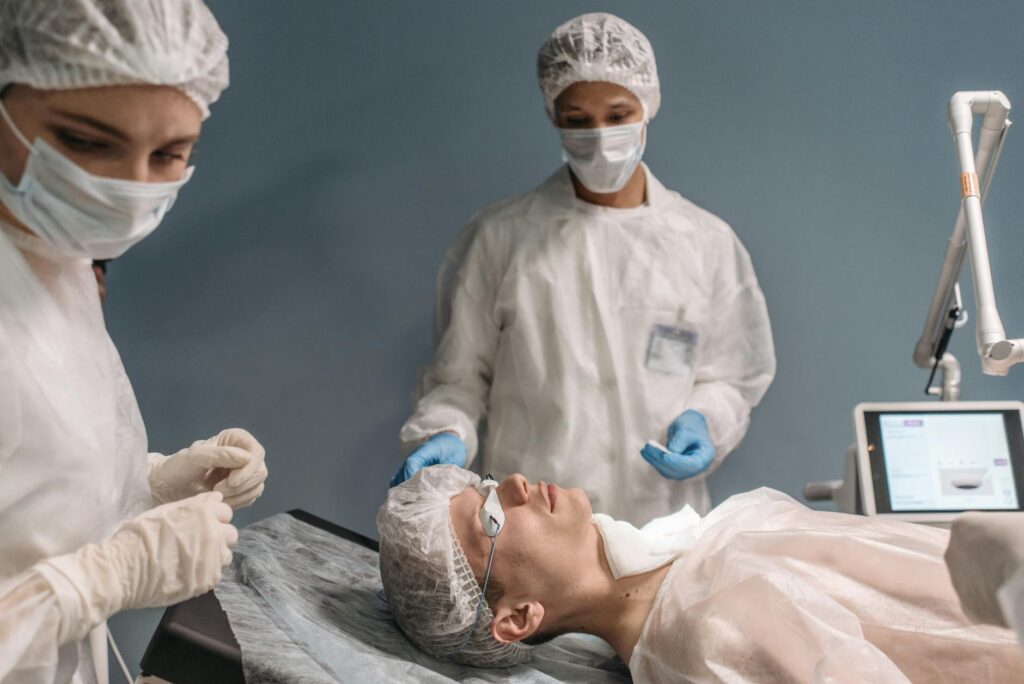
Rolling scars require five or more subcision sessions for most people because these indented marks extend into the deeper layers of skin, and healing happens gradually in phases that span several months. Subcision works by severing the fibrous tethering bands beneath the scar, but the skin’s natural collagen remodeling—the process that actually fills in the indentation—takes time and multiple disruptions to achieve meaningful improvement.
Consider someone with moderate rolling scars across their cheeks: after the first subcision, they see maybe 20-30% improvement over three months, but the underlying depression remains visible. Additional sessions are required to address scar depth across different skin layers, to stimulate new collagen production in areas that didn’t respond fully, and to allow the healing cascade to continue rebuilding volume where a single treatment fell short. This article explains why one or two sessions typically aren’t enough, how your individual skin characteristics determine your total session count, and what realistic expectations look like over a 12-24 month treatment period.
Table of Contents
- What Are Rolling Scars and Why Multiple Subcision Sessions Address Them Differently
- How Scar Depth and Severity Determine Your Realistic Session Count
- The Collagen Remodeling Timeline and Why Spacing Sessions Three Months Apart Matters
- Individual Factors That Influence Your Total Session Requirements
- Understanding Diminishing Returns and the Plateau Effect in Subcision Treatment
- Combining Subcision with Complementary Treatments to Optimize Results
- Long-Term Outlook and Realistic Expectations for the End of Your Treatment Course
- Conclusion
What Are Rolling Scars and Why Multiple Subcision Sessions Address Them Differently
Rolling scars are depressions in the skin that appear as gentle, wave-like indentations rather than sharp pits or boxcar lines. They form when scar tissue contracts and pulls the skin downward, creating a continuous depression across an area rather than isolated holes. The problem isn’t just surface-level damage—the fibrous bands tethering the skin to deeper tissue run at varying depths, sometimes spanning from the dermis (middle layer) down toward the subcutaneous fat layer. A single subcision pass cannot reach and sever all these bands at all depths.
For example, a rolling scar might have primary tethering bands at 2mm depth and secondary bands at 4-5mm depth. Your dermatologist might address the shallower bands in session one, but returning for session two allows access to the deeper structures that weren’t the treatment focus initially. Each subcision session also triggers controlled inflammation and stimulates fibroblasts (collagen-producing cells) to begin laying down new structural support. However, this collagen rebuilding peaks and plateaus after several weeks, meaning repeated sessions ensure continuous stimulation rather than a single brief surge.

How Scar Depth and Severity Determine Your Realistic Session Count
The severity of your rolling scars directly correlates with the number of subcision sessions you’ll need. Mild rolling scars—barely visible except in certain lighting, with shallow depressions—often improve noticeably after two to three sessions spaced three months apart. Moderate rolling scars, where the depression is clearly visible in normal lighting and affects confidence, typically require four to six sessions.
Severe rolling scars, especially if they cover a wide area and create pronounced depression, frequently demand six to eight sessions or more. However, assessing scar depth clinically is inexact; your dermatologist will use visualization and palpation (feeling the scar) to estimate depth, but they cannot know exactly where all tethering bands lie until they begin the procedure. This unpredictability is why some patients are told “you’ll probably need four sessions” but later discover they needed six—the actual depth and extent of tethering weren’t fully apparent in advance. Additionally, if your rolling scars vary across different areas of your face (deeper on one cheek, shallower on the other), your provider may adjust session spacing or intensity per area, further affecting your total treatment course.
The Collagen Remodeling Timeline and Why Spacing Sessions Three Months Apart Matters
Collagen remodeling is not an immediate process. After subcision breaks the tethering bands, your body initiates a healing cascade: the wound triggers inflammation, fibroblasts are recruited to the area, and new collagen begins depositing. Peak collagen production typically occurs 4-8 weeks post-procedure, but the process doesn’t fully stabilize until about 12 weeks.
This is why reputable dermatologists space subcision sessions at least 12 weeks (three months) apart—performing the procedure too frequently doesn’t allow adequate collagen synthesis and can actually increase scar risk. When sessions are properly spaced, each treatment disrupts old scar tissue patterns and stimulates fresh collagen production before the previous session’s remodeling window closes. For instance, a patient might have subcision in January, see noticeable improvement by late March, return for a second session in April, and by July show additional elevation as the second session’s collagen remodeling overlaps with the settling of the first. However, if your provider performs sessions only 4-6 weeks apart (an aggressive but risky approach), you’re essentially treating incompletely healed skin, which can lead to excessive inflammation, more post-procedure swelling, or even worsening of existing scars.
Individual Factors That Influence Your Total Session Requirements
Your age, skin type, skin quality, and genetic predisposition to scarring all affect how many subcision sessions will ultimately benefit you. Younger patients (20s-30s) with healthy skin and good collagen production typically need fewer sessions and see faster improvement between treatments because their fibroblasts respond vigorously to the stimulus. Older patients (50+) or those with naturally thin skin may require more sessions because collagen production naturally slows with age and skin elasticity is lower.
Patients with darker skin tones sometimes experience more prominent post-inflammatory hyperpigmentation after subcision, which can complicate the visual assessment of scar improvement and may require adjusted spacing or intensity—potentially affecting the total session plan. Skin quality matters too: if you have sun damage, poor healing history, or active acne, the subcision response may be less predictable. Additionally, your skin’s natural tendency toward collagen formation (some people are “good healers,” others less so) is partly genetic and determines whether you’ll see substantial improvement or more modest results. For example, one 35-year-old patient with naturally thick, resilient skin might need four sessions to achieve their desired result, while another 35-year-old with thinner, less responsive skin might need six sessions despite similar initial scar severity.
Understanding Diminishing Returns and the Plateau Effect in Subcision Treatment
After a certain point, additional subcision sessions produce diminishing returns. While the first session often yields 25-40% improvement, the second might add another 20-25%, the third another 15%, and so on. By the fifth or sixth session, you may only achieve 5-10% additional improvement per treatment.
This diminishing effect occurs for several reasons: as you eliminate the most prominent tethering bands, the remaining bands become subtler and require more sessions to produce visible change; your skin also becomes somewhat desensitized to repeated trauma, meaning the inflammatory stimulus becomes less potent; and scar tissue, once partially released, sometimes re-forms or creates new, less pronounced adhesions rather than remaining completely free. A critical warning: not all practitioners accurately communicate this diminishing return curve. Some may continue offering subcision sessions indefinitely if you’re willing to pay, even when improvement is no longer clinically meaningful. After four to six sessions, if you’re not seeing tangible improvement over the previous three months, further subcision alone may not be beneficial, and combining with other modalities (like radiofrequency, fillers, or laser resurfacing) becomes more appropriate than additional subcision sessions.

Combining Subcision with Complementary Treatments to Optimize Results
Many patients achieve better outcomes with fewer total subcision sessions when they combine the treatment with other modalities. Subcision effectively breaks tethering bands, but adding radiofrequency (RF) or microneedling between or after subcision sessions stimulates additional collagen remodeling in the surrounding skin, potentially accelerating elevation. For example, a patient might have subcision in January, then microneedling in February, another subcision in April, and radiofrequency in May—cycling treatments to provide continuous collagen stimulus.
Dermal fillers (like hyaluronic acid) can temporarily elevate rolling scars while the longer-term collagen remodeling from subcision takes effect, improving cosmetic appearance during the healing phase. However, combining treatments increases total cost and requires longer intervals between procedures to avoid excessive skin irritation. Some practitioners suggest laser resurfacing in the months following subcision to further remodel scar collagen, though this is more aggressive and carries higher downtime. The tradeoff is clear: combining treatments often reduces the number of subcision sessions needed but increases total time in treatment, cost, and potential for side effects.
Long-Term Outlook and Realistic Expectations for the End of Your Treatment Course
After completing five to seven subcision sessions over 15-24 months, most patients achieve 50-70% improvement in rolling scars, which is considered excellent cosmetic outcome by dermatologic standards. However, 100% clearance is rare, even with many sessions. Residual mild rolling scars often remain, and scar tissue can very slowly degrade or re-form over years.
The improvement stabilizes and plateaus about 6-12 months after your final session, meaning additional treatments beyond that period are unlikely to yield significant benefit. Looking ahead, emerging technologies like subcision combined with stem cell-derived growth factors, or newer collagen-induction techniques, may eventually reduce the session number required—but these are not yet standard of care. In the meantime, protecting your skin from sun damage and maintaining good skincare after your treatment course helps preserve the improvement you’ve achieved. Most patients who complete a full course of subcision sessions consider the results worthwhile despite the time and expense, though realistic patients understand they’re not returning to pre-scarring skin but rather achieving substantial cosmetic improvement.
Conclusion
Rolling scars require five or more subcision sessions in most cases because scar tethering occurs at variable depths, collagen remodeling takes months between treatments, and the skin’s healing capacity is finite per procedure. Your specific session number depends on scar severity, your individual skin characteristics (age, skin type, healing capacity), and how aggressively your provider treats. Sessions should be spaced at least 12 weeks apart to allow adequate collagen synthesis, and expecting 20-40% improvement per session in early treatments—with diminishing returns by session four or five—will help you set realistic expectations.
If you’re considering subcision for rolling scars, consult with a board-certified dermatologist who can assess your scar depth, explain their specific treatment plan, and discuss realistic outcomes for your skin type. Come prepared to discuss your healing history, whether you’re interested in combining treatments, and your timeline—this information helps your provider recommend the most appropriate session schedule. Document your progress with photos taken in consistent lighting every three months to objectively track improvement as you proceed through your treatment course.