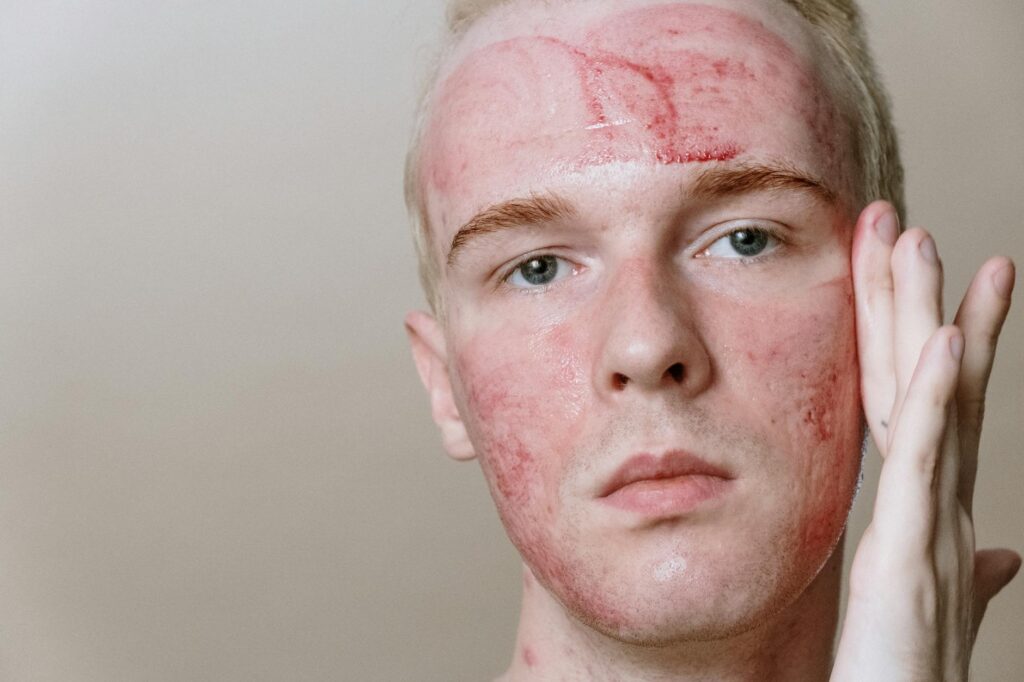
Red marks and dark spots after acne appear to be the same thing, but they’re actually two different post-inflammatory conditions that require different treatment approaches. Red marks are Post-Inflammatory Erythema (PIE)—damage to blood vessels and inflammation beneath the skin that makes the area appear red or pink. Dark spots are Post-Inflammatory Hyperpigmentation (PIH)—excess melanin production that leaves a brown or gray mark. Which one you develop depends largely on your skin tone: red marks appear more visibly on fair and medium skin tones, while dark spots occur more frequently in darker skin tones.
This distinction matters because the healing timeline and treatment options for each are fundamentally different. For example, if you’re someone with fair skin who develops red marks after a breakout, those marks will typically fade naturally within 4 to 8 weeks as inflammation subsides. But if you have darker skin and develop dark spots instead, you’re looking at a much longer journey—sometimes a year or more before the hyperpigmentation fades without treatment. Understanding which type you have and why it appeared is the first step toward choosing the right treatment strategy and managing expectations about healing time. This article explains the biological reasons these two conditions develop separately, how to identify which one you’re dealing with, how long each typically takes to heal, and what treatment options actually work for each type of mark.
Table of Contents
- What Causes Red Marks Versus Dark Spots After Acne
- How Skin Tone Affects Which Type of Mark You Develop
- How to Tell the Difference Between Red Marks and Dark Spots
- How Long Red Marks and Dark Spots Take to Fade
- Treatment Options for Red Marks Versus Dark Spots
- Understanding Atrophic Scars and When Marks Become Permanent Damage
- How to Prevent Red Marks and Dark Spots in the First Place
- Conclusion
What Causes Red Marks Versus Dark Spots After Acne
Red marks (PIE) form when acne inflames the skin deeply enough to damage the delicate blood vessels beneath the surface. When these vessels are injured or remain dilated from inflammation, they create that persistent redness or pink appearance you see even after the pimple itself has healed. The mark is essentially your skin showing you where the vascular damage occurred. This is why red marks often feel slightly warm to the touch initially—there’s genuine inflammation and blood vessel activity underneath. Dark spots (PIH) develop through an entirely different mechanism. When acne causes inflammation, some people’s skin responds by producing excess melanin—the same pigment that creates a suntan.
Instead of the melanin distributing evenly across the skin, it clusters in the area that was inflamed, creating a dark patch. This is your skin’s overzealous response to injury, not a sign of ongoing damage. The biological reason this happens more frequently in darker skin tones is that melanin-producing cells (melanocytes) in these skin types are simply more reactive to inflammation. Fair-skinned individuals have melanocytes that respond less dramatically to the same level of inflammation, which is why they’re more likely to develop visible red marks instead. Understanding this distinction is crucial because it explains why a treatment that works brilliantly for red marks—like a vascular laser that targets blood vessels—does nothing for dark spots. And conversely, exfoliating treatments that help fade hyperpigmentation won’t reduce the appearance of persistent redness from PIE.

How Skin Tone Affects Which Type of Mark You Develop
Your skin tone is the primary predictor of whether you’ll develop red marks or dark spots after acne, not the severity of the breakout itself. People with fair to medium skin tones typically see red marks as their main concern after acne heals. The underlying issue is vascular—blood vessel visibility against lighter skin creates that noticeable red or pink appearance. Even moderate inflammation in fair skin can produce a visible red mark that might barely register on someone with darker skin. In contrast, people with darker skin tones are much more prone to developing dark spots from the same level of acne inflammation.
This isn’t because they experience more severe acne or inflammation; it’s because their melanocytes respond to inflammation by ramping up melanin production, and this melanin is more visible against their skin tone. Someone with deep skin might never develop a noticeable red mark at all, but the same pimple could leave a dark spot that persists for months or years. However, this pattern isn’t absolute—you can develop either type regardless of skin tone, or even both simultaneously. Someone with darker skin might still develop some redness alongside hyperpigmentation. The key is that the risk ratio flips based on skin tone, which means your treatment strategy should account for which type is most likely and most visible in your specific case.
How to Tell the Difference Between Red Marks and Dark Spots
The fastest way to determine which type of mark you have is the glass press test. Take a clear glass—like a drinking glass—and press it firmly against the mark on your skin. If the mark fades or “blanches” and then returns to its original color when you release the pressure, you have a red mark (PIE). The fading happens because you’re temporarily pushing blood out of those dilated vessels. If the mark stays the exact same color regardless of pressure, you have a dark spot (PIH) from melanin, since pressing the glass won’t change melanin distribution. This simple test works because it directly exploits the biological difference between the two conditions.
Red marks depend on blood vessel activity, which responds to pressure. Dark spots depend on melanin location, which doesn’t. Knowing which type you’re dealing with immediately tells you which treatments to research and which to skip entirely. Many people waste time and money on treatments designed for the opposite condition, so this distinction pays off quickly. Beyond the glass test, red marks usually appear as a uniform red or pink shade, while dark spots often have an irregular border and vary in intensity across the mark. Red marks also tend to feel slightly warmer when you touch them early in the healing process, while dark spots feel normal to the touch. These visual and tactile clues reinforce what the glass test reveals.

How Long Red Marks and Dark Spots Take to Fade
The healing timeline for red marks (PIE) is relatively quick if you’re patient. Most red marks resolve naturally within 4 to 8 weeks as inflammation in the skin subsides and blood vessels return to normal. However, this is a median timeline—some marks fade in 2 weeks, while others persist for several months. In cases of deeper or more severe breakouts, red marks can take up to a year to completely disappear. The longer timeline usually indicates more extensive vascular damage that takes longer for your body to repair. Dark spots (PIH) follow a much slower healing trajectory.
Research shows that it takes at least one year for more than half of dark spot cases to fade significantly. Some individuals experience dark spots that persist for up to five years before fully resolving. This doesn’t mean you’re stuck with them forever—your skin will eventually clear them, but the waiting period is substantially longer than with red marks. This extended timeline is why many people with PIH choose to pursue treatment rather than wait for natural fading. The comparison matters because it resets expectations: if you develop red marks, natural healing is a reasonable strategy since weeks or months is a manageable wait. If you develop dark spots, relying on time alone could mean years of visible hyperpigmentation. This timeline difference is why treatment options are so different between the two conditions—waiting works for one but not the other.
Treatment Options for Red Marks Versus Dark Spots
Red marks respond best to vascular treatments that specifically target damaged blood vessels. Pulsed dye lasers (PDL) and intense pulsed light (IPL) therapy are considered the gold standard for treating PIE. These lasers emit wavelengths of light that are absorbed by the blood vessels in the mark, causing them to coagulate and fade. For many people, a series of PDL or IPL treatments produces significant improvement within weeks, which is why these remain the most popular clinical treatment for persistent red marks. Dark spots require a completely different treatment approach because the problem is pigment, not blood vessels. Topical treatments containing melanin-inhibiting ingredients—like hydroquinone, vitamin C, kojic acid, or niacinamide—can help slow melanin production and gradually fade hyperpigmentation.
Exfoliation, whether chemical exfoliants like glycolic acid or physical exfoliation, helps speed up the natural fading process by removing pigmented skin cells from the surface. Some darker skin types benefit from treatments like laser therapy designed for hyperpigmentation, but the laser wavelengths and settings are different from those used for PIE. One important limitation: treating one type won’t address the other. If you use a PDL laser on dark spots, it won’t fade the hyperpigmentation because the laser isn’t targeting melanin. Similarly, applying hydroquinone to a red mark won’t address the underlying vascular damage. This is why the glass press test and proper diagnosis are so valuable—they ensure you pursue treatments that will actually address your specific concern.
Understanding Atrophic Scars and When Marks Become Permanent Damage
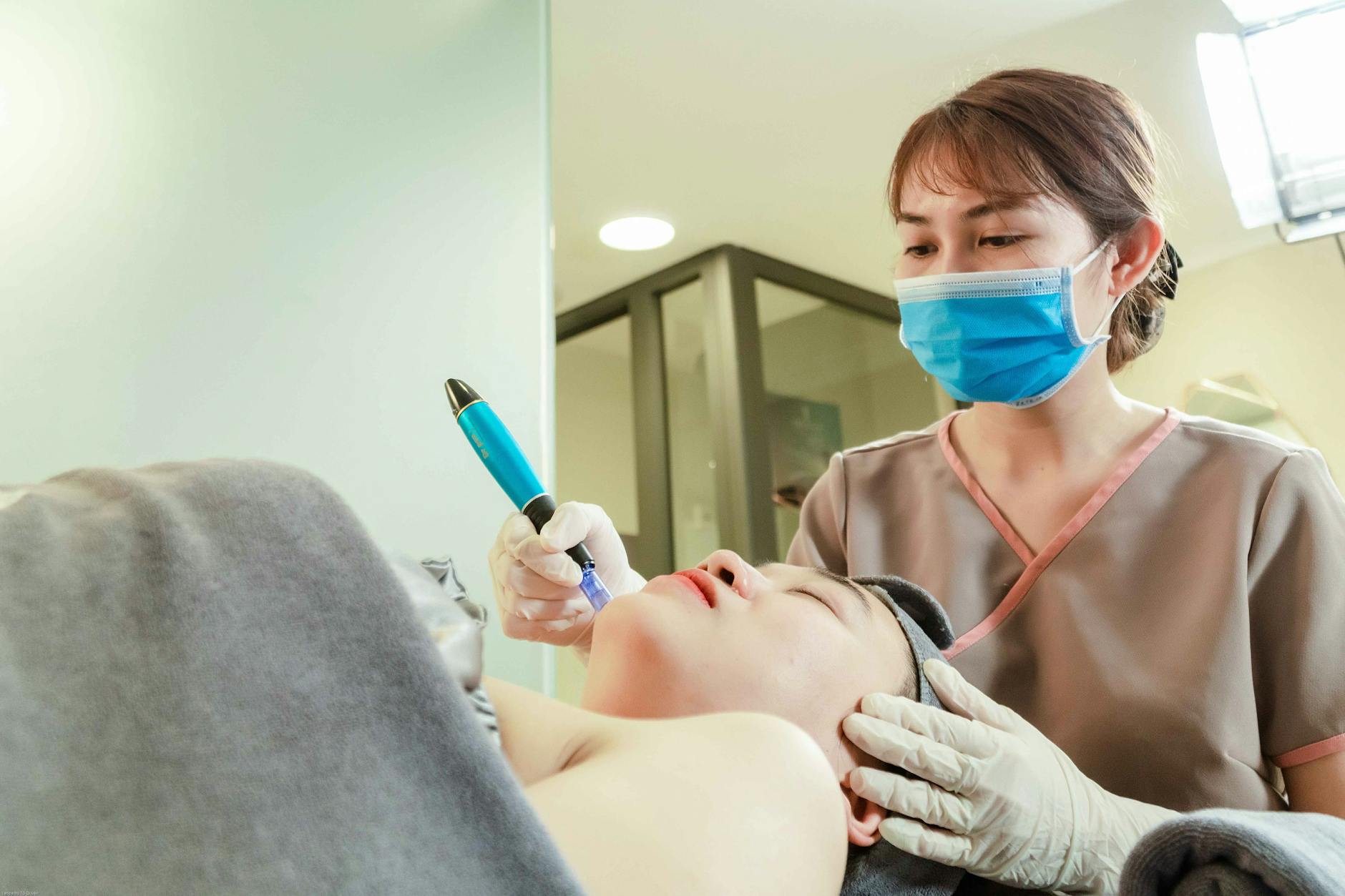
Most acne scars fall into a category called atrophic scars, where the acne damage destroys collagen beneath the skin, creating a depression or indentation. Research shows that 80-90% of acne scars are atrophic, meaning they represent permanent structural loss rather than temporary marks. This is an important distinction because red marks and dark spots are not scars in this sense—they’re temporary marks that will eventually fade. True atrophic scars, however, require more aggressive treatment because the collagen loss is permanent.
However, if a red mark or dark spot persists beyond the typical healing timeline (over a year for red marks, or years for dark spots without treatment), it doesn’t automatically mean it’s transformed into a scar. Many PIE cases fade slowly over extended periods, and many PIH cases eventually resolve even without treatment. The difference is that atrophic scars have visible pitting or texture changes you can feel, while persistent red or dark marks are flat and smooth. If your mark is flat and just discolored, it’s still likely a temporary mark rather than structural scarring.
How to Prevent Red Marks and Dark Spots in the First Place
Since red marks and dark spots develop from acne inflammation, the best prevention strategy is addressing breakouts quickly and minimizing inflammation before they can cause post-inflammatory damage. Using salicylic acid or benzoyl peroxide to treat acne early stops the cascade that leads to PIE or PIH. Additionally, protecting your skin from sun exposure immediately after acne heals is crucial—UV exposure can darken PIH marks significantly and extend healing time for both types.
Wearing sunscreen (SPF 30 or higher) in the weeks after a breakout reduces the risk that temporary marks will become more stubborn and visible. Inflammatory acne is more likely to leave noticeable marks than non-inflammatory acne, so treating cystic or nodular breakouts particularly aggressively makes sense from a prevention standpoint. If you’re prone to darker skin tones and know you’re likely to develop dark spots, starting early with melanin-inhibiting ingredients as a preventive measure during breakouts can reduce the intensity of hyperpigmentation that develops. The message is straightforward: the less inflammation you allow to persist, the lighter and shorter-lived your post-acne marks will be.
Conclusion
Red marks and dark spots are two distinct post-acne conditions with different causes, healing timelines, and treatment requirements. Red marks (PIE) result from vascular damage and typically resolve within weeks to months, while dark spots (PIH) result from melanin overproduction and can take a year or more to fade. The glass press test gives you a quick way to identify which type you’re dealing with, and that identification determines which treatment approach makes sense for your skin. For red marks, vascular lasers like PDL or IPL offer the fastest results.
For dark spots, topical melanin-inhibitors and exfoliation are the most effective tools. The best strategy is prevention—treating acne early and protecting your skin from sun exposure minimizes the marks that develop in the first place. If marks do appear, matching your treatment to the specific type ensures you’re not wasting time on approaches designed for the opposite condition. Understanding the biology behind these marks removes the guesswork and helps you make informed decisions about when to wait for natural healing and when to pursue professional treatment.