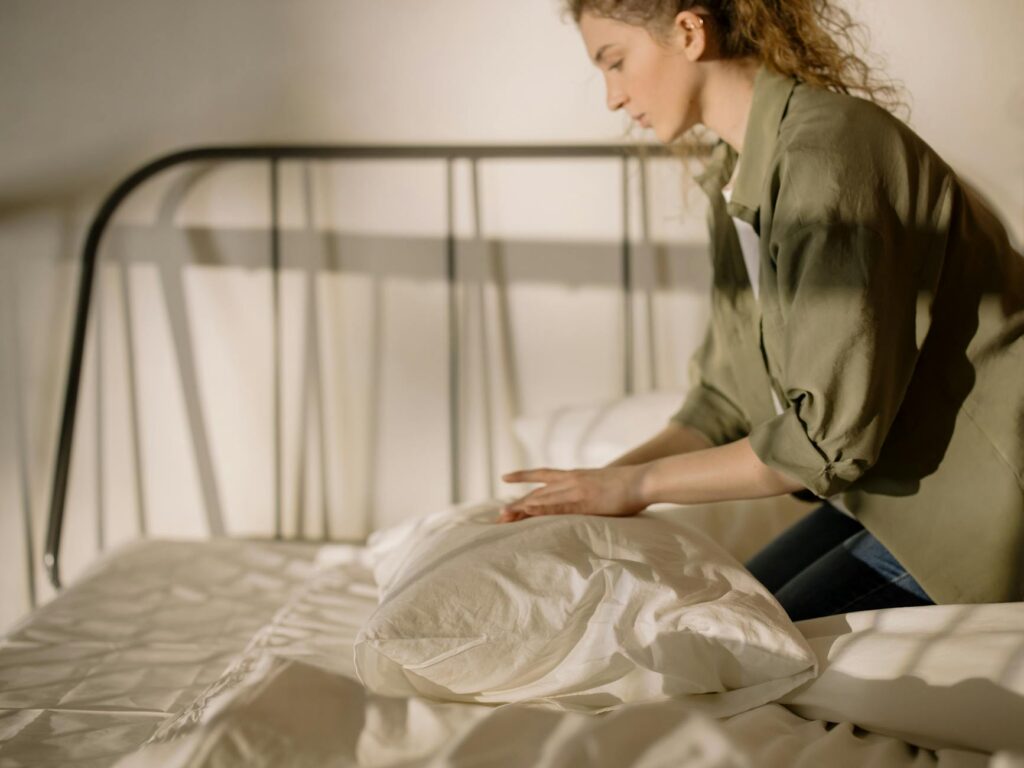
Silk pillowcases help acne-prone skin primarily by reducing friction against inflamed tissue and limiting the bacterial buildup that cotton pillowcases encourage overnight. Where cotton’s rough, textured surface drags against your face as you shift sleeping positions — disturbing the skin barrier and increasing trans-epidermal water loss — silk glides. That mechanical difference matters more than most people realize, particularly for anyone dealing with active inflammatory breakouts that worsen with repeated irritation. If you have ever woken up with new whiteheads concentrated on the cheek you sleep on, your pillowcase fabric is a reasonable suspect. But the friction story is only half the picture.
Cotton absorbs excess sebum and moisture from your face throughout the night, effectively turning your pillow into a breeding ground for *Cutibacterium acnes*, the bacterium most directly implicated in inflammatory acne. Silk is naturally less absorbent and carries inherent antimicrobial properties, which means fewer bacteria colonizing the surface you press your face into for seven or eight hours straight. Board-certified dermatologist Dr. Anna Chacon has stated plainly that “silk sheets and silk pillowcases are gentler on the skin of people with acne or sensitive skin than rough cotton ones.” That said, a silk pillowcase is not a treatment for acne. It is an environmental adjustment — one that dermatologists increasingly recommend alongside proper skincare routines, but not as a replacement for them. This article covers what the clinical research actually shows, where the evidence is strong versus where it gets thin, what specifications matter when buying silk, and how to get the most out of a silk pillowcase if you decide to try one.
Table of Contents
- How Does Friction From Your Pillowcase Affect Acne-Prone Skin?
- What Does the Clinical Research Say About Silk and Acne?
- Why Cotton Pillowcases Can Make Breakouts Worse
- What to Look for When Buying a Silk Pillowcase for Acne
- When a Silk Pillowcase Will Not Help Your Acne
- Combining Silk Pillowcases With Your Acne Treatment Routine
- Where the Research Is Heading
- Conclusion
How Does Friction From Your Pillowcase Affect Acne-Prone Skin?
Most people underestimate how much physical contact happens between their face and their pillow during sleep. The average person changes position dozens of times per night, and each shift creates friction between skin and fabric. On cotton, which has a coarse, textured weave at the microscopic level, this friction is enough to compromise the skin barrier — the outermost layer of cells responsible for keeping moisture in and irritants out. When that barrier is disrupted, trans-epidermal water loss increases, the skin becomes more reactive, and existing acne lesions are more easily aggravated. For someone with cystic or nodular acne along the jawline or cheeks, this nightly friction can turn a manageable breakout into a painful, prolonged one. Silk’s advantage here is straightforward physics. The fiber surface is smoother, so skin slides across it rather than catching and dragging.
This is particularly relevant for side sleepers, who press one cheek firmly into the pillow for hours at a time. If you have noticed that your breakouts are asymmetrical — worse on whatever side you favor — friction is almost certainly a contributing factor. Switching to silk does not eliminate contact, but it meaningfully reduces the mechanical irritation that compounds overnight. A useful comparison: think of the difference between dragging a cotton washcloth across a sunburn versus a silk scarf. The underlying skin condition is the same, but the sensation and the damage are not. Acne-inflamed skin responds similarly. Less abrasion means less redness, less swelling, and fewer opportunities for bacteria to enter micro-tears in the skin surface.
What Does the Clinical Research Say About Silk and Acne?
The honest answer is that rigorous, large-scale clinical evidence remains limited. A clinical trial registered as NCT00767104 tested silk-like pillowcases and found measurable reductions in acne lesions, which researchers attributed to lower bacterial transfer between the fabric and the skin. That result aligns with the theoretical case for silk. However, a separate study conducted at Wake Forest University found a greater reduction in total lesion count among participants who used a standard cotton pillowcase compared to a silk-like one. That study had a very small sample size, making it statistically inconclusive — but it is a reminder that the science is not settled. A more targeted clinical trial, titled “Assessment of the Effects of Silk Pillowcases on Acne Prone Skin,” is listed on ClinicalTrials.gov via Veeva, though results have not been published as of early 2026.
Until that data is available, much of the supporting evidence comes from dermatologist opinion, small trials, and brand-funded research. For instance, one branded clinical trial conducted by Blissy reported that skin brightness increased by 9.2 percent, skin texture improved by 4.2 percent, and 89 percent of participants said their skin looked more radiant. Those numbers are worth noting but should be interpreted with caution given the funding source. The takeaway is not that silk pillowcases are unproven — it is that the mechanism of action is well understood even if the clinical trial landscape is still catching up. Reduced friction and lower bacterial retention are not controversial claims. What remains genuinely uncertain is the magnitude of the benefit compared to simply washing a cotton pillowcase more frequently, which the American Academy of Dermatology emphasizes as the more critical variable for acne control.
Why Cotton Pillowcases Can Make Breakouts Worse
The specific problem with cotton and acne comes down to absorption. Cotton fibers are highly absorbent by design — that is why cotton towels work well. But when your face rests on a cotton pillowcase, those same fibers wick away sebum, sweat, and whatever skincare products you applied before bed. Over consecutive nights, that absorbed material creates what some dermatologists have described as a bacteria petri dish: a warm, moist, oil-rich environment where *Cutibacterium acnes* thrives. Consider someone who applies a retinoid or benzoyl peroxide treatment at night.
On a cotton pillowcase, a meaningful percentage of that product transfers into the fabric rather than staying on the skin where it can work. Third-party lab testing conducted for the silk pillowcase brand Slip demonstrated that silk absorbed far less face cream than cotton under identical conditions. For people spending real money on prescription acne treatments, losing product to their pillowcase is both wasteful and counterproductive. The American Academy of Dermatology recommends that acne-prone individuals change their pillowcases at least once per week. This recommendation implicitly acknowledges the bacterial accumulation problem — but notably, the AAD emphasizes that regular washing matters more than fabric type. If you are currently sleeping on the same cotton pillowcase for two weeks straight, switching to silk will help, but the bigger win is simply laundering more frequently regardless of material.

What to Look for When Buying a Silk Pillowcase for Acne
Not all silk is equivalent, and the market is crowded with products marketed as silk that are actually polyester satin. The distinction matters for acne-prone skin. Dermatologists recommend 100 percent mulberry silk at a weight between 19 and 25 momme. Momme is a unit of silk density — think of it as thread count’s equivalent for silk fabric. Below 19 momme, the silk is too thin to be durable or offer consistent benefits. Above 25, you are paying a premium for density that does not meaningfully improve skin contact properties. Polyester satin pillowcases feel smooth and look similar to silk, but they lack silk’s natural antimicrobial properties and breathability.
Satin will reduce friction compared to cotton — that part of the benefit carries over — but it does nothing to address bacterial accumulation and can actually trap more heat against the skin, which is its own acne trigger. If you are buying specifically for skin health rather than just comfort, the fabric composition matters. Check labels carefully. “Silky” and “satin” are not the same as “silk.” Price is the obvious tradeoff. A quality mulberry silk pillowcase typically runs between forty and eighty dollars, compared to five to fifteen for cotton. That cost is easier to justify if you are already spending money on prescription acne treatments that are being partially absorbed by your cotton pillowcase each night. It is harder to justify if your acne is mild and you are not yet consistent with basic skincare habits, which will always deliver a larger return on investment than any pillowcase switch.
When a Silk Pillowcase Will Not Help Your Acne
If your acne is driven primarily by hormonal fluctuations — deep, cystic breakouts along the jawline and chin that cycle with your menstrual period or respond to spironolactone — a silk pillowcase is unlikely to produce noticeable improvement. Hormonal acne originates from androgen-driven sebum overproduction deep within the skin, and no amount of surface-level friction reduction will address the underlying cause. The same applies to acne caused by medication side effects or systemic conditions. Silk pillowcases also do not help if your breakouts are primarily on areas that never contact the pillow — your forehead, nose, or upper back.
If you are breaking out symmetrically across your entire face regardless of sleeping position, the problem is almost certainly internal or related to your skincare routine, not your bedding. A silk pillowcase is most useful for people who notice a pattern: worse breakouts on the side they sleep on, worsening after nights of restless sleep, or irritation that seems mechanically triggered. There is also a maintenance reality that marketers gloss over. Silk requires more careful laundering than cotton — cold water, gentle detergent, often hand washing or a delicate cycle with a mesh bag. If you are the kind of person who already struggles to change pillowcases weekly as the AAD recommends, a silk pillowcase that you wash less often because it is inconvenient could actually perform worse for acne than a cotton one you throw in with your regular laundry every few days.

Combining Silk Pillowcases With Your Acne Treatment Routine
The practical benefit of silk’s low absorbency becomes most apparent when layered with a nighttime acne regimen. If you apply a prescription retinoid like tretinoin before bed, the product needs to remain on your skin to penetrate the epidermis and accelerate cell turnover. On cotton, some of that product ends up in the fabric within the first hour of sleep. On silk, significantly more stays where it belongs.
The same logic applies to benzoyl peroxide spot treatments, niacinamide serums, and prescription azelaic acid. One specific example: a person using adapalene gel (Differin) who switches from cotton to silk may find that they experience slightly more retinoid side effects initially — mild peeling or dryness — simply because more of the product is now actually working on their skin rather than being absorbed by the pillowcase. That is not a negative outcome. It means the treatment is finally being delivered as intended. Adjusting the amount of product applied slightly downward can compensate.
Where the Research Is Heading
The pending clinical trial on ClinicalTrials.gov examining silk pillowcases and mild to moderate acne-prone skin should provide more definitive data once results are published. If that trial confirms what smaller studies and dermatologist consensus suggest, it could shift silk pillowcases from a “probably helpful” recommendation to a standard part of acne management guidance. Given the low risk profile — silk does not interact with medications or active ingredients — even cautious dermatologists have little reason to discourage the switch.
The broader trend in acne treatment is moving toward recognizing environmental and lifestyle factors alongside traditional pharmacological approaches. Sleep hygiene, including what you sleep on, fits within that framework. Silk pillowcases are not revolutionary, and no responsible dermatologist would rank them above proven treatments like retinoids, benzoyl peroxide, or antibiotics. But as a low-risk complement to a well-constructed skincare routine, they address a genuine mechanical and microbial variable that cotton pillowcases make worse.
Conclusion
Silk pillowcases offer acne-prone skin two concrete advantages: reduced friction that minimizes barrier disruption and irritation of active lesions, and lower absorption that limits bacterial buildup and keeps topical treatments on the skin. The clinical evidence, while still developing, is supported by well-understood material science and consistent dermatologist endorsement. Dr. Anna Chacon and others in the field specifically recommend silk over cotton for sensitive and acne-prone skin types, and the American Academy of Dermatology’s emphasis on frequent pillowcase changes implicitly validates the bacterial transfer concern that silk mitigates.
The practical path forward is straightforward. If you are already following a consistent acne treatment routine and want to reduce overnight friction and bacterial exposure, invest in a 100 percent mulberry silk pillowcase rated between 19 and 25 momme, wash it weekly with gentle detergent, and pay attention to whether your breakouts on pillow-contact areas improve over the next four to six weeks. If you are not yet consistent with basic cleansing, treatment, and pillowcase hygiene, start there first. The pillowcase you sleep on matters — but it matters less than what you put on your skin and how often you wash the fabric that touches it.