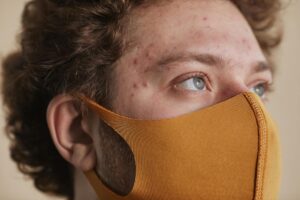
Sensitive skin is prone to persistent redness because it has a compromised skin barrier and heightened reactivity to irritants. The outer layer of sensitive skin—the stratum corneum—is thinner and contains fewer lipids (natural fats) that normally lock in moisture and block irritants. Without this protective seal, environmental triggers, inflammatory responses, and even routine skincare ingredients penetrate deeper into the skin, triggering sustained inflammation and visible redness. This isn’t just occasional flushing; it’s a chronic condition where the redness lingers for hours or days after exposure to triggers.
A person with sensitive skin using a standard astringent toner might experience redness that persists for a full day, whereas someone with a normal skin barrier would show minimal reaction within an hour. Persistent redness in sensitive skin results from two interconnected problems: impaired barrier function and an overactive immune response. When the barrier weakens, the skin loses water more rapidly (transepidermal water loss), becomes dehydrated, and signals distress to immune cells. These immune cells then release inflammatory mediators like histamine and cytokines, perpetuating the redness cycle. This article explores why sensitive skin develops these characteristics, what triggers the redness, and how to interrupt the inflammatory cascade rather than just mask symptoms.
Table of Contents
- What Causes Sensitive Skin to Develop a Compromised Barrier?
- How Does a Weakened Barrier Trigger Continuous Redness?
- Environmental and Behavioral Triggers That Intensify Redness
- Repairing the Skin Barrier to Reduce Persistent Redness
- The Role of Immune Reactivity and Inflammation Control
- Lifestyle Factors That Perpetuate Redness in Sensitive Skin
- Understanding Individual Variation and Prognosis
- Conclusion
- Frequently Asked Questions
What Causes Sensitive Skin to Develop a Compromised Barrier?
Sensitive skin typically results from a genetic predisposition combined with environmental and behavioral factors that progressively weaken the skin barrier. People with atopic dermatitis or rosacea inherit a genetic variation affecting filaggrin, a protein critical for maintaining the structural integrity of the stratum corneum. Without sufficient filaggrin, the skin cells don’t pack together tightly, creating gaps where water escapes and irritants penetrate. Even without a diagnosed condition, repeated use of harsh cleansers, over-exfoliation, or frequent exposure to extreme temperatures can chemically and physically strip away the lipid layer, leading to acquired sensitive skin. A person might not be born with sensitive skin but develop it after years of using sulfate-heavy cleansers twice daily combined with daily chemical exfoliation.
The barrier also weakens when the skin chronically lacks adequate moisture and lipid replenishment. Environmental factors like low humidity, pollution, and UV exposure accelerate lipid degradation. Indoor heating systems in winter months dry out the skin faster than most people realize, and people often respond by using more products, creating a vicious cycle. Unlike normal skin that can tolerate occasional dehydration without permanent damage, sensitive skin lacks the reserves to recover quickly. A ski trip for someone with sensitive skin—cold air, low humidity, wind, and sun—can trigger persistent redness that takes weeks to resolve, whereas someone with resilient skin bounces back in days.

How Does a Weakened Barrier Trigger Continuous Redness?
Once the barrier is compromised, irritants and allergens that would normally be blocked gain direct access to the deeper layers of the epidermis and dermis. Histamine-releasing mast cells are activated by these intrusions, and they flood the surrounding area with histamine, causing immediate redness and itching. However, the problem doesn’t stop there: the inflammatory response triggers immune cells to produce cytokines like IL-6 and TNF-alpha, which sustain inflammation long after the initial irritant is gone. This explains why the redness doesn’t fade quickly—the immune system is in an elevated state, treating even minor stimuli as threats. If someone with sensitive skin applies a fragrance-containing product in the morning, the redness might peak within an hour but persist well into the evening as the inflammatory cascade continues.
A critical limitation of the barrier dysfunction model is that simply rehydrating the skin doesn’t always resolve persistent redness if the underlying immune overresponsiveness isn’t addressed. Someone might spend weeks repairing their moisture barrier with ceramides and humectants, only to have redness flare again when exposed to a new irritant. This is because sensitive skin’s immune cells are primed to react strongly—they interpret signals more readily and release more inflammatory mediators than normal skin cells. Additionally, the redness cycle becomes self-perpetuating: inflammation damages the barrier further, which allows more irritants in, triggering more inflammation. Breaking this cycle requires both barrier repair and reducing immune reactivity simultaneously, not addressing one in isolation.
Environmental and Behavioral Triggers That Intensify Redness
Common environmental triggers that cause persistent redness in sensitive skin include temperature extremes, UV exposure, wind, and pollution. Cold air constricts blood vessels initially, but when skin warms indoors, vasodilation (blood vessel expansion) causes sudden flushing and visible redness. Someone who spends an hour outside in winter and then enters a heated building might develop intense facial redness that lasts several hours. This cycle is worse for people with rosacea or sensitive skin because their blood vessels are hyperreactive—they dilate excessively in response to temperature shifts. Similarly, sunburn isn’t just a cosmetic issue for sensitive skin; UV-damaged skin triggers ongoing inflammatory responses, creating persistent redness that can last for months if the skin isn’t properly protected.
Skincare ingredients themselves are often overlooked triggers for sensitive skin. Fragrance compounds, essential oils, alcohols, and common preservatives can penetrate a weakened barrier and activate immune cells. A product labeled “natural” or “botanical” may contain volatile compounds that seem soothing but actually irritate sensitive skin further. The warning here: “hypoallergenic” and “fragrance-free” don’t guarantee compatibility. A product might be fragrance-free yet contain methylisothiazolinone, a preservative that causes allergic contact dermatitis in sensitive individuals. Patch testing on a small area behind the ear or on the jawline for at least 48 hours (preferably a week) is essential before introducing any new product, no matter how gentle the label claims.

Repairing the Skin Barrier to Reduce Persistent Redness
The most effective approach to reducing persistent redness is a barrier repair protocol that combines three elements: gentle cleansing, hydration, and lipid replenishment. Gentle cleansing means using a pH-balanced, non-foaming cleanser (usually labeled as “mild” or “creamy”) that removes dirt without stripping natural oils. Follow cleansing immediately with a hydrating toner or essence containing humectants like glycerin or hyaluronic acid to draw water into the skin. Finally, apply a moisturizer containing ceramides, cholesterol, and fatty acids—the same lipids naturally found in a healthy skin barrier. Applied in the correct order (cleanser → hydrating layer → occlusive moisturizer), this routine repairs the barrier within 2-4 weeks for many people.
Someone who has been using a harsh foaming cleanser and salicylic acid twice daily might see dramatic improvement in redness just by switching to a gentle cream cleanser and adding a ceramide moisturizer. A key tradeoff to understand: barrier repair requires temporary simplification of skincare routines. Any active ingredients—retinoids, acids, vitamin C—should be paused during the initial repair phase, typically 4-6 weeks. This feels counterintuitive to people with acne who want to continue treating breakouts, but introducing actives while the barrier is compromised worsens redness and delays healing. The comparison: applying acids to sensitive, damaged skin is like scrubbing an open wound with a brush—technically it’s an active treatment, but it prevents healing rather than promoting it. Once the barrier is restored and redness has decreased significantly, actives can be reintroduced very gradually, perhaps once weekly, with careful monitoring for flares.
The Role of Immune Reactivity and Inflammation Control
Even with a repaired barrier, sensitive skin often maintains an underlying inflammatory state that makes redness recur easily. This immune hypersensitivity is partly genetic and partly conditioned by repeated exposure to irritants. Over time, the skin’s immune cells become more reactive, requiring lower thresholds to activate. Ingredients that reduce inflammation—like niacinamide, centella asiatica, azelaic acid, and zinc—can help dial down this reactivity. Niacinamide, for example, strengthens the barrier and also suppresses immune cell activation, making it beneficial on both fronts.
A person with persistently red sensitive skin might benefit from using a niacinamide serum or essence daily alongside their standard moisturizer. A limitation to acknowledge: topical anti-inflammatory ingredients help manage redness but don’t permanently reset immune sensitivity. If someone has had sensitive skin for years, their skin cells have “learned” to respond strongly to irritants. Topical treatments reduce the severity and frequency of flares, but they don’t erase the underlying tendency. Additionally, if the redness is driven by systemic conditions like rosacea, perioral dermatitis, or atopic dermatitis, skincare alone is insufficient—dermatological evaluation and sometimes prescription treatments (like topical metronidazole, azelaic acid, or oral medications) are necessary. The warning: if redness persists despite 8-12 weeks of consistent barrier repair and gentle skincare, professional dermatological assessment is warranted rather than continuing to experiment with products.

Lifestyle Factors That Perpetuate Redness in Sensitive Skin
Sleep quality, stress, diet, and hydration significantly influence inflammatory responses in sensitive skin. During sleep, the body reduces cortisol production and increases anti-inflammatory responses, so sleep deprivation directly worsens redness by keeping inflammation elevated. Chronic stress elevates cortisol and inflammatory cytokines, triggering flares in sensitive skin conditions like rosacea and eczema. Someone who works high-stress hours without adequate sleep might notice their redness worsens during particularly demanding work periods, independent of skincare changes.
Similarly, dietary triggers—alcohol, spicy foods, hot beverages, and high-glycemic foods—can trigger vasodilation and inflammatory responses in sensitive skin, creating persistent redness that lasts hours after consumption. Hydration is often overlooked despite being foundational. Drinking adequate water supports the skin’s ability to maintain moisture and function properly, while dehydration concentrates irritants and stresses barrier function further. The relationship isn’t direct (drinking water doesn’t immediately plump the skin), but systemic hydration is prerequisite for the skin’s natural barrier repair processes. Someone battling persistent redness who is also dehydrated—drinking primarily caffeine-containing beverages—may find that simply normalizing water intake reduces redness intensity by 20-30% even before addressing topical skincare.
Understanding Individual Variation and Prognosis
Sensitive skin exists on a spectrum, and the persistent redness some people experience is more severe than others. Genetics, age, past skin damage, and baseline barrier integrity all influence how prone someone is to redness and how quickly it resolves. Someone in their 20s with recently acquired sensitive skin from over-exfoliation has a better prognosis than someone in their 50s with lifelong atopic dermatitis—the younger person’s barrier can often fully recover with proper care, while the older person may achieve significant improvement but retain some underlying sensitivity. Understanding this spectrum helps set realistic expectations; not everyone can achieve completely redness-free skin, but most people can substantially reduce the frequency and intensity of flares.
Looking forward, emerging research on skin microbiome health, barrier lipid composition, and immune tolerance suggests new approaches beyond current standard care. Probiotic ingredients, postbiotics, and bioactive compounds from fermented ingredients show promise in reducing immune reactivity in sensitive skin. However, these remain emerging options, and the fundamentals—gentle cleansing, barrier repair with ceramides, and sun protection—remain the most evidence-supported interventions. For anyone with persistent redness, the long-term solution involves accepting that sensitivity is a skin characteristic rather than a flaw to be aggressively treated, and building a sustainable routine around protection and gentle reinforcement rather than active treatment and transformation.
Conclusion
Sensitive skin develops persistent redness due to a combination of barrier impairment and immune overresponsiveness. The weakened barrier allows irritants to penetrate and trigger chronic inflammation, while the skin’s immune cells remain hyperreactive, sustaining redness long after the initial trigger is removed. Understanding this dual mechanism—both structural (barrier) and immunological (inflammation)—is crucial for addressing redness effectively rather than chasing quick fixes or continuously trying new products that worsen the problem.
The path forward involves a multi-faceted approach: repairing the barrier with gentle cleansing and ceramide-based moisturizers, reducing inflammation through anti-inflammatory ingredients and lifestyle changes, protecting the skin from triggering environmental factors, and setting realistic expectations about prognosis. Recovery from persistent redness takes time—typically 4-12 weeks of consistent, gentle care—but most people see significant improvement when they prioritize barrier health over active treatments. If redness persists beyond this timeframe despite proper skincare, professional dermatological evaluation is essential to rule out underlying conditions like rosacea that require specialized treatment.
Frequently Asked Questions
How long does it take for persistent redness to fade if I repair my skin barrier?
Most people see noticeable improvement within 4-6 weeks of consistent gentle cleansing and barrier-supporting moisturizers. However, complete resolution can take 8-12 weeks, and some underlying redness may remain permanent if sensitivity is genetically based or associated with conditions like rosacea.
Can I use actives like retinol or vitamin C if I have sensitive, red skin?
Not during the initial barrier repair phase. Pause actives for 4-6 weeks while focusing on barrier restoration. Once redness has significantly decreased, reintroduce actives very gradually—perhaps once weekly—and discontinue immediately if flares occur.
Is sensitive skin with redness a sign that I have rosacea?
Not necessarily. Rosacea is a specific condition with diagnostic criteria that go beyond redness—it typically includes persistent facial flushing, small visible blood vessels (telangiectasia), and often pustules. However, sensitive skin redness can mimic rosacea. A dermatologist can differentiate between them through examination.
What’s the difference between sensitive skin and damaged skin barrier?
Sensitive skin is a skin type (often genetically determined) characterized by heightened reactivity. A damaged skin barrier is a condition that can occur in any skin type and manifests as dryness, redness, and increased irritant sensitivity. You can have sensitive skin without barrier damage, or normal skin with a temporarily damaged barrier (though barrier repair is faster in normal skin).
Why does my redness get worse when I try to treat it with actives?
Actives like acids and retinoids work by increasing cell turnover and immune activation, which intensifies inflammation in already-sensitive skin. They’re counterproductive when the barrier is compromised; the skin needs a period of calm and reinforcement before tolerable active treatment can resume.
Can diet actually affect redness in sensitive skin?
Yes, for many people. Alcohol, spicy foods, hot beverages, and high-glycemic foods trigger vasodilation (blood vessel expansion) and inflammatory responses in sensitive skin, causing or intensifying redness. Identifying and avoiding personal food triggers can reduce flares significantly.