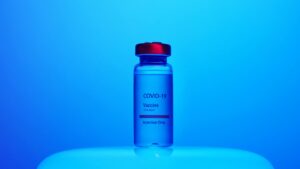
Radiesse and hyaluronic acid fillers might seem interchangeable for scar treatment, but they work through fundamentally different mechanisms. Radiesse stimulates your skin to produce new collagen through a process called biostimulation, while hyaluronic acid works primarily as a temporary volume filler. This distinction matters significantly when treating depressed acne scars or other atrophic scarring—Radiesse rebuilds skin structure over time, whereas HA plumps the area temporarily until the body breaks it down. The difference comes down to what each product is made of and how your skin responds to it.
Radiesse contains calcium hydroxylapatite (CaHA) microspheres suspended in a gel carrier, creating a stiffer structure that directly activates fibroblasts (the cells responsible for collagen production). When your fibroblasts encounter these CaHA microspheres, they’re mechanically triggered to synthesize new collagen. Hyaluronic acid, by contrast, is a smooth gel that simply sits beneath the skin without signaling your body to build anything new. Understanding this difference is essential if you’re considering filler treatment for scars, because your choice will affect not just immediate results, but how long those results last and whether your skin actually improves or just looks better temporarily.
Table of Contents
- How Does Radiesse Actually Trigger Collagen Production Differently?
- Why Collagen Type Matters for Scar Recovery
- How Long Do Results Actually Last?
- Which Filler Should You Choose for Your Scar Type?
- Dilution Strategies and Treatment Precision
- Safety and Longevity of Results
- The Future of Radiesse and Collagen-Stimulating Treatments
- Conclusion
How Does Radiesse Actually Trigger Collagen Production Differently?
The mechanism behind Radiesse’s collagen-stimulating effect is more sophisticated than typical dermal fillers. The CaHA microspheres—which make up roughly 30% of Radiesse’s composition—don’t just sit passively under your skin. When these microspheres are injected, your fibroblasts (collagen-producing cells) recognize them as a foreign material and respond by synthesizing new collagen to integrate the filler into your skin architecture. This process, called mechanotransduction, essentially tricks your body into thinking it needs to repair or reinforce the area. Over time as the gel carrier is absorbed (typically within 6-12 months), the stimulated collagen remains, explaining why results can last up to 3 years. Hyaluronic acid fillers work almost the opposite way.
HA is a naturally occurring substance that your skin already recognizes and tolerates without triggering much of an inflammatory response. It hydrates the skin in the injected area, which can temporarily plump depressed scars, but it doesn’t activate fibroblasts to produce new collagen. Your body gradually breaks down the HA through natural enzymatic processes, which is why results fade within 6-18 months. Some research suggests HA fillers provide minimal to no collagen boost—they function almost like a cushion that gradually deflates, whereas Radiesse functions like a scaffold that prompts structural rebuilding. The practical difference here is significant if you’re treating a deep acne scar. With HA, you’re essentially filling the scar like you’d fill a pothole with asphalt—it looks better while it’s there, but the underlying scar remains unchanged. Radiesse actually stimulates the skin around and beneath the scar to produce new, functional tissue, so even after the filler is absorbed, some of the improvement persists because actual collagen deposition has occurred.

Why Collagen Type Matters for Scar Recovery
Not all collagen is created equal, and Radiesse’s ability to promote the right type of collagen is one of its major advantages for scar treatment. When skin undergoes injury and healing, it initially produces Type III collagen, which is thinner and less organized—this is what gives scars their depressed appearance and reduced elasticity. Over time, healthy skin transitions from Type III to Type I collagen, which is thicker, stronger, and provides the elasticity and appearance of normal skin. Research indicates that Radiesse stimulates this progression from Type III to Type I collagen, essentially guiding your skin toward a more mature, natural-looking repair. Hyaluronic acid fillers, because they don’t stimulate collagen synthesis, don’t drive this collagen type evolution.
You get volume temporarily, but your scar tissue remains fundamentally Type III collagen—the same disorganized, inelastic tissue it was before. This explains why HA results, while sometimes impressive immediately, don’t improve the underlying scar quality the way Radiesse can. However, this advantage comes with a caveat: if someone has severe, very deep scars or requires significant immediate volume correction, Radiesse alone might not fully address the depression. While Radiesse can be diluted 1:1 with saline to treat depressed scars with minimal volume gain (allowing targeted collagen stimulation without overfilling), combining Radiesse with an HA filler in a layered approach might provide both the immediate structural improvement and the long-term collagen boost. Your dermatologist’s approach will depend on the scar’s depth and your skin’s overall needs.
How Long Do Results Actually Last?
One of the most compelling reasons practitioners choose Radiesse for scars is durability. clinical experience and research show Radiesse results can persist for up to 3 years in facial areas, significantly longer than HA fillers which typically last 6-18 months. This longevity stems from the collagen stimulation mechanism—after the gel carrier is metabolized, the newly produced collagen remains in place, sustaining improvement even as the original filler disappears. For someone with a stubborn acne scar, this means you might need only one or two Radiesse treatments to see sustained improvement over several years. With HA fillers, you’d typically need touch-up injections every 12-18 months to maintain results.
Over a five-year period, the cost and time commitment differences become significant—Radiesse can be more economical despite its higher per-treatment price. The longevity advantage isn’t absolute, though. Radiesse works best for moderate scars and depressed areas. If you have an extremely deep or large scar, you might still benefit from initial HA filling followed by Radiesse maintenance, or from multiple Radiesse sessions spaced several months apart. Additionally, individual metabolism varies; some people break down Radiesse faster than others, so your mileage may differ from the 3-year average.

Which Filler Should You Choose for Your Scar Type?
Choosing between Radiesse and HA depends on what you’re actually trying to accomplish. If you have mild to moderate depressed acne scars and want a long-term improvement that actually rebuilds skin structure, Radiesse is the more strategic choice. The biostimulation effect makes it particularly valuable for people who want to improve not just the appearance of the scar, but the skin’s underlying quality—elasticity, texture, and resilience. If you want to see immediate, dramatic results before an event or have very severe depression that needs maximum volume, HA might be the better first step. HA can fill deep scars more completely with a single treatment, and if you don’t like the results, your body will reabsorb it within months without lasting changes.
HA is also slightly less likely to cause the bumpy or granular texture that can rarely occur with Radiesse if injected improperly. Additionally, if you’re concerned about very occasional adverse reactions, HA’s temporary nature means any unwanted effects reverse relatively quickly. Many experienced practitioners use a hybrid approach: initial HA filler to address the immediate depression, followed by Radiesse injections 2-3 weeks later to lock in structural improvement and trigger collagen remodeling. This combines the immediate cosmetic satisfaction of HA with the long-term benefit of Radiesse’s biostimulation. Your dermatologist can assess your specific scars and recommend the approach most likely to deliver lasting improvement.
Dilution Strategies and Treatment Precision
One advanced technique that makes Radiesse particularly useful for acne scars is its ability to be diluted. Since Radiesse can be safely mixed with saline at a 1:1 ratio (even up to higher dilutions in some cases), practitioners can use it to target depressed scars with precision, stimulating collagen in the exact scarred area without adding excess volume that would make skin appear puffy or overfilled. This makes Radiesse effective for treating the multiple shallow to moderate depressions typical of ice-pick or boxcar acne scars. Hyaluronic acid, by contrast, doesn’t benefit from dilution in the same way.
If you dilute HA to reduce volume, you also reduce its structural support, potentially leaving the scar incompletely addressed. Some practitioners do blend HA with other substances or use it at different concentrations, but the approach doesn’t provide the same precision and collagen-stimulating benefit as diluted Radiesse. One important warning: diluting either product beyond recommended ratios or injecting too superficially can result in visible bumping or granulomas (small nodules). Radiesse, because it contains microspheres, is particularly susceptible to this if not placed at the proper depth—typically just above or at the level of subcutaneous tissue. A skilled practitioner will inject in the right plane and at appropriate dilution to avoid these complications while maximizing collagen stimulation.
Safety and Longevity of Results
Both Radiesse and hyaluronic acid have established safety profiles in clinical use. HA fillers show minimal adverse effects in prospective clinical trials, with temporary erythema (redness), bruising, and swelling being the most common reactions—these typically resolve within a few days to a week. Radiesse has been used clinically for over a decade with a well-documented safety history; adverse effects are similarly minimal and usually limited to temporary injection-site reactions.
The key distinction is that Radiesse’s adverse effects, when they occur, can potentially last longer because the stimulation process is ongoing for months. Rare complications like nodule formation or localized granulomas resolve more slowly than HA reactions because Radiesse takes longer to fully integrate. This isn’t a reason to avoid Radiesse—just a reason to ensure your injector is experienced with the product and understands proper injection depth and dilution.
The Future of Radiesse and Collagen-Stimulating Treatments
The direction of scar treatment is increasingly toward collagen-stimulating approaches rather than pure fillers. Radiesse represents one of the more established options in this category, but research continues on other biostimulating agents and combination approaches. Some dermatologists now combine Radiesse with microneedling or laser resurfacing, timing the procedures so that collagen stimulation from multiple modalities compounds.
Others use fractional laser to create controlled micro-injuries that activate healing, then follow with Radiesse to amplify and direct that collagen production. This evolution reflects a growing understanding that scars aren’t just volume deficits—they’re qualitative changes in skin texture, elasticity, and collagen organization. Future scar treatment will likely increasingly favor approaches like Radiesse that address these underlying issues rather than just filling the depression temporarily.
Conclusion
Radiesse works differently than hyaluronic acid for scars because it doesn’t just add volume—it actively triggers your skin to produce new collagen through biostimulation. This fundamental difference means Radiesse addresses the underlying scar tissue quality, lasts significantly longer (up to 3 years versus 6-18 months), and can be precisely applied to depressed scars without excess volume.
While hyaluronic acid fillers remain valuable for immediate aesthetic improvement or as an initial step in deeper scar treatment, Radiesse is increasingly recognized as the superior long-term option for sustainable scar improvement. If you’re considering filler treatment for acne scars, discuss both options with a board-certified dermatologist who can assess your specific scar type, depth, and treatment goals. They can determine whether Radiesse alone, HA alone, or a staged combination approach will deliver the lasting improvement you’re looking for.