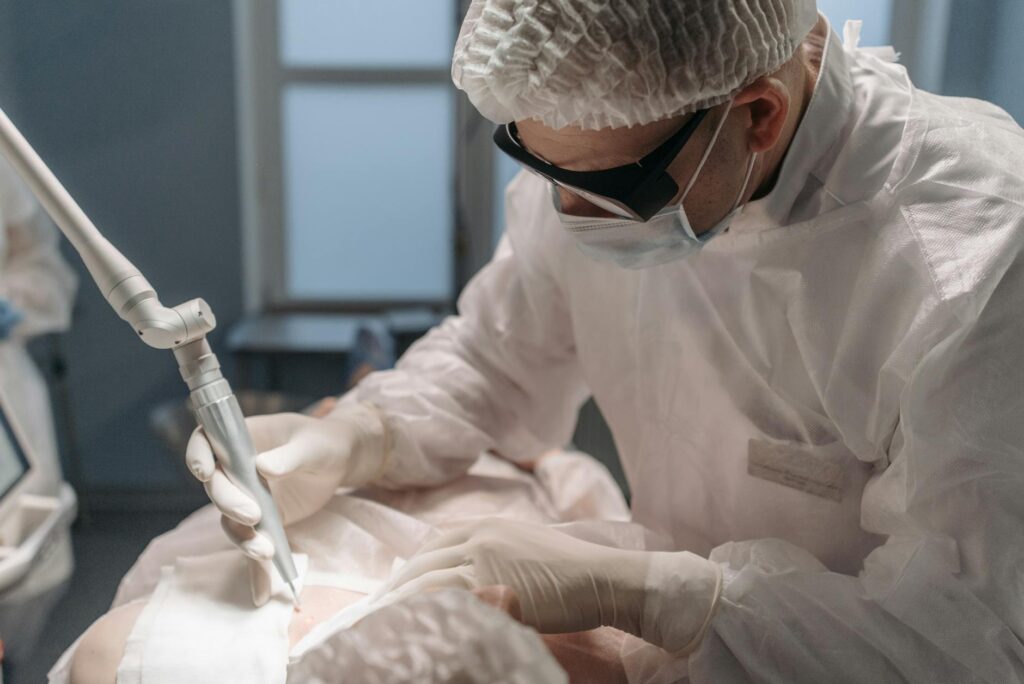
ProFractional laser works for mild-to-moderate acne scars because it stimulates your skin’s natural healing response at the cellular level. When fractional laser energy creates micro-perforations across the scarred skin, it triggers collagen remodeling and regeneration—essentially telling your body to rebuild tighter, firmer tissue in areas where previous acne has created indentations or pitting. The result is tangible: clinical studies show that 68.3% of patients experience “good or excellent results” within six months, with some patients achieving up to 90% scar improvement after just two treatments. This article covers how fractional laser actually works at the skin level, what the clinical evidence shows about realistic outcomes, the downtime and recovery timeline you can expect, how it compares to other treatments, and whether it’s truly right for your specific scar type.
Table of Contents
- How Fractional Laser Technology Creates Lasting Scar Improvement
- Clinical Evidence of Effectiveness for Mild-to-Moderate Scars
- Safety Profile and Real-World Downtime
- Timeline for Results and What Realistic Expectations Look Like
- Limitations and When Fractional Laser May Not Be Ideal
- Fractional Laser Compared to Other Modern Scar Treatments
- Recent Research and the Future of Acne Scar Treatment
- Conclusion
How Fractional Laser Technology Creates Lasting Scar Improvement
The key to ProFractional’s effectiveness lies in how it delivers laser energy—not as one continuous beam across the entire scarred area, but as thousands of tiny, precisely controlled columns of energy that penetrate into the dermis while leaving surrounding tissue intact. This fractional pattern (meaning partial, not complete coverage of the treatment area) allows your skin to heal faster than it would with traditional ablative lasers that treat the entire surface.
When these microbeams create controlled injury, the body responds by synthesizing new collagen and elastin, which literally fills in the depressed areas of acne scars from underneath. For someone with atrophic (indented) acne scars—the most common type—this collagen induction is exactly what you need; it physically raises the scarred tissue closer to the level of surrounding unblemished skin. Different types of fractional lasers vary in their wavelength and how deeply they penetrate: erbium-doped yttrium aluminum garnet (Er:YAG) lasers are gentler with shallower penetration, while CO2 fractional lasers penetrate deeper for more severe scarring, and the YSGG laser balances efficacy with safety by providing excellent control of thermal damage to surrounding tissue.
Clinical Evidence of Effectiveness for Mild-to-Moderate Scars
The clinical data backing fractional laser for acne scars is substantial, though outcomes vary based on scar severity and the specific laser type used. In a tertiary care hospital study tracking 60 patients over six months, 68.3% achieved either “good or excellent results,” with 43.3% showing excellent response and 18.3% demonstrating more than 75% improvement in both scar appearance and overall skin texture. A 2024-2025 systematic review examining fractional laser use across multiple acne scar studies confirmed these figures as representative of standard treatment outcomes.
When comparing fractional laser types, fractional CO2 lasers showed 65% of patients achieved greater than 50% improvement, outperforming Er:YAG lasers where only 55% reached that same improvement threshold. However, it’s important to understand that “improvement” on clinical scales doesn’t mean complete erasure—especially for more severe icepick or rolling scars. The benefit to mild-to-moderate scars is particularly strong because the remaining healthy skin around each scar can better support the collagen remodeling process; patients with deeper or more extensive scarring may require additional treatments or combination approaches to achieve similar results.
Safety Profile and Real-World Downtime
One reason fractional laser has become so popular for acne scars is that the fractional approach substantially reduces downtime compared to older ablative laser methods. Most patients experience mild erythema (redness) that persists for 4-7 days after YSGG treatment, with downtime averaging just five days before resuming normal daily activities. This is dramatically less than traditional CO2 laser resurfacing, which historically required 2-3 weeks of recovery.
More importantly, the clinical studies show no serious adverse events—meaning no permanent scarring, no long-lasting color changes, and no unexpected complications when performed by experienced practitioners. The reason YSGG laser has gained traction in particular is its superior intraoperative hemostasis (bleeding control) compared to Er:YAG alternatives, which reduces thermal damage to surrounding tissue and further minimizes unwanted side effects. That said, downtime varies individually—some patients feel ready to resume light exercise after a few days, while others prefer to wait the full week before public-facing activities. Also, while serious complications are rare, temporary side effects like swelling, temporary darkening of treated skin, or mild crusting in the treatment area are normal and expected parts of healing.

Timeline for Results and What Realistic Expectations Look Like
If you’re considering fractional laser for acne scars, understanding the realistic timeline is crucial for setting expectations. Results become visible within 2-3 months of completing your initial treatment course, but full appreciation of improvement can extend to a full three months post-treatment as collagen continues to remodel beneath the skin surface. This gradual improvement actually reflects the natural healing process—it’s collagen being synthesized and reorganized, not an instant cosmetic change.
Most practitioners recommend 2-4 treatment sessions spaced 4-6 weeks apart for optimal outcomes, and the research supports this cumulative approach: mean scar improvement scores increased from 0.56 after the first session to 1.62 by the final session, demonstrating that sequential treatments compound the benefit. Patience is essential here—if you’re planning to treat acne scars with fractional laser, block out 3-4 months mentally before expecting to see your final result, and understand that the body’s collagen remodeling continues working even after your last session. This extended timeline is one reason why fractional laser doesn’t appeal to everyone; if you need dramatic, immediate improvement, more invasive surgical options like subcision might be worth discussing with a dermatologist, though they carry different risks and recovery profiles.
Limitations and When Fractional Laser May Not Be Ideal
While fractional laser is effective for mild-to-moderate atrophic (indented) scars, it has real limitations worth understanding. Hypertrophic scars (raised, thickened scars) respond poorly to fractional laser because the treatment mechanism—stimulating collagen production—actually worsens tissue that’s already built up too much collagen. Similarly, very severe icepick scars (narrow, deep punctures) often require combination treatment or surgical elevation before fractional laser can be effective, since the laser alone may not penetrate or reshape tissue that’s severely depressed.
Patients with very dark skin tones have historically experienced higher rates of post-inflammatory hyperpigmentation (darkening), though modern protocols using appropriate laser settings and concurrent skin care have reduced this risk substantially. Additionally, fractional laser typically does not work well on active acne breakouts—you’ll need to complete or control your acne first, as treating actively inflamed skin or open lesions increases infection risk and complicates healing. If you have active cystic acne or widespread inflammatory lesions alongside old scars, treating the active acne (with medications, professional extractions, or oral treatments) should come before fractional laser resurfacing.
Fractional Laser Compared to Other Modern Scar Treatments
To contextualize why fractional laser has become a standard treatment, it’s worth comparing it to alternatives. Radiofrequency fractional treatments also exist and show comparable effectiveness in recent studies, achieving 64.7% to 69.4% improvement depending on treatment protocols, with potentially slightly less downtime but also slightly less dramatic results for severe scars. Subcision—where a dermatologist uses a needle to separate scar tissue from underlying tissue and promote lifting—works through a completely different mechanism (mechanical rather than collagen-inductive) and pairs well with fractional laser for specific scar types, though it carries slightly higher bruising and requires precise technique.
Chemical peels, while popular for treating surface texture and mild superficial scars, lack the depth of penetration to address deep atrophic acne scars. Microneedling, another collagen-induction method, requires many more sessions to achieve similar results and is generally recommended for very mild scars or as a maintenance treatment after fractional laser. For mild-to-moderate atrophic scars specifically, fractional laser strikes an evidence-based balance: it’s less invasive than surgical options, more effective than peels or basic microneedling, and has a clearer research foundation than many emerging treatments.
Recent Research and the Future of Acne Scar Treatment
A June 2025 systematic review in *Frontiers in Medicine* examining fractional laser use across multiple acne scar studies confirms that fractional laser resurfacing remains a standard, evidence-based treatment with consistent outcomes. The research landscape continues to evolve, particularly around optimizing laser parameters (wavelength, pulse duration, spacing, and depth of treatment) to minimize side effects while maximizing improvement.
Combination approaches—pairing fractional laser with other modalities like radiofrequency, subcision, or even emerging treatments like platelet-rich plasma (PRP) injections—are increasingly being studied and refined by dermatologists seeking to push results beyond what single-modality treatment achieves. This suggests that for the near future, fractional laser will likely remain a cornerstone of acne scar treatment, often used as part of a customized combination approach rather than as a standalone solution for more severe cases.
Conclusion
ProFractional laser works for mild-to-moderate acne scars through a well-understood biological mechanism: creating controlled micro-injuries that trigger your skin’s natural collagen production and remodeling. The clinical evidence is robust, showing that 68.3% of patients achieve good-to-excellent results, with improvement rates varying from 50-90% depending on the specific laser type and your scar severity.
With minimal downtime (averaging five days) and a strong safety profile backed by multiple clinical studies showing no serious adverse events, fractional laser has earned its place as a standard dermatological treatment. If you have mild-to-moderate indented acne scars and are considering this treatment, the next step is scheduling a consultation with a board-certified dermatologist who can assess your specific scar type, skin tone, and healing capacity to determine whether fractional laser alone is appropriate or whether a combination approach would serve you better. Set realistic expectations around the 3-month timeline for full results, commit to the recommended 2-4 treatment sessions, and understand that this treatment works best on acne scars once your active acne is controlled.