
That red or pink mark lingering on your skin after a pimple has healed isn’t a sign of permanent damage—it’s post-inflammatory erythema, or PIE, caused by dilated or damaged blood vessels beneath the surface. When acne forms and heals, the small capillaries in the inflamed area either become abnormally widened and remain that way, or new blood vessels form as part of the healing process but don’t fully resolve once the injury closes. These visible blood vessels show through your skin as redness, even though the acne itself is long gone.
Unlike true acne scarring, PIE is temporary and will fade with time, though patience is required—the process can take anywhere from weeks to over a year depending on the severity of the original breakout. This article explains why post-acne redness persists, how long you should expect it to last, what factors influence healing speed, and what treatments have actually been shown to help. Understanding the difference between vascular redness and other types of post-acne marks can help you set realistic expectations and avoid unnecessary treatments for marks that will resolve on their own.
Table of Contents
- What is Post-Inflammatory Erythema and Why Does It Happen?
- How Long Does Post-Acne Redness Actually Last?
- Why Some Marks Take Longer to Fade Than Others
- Treating Post-Acne Redness: What Actually Works
- When Redness Is Actually a Scar (and When It’s Not)
- Protecting Your Skin While PIE Fades
- The Healing Timeline and What to Expect Going Forward
- Conclusion
What is Post-Inflammatory Erythema and Why Does It Happen?
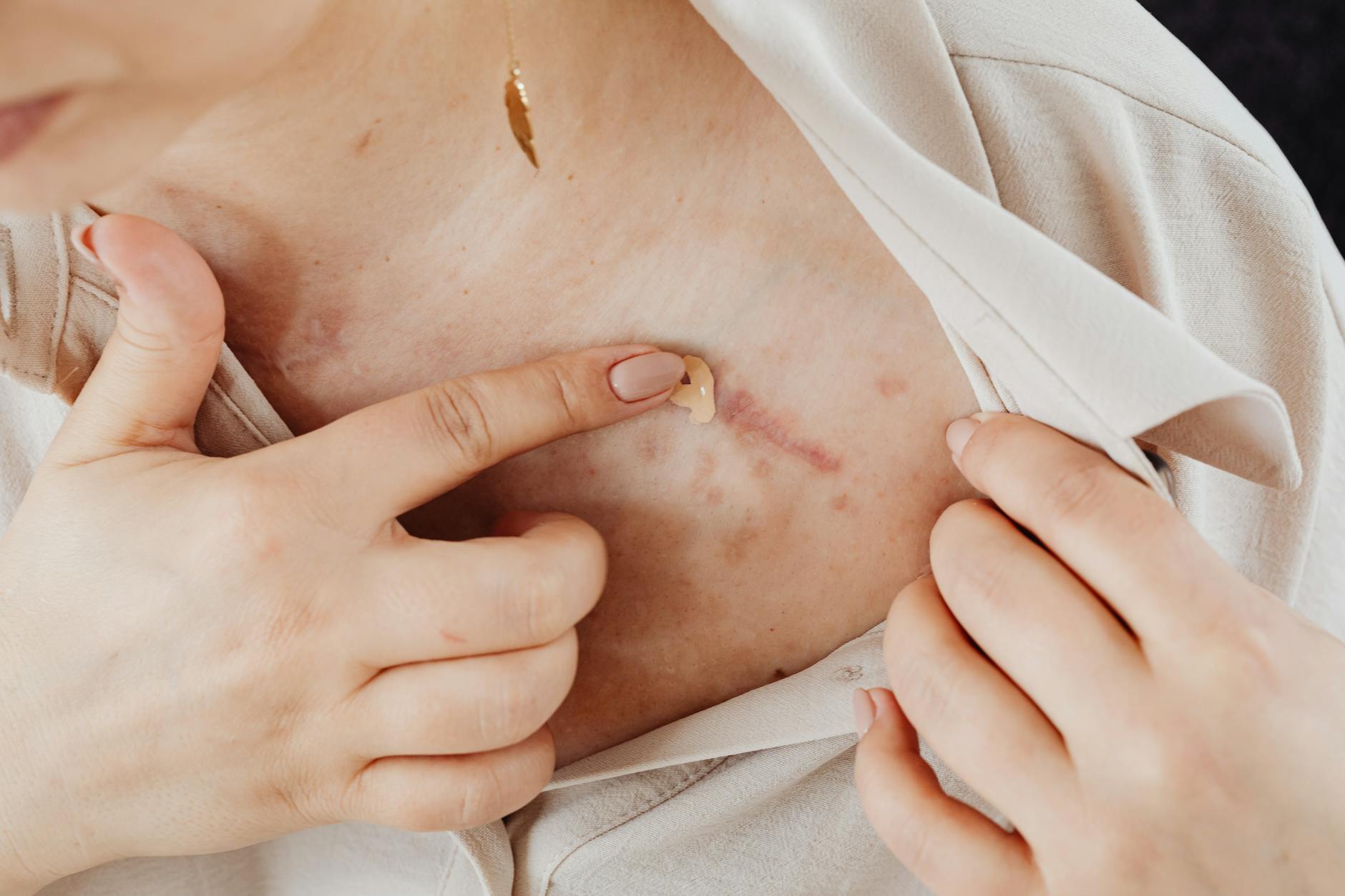
Post-inflammatory erythema is a vascular issue, not a pigmentation problem. When acne forms, it triggers an inflammatory response in your skin. Your body rushes blood to the area to fight infection and begin healing. During this process, capillaries (the tiny blood vessels in your skin) dilate to let more blood flow through. Normally, once the inflammation subsides, these vessels should shrink back to their normal size. But sometimes they don’t—they either stay dilated or fail to fully return, leaving a red or pink mark on your skin even after the pimple itself has completely healed. This is distinct from post-inflammatory hyperpigmentation (PIH), which is the darkening or browning of skin after acne.
PIH happens because extra melanin gets deposited in the area during healing. While PIH and PIE can both occur at the same time, they’re caused by completely different mechanisms and respond to different treatments. A red mark is PIE; a brown or dark mark is PIH. You can have one, the other, or both—which is why some people see redness fade but still have a darker patch lingering. The key thing to understand is that PIE develops because of how your body heals, not because of damage that can’t be fixed. It’s your skin doing exactly what it’s supposed to do—but sometimes it overshoots, leaving visible blood vessels in its wake. This is especially true for deeper breakouts like cystic acne, which cause more inflammation and more vascular damage than small surface pimples.
How Long Does Post-Acne Redness Actually Last?
If you‘re waiting for that red mark to disappear, here’s what the data shows: 81.6% of people with post-acne redness see it fade completely within 6 to 12 months. That means if you’re in the majority, you’re looking at less than a year of waiting. However, 18.3% of people experience redness that persists beyond 12 months, sometimes extending to 18 months or longer. For milder breakouts and superficial pimples, redness can resolve much faster—sometimes in as little as 1 to 3 weeks. But for more severe inflammation or deeper cystic acne, that timeline stretches significantly.
The frustrating part is that there’s no way to predict exactly where you’ll fall without waiting it out. The duration depends on how intensely your skin reacted to the acne, how deep the breakout was, and individual factors like your genetics and skin type. Someone with pale, fair skin (skin types I-III) is more likely to notice redness and for it to persist longer, because the contrast between the flushed area and normal skin tone is more obvious. A person with darker skin may experience the same vascular issue, but it might be less visually apparent or resolve differently because their skin has different healing characteristics. This is why patience is such a crucial part of acne recovery. Knowing that most marks will fade completely within a year can help you avoid chasing treatments for something that time will likely handle on its own.
Why Some Marks Take Longer to Fade Than Others
Not all post-acne redness is created equal. The main factor determining how long your PIE sticks around is the intensity of the original inflammation. When you had severe cystic acne that was painful, swollen, and deeply embedded in your skin, your body’s healing response was equally intense. That deep inflammation caused more vascular disruption, and those blood vessels take longer to remodel and return to normal. By contrast, a whitehead that came to a head quickly and didn’t cause much swelling might leave a barely noticeable red mark that’s gone in weeks. The size and depth of the breakout matter too.
A pimple that involved multiple layers of your skin and damaged a larger area created more vascular chaos than a small surface pustule. Your body has to do more healing work, recruit more blood vessels, and take longer to normalize them. Genetics also play a role—some people’s skin is just naturally more prone to leaving red marks, while others heal with barely a trace. This often runs in families. However, if you’re exposing your healing skin to frequent UV exposure from the sun, you’re essentially working against your skin’s natural healing process. Sun exposure can prolong redness by causing additional inflammation and preventing the blood vessels from settling back down. This is one of the few factors you can actually control, which is why sunscreen is so important during the healing phase.
Treating Post-Acne Redness: What Actually Works
For years, treatment options for PIE were limited. People tried everything from topical vitamin C to LED light therapy with mixed results. But recent clinical research has begun to change the conversation. A 2024 clinical trial found that 15% azelaic acid gel effectively improved acne-induced PIE with minimal adverse reactions. Azelaic acid works by reducing inflammation and helping to normalize blood vessel function, which is exactly what you need when dealing with post-inflammatory erythema. The benefit of azelaic acid is that it’s relatively gentle, well-tolerated by most skin types, and addresses the vascular component of PIE rather than just masking it.
Other treatments that dermatologists sometimes recommend include laser therapy (particularly vascular lasers designed to target the blood vessels themselves), intense pulsed light (IPL), and topical treatments like niacinamide or centella asiatica that support skin barrier healing and reduce redness. However, these treatments work best for people whose PIE isn’t fading on its own after several months. For the 81.6% of people who see marks fade within 6 to 12 months naturally, these clinical interventions may not be necessary. The key trade-off is cost versus time. A tube of azelaic acid gel is affordable and worth trying if you want to actively address the problem. Laser treatments are significantly more expensive and typically reserved for stubborn redness that hasn’t improved in 6+ months. For most people with standard post-acne redness, consistent sunscreen use, a gentle skincare routine, and time are the most practical approach.
When Redness Is Actually a Scar (and When It’s Not)
This is important: not all redness after acne is PIE. If you’re seeing red marks, you need to distinguish between post-inflammatory erythema and actual atrophic scars (the pitted, indented kind). With PIE, the skin surface is flat and smooth—it’s just discolored from the blood vessels underneath. With an actual scar, the skin has lost collagen and is visibly indented or pitted. You can feel the difference if you run your finger across it. The reason this distinction matters is that PIE will fade on its own with time.
Scars won’t. If you have true scarring, you’ll need professional treatment like microneedling, dermal fillers, or laser resurfacing to rebuild the collagen or raise the indentation. But if it’s just redness on smooth skin, you’re dealing with PIE, and you should expect it to fade without intervention. A helpful rule of thumb: if the mark is completely flat to the touch but red or pink in color, it’s PIE and it will fade. If you can feel an indentation or depression in the skin, that’s scarring. Most people have some PIE after breakouts, but true scarring only happens with severe, deep cystic acne or if acne was picked at or manipulated during the healing phase. So before assuming you have permanent scarring, make sure you’re not mistaking temporary redness for structural damage.
Protecting Your Skin While PIE Fades
While you’re waiting for post-acne redness to resolve naturally, sun protection is your most powerful tool. UV exposure can extend the duration of PIE by triggering additional inflammation and keeping the blood vessels reactive. If you’re diligent about sunscreen during the healing phase, you’re actively shortening the timeline. This is one of the few things you can directly control, which makes it worth prioritizing.
Use a broad-spectrum SPF 30 or higher every single day, even when it’s cloudy or you’re mostly indoors. Reapply every two hours if you’re outside, and more frequently if you’re swimming or sweating. Physical sunscreens with zinc oxide or titanium dioxide are often gentler on healing, inflamed skin than chemical sunscreens, though either can work. Beyond sunscreen, avoid picking at or physically irritating the healing area, and keep your skincare routine simple—your skin is already dealing with inflammation, so this isn’t the time to layer in active ingredients like retinoids or acids unless your dermatologist specifically recommends it.
The Healing Timeline and What to Expect Going Forward
Understanding the typical PIE timeline can help you avoid unnecessary panic or premature treatment decisions. For mild breakouts, you might see significant improvement within 4 to 8 weeks. For moderate acne, the 6 to 12 month window is realistic. For severe cystic acne with multiple breakouts and significant inflammation, you might be looking at the longer end of that range or beyond.
The good news is that even when marks persist for months, they’re usually fading gradually—the improvement just happens slowly enough that you might not notice week to week. As dermatological research continues, more targeted treatments are likely to emerge. The azelaic acid data suggests that there’s real progress being made on shortening the PIE timeline for people who want active treatment. But for most people dealing with post-acne redness today, the combination of sun protection, a stable skincare routine, and time remains the most reliable path to clear skin.
Conclusion
Post-acne redness persists because the blood vessels in your skin remain dilated or fail to fully normalize after the inflammation from acne subsides. This is post-inflammatory erythema, and it’s temporary—not permanent scarring. While the timeline can be frustrating (anywhere from weeks to over a year), the majority of people see these marks fade completely within 6 to 12 months with no treatment at all.
The most important things you can do are protect your skin from sun exposure, keep your routine simple while healing, and resist the urge to pick or manipulate the area. If redness persists beyond 6 months and you want to accelerate fading, azelaic acid or professional vascular laser treatments are evidence-based options worth discussing with a dermatologist. But in most cases, patience combined with smart sun protection will get you to clear skin without expensive interventions.