Phenol peels require cardiac monitoring during treatment because phenol is absorbed so rapidly into the bloodstream that it can cause direct toxicity to the heart muscle itself. When phenol is applied to the skin, approximately 70% of the volume is absorbed systemically within just 30 minutes of application. This systemic absorption creates a significant risk for cardiac arrhythmias—irregular heartbeats that can range from premature contractions to more serious conditions like ventricular tachycardia. A study of 54 patients who received phenol peels applied rapidly over the entire face in about 30 minutes found that 39% developed some form of cardiac arrhythmia during treatment, highlighting why real-time electrocardiography monitoring has become a standard safety requirement for this procedure.
The critical issue is that these cardiac complications cannot be predicted based on a patient’s age, sex, previous heart history, or even their blood phenol levels. This unpredictability is precisely why constant monitoring is essential rather than relying on patient demographics or risk assessments. With proper protocols—including spaced applications, careful fluid management, and continuous ECG monitoring—the risk of serious complications can be significantly reduced. This article covers the mechanism behind phenol’s cardiac toxicity, the types of arrhythmias that can occur, the factors that influence risk, and the monitoring and prevention strategies that have proven effective in modern dermatological practice.
Table of Contents
- How Does Phenol Cause Cardiac Problems During Facial Peeling?
- Why Systemic Absorption Matters More Than You’d Expect
- What Types of Heart Rhythm Problems Actually Occur?
- What Are the Evidence-Based Protocols That Reduce Cardiac Risk?
- Why Can’t Doctors Predict Which Patients Will Have Problems?
- Recognizing Early Signs and Managing Arrhythmias During Treatment
- Modern Practice and the Future of Safe Phenol Peeling
- Conclusion
- Frequently Asked Questions
How Does Phenol Cause Cardiac Problems During Facial Peeling?
phenol‘s cardiac toxicity operates through two primary mechanisms: direct myocardial toxicity and systemic effects on blood vessels. When phenol enters the bloodstream through skin application, it directly affects the heart muscle itself, causing decreased myocardial contraction and electrical activity. Animal studies have demonstrated that systemic exposure to phenol reduces the heart’s ability to contract effectively and disrupts the electrical signals that coordinate normal heartbeats. Additionally, phenol causes vasodilation—a widening of blood vessels—which can lead to a sudden drop in blood pressure.
These combined effects create an environment where the heart is more prone to developing irregular rhythms. The challenge is that the absorption rate and systemic toxicity depend primarily on the extent of skin surface exposed to phenol at any given time, not on the concentration of the phenol solution being used. This is why a dermatologist applying phenol to a patient’s entire face over 30 minutes creates much higher risk (39% arrhythmia rate) compared to dividing the face into separate treatment units spaced 20 minutes apart (22% arrhythmia rate). The key variable isn’t how strong the phenol solution is—it’s how much skin area receives phenol simultaneously and how quickly the body absorbs it into the bloodstream.

Why Systemic Absorption Matters More Than You’d Expect
The rapid systemic absorption of phenol fundamentally changes how we approach safety during phenol peels. Since 70% of the phenol volume enters the bloodstream within 30 minutes, the body’s organs—particularly the heart and kidneys—are exposed to significant phenol concentrations during and immediately after the procedure. This isn’t a localized skin treatment; it’s a systemic exposure event. The implication is that once phenol is applied to the skin, you cannot simply wash it off to stop absorption.
The damage timeline is already in motion. However, understanding this absorption rate has led to an important clinical insight: spacing out applications allows the body time to metabolize and eliminate some of the phenol before additional phenol is applied. When only half the face is treated on consecutive days rather than the entire face at once, the arrhythmia rate drops from 39% to 22%—a significant reduction in risk. This demonstrates that controlling the rate of systemic absorption through procedural timing is one of the most effective ways to prevent cardiac complications. The body has a window of time to process phenol, but only if physicians apply the treatment strategically rather than all at once.
What Types of Heart Rhythm Problems Actually Occur?
The cardiac arrhythmias caused by phenol peels vary in severity, but they follow a somewhat predictable pattern in terms of which types appear first. Tachycardia—a rapid heart rate—typically appears as the initial arrhythmia. This is often followed by more complex and potentially dangerous rhythm disturbances. Premature ventricular contractions are common, appearing as extra, irregular heartbeats originating from the lower chambers of the heart. Bigeminy is another pattern observed, where every normal heartbeat is followed by an abnormal one, creating an alternating rhythm that is visually distinctive on an ECG.
More serious arrhythmias can develop, including paroxysmal atrial tachycardia (episodes of rapid heart rate originating from the upper chambers) and ventricular tachycardia (rapid firing from the lower chambers). What makes monitoring essential is that these arrhythmias are not uniform in presentation. They can appear at different times during the procedure, persist for varying durations (studies show 2 to 19 minutes is typical), and escalate in severity. One patient might experience only brief premature contractions, while another might develop sustained ventricular tachycardia. Because the progression and severity cannot be predicted beforehand, continuous ECG monitoring throughout and shortly after the procedure is the only reliable way to detect and respond to these rhythm problems.

What Are the Evidence-Based Protocols That Reduce Cardiac Risk?
The most effective approach to preventing phenol-related cardiac complications involves dividing facial treatment into multiple separate units and spacing the phenol application at least 20 minutes apart between each unit. This spacing allows some phenol metabolism to occur, reducing the peak concentration in the bloodstream and lowering arrhythmia risk from 39% to 22%. Beyond timing, maintaining proper fluid management is critical—patients should be well-hydrated before the procedure, and some protocols recommend forced diuresis using furosemide (a diuretic medication) to increase urine output and help eliminate phenol from the body more rapidly.
Electrocardiography monitoring during and for a period after the procedure allows for real-time detection of premature ventricular contractions and premature atrial contractions. Some physicians use lidocaine hydrochloride as a prophylactic antiarrhythmic agent, meaning they administer it preventively to reduce the likelihood of arrhythmias developing in the first place. The tradeoff is that these additional interventions—continuous ECG monitoring, IV lines for medication administration, post-procedure observation time—increase the complexity and cost of the procedure. However, when compared to the risk of serious, potentially life-threatening cardiac complications, these measures are considered necessary for patient safety, particularly in patients undergoing treatment of large facial areas.
Why Can’t Doctors Predict Which Patients Will Have Problems?
One of the most important findings from phenol peel research is that traditional risk factors are surprisingly poor predictors of who will develop cardiac arrhythmias. Age, sex, and a patient’s previous cardiac history do not reliably identify which patients are at high risk. Similarly, there is no predictable relationship between the serum (blood) level of phenol and whether a cardiac arrhythmia will occur. This means you cannot simply draw a blood test, see that phenol levels are “acceptable,” and conclude that the patient is safe from arrhythmias. A patient with no history of heart problems can develop serious arrhythmias, and a patient with mild cardiac issues might have none.
This unpredictability is humbling for physicians and critical for patient understanding. It means that monitoring cannot be replaced by patient history questionnaires or pre-procedure risk stratification alone. Even a seemingly low-risk patient needs cardiac monitoring during phenol peel treatment. The silver lining is that because risk cannot be predicted, it also cannot be reduced through patient selection alone—it must be reduced through procedural technique (spacing and timing) and real-time monitoring (ECG). This is why modern dermatological practice has made cardiac monitoring a standard requirement rather than an optional add-on for “high-risk” patients.
Recognizing Early Signs and Managing Arrhythmias During Treatment
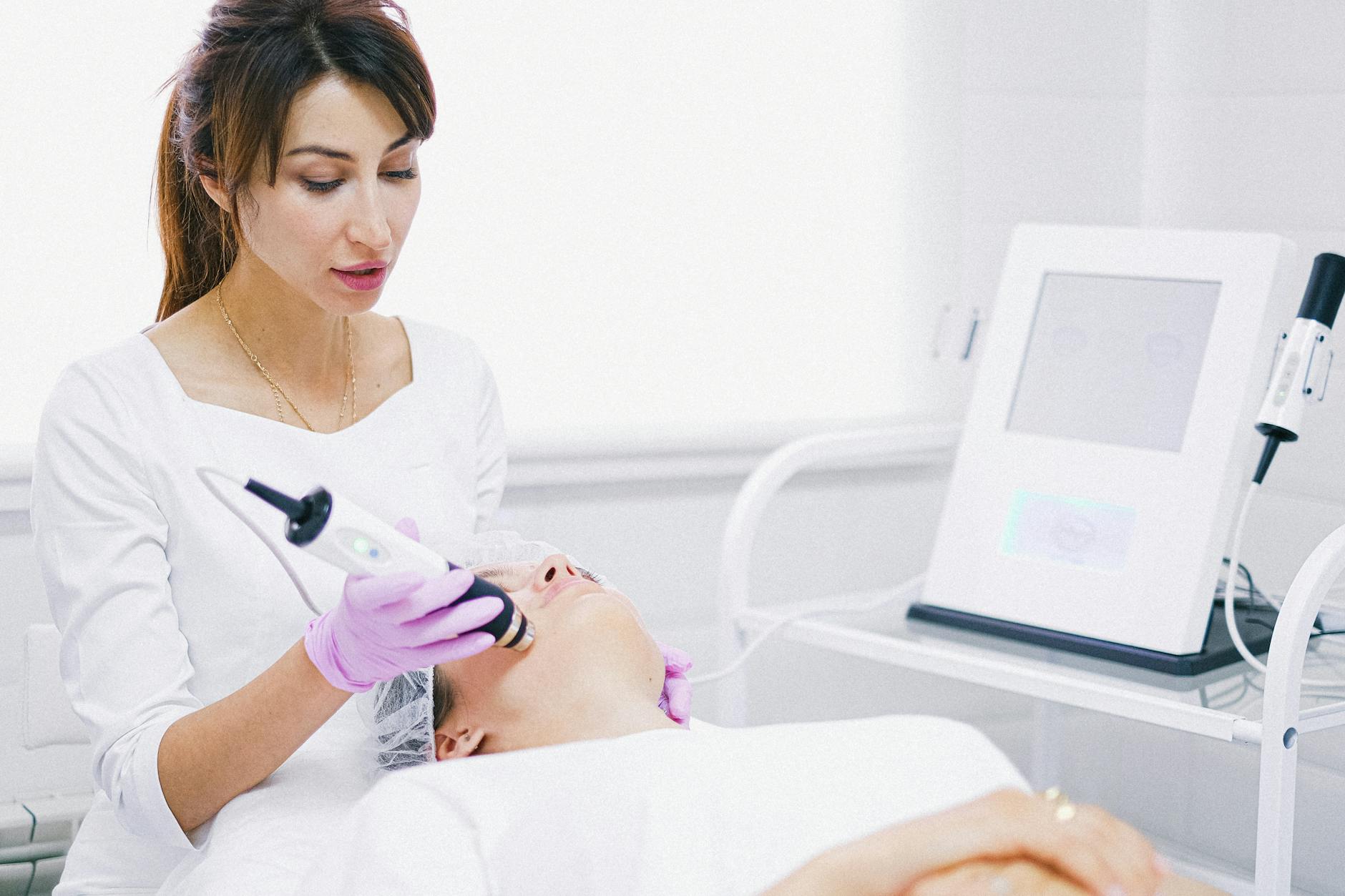
During a phenol peel procedure with proper monitoring in place, the first indication of a cardiac problem is typically the ECG recording showing abnormal electrical activity. However, some patients may report subjective symptoms like palpitations (feeling their heartbeat), lightheadedness, or brief chest discomfort. These symptoms warrant immediate attention and cessation of phenol application. The ECG provides the objective confirmation that guides clinical decision-making—a patient might feel a single skipped heartbeat that is benign, but the ECG will show whether this represents a true arrhythmia requiring intervention.
Management of arrhythmias that occur during the procedure typically involves stopping the phenol application immediately, alerting the patient, and providing supportive care. Most arrhythmias resolve within 2 to 19 minutes once the phenol application is halted and the systemic absorption reaches a plateau. In some cases, medications like lidocaine might be administered to suppress further abnormal electrical activity. The goal is to stabilize the patient, allow the arrhythmia to resolve, and then decide whether to continue the procedure in subsequent sessions or complete it using the spaced protocol. This responsive approach—detecting, responding, and then modifying the treatment plan—is why monitoring is so much more effective than trying to predict and prevent arrhythmias through screening alone.
Modern Practice and the Future of Safe Phenol Peeling
Despite phenol’s significant potential for cardiac toxicity, recent evidence from 2025 confirms that this procedure can be performed safely in highly trained hands with constant monitoring and controlled application techniques. The key is acknowledging that phenol peels carry inherent serious risks—not just arrhythmias, but also the potential for renal failure, neurotoxicity, and in rare cases, multiple organ failure—and then implementing protocols that mitigate those risks. The shift toward safety has been gradual but deliberate, moving away from rapid full-face applications toward segmented approaches with monitoring.
Looking forward, phenol peels remain one of the most effective treatments for deep facial wrinkles, severe acne scars, and pigmentation problems because of their powerful mechanism of action. However, this efficacy comes with responsibility. As dermatology continues to evolve, the standard of care increasingly demands that phenol peels be performed in settings with full cardiac monitoring capabilities, by physicians trained in recognizing and managing complications, and with clear protocols for spacing and timing applications. For patients considering this treatment, the presence of these safety measures should be a requirement, not an option.
Conclusion
Cardiac monitoring during phenol peels is not an optional precaution—it is an essential safety requirement. Phenol’s rapid systemic absorption (70% within 30 minutes), direct myocardial toxicity, and the inability to predict arrhythmia risk based on patient factors all converge to create a compelling case for continuous electrocardiography during treatment. The data is clear: uncontrolled application to the entire face results in a 39% rate of cardiac arrhythmias, while spaced, controlled applications reduce this to 22%, demonstrating that procedural technique and monitoring work.
If you are considering a phenol peel, ensure that your treatment will be performed by a dermatologist or plastic surgeon experienced with this procedure, in a setting equipped with ECG monitoring capabilities, using a spaced application protocol with adequate intervals between treatment areas. Ask your physician about their specific safety protocols, the monitoring equipment they will use, and their experience managing any complications that might arise. Phenol peels can deliver remarkable cosmetic results, but only when the cardiac risks are respected and actively managed throughout the procedure.
Frequently Asked Questions
Can I have a phenol peel if I have a history of heart problems?
Previous cardiac history does not reliably predict arrhythmia risk during phenol peels, but it does warrant a discussion with your dermatologist. Your primary care physician may recommend pre-procedure cardiac evaluation (such as an EKG) to establish a baseline, and your dermatologist should be informed of any cardiac conditions so they can adjust protocols accordingly. The decision to proceed should involve consultation with both your dermatologist and cardiologist.
What does the ECG monitoring actually detect?
ECG monitoring records the electrical activity of your heart in real-time. It detects arrhythmias like premature ventricular contractions, premature atrial contractions, bigeminy, paroxysmal atrial tachycardia, and ventricular tachycardia—the rhythm disturbances that phenol can cause. The monitor allows your physician to see these problems as they develop, rather than relying on symptoms you might or might not feel.
How long do the cardiac arrhythmias from phenol peels typically last?
Studies show that arrhythmias induced by phenol peels usually last between 2 and 19 minutes. Most resolve on their own once the phenol application is stopped and systemic absorption reaches a plateau. However, this is why monitoring must continue for some time after the procedure ends—to ensure the arrhythmia has fully resolved.
Does the concentration of phenol matter for cardiac risk?
The concentration of phenol matters less than the extent of skin exposed at one time. Arrhythmia risk is primarily determined by how much skin area receives phenol simultaneously, not by whether you’re using a 50% or 88% phenol solution. This is why spacing applications and dividing the face into multiple treatment units is more important than diluting the solution.
Can spaced applications prevent cardiac problems?
Spaced applications significantly reduce risk—from 39% to 22%—but they do not entirely eliminate the possibility of cardiac arrhythmias. This is why even with optimal spacing and timing, continuous ECG monitoring is still essential. The spacing protocol is one layer of protection; monitoring is another critical layer.
What should I do if I experience palpitations or chest discomfort during the procedure?
Tell your physician immediately. Palpitations or chest discomfort during a phenol peel should trigger an immediate halt to the application and assessment by ECG. Do not continue the procedure or assume these symptoms are benign. Your physician needs to determine whether an arrhythmia is occurring and decide whether to continue treatment, pause, or stop for the day.