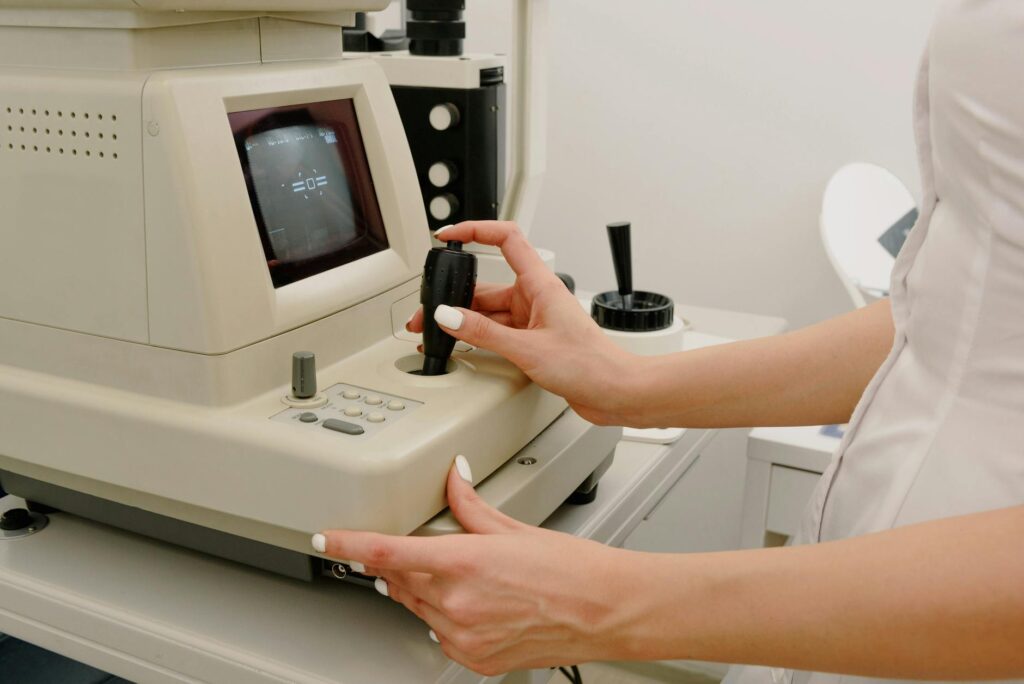
Optical Coherence Tomography (OCT) is being used in acne research because it provides the first noninvasive way to measure what happens beneath the skin surface in real-time, revealing structural and vascular changes that correlate directly with acne severity and treatment response. Unlike clinical observation alone, which relies on visual grading, OCT generates high-resolution cross-sectional images of the epidermis and dermis up to 2 mm deep—allowing researchers to quantify acne-related changes like follicle diameter, keratin plugs, inflammatory cell density, and blood flow patterns. For example, researchers using Doppler OCT discovered that blood flow in severe acne (IGA grade 3) is significantly increased compared to mild acne (IGA grade 1), providing an objective biomarker that mirrors acne severity. This article explores the technical capabilities making OCT valuable for acne research, how it measures severity with precision, its role in monitoring treatment effectiveness, and the clinical potential this imaging technology holds for personalizing acne treatment in the near future.
Table of Contents
- How Does OCT Technology Detect Acne-Related Changes in Skin?
- Quantifying Acne Severity Through Structural and Vascular Markers
- Monitoring Treatment Response with Precise Measurement
- From Research Findings to Clinical Practice—Personalized Treatment Protocols
- The Research Gap—Why OCT Hasn’t Yet Become Standard Clinical Acne Imaging
- Vascular Changes and Inflammatory Markers—What OCT Reveals About Acne Inflammation
- The Future of OCT in Personalized Acne Management
- Conclusion
How Does OCT Technology Detect Acne-Related Changes in Skin?
Optical Coherence Tomography works by using infrared light to image skin without requiring biopsies or invasive procedures. The technology captures backscattered light from deep within the skin layers, generating both cross-sectional 2D and 3D images in real-time. This depth capability is critical for acne research: OCT can visualize the dermis up to 1.5 mm depth and generate images to a maximum depth of 2 mm, which encompasses the sebaceous glands and follicles where acne forms. Standard skin photography or clinical grading cannot penetrate below the surface, making OCT fundamentally different in what it reveals about acne pathophysiology.
The imaging depth of 2 mm means researchers can observe structural changes that matter for acne: the hyperkeratotic borders of follicles, the diameter of follicle infundibula, keratin accumulation within pores, and the density of inflammatory cells surrounding lesions. Each of these features corresponds to acne severity, but they’re invisible to the naked eye or standard examination techniques. In comparison, traditional dermatologic assessment relies on counting visible pustules and nodules on the skin surface—a method that misses the subsurface inflammation and structural alterations that drive acne progression. OCT bridges this gap by making the invisible visible.
Quantifying Acne Severity Through Structural and Vascular Markers
Research has identified specific OCT features that reliably correlate with acne severity grades. Higher acne severity corresponds with an increased number of follicles displaying hyperkeratotic borders, larger keratin plugs, increased infundibulum diameter, greater density of inflammatory cells within and around lesions, and elevated blood flow parameters. This correlation is not approximate—it’s statistically significant. When researchers compared patients with IGA grade 3 acne to those with IGA grade 1 acne, Doppler OCT blood flow measurements were significantly increased in the more severe group, validating that vascular changes are useful biomarkers for grading acne severity.
This means OCT can function as an objective measurement tool rather than relying solely on subjective clinical judgment. However, the current limitation is that few large-scale studies exist examining acne through noninvasive imaging techniques, which researchers have identified as a major gap in the field. This means that while OCT shows promise in correlating with acne severity, its use remains primarily in research settings rather than routine clinical practice. If you’re interpreting OCT results, you should recognize that standardized cutoff values—the specific blood flow numbers or follicle diameter measurements that definitively separate grades—are still being established. The technology is advanced, but the reference standards clinicians would need to apply it routinely have not yet been solidified across the dermatology community.
Monitoring Treatment Response with Precise Measurement
One of the most significant applications of OCT in acne research is tracking how lesions respond to treatment at the microscopic level. In a clinical study, researchers monitored patients receiving topical minocycline treatment (1-2% concentration) over 14 days. Using OCT image analysis, they measured the volume of individual lesions before and after treatment. The result: a statistically significant reduction in lesion volume (P ≤ 0.05) was observed in the minocycline-treated group compared with both untreated controls and groups receiving vehicle (inactive) cream. This quantitative approach to measuring treatment response is fundamentally different from traditional methods.
Standard acne assessment relies on counting how many lesions are present or using a global severity scale. OCT changes this paradigm by measuring the actual volume of acne lesions—essentially, how much the lesion has shrunk. This provides objective evidence of whether a treatment is working at the microscopic level, not just whether lesions appear less visible. For a patient on an acne medication, OCT could theoretically answer the question “is my treatment actually reducing the underlying inflammation?” within days or weeks, rather than waiting months for visual changes to become apparent. This precision is particularly valuable in acne research because it reduces the noise from subjective observations and accelerates the ability to determine whether a new treatment candidate is effective.
From Research Findings to Clinical Practice—Personalized Treatment Protocols
The natural endpoint for this research is clinical implementation: using OCT imaging to evaluate individual acne patients and tailor treatment based on their specific pattern of follicular and vascular changes. Current evidence suggests this transition is on the horizon. Research literature indicates that OCT is expected in the near future to become routinely used for acne evaluation, guiding the selection of tailored treatment protocols based on individual patient characteristics. Rather than using a one-size-fits-all approach, clinicians could potentially use OCT to identify whether a patient’s acne is driven primarily by follicular plugging, inflammation, or vascular changes—and select treatments accordingly.
This personalized approach differs markedly from current practice, where acne is treated based on severity grade and lesion type (comedonal, pustular, nodular) without deep structural knowledge. A patient with extensive follicular plugging might benefit from keratolytic agents, while one with high inflammatory cell density might respond better to anti-inflammatory treatments. However, the major barrier to clinical adoption is the current lack of large-scale studies establishing standard OCT criteria and treatment decision trees. Before OCT can be integrated into routine acne care, researchers need to conduct multi-center studies demonstrating that OCT-guided treatment selection leads to better outcomes than conventional approaches.
The Research Gap—Why OCT Hasn’t Yet Become Standard Clinical Acne Imaging
While OCT technology is sophisticated and can provide detailed information about skin structure and blood flow, significant challenges remain before it becomes a routine tool in dermatology clinics. The most obvious gap is that few large-scale studies have examined acne through noninvasive imaging techniques—a gap that researchers have explicitly identified as critical. Most OCT acne studies to date involve small patient populations, single-center research, or proof-of-concept investigations. To translate OCT from research tool to clinical standard, the field needs large, multicenter trials demonstrating clinical utility and establishing diagnostic cutoff values.
Additionally, OCT devices are expensive and not yet widely available in typical dermatology offices. While the technology generates real-time images noninvasively, the equipment investment and training required create practical barriers to adoption. If OCT becomes a clinical standard, this will require not only scientific validation but also cost reduction and integration into dermatology workflows. For now, OCT remains primarily a research tool that generates data about acne pathophysiology, rather than a clinical tool that guides individual patient treatment decisions in everyday practice.

Vascular Changes and Inflammatory Markers—What OCT Reveals About Acne Inflammation
Doppler OCT adds another layer to standard OCT imaging by measuring blood flow in and around acne lesions. The research clearly shows that blood flow parameters are useful biomarkers for determining acne severity: patients with IGA grade 3 acne (the most severe category) show significantly elevated blood flow compared to those with IGA grade 1 (mild) acne. This vascular insight is important because it reflects the inflammatory nature of acne—increased blood flow to a lesion indicates active inflammation and immune response.
Standard clinical examination cannot detect this vascular change, making Doppler OCT unique in its ability to quantify the inflammatory state of acne. Researchers have even pushed OCT technology into experimental models: in a groundbreaking study, they demonstrated the first use of swept-source OCT to evaluate inflammatory acne-like lesions in a living mouse model. This research showed that OCT could capture real-time inflammatory responses in an in vivo system, opening possibilities for studying how acne inflammation develops and responds to treatment at the cellular level. These animal model studies may provide insights into the inflammatory cascade that could eventually inform human acne treatment strategies.
The Future of OCT in Personalized Acne Management
The trajectory of OCT in acne research is moving toward clinical integration. Based on current evidence, OCT is expected to become routinely used for acne evaluation in the near future, guiding the development of tailored treatment protocols specific to each patient’s unique skin characteristics. This vision represents a shift from generic acne treatment guidelines to precision medicine—where the specific type and severity of follicular, inflammatory, and vascular abnormalities drive treatment selection.
For acne patients and dermatologists alike, this future offers meaningful benefits: earlier detection of treatment response, objective measurement of improvement, and the potential to identify which treatments are most likely to work for a given patient’s unique acne profile. However, the timeline for clinical adoption depends on completing the large-scale research studies that currently represent a significant gap in the literature. The science is promising, but the field is still in the phase of gathering evidence rather than clinical implementation.
Conclusion
Optical Coherence Tomography represents a paradigm shift in how acne severity and treatment response can be measured. By capturing high-resolution images up to 2 mm deep within the skin, OCT reveals structural changes in follicles, inflammatory cell density, and vascular patterns that correlate directly with acne severity—information that standard clinical assessment cannot provide. Whether monitoring the response to topical minocycline or evaluating baseline acne characteristics, OCT offers objectivity and precision that could transform acne research and eventually reshape clinical practice.
While OCT remains primarily a research tool today due to cost, availability, and the current gap in large-scale clinical trials, the future holds promise for routine clinical use. As more studies accumulate evidence about OCT’s diagnostic value and establish standardized criteria for acne evaluation, dermatologists may soon shift toward OCT-guided treatment protocols tailored to each patient’s specific pathophysiology. For anyone involved in acne research or seeking cutting-edge assessment methods, OCT represents the next frontier in understanding what happens beneath the skin surface.