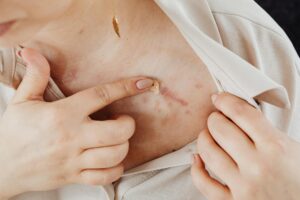
Obagi Nu-Derm is popular for severe post-acne PIH because it’s the only comprehensive system clinically proven to outperform both single-ingredient treatments and over-the-counter products at reducing dark marks left behind by acne. The system combines prescription-strength hydroquinone and tretinoin in carefully formulated products designed to work synergistically—hydroquinone directly suppresses melanin production triggered by inflammation, while tretinoin accelerates cell turnover to shed the discolored skin cells faster.
Unlike isolated treatments, this dual approach addresses PIH from multiple angles, delivering measurable improvements within 4 to 6 weeks and dramatic transformation by 18 to 24 weeks with consistent use. For someone dealing with severe hyperpigmentation from a year of deep cystic acne, for example, switching to Obagi Nu-Derm after months of ineffective spot treatments or OTC fade creams often produces the first visible lightening in under two months—something single-ingredient regimens rarely achieve on that timeline. This article explains what makes the Obagi Nu-Derm System genuinely effective for PIH, how long real results take, when to choose the hydroquinone-free alternative, and what the clinical evidence actually shows.
Table of Contents
- Why Obagi Nu-Derm Outperforms Single Ingredients for Post-Acne Marks
- How Obagi Targets the Root Cause of Post-Inflammatory Hyperpigmentation
- Timeline for Results: When You’ll Actually See Your PIH Lighten
- The Complete System Approach: Why Using All the Products Matters
- When to Choose Nu-Derm Fx Instead (Hydroquinone-Free Alternative)
- Clinical Evidence: What the Research Actually Shows
- Recent Research and Dermatologist Consensus on Long-Term Results
- Conclusion
Why Obagi Nu-Derm Outperforms Single Ingredients for Post-Acne Marks
The core reason dermatologists recommend Obagi Nu-Derm for severe PIH is that post-inflammatory hyperpigmentation doesn’t respond well to single treatments. When acne heals, the inflammatory response triggers an overproduction of melanin as the skin attempts to protect itself. Addressing this requires simultaneously suppressing melanin production while expediting the shedding of already-darkened cells—a job that neither hydroquinone alone nor tretinoin alone can accomplish as effectively. A clinical study of 301 subjects directly compared the complete Obagi Nu-Derm System to regimens using only hydroquinone, only tretinoin, and OTC products.
At both 12 and 24 weeks, the full Obagi system produced significantly greater reductions in hyperpigmentation, photodamage, and skin roughness when measured by clinical grading, digital photography, ultrasound analysis, and skin biopsies. The synergy happens because hydroquinone blocks new melanin while tretinoin increases cell turnover—each product enhances what the other one is doing, rather than providing redundant benefits. However, this synergy only works if you use the products as a system. Using hydroquinone from one brand and tretinoin from another rarely delivers the same results because the formulations and strengths aren’t calibrated to work together, and the supporting cleansers and moisturizers in the Obagi system are specifically designed to prevent the irritation that normally makes this combination unbearable.
How Obagi Targets the Root Cause of Post-Inflammatory Hyperpigmentation
post-inflammatory hyperpigmentation occurs because acne lesions trigger inflammation that signals melanocytes—the cells responsible for producing pigment—to go into overdrive. The excess melanin accumulates in the outer layers of skin, creating dark spots or patches that persist long after the acne itself has healed. This is different from scarring; it’s purely a pigmentation issue, which is why it’s potentially reversible with the right treatment. Obagi Nu-Derm addresses this through a two-pronged mechanism. The hydroquinone (at prescription strength, typically 4% in the system) actively inhibits tyrosinase, an enzyme melanocytes need to manufacture melanin.
Simultaneously, the tretinoin in the system increases how quickly skin cells turn over, moving pigmented cells from the deeper layers of the epidermis to the surface where they’re shed. This combination means the skin stops producing excess color while actively removing the discolored cells that are already there. A critical caveat: this process requires dermatologist supervision because tretinoin and strong hydroquinone cause significant irritation during the adaptation period (typically the first 2 to 4 weeks). A dermatologist can recommend a gradual introduction schedule, proper moisturizing support, and sun protection—steps that prevent people from abandoning the system when their skin becomes red and flaky. Without this guidance, many people stop using the products before they reach the point where results appear, mistaking irritation for a sign that the treatment isn’t working.
Timeline for Results: When You’ll Actually See Your PIH Lighten
Visible results from the Obagi Nu-Derm System follow a predictable timeline, though individual variation exists based on the severity of pih and how well someone tolerates the active ingredients. Within 4 to 6 weeks of consistent twice-daily use under dermatologist supervision, most people notice the first lightening of post-acne dark marks. This is when the hydroquinone’s melanin-suppressing effect and tretinoin’s cell-turnover acceleration start compounding—the discolored cells are actively leaving the skin rather than sticking around indefinitely. By 8 to 12 weeks, the transformation becomes more obvious. People typically report noticeably reduced pigmentation, improved overall skin tone, decreased appearance of fine lines, and smoother texture.
The skin looks brighter not just because the marks are lighter but because the increased cell turnover reveals fresher skin beneath. At this point, someone who started with moderate-to-severe PIH might see 40 to 60% improvement depending on how dark the marks were initially. The full benefit emerges over 18 to 24 weeks of consistent use. This is when dramatic transformation typically occurs—deep post-acne marks that seemed permanent fade significantly, the skin achieves a more even tone, and the improvements compound as tretinoin reshapes the skin’s texture and structure over time. For someone with severe PIH covering significant areas of the face, this extended timeline is usually worth it because the alternative (waiting years for marks to fade naturally, or accepting them permanently) is far less appealing than committing to six months of a structured skincare routine.

The Complete System Approach: Why Using All the Products Matters
Obagi Nu-Derm Fx System (or the standard Nu-Derm System) includes six to eight products—not because the company wants to increase the price tag, but because using only the actives without the supporting formula causes intolerable irritation that most people can’t sustain. The system includes a gentle cleanser, hydrating toner, exfoliating product, the tretinoin and hydroquinone actives, a specialized moisturizer, and a robust sunscreen. Each product is formulated to work with the others: the cleanser prepares skin without over-drying, the moisturizer provides the buffering that makes the actives tolerable, and the sunscreen is essential because tretinoin increases photosensitivity. Attempting to replicate the Obagi approach by buying tretinoin from a telemedicine service and hydroquinone from a dermatologist, then using drugstore moisturizer and sunscreen, frequently fails because the synergy breaks down.
The tretinoin and hydroquinone concentrations might not be compatible, the supporting products don’t provide adequate buffering, and the user typically experiences severe peeling, redness, and sensitivity that leads them to reduce frequency or stop altogether. The complete system costs somewhere in the range of $209 for the brightening duo or higher for the full regimen, depending on location and specific formulation—an investment, but one that typically delivers results where piecemeal approaches fail. A practical comparison: someone using only tretinoin from a generic source might see modest improvement in tone and texture over six months. Someone using Obagi Nu-Derm as designed typically sees dramatic improvement in PIH specifically within that same timeframe, because every product in the system is calibrated to maximize tolerance while optimizing the active ingredients’ efficacy.
When to Choose Nu-Derm Fx Instead (Hydroquinone-Free Alternative)
The standard Obagi Nu-Derm System contains 4% hydroquinone, which is highly effective but can be irritating or problematic for some skin types. Some people experience contact dermatitis to hydroquinone itself, while others have skin that’s simply too dry or sensitive to tolerate the combination of tretinoin plus hydroquinone without experiencing severe peeling and inflammation. For these individuals, Obagi Nu-Derm Fx System provides an alternative: it replaces hydroquinone with a different pigmentation-fighting complex designed to suppress melanin production through alternative botanical and chemical ingredients while maintaining tretinoin as the cell-turnover driver. Nu-Derm Fx is typically recommended for individuals with dry skin, sensitive skin, or a history of allergic reactions to hydroquinone. However, it’s important to understand the tradeoff: clinical efficacy studies suggest that the standard system with hydroquinone produces faster and more dramatic results, particularly for severe PIH.
The Fx alternative still works, but the timeline to visible results is often slightly longer, and the magnitude of improvement may be more modest. For someone with very mild PIH or primarily concerned with skin tone rather than dramatic darkening, this difference might be negligible; for someone with severe post-acne marks, the standard system’s superior efficacy often justifies tolerating some initial irritation. A warning worth emphasizing: the first 2 to 4 weeks on either Obagi system will likely involve redness, peeling, and dryness as skin adapts. This is normal and not a sign that the product is damaging your skin—it’s the tretinoin working—but it can be discouraging. People who misinterpret this adaptation phase as an allergic reaction sometimes switch to the Fx system prematurely, losing the benefit of the more effective hydroquinone-containing version.

Clinical Evidence: What the Research Actually Shows
A 24-week clinical trial involving 301 subjects directly evaluated the Obagi Nu-Derm System’s efficacy against competing approaches. Researchers measured outcomes through multiple methods: clinical grading by dermatologists, digital photography comparing before-and-after images, ultrasound analysis of skin structure, and skin biopsies examining cellular changes. At the 12-week mark, the full Obagi Nu-Derm System demonstrated significantly greater improvement in hyperpigmentation compared to regimens using only hydroquinone, only tretinoin, or over-the-counter products.
These differences became even more pronounced by 24 weeks, with the complete system producing substantially more dramatic lightening and improvements in skin texture and photodamage. This evidence matters because it’s not marketing language or before-and-after photos—it’s standardized clinical measurement showing that the Obagi approach genuinely outperforms the alternatives people try before committing to the full system. Many people spend months trying single ingredients or OTC fade creams before reluctantly investing in Obagi; the clinical data suggests starting with the system from the beginning would have saved time and money.
Recent Research and Dermatologist Consensus on Long-Term Results
Dermatologists continue recommending the Obagi Nu-Derm System for severe PIH specifically because the system produces dramatic, long-term results that persist beyond the treatment period. Recent research from 2025 and 2026 has expanded understanding of post-inflammatory hyperpigmentation, including the discovery that acne-induced PIH can occur even without visible inflammation—meaning some people develop dark marks from acne they didn’t even realize was inflammatory.
AI-powered grading tools now help treatment planning by assessing PIH severity and predicting which patients will respond best to tretinoin-based regimens like Obagi, informing personalized treatment approaches. The dermatologist consensus remains strong: for measurable, synergistic results in addressing severe post-acne marks, the Obagi Nu-Derm System’s combination of hydroquinone and tretinoin within a complete supporting formula delivers outcomes that justify the cost and the initial irritation period. As skin research advances and new tools improve treatment guidance, the fundamental approach—combining melanin suppression with accelerated cell turnover—remains the gold standard for severe PIH.
Conclusion
Obagi Nu-Derm is popular for severe post-acne PIH because it’s clinically proven to outperform single treatments, combining prescription-strength hydroquinone and tretinoin in a system calibrated to maximize both efficacy and tolerability. Results typically appear within 4 to 6 weeks, with dramatic transformation by 18 to 24 weeks—a timeline that reflects genuine skin changes rather than temporary coverage.
For anyone who’s tried OTC fade creams, single-ingredient treatments, or extended waiting periods without success, Obagi Nu-Derm offers the evidence-backed alternative that dermatologists recommend specifically for situations where PIH is severe and persistent. If you’re considering this system, work with a dermatologist who can monitor your skin’s adaptation to tretinoin, adjust your introduction schedule if needed, and confirm that the standard hydroquinone-containing version (rather than the Fx alternative) is appropriate for your skin type. The investment in a complete system, rather than attempting to replicate the approach with piecemeal products, significantly increases the likelihood of the results the clinical data suggests are possible.