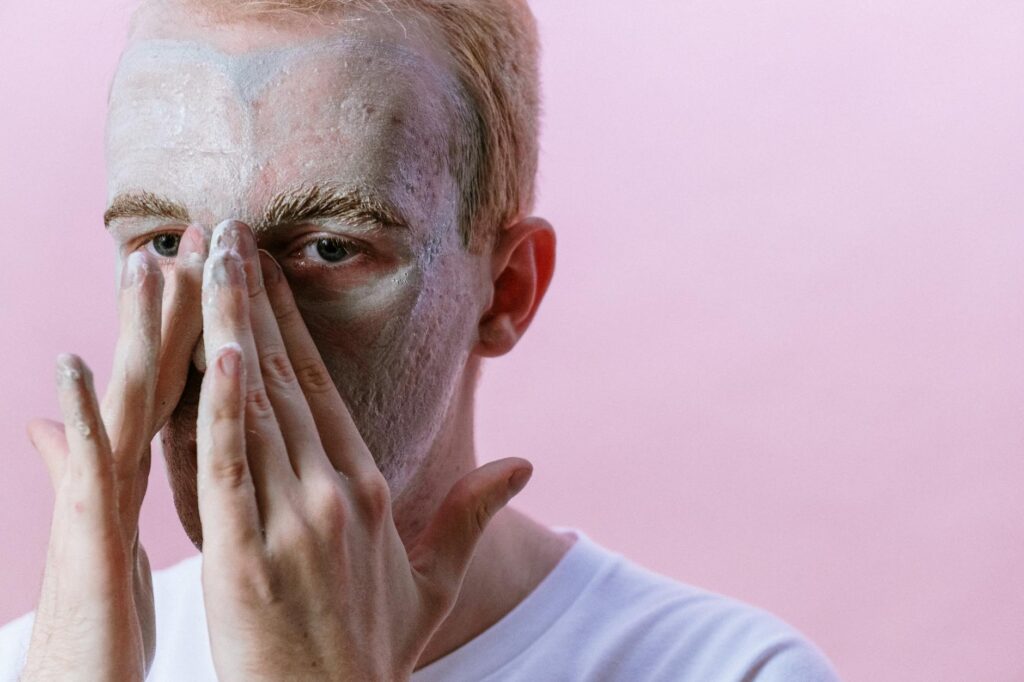
Nighttime skincare is critical for acne healing because your skin undergoes significant repair and regeneration processes during sleep, making it the optimal window for active treatment ingredients to work effectively. While you sleep, your skin’s cell turnover accelerates, barrier function strengthens, and circulation to the skin increases—conditions that don’t exist during the day when your skin is occupied with defending against environmental stressors like UV damage and pollution.
This biological reality means that the same skincare product applied at night can penetrate deeper and produce stronger results than its daytime equivalent. A person with moderate acne applying a retinoid only in the morning will see slower improvement than someone using it exclusively at night, because nighttime application allows the ingredient to work without competition from sunscreen, makeup, and daily oxidative stress. This article covers how nighttime skin biology accelerates acne healing, which ingredients are most effective after dark, how to build a nighttime routine that doesn’t backfire, and what realistic timeline you should expect for clearer skin.
Table of Contents
- How Does Nighttime Accelerate Acne Healing at the Cellular Level?
- Why Nighttime Products Penetrate Deeper Than Daytime Ones
- Which Acne-Fighting Ingredients Are Most Effective at Night?
- Building a Nighttime Acne Skincare Routine Without Overdoing It
- Common Nighttime Skincare Mistakes That Stall Acne Healing
- The Sleep Quality and Acne Connection
- Timeline: When Should You Expect to See Results from Nighttime Acne Treatment?
- Conclusion
- Frequently Asked Questions
How Does Nighttime Accelerate Acne Healing at the Cellular Level?
your skin follows a circadian rhythm just like the rest of your body, and this cycle heavily favors healing during sleep. Between 10 p.m. and 4 a.m., cellular turnover—the rate at which old skin cells die and new ones migrate to the surface—increases by up to 30 percent compared to daytime hours. This accelerated turnover is why acne lesions flatten faster at night and why dead skin cells that trap bacteria are shed more efficiently.
Additionally, nighttime is when your body increases blood flow to the skin to support repair processes, delivering more oxygen and nutrients to damaged areas and helping the skin’s immune response target acne-causing bacteria. Cortisol (your stress hormone) naturally dips at night, which reduces inflammation in the skin and lowers sebum production—two factors that directly worsen acne. This hormonal shift is why people with stress-triggered acne often notice their skin looks calmer after a good night’s sleep. However, this benefit is significantly diminished if you use nighttime skincare incorrectly; over-exfoliating at night or using too many active ingredients at once can trigger inflammation that cancels out the natural anti-inflammatory window that sleep provides.

Why Nighttime Products Penetrate Deeper Than Daytime Ones
The skin’s barrier function shifts at night to prioritize repair over protection. During the day, your epidermis tightens to defend against environmental damage, which actually makes it harder for skincare ingredients to penetrate deeply. At night, the barrier relaxes—this isn’t a weakness, it’s a feature that allows therapeutic ingredients to reach the layers where acne bacteria live and where oil production originates. Retinoids, chemical exfoliants, and peptides all work more effectively at night because they can reach deeper skin layers without the barrier’s daytime defenses blocking them.
Humidity plays a significant role too. Your skin loses more water at night through transepidermal water loss, which sounds counterintuitive, but actually allows water-based products to penetrate faster (water molecules diffuse through skin more readily when the barrier is already losing moisture). Occlusives like oils and thick creams then seal this hydration in, which is why nighttime moisturizers can be richer without feeling greasy. However, if your acne is inflammatory or you have very oily skin, over-occlusion at night can trap heat and bacteria, worsening breakouts—a common mistake people make when they assume “thicker moisturizer at night” is always better.
Which Acne-Fighting Ingredients Are Most Effective at Night?
Retinoids are the gold standard for nighttime acne treatment because they require darkness to be stable (sunlight degrades them) and because their irritation potential is much easier to manage when you’re not exposing skin to sun immediately after. Retinol, retinaldehyde, and prescription retinoids like tretinoin all increase cell turnover and reduce sebum production, directly addressing acne’s root causes—but they cause photosensitivity, making daytime use risky without SPF 50+. Nighttime application eliminates this concern while allowing the ingredient to work for 8+ hours without interruption.
Chemical exfoliants like salicylic acid and glycolic acid are also far more effective at night because the extended contact time without daytime hydration-disruption and sun exposure allows them to penetrate blocked pores more thoroughly. Benzoyl peroxide, while stable during the day, actually becomes more effective at night when combined with other actives—during the day it can cause oxidative stress that worsens inflammation if you’re also in the sun. Niacinamide and zinc both reduce sebum and have anti-inflammatory effects that are amplified by nighttime’s natural cortisol dip. A practical example: someone using 2.5% benzoyl peroxide only at night will see faster bacterial clearance than someone splitting the same dose between morning and night, because the concentrated nighttime application penetrates deeper into follicles.

Building a Nighttime Acne Skincare Routine Without Overdoing It
The most common nighttime skincare mistake is using too many active ingredients at once, which causes irritation that overrides any healing benefit. A solid nighttime routine for acne should include: a gentle cleanser to remove the day’s oil and bacteria buildup, one active treatment ingredient (either a retinoid, chemical exfoliant, or benzoyl peroxide—not multiple), and a moisturizer appropriate for your skin type. Adding a fourth step like vitamin C serum or another acid is usually excessive and can damage the barrier. The order matters significantly.
Apply your active treatment to completely dry skin (wait 15-20 minutes after cleansing) to ensure maximum penetration and minimal irritation. Apply moisturizer after the active ingredient, not before—applying moisturizer first creates a barrier that blocks the active from penetrating. A realistic comparison: someone using retinol three nights a week with proper spacing sees faster acne improvement than someone using it nightly without moisturizer, because consistency and barrier health matter more than frequency. If you have very sensitive skin, applying your active treatment only 3-4 nights per week with rest days in between actually produces better long-term results than nightly use, because it gives your barrier time to recover and reduces the risk of sensitivity that causes you to stop treatment altogether.
Common Nighttime Skincare Mistakes That Stall Acne Healing
Using hot water before bed sounds soothing but opens pores and strips skin oil, leaving it dehydrated and prone to overcompensating with excess sebum production overnight—the opposite of what you want for acne. Applying skincare products to damp skin is another widespread mistake; it dilutes active ingredients and reduces their effectiveness by up to 50 percent. Sleeping on the same pillowcase multiple nights without washing it is particularly problematic for acne because bacteria, dead skin cells, and oil accumulate on the fabric, pressing against your face for 8 hours and reinfecting treated acne lesions.
Another critical mistake is applying occlusive products (heavy oils, thick creams, face masks) over active treatment ingredients, which can trap heat and create an anaerobic environment that feeds acne bacteria. If you use retinoid at night, you should use a lightweight hydrating moisturizer, not an oil. Similarly, many people use physical exfoliants or strong acids at night without realizing they’re reducing the skin’s protective capacity right when the barrier is already in healing mode—chemical exfoliation at night is fine, but physical scrubbing at night is counterproductive. A warning: if your acne is cystic or hormonally driven, nighttime skincare alone won’t solve it; you’ll need to address the hormonal component, either through dietary changes, stress management, or medical intervention.
The Sleep Quality and Acne Connection
Nighttime skincare only works if you’re actually sleeping. Poor sleep quality—whether from inconsistent bedtime, insufficient hours, or sleep apnea—impairs your skin’s repair cycle and increases cortisol and inflammatory markers that worsen acne. Someone getting 5 hours of fragmented sleep with an excellent nighttime skincare routine will see slower acne improvement than someone sleeping 7-9 hours with a basic routine, because sleep deprivation overrides the biological advantage that nighttime skincare provides.
Sleep also affects wound healing; acne lesions that are inflamed essentially become small wounds, and healing of wounds significantly slows under sleep deprivation. The practical takeaway is that your nighttime skincare routine is only one part of the equation. Consistent sleep timing (going to bed and waking at the same time) actually primes your skin’s circadian rhythm to maximize the cellular repair window, so irregular sleep schedules that shift your circadian rhythm—like working night shifts or frequent time zone changes—can partially negate the benefits of even the best nighttime skincare products.
Timeline: When Should You Expect to See Results from Nighttime Acne Treatment?
Most acne-fighting ingredients require 6-12 weeks of consistent nighttime use before visible improvement appears. This isn’t because they’re slow to work—it’s because acne’s timeline is determined by how long it takes for new, non-acne skin cells to migrate to the surface (about 4-6 weeks) and for bacteria populations to be suppressed enough that new lesions don’t form as readily.
Someone starting retinoid treatment might notice less irritation and smoother texture after 2-3 weeks, but active acne reduction usually takes 8-12 weeks. Realistic expectations matter because most people abandon effective nighttime routines after 3-4 weeks when they don’t see dramatic results, not realizing they’re actually in the process of preventing new acne from forming beneath the skin’s surface. If you’re consistent for 3 months and see no improvement, the issue is usually either that you need a stronger treatment (prescribed by a dermatologist), that your acne is driven by something nighttime skincare alone can’t address (hormones, diet, underlying skin condition), or that you’re using the right products but with incorrect technique (diluting actives on damp skin, not waiting between steps, applying before the skin barrier is ready).
Conclusion
Nighttime skincare is critical for acne healing because your skin’s biology is optimized for deep repair and ingredient penetration during sleep—conditions that simply don’t exist during the day. By working with your skin’s natural circadian rhythm rather than against it, you can use the same acne-fighting ingredients with greater effectiveness and fewer side effects than daytime application would provide. The key is consistency, appropriate product selection based on your skin’s sensitivity level, and patience for the 6-12 week timeline that acne improvement requires.
Start with a simple nighttime routine: gentle cleanser, one active ingredient (retinoid, chemical exfoliant, or benzoyl peroxide), and a suitable moisturizer. Avoid common mistakes like over-exfoliation, product layering, and applying to damp skin. If you’re not seeing improvement after 3 months of consistent use, consult a dermatologist to rule out hormonal acne or other underlying factors that nighttime skincare alone can’t address.
Frequently Asked Questions
Can I use retinoid and chemical exfoliant on the same night?
No. Using both simultaneously dramatically increases irritation risk and can damage your barrier, counteracting any acne benefit. Choose one per night, or alternate nights—for example, retinoid Monday, Wednesday, Friday and chemical exfoliant Tuesday, Thursday.
Should I use nighttime acne products if I have sensitive skin?
Yes, but start with lower concentrations and less frequent application. Someone with sensitive skin using 0.025% retinoid twice weekly with proper moisturizing sees better long-term results than someone avoiding treatment altogether or jumping to aggressive concentrations that cause them to quit.
Is it okay to skip nighttime skincare on weekends?
Consistency matters more than daily use without breaks. If you use active treatment 5-7 nights per week, taking weekends off won’t significantly slow results. If you’re inconsistent (some weeks 3 nights, some weeks 7), your skin won’t adapt well to the treatment, and you’ll see slower improvement.
Can nighttime skincare replace prescription acne medication?
Not for moderate to severe acne. Nighttime skincare is highly effective for mild acne and maintenance after other treatments, but if you have moderate inflammatory acne, cystic acne, or acne that’s significantly affecting your quality of life, prescription treatment (oral or topical) is usually necessary in addition to a solid nighttime routine.
Why does my acne get worse before it gets better with retinoid?
This is called retinization, and it’s a normal response to retinoid treatment, not a sign the product is wrong. Your skin is accelerating cell turnover (purging existing acne to the surface) and adjusting to the ingredient. This typically lasts 4-8 weeks and is a sign the treatment is working, not failing.
Should I use a different nighttime routine in summer versus winter?
Yes. In summer, use lighter moisturizers and possibly reduce the frequency of occlusive products since your skin is already more hydrated. In winter, you may need to increase moisturizer thickness or add an occlusive oil layer because heating systems and cold air increase transepidermal water loss, and a compromised barrier worsens acne.