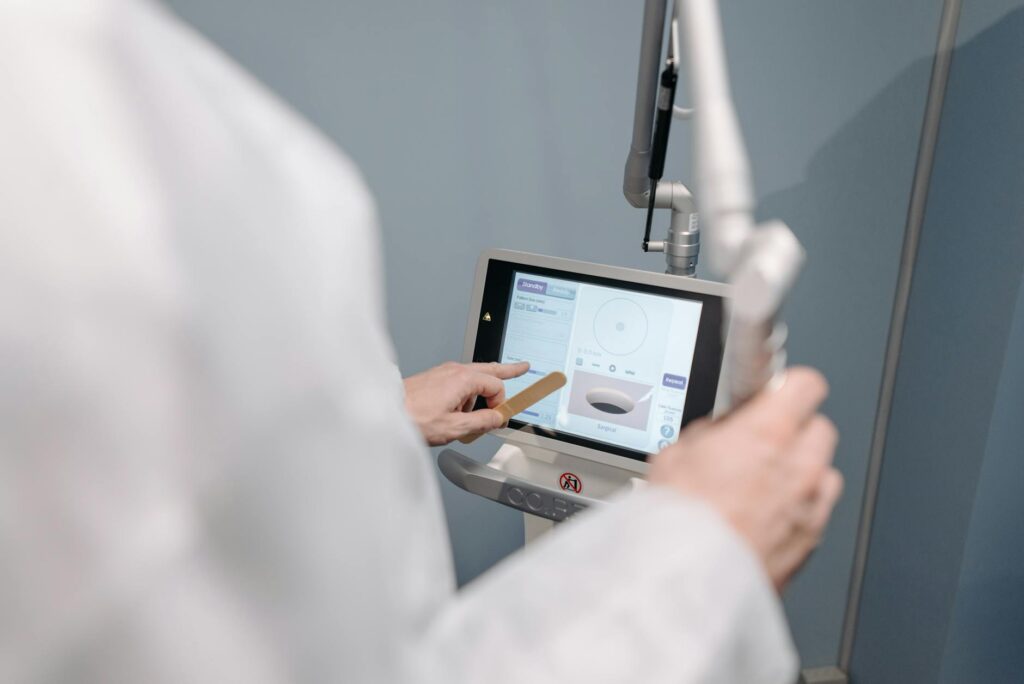
Excel V+ laser works for acne redness and post-inflammatory erythema (PIE) through a dual-wavelength approach that simultaneously targets active inflammation and stimulates the skin’s natural healing response. The 532nm wavelength directly hits the hemoglobin in dilated capillaries that cause the red appearance, while the 1064nm wavelength penetrates deeper to reduce vascular dilation and trigger collagen remodeling.
For example, someone with bright red marks from acne that healed six months ago often finds that Excel V+ produces visible improvement because it addresses both the superficial redness and the underlying vascular changes that keep PIE persistent. Unlike treatments that simply reduce visible inflammation temporarily, Excel V+ creates lasting change by teaching the skin to normalize its vascular response and rebuild structural support. This article covers how the dual wavelengths work at different skin depths, explains why PIE proves so stubborn to treat, details what the actual treatment experience involves, and explores how to combine Excel V+ with other approaches for the fastest results.
Table of Contents
- How Do the 532nm and 1064nm Wavelengths Target Acne Redness Differently?
- Understanding Post-Inflammatory Erythema and Why Excel V+ Succeeds Where Other Treatments Stall
- The Collagen Remodeling Effect: Building Skin Structure While Reducing Redness
- What to Expect During and After Excel V+ Treatment
- Limitations and Who Shouldn’t Get Excel V+ Laser Without Extra Caution
- Combining Excel V+ with Other Treatments for Optimal Results
- The Evolution of Laser Technology and Future Directions for Treating Acne Redness
- Conclusion
How Do the 532nm and 1064nm Wavelengths Target Acne Redness Differently?
The 532nm green light is selectively absorbed by hemoglobin, the oxygen-carrying protein that gives blood its red color. When acne heals, the skin often left with dilated capillaries and increased blood vessel activity in the area. The 532nm wavelength heats these vessels just enough to cause mild thermal injury and vessel collapse without damaging surrounding tissue. This immediate effect reduces the visible redness by literally removing the conduit that makes the area appear red in the first place.
The 1064nm near-infrared light operates at a completely different depth and mechanism. Because it penetrates the dermis more effectively, it heats deeper structures without being absorbed by superficial hemoglobin. This wavelength stimulates fibroblasts—the cells responsible for collagen production—and causes controlled thermal injury to hypertrophic blood vessel walls. Over weeks and months following treatment, this triggers the body’s natural wound-healing cascade, which gradually normalizes vascular function and reinforces skin structure. In comparison, using only the 532nm wavelength alone would address visible redness but miss the deeper vascular remodeling, while using only 1064nm would take longer to see results because it doesn’t immediately affect visible red appearance.

Understanding Post-Inflammatory Erythema and Why Excel V+ Succeeds Where Other Treatments Stall
Post-inflammatory erythema is fundamentally different from acne scarring or textural damage because it’s a vascular problem, not a structural one. After inflamed acne lesions heal, the skin remains red for weeks or months because the blood vessels in and around the treated area stay dilated and over-active. Many people assume this redness will fade on its own, but for severe acne, PIE can persist for a year or longer because the skin has essentially learned to keep those vessels permanently dilated. Traditional treatments like vitamin C serums, topical retinoids, or even stronger options like tretinoin can fade PIE to some degree, but they work slowly and incompletely because they can’t directly address vascular dysfunction.
However, if your redness is actually scar-related—meaning the skin is actually indented or raised rather than just discolored—Excel V+ will not fix that. Excel V+ treats vascular issues, not structural ones, so atrophic (indented) scars require subcision or microneedling instead. Additionally, the effectiveness of Excel V+ depends heavily on the settings used and the provider’s experience. Darker skin tones require lower fluences (energy levels) to avoid post-inflammatory hyperpigmentation, which means treatments may need to be gentler and sometimes require more sessions to achieve the same endpoint as lighter skin. Some providers use settings that work excellently for pale skin but risk triggering more hyperpigmentation in deeper skin tones—a limitation that’s crucial to discuss before beginning treatment.
The Collagen Remodeling Effect: Building Skin Structure While Reducing Redness
Beyond immediate vascular collapse, Excel V+ triggers a secondary healing response that takes weeks to fully develop. The thermal injury to collagen fibers and surrounding tissue initiates inflammation in a controlled way, which prompts fibroblasts to lay down new, organized collagen. This remodeling simultaneously firms the skin, improves texture, and further normalizes the appearance of redness because healthier collagen supports more normal vascular function. The combined effect means that results continue improving for two to three months after a single treatment, even though most visible improvement appears within the first two weeks. A practical timeline looks like this: immediately after treatment, there’s visible reduction in redness due to the direct vascular effect.
By week one, most swelling resolves. By week three to four, collagen remodeling kicks into higher gear and redness typically looks even better. By month three, that remodeling is largely complete. This extended timeline means that people often make the mistake of deciding a treatment “didn’t work” after two weeks, when the most significant improvement is still incoming. For someone with severe PIE affecting their confidence, this three-month window represents a genuine improvement in both appearance and skin function.

What to Expect During and After Excel V+ Treatment
The actual treatment session typically lasts 20 to 45 minutes depending on the area treated. The provider will apply cooling gel, use a handheld laser probe to systematically treat the affected area, and you’ll feel brief, controlled snaps or pulses of heat. The sensation is often described as uncomfortable but tolerable—roughly comparable to a rubber band snap or the feeling of getting waxed. Most patients report that the discomfort is manageable without anesthesia, though some clinics offer numbing cream or even local anesthesia for particularly sensitive individuals.
Immediately after treatment, you’ll see redness and swelling similar to a sunburn or mild irritation—this is normal and expected. This acute inflammation typically peaks at 24 hours and gradually fades over 48 to 72 hours. You can resume most normal activities immediately, but you should avoid intense exercise, saunas, and very hot water for at least 48 hours because heat will amplify swelling and redness. One key tradeoff with Excel V+ compared to gentler options like LED light therapy is that Excel V+ requires downtime and post-treatment care, but that downtime is brief and the results are substantially more dramatic and longer-lasting. LED therapy produces minimal downtime but also minimal results for significant PIE, making it a poor choice if your redness is substantial.
Limitations and Who Shouldn’t Get Excel V+ Laser Without Extra Caution
While Excel V+ is highly effective, it’s not a universal solution for all acne-related concerns. The laser specifically targets vascular issues, which means it works excellently for red marks and PIE but offers minimal benefit for purely pigmented marks (brown or purple discoloration without prominent vessels), texture problems from scarring, or active acne. Additionally, certain skin types and conditions require modified approaches. People with active acne should complete their acne treatment before starting Excel V+, because treating inflamed lesions with a heating laser can worsen inflammation. Those with melasma or a strong tendency toward post-inflammatory hyperpigmentation should discuss risks carefully, because the inflammatory stimulus from treatment can trigger unwanted pigmentation changes in susceptible individuals.
Another important limitation is that Excel V+ results are not permanent. The skin gradually returns to its baseline vascular function over months to years, which means most patients need maintenance treatments—typically one follow-up session every 12 to 24 months to sustain results. This makes Excel V+ a long-term commitment and expense, not a one-time fix. Some people experience excellent results after a single session; others see incremental improvement with three to four sessions spaced four to six weeks apart. This variability depends on how severe the underlying vascular dysfunction is, how the individual’s skin heals, and whether they’re managing acne triggers (like picking, certain products, or hormonal factors) that could perpetuate redness.

Combining Excel V+ with Other Treatments for Optimal Results
Excel V+ often works best as part of a layered treatment approach rather than as a standalone solution. Many dermatologists recommend starting with a series of microneedling treatments to address any texture concerns, then adding Excel V+ to specifically target remaining redness and vascular components. This combination addresses both the vascular issue (Excel V+) and any residual structural changes (microneedling).
For someone with significant PIE and mild atrophic scarring, this combination produces better overall results than either treatment alone because you’re simultaneously normalizing vascular function and improving skin structure. For active acne occurring alongside PIE, the typical protocol is to stabilize the acne first through topical retinoids, oral treatments, or other dermatological management, then begin Excel V+ once the active inflammation has calmed. Starting Excel V+ during active acne flares often creates more problems than benefits because the inflamed lesions will respond excessively to the laser heat. Conversely, for stubborn acne-prone skin, adding topical vitamin C serum or niacinamide after Excel V+ sessions can support the skin’s recovery and potentially enhance collagen remodeling.
The Evolution of Laser Technology and Future Directions for Treating Acne Redness
Excel V+ represents a significant advancement in laser technology specifically because it combines two wavelengths in a single device rather than requiring separate treatment sessions. Earlier generations of laser treatment required patients to choose between targeting superficial redness (KTP or other 532nm-only lasers) or deeper vascular changes (1064nm-only devices), forcing a tradeoff. The dual-wavelength approach eliminates that tradeoff and produces faster, more comprehensive results.
Newer iterations of the technology continue to improve cooling systems and customizable settings, making treatment safer for darker skin tones and more effective for resistant cases. Looking forward, the integration of laser treatment with other modalities—particularly combining fractional laser, radiofrequency, and targeted light therapies—is expanding what’s possible for post-acne redness. Emerging research also suggests that timing matters: treating PIE earlier (within the first 3 to 6 months after acne heals) may produce faster results because the skin’s vascular dysfunction hasn’t yet become fully ingrained. This means that acne patients aware of Excel V+ options can plan to begin treatment sooner rather than waiting years with persistent redness.
Conclusion
Excel V+ laser works for acne redness and PIE because it directly targets the vascular dysfunction that causes persistent red discoloration. The 532nm wavelength immediately reduces visible redness by collapsing dilated blood vessels, while the 1064nm wavelength triggers deeper collagen remodeling that normalizes vascular function long-term. Results continue improving for two to three months post-treatment as collagen rebuilds, making it a significantly more effective option than topical treatments alone, though it requires some commitment to a series of sessions and maintenance treatments over time.
Before pursuing Excel V+ treatment, verify that your redness is actually vascular (bright red, not brown or purple) and that any active acne has been addressed. Work with a provider experienced in treating your specific skin tone, since settings need adjustment for different skin depths to avoid triggering hyperpigmentation. Expect brief downtime and some initial inflammation, but also expect substantial improvement in appearance and skin health over the following months.