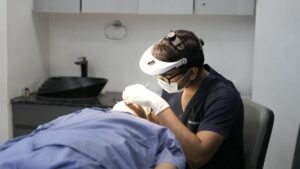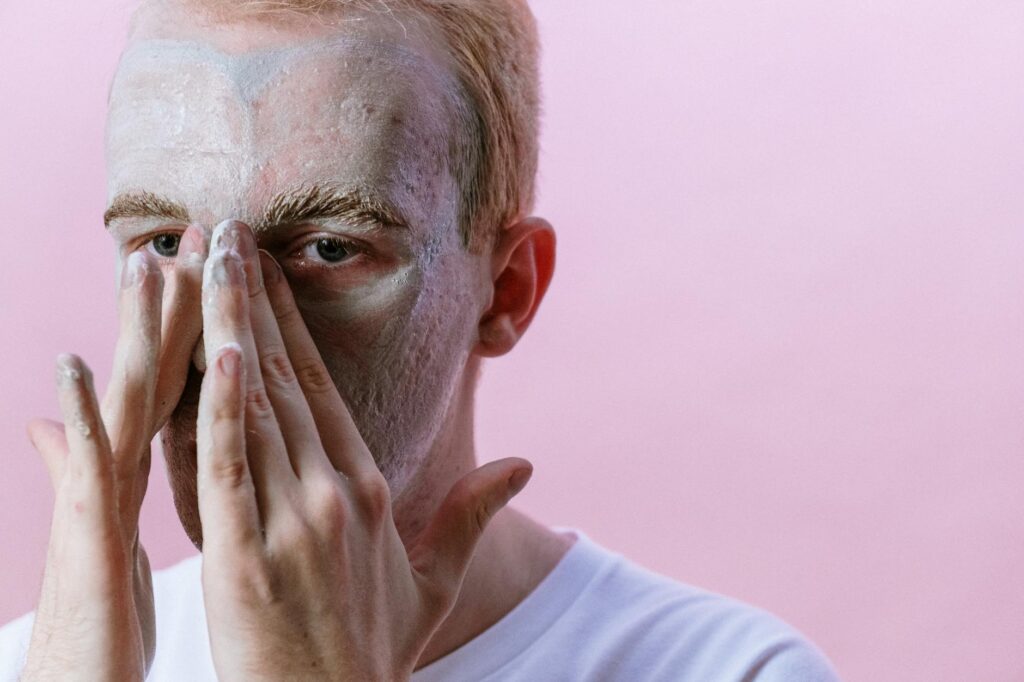
Evidence-based acne treatment differs from social media advice in one critical way: it works. When patients follow clinically proven treatments recommended by dermatologists, they experience significantly better outcomes than those who rely on social media guidance. In fact, only 0.8% of patients reported significant improvement in their acne from social media advice, while 32.2% saw no changes at all and 12.8% actually experienced worsening of their acne. This isn’t a minor difference—it’s the fundamental gap between science and anecdote.
The core distinction comes down to research versus reputation. Evidence-based treatment relies on clinical trials, peer-reviewed studies, and guidelines from organizations like the American Academy of Dermatology. Social media advice, by contrast, comes largely from influencers and people without medical training—only 11% of acne-related videos on TikTok are posted by medically trained clinicians. The people with the biggest platforms aren’t necessarily the people with the best science. This article explores why that gap exists, what treatments actually work, and how to tell the difference between evidence-based care and viral trends.
Table of Contents
- What Does the Research Show About Social Media’s Track Record on Acne?
- Why Do Clinical Trials Show Such Different Results Than What You See Online?
- Which Treatments Are Proven to Work, and Why Aren’t They on Social Media?
- How Should You Evaluate Acne Advice When You Find It Online?
- What About Dietary Changes, Supplements, and Other Trending Advice?
- What Do Recent Advances Show About the Future of Acne Treatment?
- Building Trust in Your Acne Treatment Plan
- Conclusion
- Frequently Asked Questions
What Does the Research Show About Social Media’s Track Record on Acne?
The numbers paint a clear picture of social media’s limitations. When researchers studied patients who consulted social media for acne advice, they found alarming results: only 6% reported satisfaction with advice from social media influencers, and just 23% reported any improvement in their acne at all. These aren’t small margins—these are fundamental failures of the medium to deliver results. Worse, only 31% of participants who consulted social media actually made changes that aligned with American Academy of Dermatology clinical guidelines. That means the vast majority of people following social media advice were essentially taking medical guidance that contradicted established scientific consensus.
This distinction matters because social media rewards engagement, not accuracy. A dermatologist’s careful explanation of how retinoids work might get 10,000 views. A celebrity’s claim that their acne cleared up from a “natural detox tea” might get 10 million. The algorithm doesn’t distinguish between the two—it just amplifies what’s popular. Meanwhile, 67% of people with acne actually do search social media for answers, so they’re swimming in a content ecosystem where visibility bears no relationship to medical accuracy.

Why Do Clinical Trials Show Such Different Results Than What You See Online?
Clinical trials for acne medications involve carefully controlled conditions, standardized measurements, and comparison groups. Take denifanstat, a medication that completed Phase III trials in June 2025: 33.2% of patients treated with denifanstat achieved treatment success compared to just 14.6% of those receiving placebo. The lesion count decreased 57.4% with the medication versus 35.4% with placebo. These aren’t modest improvements—they represent more than double the success rate. But here’s the key: none of that success would be visible on social media, because clinical trials don’t care about anecdotes or before-and-after photos.
They care about measurable, reproducible outcomes. However, it’s important to recognize that clinical trials have limitations too. They study specific patient populations under ideal conditions, with high adherence to treatment protocols. Real-world outcomes can differ, which is why dermatologists emphasize that individual response varies. A treatment that works for 33% of trial participants won’t work for everyone in a dermatology office. What makes evidence-based treatment superior isn’t that it always works—it’s that when it doesn’t work, a dermatologist can pivot to something else with a track record, rather than suggesting whatever went viral on TikTok last week.
Which Treatments Are Proven to Work, and Why Aren’t They on Social Media?
The American Academy of Dermatology recommends benzoyl peroxide, retinoids, antibiotics, hormonal therapies, and isotretinoin as first-line or adjunctive treatments for acne. These recommendations come from decades of research showing consistent efficacy. Benzoyl peroxide, for instance, reduces acne-causing bacteria and has been used for over 70 years with extensive safety data. Retinoids normalize skin cell turnover and are backed by thousands of peer-reviewed studies. Yet if you searched for acne advice on Instagram, you’d be far more likely to encounter recommendations for lemon juice, “skin detoxes,” or expensive skincare blends than to find basic information about these proven treatments. Why? Because proven treatments are often boring and sometimes uncomfortable.
Retinoids cause dryness and irritation initially. Antibiotics require proper usage to prevent resistance. Isotretinoin requires monthly pregnancy tests for women and monthly blood work due to its potency. Social media prefers the narrative of a magic product that works instantly and comes with no downside. Laser therapy for acne represents another evidence-based option: 40% of patients with moderate to severe acne achieve clear or almost clear skin for up to 6 months after treatment, and 80-90% experience at least a 50% reduction in inflammatory lesions. But you don’t see dermatologists promoting expensive laser treatments on Instagram, because the goal is treating the patient, not building a brand.

How Should You Evaluate Acne Advice When You Find It Online?
The first filter is credibility: check whether the person giving advice has formal medical training. Board-certified dermatologists produce significantly higher quality content on TikTok and Instagram compared to non-dermatologists, according to research in JMIR Dermatology. This doesn’t mean non-dermatologists never have useful insights, but it means you should be skeptical. If someone is selling you a product alongside their acne advice, you have an obvious conflict of interest to consider. If someone is building a following by being your friend rather than your doctor, the incentives aren’t aligned with your health.
The second filter is specificity. Vague advice like “heal your gut to clear your skin” or “use this miracle ingredient” should raise red flags, especially when it’s not backed by mechanism or evidence. Specific advice like “apply benzoyl peroxide 2.5% once daily for two weeks, then increase to twice daily as tolerated” comes from understanding how treatments actually work. You can always consult a dermatologist to verify that advice, which brings us to the core truth: social media is useful for learning that acne treatments exist, not for actually getting treated. The treatment itself requires professional guidance.
What About Dietary Changes, Supplements, and Other Trending Advice?
One of the most common pieces of social media acne advice involves dietary modification. Research found that 40% of patients influenced by social media chose dietary modification for acne management. The problem is that dietary changes don’t align with American Academy of Dermatology clinical guidelines for acne treatment. This doesn’t mean diet never matters—there’s emerging research suggesting high-glycemic diets may worsen acne in some people, and certain studies hint at possible links between dairy and acne. But these associations are weak compared to the proven efficacy of topical treatments and medications.
Be cautious of the assumption that “natural” equals safe or effective. Lemon juice, apple cider vinegar, and various herbal “detox” recipes lack clinical support and may actually damage your skin through irritation or excessive drying. If you’re going to try a dietary change, do it as a complement to evidence-based treatment, not as a replacement. And if you’re considering supplements like zinc or vitamin A specifically for acne, understand that while some research supports certain supplements as adjunctive treatments, they’re not substitutes for medications with proven track records. Talk to a dermatologist before adding supplements, especially if you’re on other medications.
What Do Recent Advances Show About the Future of Acne Treatment?
The newest generation of acne treatments shows how evidence-based medicine continues to evolve. Topical clascoterone, a treatment that blocks the androgen receptor, demonstrated significantly increased treatment success versus placebo at week 12, with a Risk Ratio of 2.87 (95% CI: 2.11–3.89). This means patients using clascoterone were nearly three times more likely to achieve treatment success compared to placebo. These aren’t treatments you’ll find promoted heavily on social media because they’re relatively new, they require a prescription, and they don’t come with a personal brand story.
But they represent where acne care is actually heading. What these advances share is clinical validation. Each new treatment goes through rigorous testing before it reaches patients. The burden of proof falls on the treatment, not on your skin to prove it failed. This is the opposite of social media, where the burden falls on you to determine whether something actually works, and you’re making that determination based on anecdotes and aesthetics rather than science.
Building Trust in Your Acne Treatment Plan
The gap between social media advice and evidence-based treatment ultimately comes down to trust and accountability. A dermatologist has years of training, board certification, and professional liability. If their advice harms you, you have recourse. An influencer has follower engagement and sponsorship deals. If their advice harms you, you’re on your own.
This difference in accountability creates fundamentally different incentives for what advice gets shared. Looking forward, the challenge isn’t finding acne treatments that work—clinical research is generating better options every year. The challenge is navigating an information environment where proven treatments compete for attention against viral trends. Your best strategy is to view social media as a starting point for questions, not as a source of answers. Learn that treatments exist, then consult a dermatologist to determine which evidence-based option is right for your specific situation.
Conclusion
Evidence-based acne treatment differs from social media advice because it prioritizes outcomes over engagement, relies on tested protocols rather than anecdotes, and comes from professionals with training and accountability. The statistics are unambiguous: 0.8% of people achieve significant improvement from social media advice, while clinical treatments achieve success rates of 33%, 40%, or higher depending on the therapy. The difference isn’t subtle.
If you’re struggling with acne, you don’t need to choose between following social media and getting real treatment. Use social media to educate yourself about what exists, then schedule a dermatology appointment to determine what actually works for your skin. Your dermatologist can explain the evidence behind different options, address your specific concerns, and adjust your treatment if the first approach doesn’t work—something an algorithm can never do.
Frequently Asked Questions
Is all social media acne advice bad?
No, but you need to verify it. Some dermatologists do share evidence-based advice on social media. The problem is distinguishing that from the 89% of acne content posted by non-medical professionals. When in doubt, cross-reference any advice with your dermatologist before implementing it.
Can diet really affect acne?
Possibly, but diet modification alone isn’t a standard acne treatment. Emerging research suggests high-glycemic foods may trigger acne in some people, but this effect varies widely. If you want to try dietary changes, do it alongside evidence-based treatments, not instead of them.
Are natural treatments ever better than prescription medications?
Not for treating acne. Natural ingredients like tea tree oil have modest antibacterial properties, but they’re not comparable to the efficacy of benzoyl peroxide, retinoids, or prescription medications. Some natural approaches might help with overall skin health, but acne specifically requires more potent interventions.
How do I find a dermatologist who uses evidence-based treatment?
Board-certified dermatologists follow established clinical guidelines from the American Academy of Dermatology. You can verify board certification through the American Board of Dermatology website. Most dermatologists will explain the evidence behind their treatment recommendations.
What should I do if a treatment a dermatologist recommended isn’t working?
Tell your dermatologist. Evidence-based treatment is iterative—if something doesn’t work after a reasonable trial period, there’s an established pathway to try something else. The advantage of working with a professional is that your next option is also evidence-based, not dependent on what happened to work for an influencer.
Can I combine treatments or use social media tips alongside my dermatology plan?
Ask your dermatologist before adding anything. Some complementary approaches are safe, but others can interfere with prescription treatments or cause irritation. Your dermatologist needs to know everything you’re using to give you the best advice.