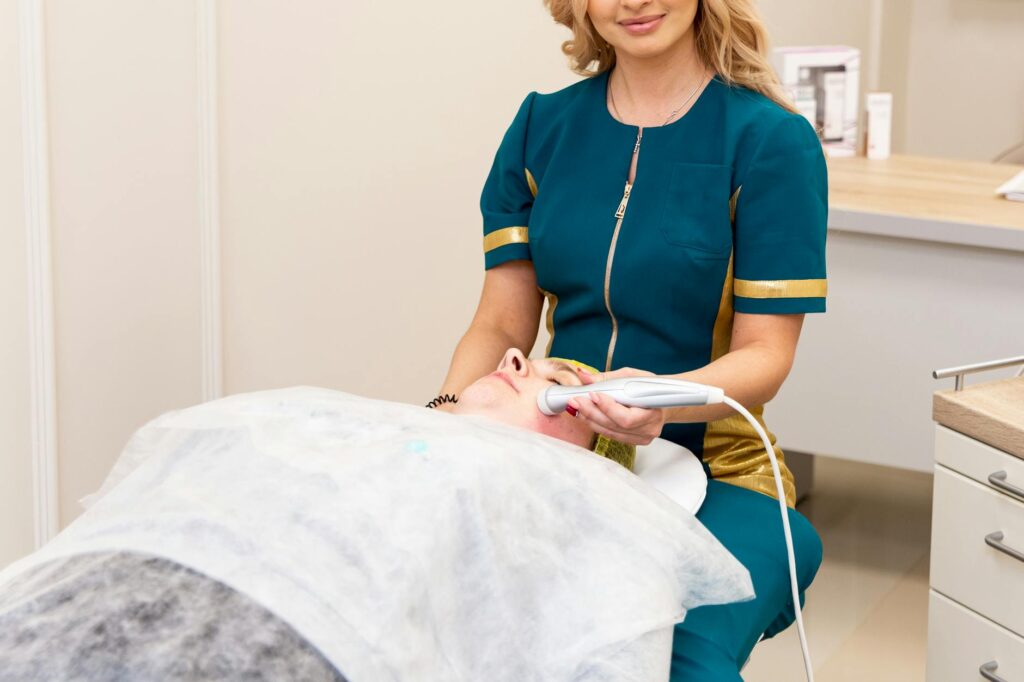
Estheticians cannot treat cystic acne because it is a medical condition that falls entirely outside their legal scope of practice. Cystic acne involves deep, painful, pus-filled cysts beneath the skin surface that require prescription medications, and estheticians are legally prohibited from diagnosing skin conditions, prescribing medications, or performing invasive treatments. Their license covers cosmetic and aesthetic services only — not medical interventions. If you walk into a spa with angry, inflamed cysts along your jawline and expect your esthetician to fix them, you are asking that person to do something their training and their license simply do not allow.
This distinction matters more than most people realize. Roughly 20% of acne sufferers experience severe cystic acne, and mishandling it — whether through improper extractions or inadequate treatment — can lead to permanent scarring, deeper infection, and significant worsening of the condition. An esthetician who attempts to treat cystic acne is not just stepping outside professional boundaries; they are putting your skin at genuine risk. This article breaks down exactly why the line between esthetician care and dermatological treatment exists, what the legal restrictions look like across different states, how the education gap between these two professions shapes what each can safely do, and what your best course of action is if you are dealing with cystic acne right now.
Table of Contents
- What Legal Restrictions Prevent Estheticians From Treating Cystic Acne?
- The Education Gap Between Estheticians and Dermatologists
- Why Cystic Acne Requires Medical-Grade Treatment
- What Estheticians Can Actually Do for Acne-Prone Skin
- The Risks of an Esthetician Attempting to Treat Cystic Acne
- How State Regulations Vary on Esthetician Scope of Practice
- The Future of Collaborative Skincare
- Conclusion
- Frequently Asked Questions
What Legal Restrictions Prevent Estheticians From Treating Cystic Acne?
The most straightforward reason estheticians cannot treat cystic acne is that the law says they cannot. Every state in the U.S. defines a scope of practice for licensed estheticians, and that scope is limited to cosmetic and aesthetic services performed on the superficial layers of the skin. Any treatment that penetrates the skin, destroys tissue, or requires prescription-grade products crosses the line into medical practice. In California, this boundary is spelled out explicitly — procedures affecting living tissue or requiring prescription products are prohibited for estheticians by law. In Minnesota, estheticians are barred from any service that penetrates the skin or is considered medical in nature, including procedures affecting the dermis or deeper layers. Illinois has gone even further.
The state has explicitly prohibited estheticians from using techniques intended to affect the living layers of the skin, classifying several such procedures as the practice of medicine. This is not a gray area or a matter of interpretation. Performing extractions on infected or cystic acne requires advanced medical care, and estheticians are not permitted to do it. Attempting these extractions can cause scarring, secondary infection, or a dramatic worsening of the condition — outcomes that expose both the client and the esthetician to serious consequences. To put this in practical terms: if you have a deep, inflamed cyst on your cheek, an esthetician who lances it or attempts to extract it is practicing medicine without a license. That is not a technicality. It is a legal violation that can result in fines, loss of licensure, and liability for any damage caused to the client’s skin.

The Education Gap Between Estheticians and Dermatologists
The scope of practice restrictions exist for good reason, and that reason is training. Estheticians complete between 300 and 1,000 hours of education, depending on the state — a program that typically lasts six to twelve months. That training covers skin analysis, facials, superficial chemical peels, basic extractions of non-inflamed blemishes, and product knowledge. It is solid preparation for cosmetic skincare work. It is not remotely sufficient for managing a complex inflammatory disease process happening deep beneath the skin’s surface. Dermatologists, by contrast, require approximately twelve years of post-secondary education: a four-year bachelor’s degree, four years of medical school, a one-year internship, and a three-year dermatology residency, followed by board certification through the American Board of Dermatology. During that residency, dermatologists treat thousands of acne cases across the full severity spectrum and learn to manage the systemic medications that cystic acne demands.
The gap between 600 hours and 12 years is not a matter of degree — it is a fundamentally different category of expertise. However, this does not mean esthetician training is inadequate for what estheticians are supposed to do. The issue is not that estheticians are poorly trained. It is that cystic acne is a medical problem requiring medical training. Expecting an esthetician to handle cystic acne is like expecting a dental hygienist to perform oral surgery. Both work on teeth. The comparison ends there.
Why Cystic Acne Requires Medical-Grade Treatment
Cystic acne is the most severe form of acne, and it behaves nothing like the blackheads and whiteheads that estheticians are trained to address. According to the Cleveland Clinic, cystic acne is characterized by deep, painful, pus-filled cysts beneath the skin surface that can cause permanent scarring if improperly treated. These cysts form when infection and inflammation reach deep into the skin, creating large, swollen lesions that do not respond to over-the-counter products or surface-level treatments. Effective treatment requires prescription medications that only licensed physicians can prescribe. The front-line options include oral isotretinoin — commonly known by its former brand name Accutane — which is the most effective treatment for severe cystic acne but requires careful medical monitoring due to significant side effects. Oral antibiotics like minocycline and doxycycline are used to reduce deep inflammation. Corticosteroid injections can shrink persistent or non-responsive individual cysts within hours.
For hormonal cystic acne, dermatologists may prescribe spironolactone or oral contraceptives to address the underlying hormonal drivers. None of these tools are available to an esthetician. Not one. An esthetician cannot write a prescription, cannot administer injections, and cannot order the blood work that isotretinoin therapy requires. The entire treatment arsenal for cystic acne sits behind a medical license, and no amount of facial expertise or product knowledge can substitute for it. Someone with mild comedonal acne — a few blackheads, some clogged pores — can absolutely benefit from esthetician care. Someone with painful cysts needs a doctor.
What Estheticians Can Actually Do for Acne-Prone Skin
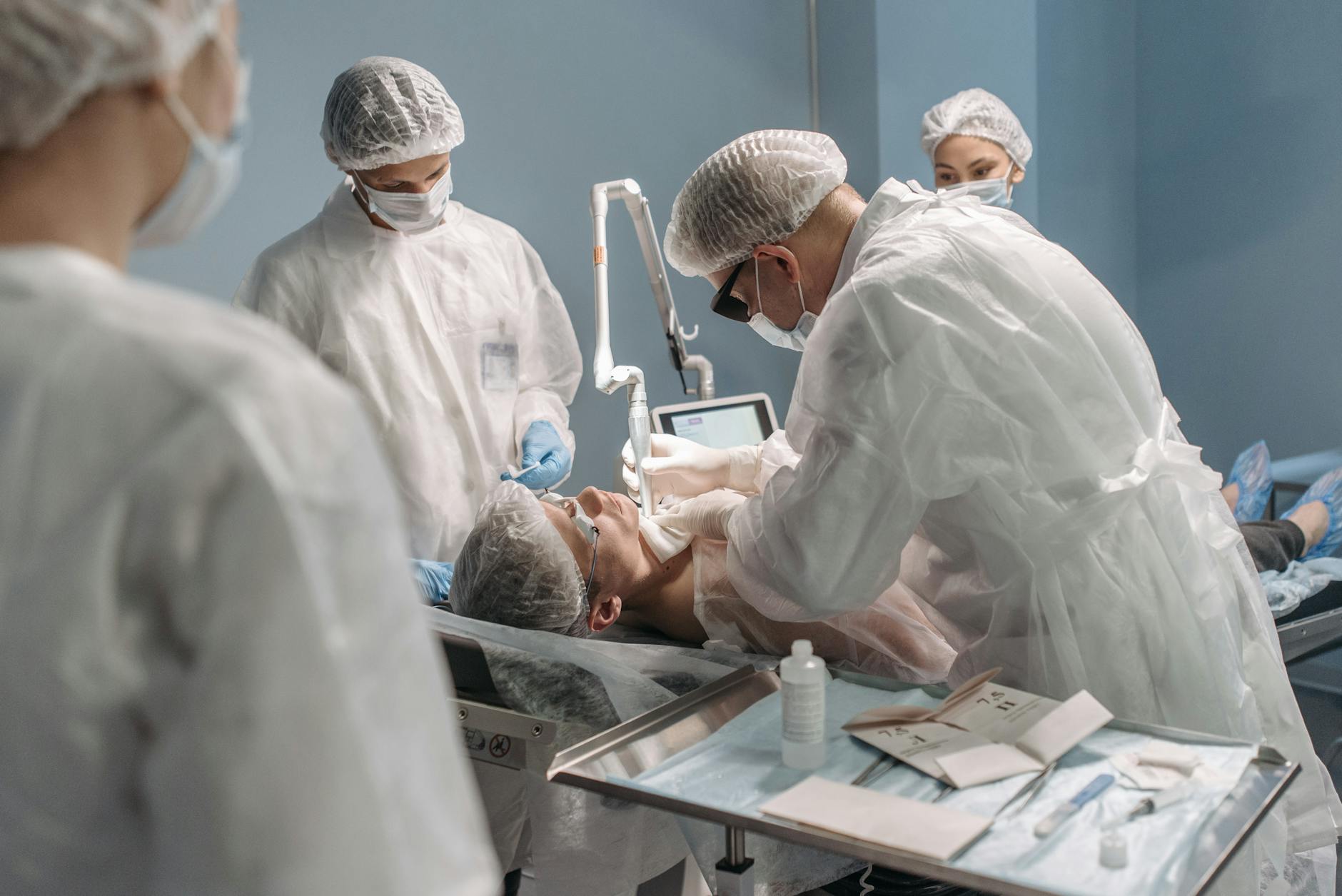
This is where the conversation gets more practical, because estheticians are not useless in the acne picture — they are just limited to a specific part of it. Estheticians can treat mild to moderate acne, classified as Grade I through Grade II, using facials, gentle extractions of non-inflamed comedones, superficial chemical peels, and product recommendations built around over-the-counter active ingredients like salicylic acid, benzoyl peroxide, and niacinamide. For someone dealing with occasional breakouts, clogged pores, or texture issues, a skilled esthetician can make a meaningful difference. The more valuable role estheticians play is collaborative. A dermatologist provides the medical treatment — the isotretinoin, the antibiotics, the injections — while an esthetician offers adjunct cosmetic treatments to improve skin texture, support barrier health, and reduce post-acne scarring once the active disease is under control.
This dermatologist-esthetician partnership is increasingly common and benefits the patient by combining medical management with ongoing skin maintenance that a busy dermatology practice may not have time to provide. The tradeoff is clear: esthetician care is more accessible, often less expensive per visit, and typically involves a longer, more relaxed appointment with personalized attention to your skin. Dermatological care is harder to get — wait times for new patients can stretch weeks or months — but it is the only option that can actually resolve cystic acne. Choosing between them is not really a choice when cysts are involved. You need the dermatologist first. The esthetician comes after.
The Risks of an Esthetician Attempting to Treat Cystic Acne
The worst outcomes in skincare often happen when someone with good intentions exceeds their training. When an esthetician attempts to extract or manually treat a cystic lesion, the risks are not hypothetical. Cystic acne sits deep in the dermis. Applying pressure to extract a cyst can rupture the cyst wall internally, spreading the infection laterally beneath the skin and creating new cysts where none existed before. The result is often worse acne, not better, along with inflammation that can produce permanent ice pick or boxcar scarring.
There is also the infection risk. Unlike a superficial comedone, a cystic lesion is a contained pocket of bacteria and pus surrounded by inflamed tissue. Breaking that containment without sterile technique and proper medical protocols can introduce additional bacteria, turning a painful but manageable cyst into a spreading skin infection requiring antibiotics — the very medications an esthetician cannot prescribe. Estheticians are ethically and legally obligated to refer clients with cystic acne to a dermatologist rather than attempting treatment themselves. A responsible esthetician will recognize cystic acne on sight, explain that it falls outside their scope, and provide a referral. If your esthetician tells you they can handle your cystic acne with a series of facials or a particular product line, that is a red flag — not a sign of expertise, but a sign that you should find both a new esthetician and a dermatologist.

How State Regulations Vary on Esthetician Scope of Practice
It is worth noting that scope of practice rules are not uniform across the country, which creates confusion. In some states, estheticians complete as few as 300 hours of training. In others, the requirement reaches 1,000 hours.
Some states allow estheticians to perform microneedling under supervision; others classify it as a medical procedure. The inconsistency can make it seem like the rules are arbitrary, but the core prohibition on treating cystic acne is remarkably consistent: no state allows estheticians to diagnose medical skin conditions, prescribe systemic medications, or perform procedures that penetrate into the deeper layers of the skin. If you are unsure what your state allows, your state’s board of cosmetology or barber and beauty licensing authority publishes the specific scope of practice rules. But as a general principle, if a skin condition is painful, deep, inflamed, and not responding to over-the-counter products, it needs a physician — regardless of which state you live in.
The Future of Collaborative Skincare
The most promising development in acne care is not the expansion of esthetician scope — it is the formalization of collaborative models between dermatologists and estheticians. More dermatology practices are bringing estheticians in-house or building referral networks with local estheticians, creating a treatment pipeline where the dermatologist handles the medical management and the esthetician provides the ongoing maintenance facials, gentle peels, and product guidance that keep skin healthy once the cystic acne is controlled. This model serves patients better than either profession working alone.
Dermatologists have limited appointment time and often focus narrowly on the prescription side. Estheticians have the time and training to educate clients on daily routines, ingredient interactions, and lifestyle factors that influence skin health. As this collaborative approach becomes more standard, the line between what each professional does will become clearer, not blurrier — and patients dealing with cystic acne will be less likely to fall through the cracks between spa care and medical treatment.
Conclusion
Cystic acne is a medical condition that demands medical treatment. Estheticians — regardless of their skill, experience, or intentions — are legally prohibited from diagnosing it, prescribing the medications required to treat it, or performing the invasive procedures necessary to manage it. The education gap between esthetician training and dermatological training is measured in years, not hours, and the treatments that actually resolve cystic acne all require a physician’s prescription. None of this diminishes the value of esthetician care for the skin concerns that fall within their scope. It simply means that cystic acne is not one of those concerns.
If you are dealing with deep, painful cysts that are not responding to over-the-counter treatments, your next step is a dermatologist appointment — not a facial. Once your dermatologist has your cystic acne under medical management, an esthetician can play a valuable supporting role in maintaining your skin and addressing texture or scarring. But the order matters. Get the medical treatment first. The cosmetic care comes after.
Frequently Asked Questions
Can an esthetician pop a cystic pimple during a facial?
No. Estheticians are not permitted to perform extractions on infected or cystic acne. Attempting to extract a cyst can rupture it internally, spread the infection beneath the skin, and cause permanent scarring. This falls outside the esthetician’s legal scope of practice.
What is the difference between a regular pimple and cystic acne?
Regular pimples form near the skin’s surface as clogged pores or small inflamed bumps. Cystic acne involves deep, painful, pus-filled cysts beneath the skin surface and is classified as the most severe form of acne. Cystic acne can cause permanent scarring and requires prescription medications that only a physician can provide.
Can an esthetician recommend products for cystic acne?
An esthetician can recommend over-the-counter skincare products, but OTC products alone are generally insufficient for cystic acne. Effective treatment typically requires prescription-strength therapies such as oral isotretinoin, oral antibiotics, corticosteroid injections, or hormonal therapies — all of which must be prescribed by a licensed physician.
Should I see an esthetician or a dermatologist for my acne?
It depends on severity. Estheticians can treat mild to moderate acne — Grade I through Grade II — with facials, gentle extractions of non-inflamed comedones, and superficial chemical peels. If you have deep, painful, cystic lesions, you need a dermatologist. The best approach for severe acne is seeing a dermatologist for medical treatment and an esthetician for adjunct cosmetic care once the condition is under control.
How many hours of training does an esthetician have compared to a dermatologist?
Estheticians complete 300 to 1,000 hours of training depending on the state, typically over six to twelve months. Dermatologists complete approximately twelve years of post-secondary education, including a bachelor’s degree, medical school, an internship, and a three-year dermatology residency, followed by board certification.
Is it illegal for an esthetician to treat cystic acne?
Treating cystic acne involves diagnosing a medical condition and performing procedures or recommending treatments that fall under the practice of medicine. In states like California, Illinois, and Minnesota, regulations explicitly prohibit estheticians from performing treatments that penetrate the skin, affect living tissue, or require prescription products. An esthetician who treats cystic acne risks practicing medicine without a license.