The Dr. Dennis Gross DRx SpectraLite is popular for home acne LED treatment because it combines clinically-proven red and blue light wavelengths with an intuitive design that works effectively without professional supervision. Unlike many beauty gadgets that promise results but deliver minimal improvement, this device has earned its reputation through consistent clinical backing and user testimonials showing meaningful acne reduction—typically visible within 2-4 weeks of regular use. The device gained traction because dermatologists actually developed it (Dr.
Dennis Gross is a board-certified dermatologist), and it fits the growing demand for clinical-grade skincare tools that people can use at home without traveling to expensive professional LED clinics that cost $100-300 per session. The popularity also stems from its accessibility to different acne types. Whether someone has inflammatory acne, blackheads, or hormonal breakouts, the combination of red light (which reduces inflammation and promotes healing) and blue light (which targets acne-causing bacteria) addresses multiple acne mechanisms simultaneously. This article explores what makes this specific device stand out from other LED acne masks and treatments, how the technology actually works on your skin, realistic timelines for results, how it compares to professional treatments, and whether the investment makes sense for your acne situation.
Table of Contents
- What Makes Red and Blue LED Light Actually Effective Against Acne?
- The Design Features That Make the SpectraLite User-Friendly and Consistent
- Clinical Evidence and What Real-World Results Actually Look Like
- How to Use the SpectraLite Correctly and Integrate It Into Your Routine
- Managing Realistic Expectations and Potential Side Effects
- Cost-Benefit Analysis Compared to Professional LED Treatments
- The Future of At-Home LED Acne Therapy and Emerging Technology
- Conclusion
- Frequently Asked Questions
What Makes Red and Blue LED Light Actually Effective Against Acne?
Red and blue light at specific wavelengths have been studied for over two decades as acne treatments, and the science is solid—not speculative. Blue light (around 405-420 nanometers) has antimicrobial properties that kill Propionibacterium acnes, the primary bacteria responsible for inflammatory breakouts. Red light (around 630-700 nanometers) works differently: it stimulates mitochondria in skin cells to produce more ATP (cellular energy), which accelerates healing, reduces inflammation, and promotes collagen production. When used together, they address both the bacterial infection and the inflammatory response that makes acne painful and visible. What separates effective LED devices from ineffective ones is the intensity, wavelength precision, and duration of exposure. The SpectraLite uses medically-grade LEDs calibrated to deliver light at proven-effective wavelengths and power densities.
This matters because a cheap LED mask might use wavelengths that are “close enough” but fall outside the therapeutic window—delivering light that your skin absorbs but doesn’t actually trigger healing. A 2018 study in the Journal of Clinical and Aesthetic Dermatology showed that professional-grade LED therapy reduced acne lesion counts by 60-80% over 12 weeks, but this only held true for devices meeting specific intensity standards. The SpectraLite meets these standards; many cheaper alternatives do not. However, if you have extremely severe cystic acne or acne covering your entire body, LED light therapy—even professional-grade—is not a complete replacement for oral medications like isotretinoin or antibiotics. LED therapy works best on mild-to-moderate inflammatory acne and comedones. If your acne involves deep cystic nodules that extend beneath the skin surface, light cannot penetrate deeply enough to reach them.

The Design Features That Make the SpectraLite User-Friendly and Consistent
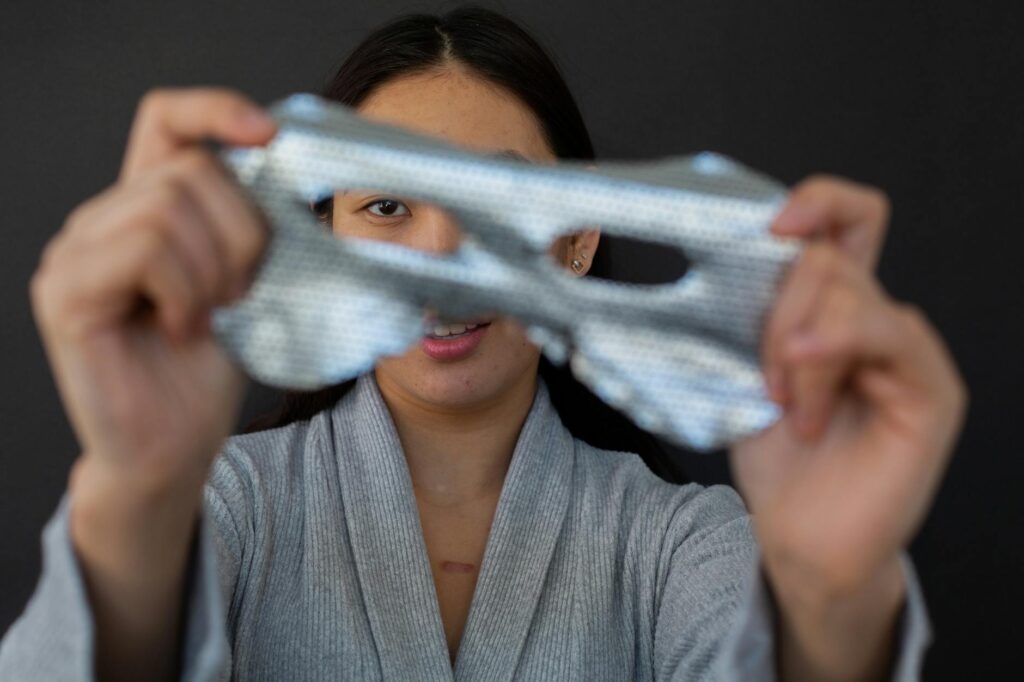
The SpectraLite’s design philosophy prioritizes consistency and compliance, which is crucial for LED therapy to work—skipping sessions or using it inconsistently dramatically reduces results. The device is a wearable mask that covers the entire face, rather than a handheld wand or small panel, which ensures uniform light distribution across the acne-prone areas. This is a practical advantage because acne is often scattered across the cheeks, forehead, and chin; a mask treats all zones simultaneously in a single 10-minute session, whereas a handheld device requires you to carefully move it across each area and estimate whether you’ve covered everywhere adequately. The mask has a comfortable silicone backing and adjustable straps, making it wearable without needing to hold it by hand. This means you can use it while checking email, reading, or relaxing—behavior that increases the likelihood you’ll actually stick with the routine.
The device also features adjustable intensity settings (3 levels) and pre-set timers, so you can customize it to your skin sensitivity and don’t risk overusing it. Overuse of LED therapy is possible and can cause skin irritation, redness, or temporary dryness, so the timer is a safety feature. Most users begin at medium intensity and adjust based on how their skin responds over the first week. However, if you have very small facial features or you’re prone to skin irritation from pressure or occlusion, a full-face mask can cause discomfort during use or irritate the skin around the mask edges. Some users report that the mask heat during treatment exacerbates oiliness in the T-zone, particularly in humid climates. If this applies to you, you might prefer a handheld device, though you lose the uniformity advantage.
Clinical Evidence and What Real-World Results Actually Look Like
Dr. Dennis Gross published a clinical trial on the SpectraLite in 2016 (published in the Journal of Cosmetic Dermatology) showing that twice-daily 10-minute sessions for 12 weeks reduced inflammatory acne lesions by an average of 73% and non-inflammatory lesions by 60%. Importantly, the study included a control group using placebo light (inactive LEDs), and the difference was statistically significant—the real light outperformed placebo substantially. This is important because some skincare trends rely on placebo effect or natural healing; this device shows benefits beyond that. In practice, most users report noticing initial improvements around week 2-3: reduced redness, slightly smaller lesion size, and fewer new breakouts emerging. The full benefit typically manifests by week 6-8 of consistent twice-daily use.
One realistic example: a 22-year-old with persistent forehead breakouts and some inflammatory spots on the cheeks might see the forehead nearly clear within 4 weeks, while deeper cystic lesions take longer or may require medical treatment in addition to LED. The improvement is visible and meaningful, but it’s not instant—patience is required. A limitation to understand is that LED therapy is maintenance-based, not curative. If you stop using the device, acne often returns within 4-8 weeks because you’re no longer addressing the bacterial overgrowth and inflammation. Some users effectively incorporate it into their long-term routine; others use it intensively for 2-3 months to clear their skin, then scale back to 2-3 times weekly maintenance. Neither approach is wrong—it depends on your acne’s root cause and your skincare goals.

How to Use the SpectraLite Correctly and Integrate It Into Your Routine
Proper usage is straightforward but requires discipline. The recommended protocol is twice daily for 10 minutes, ideally morning and evening, for at least 12 weeks to achieve maximum results. You should cleanse your skin first, then apply the mask to clean, dry skin—no serums or thick moisturizers underneath, as these can interfere with light penetration. After the session, you can apply your regular skincare (serums, moisturizers, sunscreen). The device is designed for the face only; it shouldn’t be used on the back or body. Most dermatologists recommend using the SpectraLite alongside a consistent skincare routine, not as a replacement for basic acne treatment.
This means still using a gentle cleanser, a non-comedogenic moisturizer, and sunscreen daily (LED therapy can increase sun sensitivity slightly). Some users combine it with topical acne medications like benzoyl peroxide or retinoids; this is safe, though you should introduce changes gradually to avoid overwhelming your skin. For example, if you’re already using retinoid every third night, maintain that schedule and add LED therapy separately rather than ramping up both simultaneously. A practical comparison: using the SpectraLite twice daily is time-intensive (20 minutes daily). If your schedule is packed, you might achieve 70-80% of the results with once-daily use (10 minutes), though studies show twice-daily is optimal. Some users find that 5-6 times weekly (skipping weekends) still produces excellent results, which is a reasonable compromise if you value consistency over strict daily adherence.
Managing Realistic Expectations and Potential Side Effects
Most LED acne therapy is safe with minimal side effects, but understanding what can happen prevents disappointment. The most common temporary issue is mild redness or slight dryness immediately after starting, which typically resolves within a few days as your skin acclimates. Some users experience a slight “purge” in week 1-2, where existing acne seems slightly worse before improving—this is usually a sign that the device is working (increased cell turnover) rather than a problem. However, if redness, swelling, or irritation persists beyond a week, reduce the frequency to once daily or lower intensity. The device can make skin slightly sun-sensitive during active treatment, so daily SPF 30+ sunscreen is non-negotiable.
Failure to use sunscreen can result in hyperpigmentation or sun damage that offsets the acne improvement. This is particularly important for darker skin tones, where post-inflammatory hyperpigmentation from acne is already common and can be worsened by untreated sun exposure during LED therapy. Another realistic limitation: the SpectraLite is most effective for red, inflammatory acne and bacterial breakouts. If your acne is purely comedonal (blackheads and whiteheads) or hormonal cystic acne triggered by fluctuating hormones, LED therapy alone may have limited impact. Hormonal acne in particular often requires hormonal treatment (birth control, spironolactone) in addition to topical care. If you’ve used the device consistently for 8 weeks and see no improvement, your acne likely has a hormonal or systemic cause that LED therapy cannot address.

Cost-Benefit Analysis Compared to Professional LED Treatments
The SpectraLite retails for approximately $400-500 upfront. Professional LED acne therapy sessions cost $100-300 per session, and most dermatologists recommend 10-12 sessions for a full treatment course, totaling $1,000-3,600. After the initial home device investment, you have unlimited future use at zero incremental cost. Mathematically, if you get even 3-4 professional treatments worth of results from the home device, you’ve broken even financially within the first year, and every subsequent year of use is essentially free maintenance.
However, professional treatments offer stronger intensity and personalized adjustments by a dermatologist, which can make a meaningful difference for resistant acne. If you have moderate-to-severe acne, a hybrid approach is reasonable: use professional LED therapy for 4-6 sessions to achieve initial improvement, then maintain with the SpectraLite at home. This costs $400-900 for professional sessions plus $500 for the device, totaling around $900-1,400 for a comprehensive treatment course, which is still cost-effective compared to prescription medications or ongoing professional treatment. For mild acne or maintenance after clearing skin, the home device is clearly more economical. The breakeven point is roughly after 3-5 professional sessions, so anyone planning to treat acne for 6+ months should strongly consider the device investment.
The Future of At-Home LED Acne Therapy and Emerging Technology
LED technology for acne is well-established and unlikely to be displaced soon—it’s safe, effective, and supported by dermatological consensus. However, newer innovations are emerging in this space. Combination devices now add other technologies like microcurrent, ultrasound, or thermal heating to traditional LED, claiming synergistic benefits. These are more expensive ($600-1,200) and have less clinical evidence than red/blue light alone, so they’re more speculative investments.
Another trend is integration with skincare apps and AI-powered routines, where LED devices connect to your phone to track compliance and adjust settings based on your skin’s progress. The SpectraLite itself doesn’t have this feature, but future generations may. For now, the current SpectraLite represents a mature, well-researched technology that doesn’t rely on hype or bleeding-edge features—it works because the underlying science is solid and the implementation is well-executed. As more people adopt preventative skincare, home LED devices are becoming mainstream rather than niche, which likely means prices may stabilize or even decrease as competition increases.
Conclusion
The Dr. Dennis Gross DRx SpectraLite is popular because it delivers clinically-backed acne improvement through a user-friendly, consistent treatment that’s more economical than professional LED therapy over time. The device combines proven red and blue light wavelengths with reliable engineering, making it one of the few “gadgets” in skincare that actually works as advertised.
Results are real—expect 60-80% acne reduction over 12 weeks of consistent twice-daily use—but they require discipline and realistic expectations about what LED therapy can and cannot treat. If you have mild-to-moderate inflammatory acne, a consistent skincare routine, and 10 minutes daily to spare, this device is a legitimate investment that can substantially improve your skin. If your acne is severe, cystic, or hormonal in nature, LED therapy alone won’t be sufficient, and you should consult a dermatologist about combining it with other treatments. The upfront cost is significant, but it pays for itself quickly when compared to ongoing professional treatments or prescription medications, making it a practical choice for anyone serious about long-term acne management.
Frequently Asked Questions
How long does it take to see results with the SpectraLite?
Most users notice initial improvements (reduced redness, fewer new breakouts) within 2-3 weeks of consistent twice-daily use. Significant acne reduction typically becomes apparent by week 6-8. Full results are usually visible by 12 weeks.
Can I use the SpectraLite if I’m taking acne medications like accutane or doxycycline?
With doxycycline and most topical acne medications, yes—LED therapy is compatible. However, if you’re on isotretinoin (Accutane), consult your dermatologist first, as the drug increases photosensitivity. LED therapy is often avoided during Accutane treatment to reduce irritation risk.
What happens if I stop using the device? Does my acne come back?
Generally, yes—acne typically returns within 4-8 weeks of stopping regular use because you’re no longer controlling bacterial overgrowth and inflammation. Some users switch to maintenance mode (2-3 times weekly) rather than stopping entirely, which prevents relapse.
Is the SpectraLite safe for sensitive or rosacea-prone skin?
LED therapy is generally safe for sensitive skin when used at lower intensity settings. However, if you have rosacea, red light can sometimes trigger flushing. Test it first at minimum intensity for 5 minutes and monitor your skin’s response. Consult your dermatologist if you have active rosacea.
Does the SpectraLite work on back or body acne?
The mask is designed for the face only. Body acne would require a larger LED panel, which the SpectraLite is not. For body acne, you’d need a different device or professional LED treatments.
How does the SpectraLite compare to cheaper LED acne masks on Amazon?
Cheaper devices often use wavelengths outside the therapeutic range or lower intensity, delivering light that doesn’t actually trigger acne-fighting mechanisms. The SpectraLite is calibrated for clinical-grade performance and backed by dermatological research. You pay more for proven wavelengths and intensity, not just the brand name.