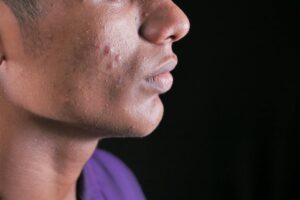
Acne often leaves behind uneven skin texture because the inflammation from breakouts damages the skin’s deeper layers, disrupting its smooth surface.[1]
When you get acne, especially the red, inflamed kind like pimples or cysts, your skin goes through a lot. The body’s response to fight bacteria and excess oil creates swelling and pus. If this happens deeply enough, it harms the collagen and elastin that keep skin firm and even. Collagen is like the scaffolding under your skin. When it’s broken down, the surface can’t heal flat. Instead, you end up with pits, rolls, or raised spots that make the skin feel bumpy or rough.[1][3]
Picking or popping pimples makes it worse. This adds more injury, leading to scars that stick around. There are different scar types from acne. Ice pick scars are tiny, deep holes. Rolling scars create wavy dips. Boxcar scars form sharp edges. Raised ones, like hypertrophic scars, build up extra tissue. All these change how smooth your skin feels.[1]
Clogged pores play a role too. Acne starts when oil, dead skin, and bacteria block pores. As they stretch and heal, pores can look bigger, adding to the uneven look.[1][3]
Healing takes time, but poor habits slow it. Without enough moisture, skin stays dry and rough. Sun exposure breaks down more collagen, making texture issues stand out.[1]
Genetics and hormones can make some people more prone. Teens or those with hormonal shifts often see worse scarring because oil production ramps up.[3]
Over time, dead skin buildup adds grit if not shed right. This mixes with acne damage for a textured feel.[2]
Sources
https://worldofasaya.com/blogs/acne/essential-checklist-conquering-uneven-skin-texture
https://www.usdermatologypartners.com/blog/bumpy-and-dry-skin/
https://renotahoederm.com/when-its-time-to-see-a-dermatologist-for-acne-in-reno-nv/