Why Does Acne Cluster in Certain Areas
Acne often shows up in groups on specific parts of the body because of how oil glands, hormones, habits, and skin conditions work together in those spots. Different areas have more active oil glands or face more irritation, making them hotspots for pimples to form and repeat.
The face has zones packed with sebaceous glands that pump out oil, or sebum, to keep skin moist. The T-zone, which covers the forehead, nose, and chin, gets oily fast because these glands are largest and most active there. Excess sebum mixes with dead skin cells and blocks pores, trapping bacteria like C. acnes inside. This leads to clusters of blackheads, whiteheads, or inflamed pimples right in that central strip.[1][2][3][4]
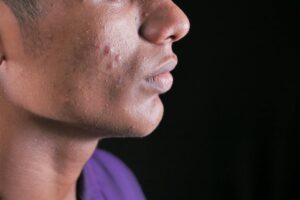
Jawline and chin breakouts cluster due to hormones, especially androgens that spike during periods, stress, or conditions like PCOS. These hormones tell oil glands in the lower face to overproduce sebum, creating deep, painful cysts that stick around. Touching your face or hormonal shifts make the same spots flare up over and over.[1][2][3]
Cheeks light up from friction and bacteria transfer. Phones pressed against the skin, dirty pillowcases, or masks rub and spread germs, causing acne mechanica. This pressure irritates pores before they heal, leading to repeated clusters. Allergies or pollution can add to it by weakening the skin barrier.[3][6]
Body areas like the back, chest, and shoulders see acne clusters from sweat, heat, and tight clothes during workouts. Larger glands here mix sweat with sunscreen or makeup, trapping everything in pores under friction from sports bras or fabrics. This “gym acne” or “bacne” thrives in humid, covered skin.[1][6][8]
Some clusters mimic acne but come from other causes. Fungal overgrowth creates uniform, itchy bumps on the forehead, chest, or back in hot, humid conditions, while bacterial acne varies with red, pus-filled spots in oily zones.[4][8] Habits like high-sugar diets, dairy, or harsh scrubbing worsen any area by boosting oil or inflammation.[1][2]
Recognizing these patterns helps target the right fixes, like gentle cleansing for oily zones or hormone checks for jawline flares.
Sources
https://londondermatologyclinics.com/cystic-acne-your-guide-to-causes-and-management/
https://consciouschemist.com/blogs/good-skin-blog/why-you-keep-getting-pimples-in-the-same-spot-and-how-to-stop-it
https://timesofindia.indiatimes.com/life-style/health-fitness/acne-mapping-what-your-breakout-patterns-reveal-about-skin-health-and-habits/articleshow/125958499.cms
https://naturalimageskincenter.com/common-misconceptions-about-bacterial-acne-how-to-identify-it-correctly/
https://www.usdermatologypartners.com/blog/bumpy-and-dry-skin/
https://selflondon.com/is-your-workout-causing-you-acne/
https://www.felixforyou.ca/blog-posts/what-is-acne
https://drderrickphillips.com/video/fungal-acne-treatment-guide/