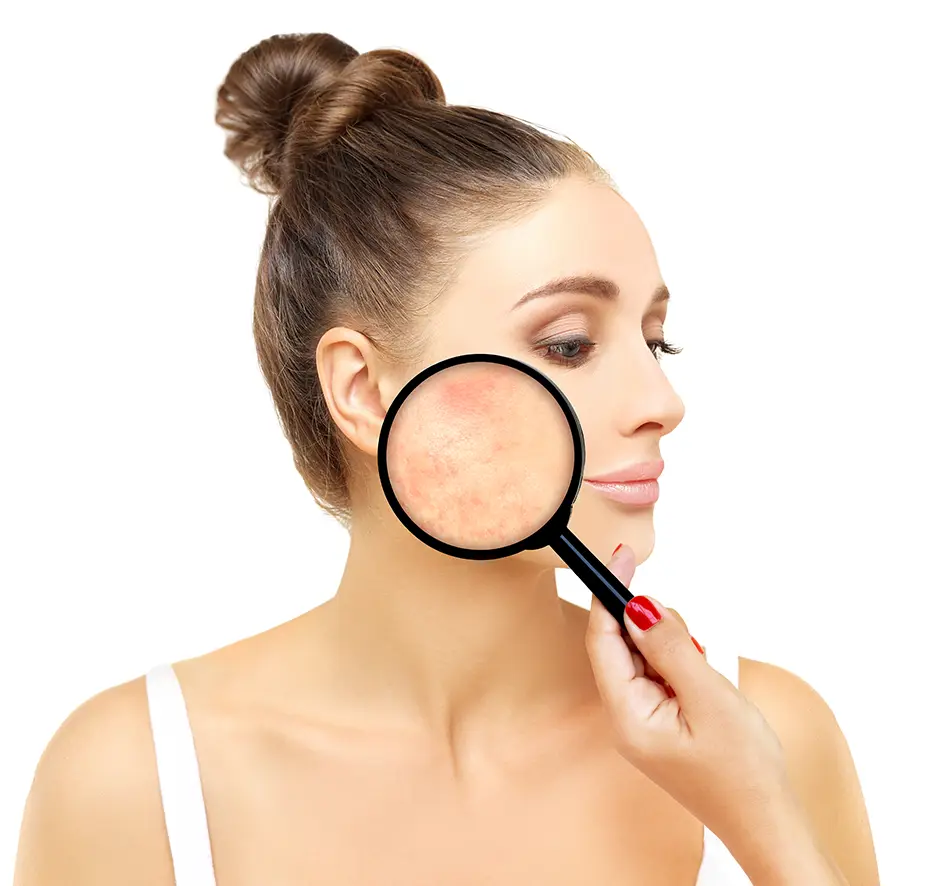
Why Does Acne Appear Along the Jawline
Jawline acne is one of the most frustrating types of breakouts, and there’s a good reason why this area seems to be a magnet for pimples. Understanding what causes acne along the jawline can help you find the right treatment and finally get clearer skin.
The Hormone Connection
The primary reason acne clusters around your jawline comes down to hormones. Jawline acne is predominantly driven by androgens, which are hormones that stimulate your skin to produce more oil and cause changes in how skin cells behave. When androgen levels rise or become unbalanced, your jawline and chin tend to respond with increased oil production and inflammation.
This hormonal pattern is especially common in women. If you notice breakouts appearing along your jawline, it’s often a sign that hormones are playing a major role. Many women discover that their jawline acne flares up at specific times during their menstrual cycle, particularly before their period when progesterone levels rise. Some women also experience jawline acne after starting or stopping hormonal birth control, or during pregnancy and menopause.
Why the Jawline Specifically
The jawline is uniquely prone to hormonal acne because this area responds more intensely to hormonal changes than other parts of your face. The chin and jawline are especially susceptible to deep, inflamed cystic lesions rather than surface-level pimples. This happens because hormones trigger excess sebum production, and when that oil mixes with dead skin cells and bacteria, it creates the perfect environment for deep pore clogging.
Beyond Hormones
While hormones are the main culprit, other factors can make jawline acne worse. Stress increases cortisol production, which can worsen breakouts. Poor sleep, irregular eating patterns, and high-sugar or high-dairy diets can all contribute to inflammation. Heavy makeup, pore-clogging moisturizers, and harsh cleansers can irritate the area and trap bacteria. Even mask wearing can trigger jawline acne through moisture, friction, and trapped bacteria.
Certain medications can also cause acne along the jawline. Testosterone, progesterone, steroids, lithium, and phenytoin may all induce acne in this distribution. Additionally, some people with underlying endocrine disorders like polycystic ovary syndrome (PCOS), Cushing syndrome, or congenital adrenal hyperplasia may experience jawline acne as a symptom.
What Makes Jawline Acne Different
Jawline acne tends to be more stubborn than acne in other areas. The breakouts are often painful, cyst-like, and slower to heal. They carry a higher risk of scarring if not treated properly. This is because the inflammation runs deeper beneath the skin’s surface compared to whiteheads or blackheads.
Getting Treatment
The good news is that jawline acne responds well to targeted treatment. The foundation of any treatment plan should include a topical retinoid like adapalene combined with benzoyl peroxide. These work together to unclog pores, reduce inflammation, and kill acne-causing bacteria.
For women with jawline acne, adding hormonal therapy is often necessary. Spironolactone, a medication that blocks androgen effects, is particularly effective for hormonal acne patterns and jawline distribution. Combined oral contraceptives can also help by reducing inflammatory lesions. Newer options like clascoterone, a topical anti-androgen, may be especially relevant for androgen-driven jawline acne.
For more severe cases, dermatologists may recommend oral antibiotics to reduce bacterial growth and inflammation, or even isotretinoin for treatment-resistant acne. Professional treatments like cortisone injections can rapidly flatten painful cysts, while chemical peels, laser therapy, and blue light therapy offer additional options for clearing breakouts and preventing scarring.
The key to treating jawline acne is recognizing that it’s often multifactorial, meaning it requires a combination of approaches. Simply treating the surface won’t work if hormones are driving the breakouts underneath. Working with a dermatologist to identify whether your jawline acne is hormonal, stress-related, or caused by other factors will help you choose the most effective treatment plan.
Sources
https://www.droracle.ai/articles/642363/what-are-the-causes-and-treatment-options-for-acne
https://www.tuftsmedicine.org/about-us/news/acne-over-30
https://londondermatologyclinics.com/cystic-acne-your-guide-to-causes-and-management/
https://www.westchestercosmeticdermatology.com/blog/adult-acne-why-it-happens-and-how-to-treat-it/
https://www.drbatras.com/hormonal-acne-what-causes-it-and-how-to