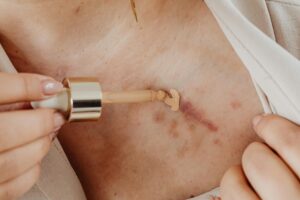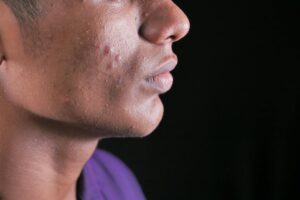
Dermabrasion has become the secondary choice for skin resurfacing primarily because fractional laser technology delivers faster results with less downtime and more controllable healing. While dermabrasion physically abrades the skin’s outer layers to smooth acne scars and texture, fractional lasers use targeted light energy to stimulate collagen renewal in micro-zones, allowing most of the skin to heal normally between treated areas. This fundamental difference means patients using fractional lasers can return to normal activities in days rather than weeks, and they experience more predictable outcomes with fewer complications.
For example, a patient treating moderate acne scarring with dermabrasion historically faced 7-10 days of raw, weeping skin and 3-4 weeks before social presentation, whereas the same patient using fractional laser technology might resume work within 3-4 days with manageable redness. The shift away from dermabrasion accelerated through the 2000s and 2010s as laser technology improved and became more accessible. What was once a dominant treatment option has now become a niche choice, reserved primarily for severe cases where other options haven’t worked or for patients specifically seeking full-depth ablation. This article covers how fractional laser technology outpaced dermabrasion, when each treatment is still appropriate, what the recovery and cost differences look like, and what the current landscape of skin resurfacing actually offers.
Table of Contents
- What Makes Fractional Lasers More Effective Than Dermabrasion?
- Recovery Differences and Long-Term Complications
- Specific Results: Scar Depth and Texture Improvement
- Choosing the Right Treatment: When to Use Each
- Skin Type, Safety, and Why Some Patients Still Face Complications
- Cost and Accessibility Factors
- The Evolution of Resurfacing Technology
- Conclusion
- Frequently Asked Questions
What Makes Fractional Lasers More Effective Than Dermabrasion?
Fractional lasers work by creating thousands of microscopic treatment zones while leaving surrounding skin untouched—this “fractional” approach fundamentally changed what’s possible in resurfacing. dermabrasion, by contrast, removes an entire uniform layer of skin, requiring the whole treatment area to scab, weep, and regenerate simultaneously. The fractional approach produces collagen remodeling faster because the untreated skin between treated zones can provide growth factors and healing signals to accelerate recovery.
Clinical studies comparing the two show that fractional CO2 lasers achieve comparable scar improvement to dermabrasion in fewer treatments and with significantly better texture outcomes. A specific example: a 35-year-old patient with rolling acne scars on the cheeks might need 3-4 fractional laser sessions spaced 4-6 weeks apart to see 70% improvement, with each session requiring only 3-4 days of visible peeling. The same patient with dermabrasion would typically need 1-2 treatments but would require 3-4 weeks of social downtime after each session and face higher risks of hyperpigmentation, especially with darker skin types. Fractional lasers also allow physicians to adjust depth and intensity per pass, whereas dermabrasion removes a fixed depth across the entire treatment area.

Recovery Differences and Long-Term Complications
The recovery timeline is where fractional laser wins most decisively. Dermabrasion patients enter a “raw skin” phase for 7-14 days where the treated area actively weeps lymphatic fluid, requires daily ointment changes, and demands strict sun avoidance. Many patients cannot return to work or public activities during this window. Fractional laser patients typically experience 2-3 days of significant redness and peeling, then 5-7 days of moderate flaking, after which makeup or normal clothing adequately covers remaining visible changes. However, if a patient has severe photosensitivity or a history of keloid formation, the intensity of fractional laser can sometimes trigger more dramatic inflammatory responses than expected—in these cases, gentler modalities or multiple lighter sessions might be preferable to single aggressive treatments.
Long-term complication rates also favor fractional lasers. Dermabrasion carries a higher historical risk of permanent hypopigmentation (especially in darker skin tones), hypertrophic scarring during healing, and irregular pigmentation patterns if sun protection isn’t meticulous. Fractional lasers, because they preserve epidermal islands between treated zones, show lower rates of these permanent changes. That said, neither technology eliminates the risk entirely—overly aggressive treatment with either method can cause permanent changes. The key difference is that fractional lasers allow physicians to titrate intensity in ways dermabrasion cannot, making complications more preventable.
Specific Results: Scar Depth and Texture Improvement
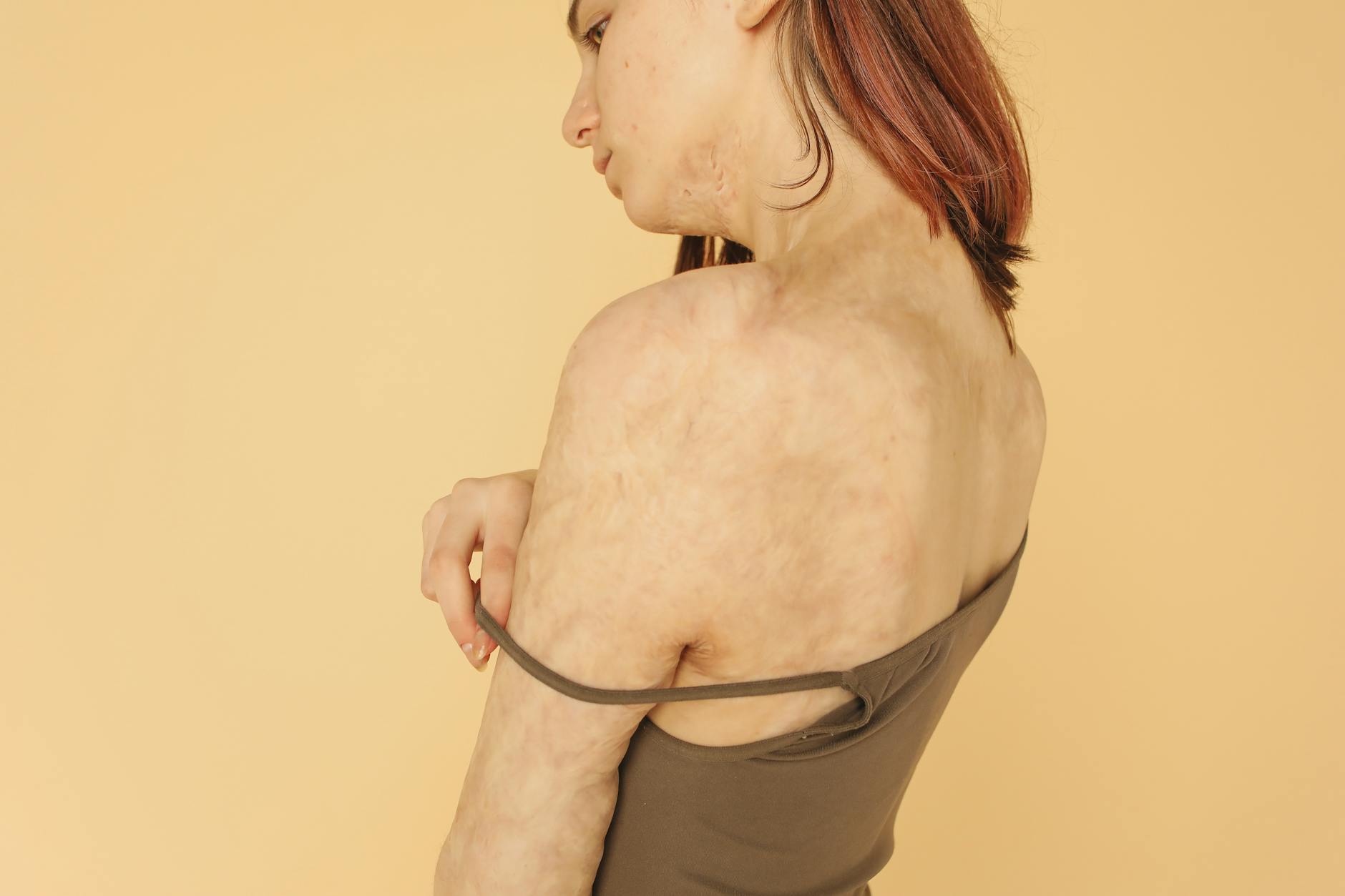
Dermabrasion was historically the gold standard for severe, deep rolling scars because its mechanical action could address deeper structural changes in a single aggressive treatment. A severely scarred patient with 3-4mm depth rolling scars might see dramatic improvement from one well-executed dermabrasion session because the procedure removes enough skin to literally elevate the scar floor. Fractional lasers achieve their results through collagen remodeling, which works differently—they’re excellent at improving the appearance of scars but may require multiple sessions to achieve the same depth of structural change.
In practice, this means fractional lasers excel at mild-to-moderate scarring and textural issues, where several sessions produce excellent, natural-looking results. For severe, deeply pitted scarring (particularly in patients with large, box-car scars), dermabrasion or combination approaches (dermabrasion plus fractional laser, or fractional laser plus subcision) sometimes still outperform fractional laser alone. A patient with primarily superficial rolling scars and mild texture will see exceptional results from fractional laser; a patient with deep, structural scarring might need a more aggressive approach or accept that multiple fractional sessions will be required.
Choosing the Right Treatment: When to Use Each
The practical decision between dermabrasion and fractional laser comes down to scar severity, patient schedule, and skin type. Patients who can take 3-4 weeks off work, have deeper scarring (especially box-car or ice-pick patterns), and aren’t prone to keloid formation remain candidates for dermabrasion because one aggressive session can address structural changes that would require 4-5 fractional laser sessions. Patients who need faster recovery, have mild-to-moderate scarring, darker skin tones, or photosensitivity almost always benefit from fractional laser’s ability to reduce treatment intensity and extend healing across multiple visits.
A 28-year-old professional with moderate, widespread acne scarring and limited time off work would be a clear fractional laser candidate—they can tolerate several sessions spaced over months, and the fast recovery fits their schedule. A 42-year-old with severe, concentrated scarring on one cheek who can take three weeks off might be better served by dermabrasion, accepting the prolonged downtime in exchange for potentially more dramatic single-session results. Combination approaches—such as subcision followed by fractional laser, or fractional laser with targeted dermabrasion in the deepest scar zones—have also become more common as providers recognize the strengths of each modality.
Skin Type, Safety, and Why Some Patients Still Face Complications
Dermabrasion’s risk profile shift has been particularly dramatic in patients with darker skin tones. The procedure historically carried substantial risks of post-inflammatory hyperpigmentation and permanent color changes because aggressive mechanical abrasion removes melanocyte-rich layers and triggers prolonged inflammation. Fractional lasers are significantly safer for darker skin because the preserved epidermal islands contain functioning melanocytes that can restore normal pigmentation more uniformly.
However, even fractional technology requires careful provider selection and settings adjustment for darker skin—overly aggressive fractional CO2 or even aggressive Nd:YAG fractional treatments can still trigger delayed hyperpigmentation or hypopigmentation in this population. This is critical: a patient with Fitzpatrick skin type IV-VI considering dermabrasion should have serious reservations and seek out specialists experienced with this population, as the risk-benefit calculation has fundamentally shifted. Fractional laser remains relatively safer for darker skin, though not without risk. Additionally, patients with active acne, certain medical conditions like autoimmune disorders, or those taking specific medications (like isotretinoin) may have compromised healing that makes the aggressive inflammation of dermabrasion problematic, whereas fractional laser’s gentler approach might be more appropriate.

Cost and Accessibility Factors
Fractional laser treatments typically cost more per session than dermabrasion (often $800-2,500 per fractional laser session versus $1,500-3,000 for a single dermabrasion treatment), but because most patients need multiple fractional sessions, total cost can be comparable or higher. The real difference is distribution: fractional laser expenses spread across 4-6 visits over several months, while dermabrasion concentrates cost into one or two sessions. For patients with limited budgets who want results faster, dermabrasion’s single-session structure can be financially appealing despite higher downtime. For patients who prefer payment flexibility or can’t afford full treatment upfront, fractional laser’s multi-visit approach allows staged spending.
Availability also plays a role—fractional laser technology is now widely available at dermatology practices, aesthetic clinics, and even med-spas across most regions. Skilled dermabrasion providers, particularly those experienced with complex cases and darker skin types, are more specialized. This accessibility gap means many patients never even learn dermabrasion is an option, and they proceed with fractional laser by default. For patients in rural areas or with limited specialist access, fractional laser’s broader availability makes it the practical choice regardless of whether it’s technically optimal for their specific scarring pattern.
The Evolution of Resurfacing Technology
The future of resurfacing isn’t simply “more lasers”—it’s increasingly combination approaches and modality sequencing. Providers now commonly use subcision or other scar-lifting techniques before fractional laser to address structural depth, then follow with fractional treatment to smooth remaining texture. Some practitioners combine fractional laser with radiofrequency energy (like radiofrequency microneedling) to achieve intermediate results between fractional laser and more aggressive approaches. Emerging technologies like newer fractional systems, picosecond lasers, and combination platforms are making dermabrasion increasingly obsolete for most applications.
That said, the shift away from dermabrasion also represents a broader change in dermatology toward gentler, more graduated approaches with better safety profiles. Modern providers are trained extensively in fractional technology and conservative treatment philosophy, meaning today’s 25-year-old dermatologist has likely never performed more than a handful of dermabrasion procedures. This generational shift means dermabrasion expertise is concentrated in experienced practitioners, and referral patterns now route patients toward laser specialists almost exclusively. As fractional technology continues improving—with faster healing times, better depth control, and better outcomes in darker skin types—the already-niche role of dermabrasion will only diminish further.
Conclusion
Fractional laser technology has displaced dermabrasion as the primary resurfacing choice because it delivers comparable or better results with dramatically faster recovery, better safety profiles (particularly for darker skin), and greater flexibility in treatment planning. The ability to spread treatment across multiple sessions while preserving untreated skin between zones simply outperforms the aggressive, all-or-nothing approach of mechanical abrasion for the majority of patients and scarring patterns. Recovery days instead of weeks, lower complication rates, and the ability to adjust intensity mid-treatment have made fractional laser the default recommendation across most dermatology practices.
If you’re considering treatment for acne scarring or textural concerns, fractional laser should be your starting point unless you have severe, deeply structural scarring that specifically warrants more aggressive intervention. A qualified dermatologist can assess whether your particular scarring pattern benefits from fractional laser alone, a combination approach, or whether a gentler gradual approach suits your schedule and skin type better. The days of dermabrasion as a first-line treatment are largely behind us, but understanding why—and recognizing that certain patients still benefit from more aggressive modalities—helps you make an informed choice about what actually works for your skin.
Frequently Asked Questions
Will I definitely need multiple fractional laser sessions, or can one aggressive session work like dermabrasion?
One aggressive fractional session can work for mild scarring, but most moderate scarring improves dramatically with 3-5 sessions spaced 4-8 weeks apart. The advantage of multiple sessions is that you can assess results and adjust intensity based on healing rather than committing to a single aggressive treatment. Some patients do choose aggressive single-session approaches, but this increases complication risk without dramatically improving outcomes over staged treatment.
Is dermabrasion still used for anything, or is it completely obsolete?
Dermabrasion is rarely first-line but still occasionally used for severe, deeply structural scarring when fractional laser hasn’t achieved adequate results, or by specialized providers treating specific scar types. Most dermatologists simply recommend fractional laser because it’s safer and more flexible. If a provider recommends dermabrasion, ask why they believe your scarring pattern specifically warrants that over fractional laser.
Can I combine dermabrasion and fractional laser in one treatment plan?
Yes, some providers use dermabrasion or microdermabrasion on the deepest scar zones combined with broader fractional laser coverage, particularly for very severe or mixed scarring patterns. This requires an experienced provider because you’re essentially using two aggressive modalities and managing healing from both simultaneously.
Why is fractional laser supposedly safer for darker skin if lasers can cause hyperpigmentation?
Fractional lasers preserve melanocyte-containing epidermal islands between treated zones, meaning normal skin pigmentation can migrate into treated areas and restore color more uniformly. Dermabrasion removes those islands entirely, disrupting pigment restoration. That said, both modalities carry some hyperpigmentation risk in darker skin if overtreated—it’s about relative safety, not absolute safety.
How much does fractional laser cost compared to dermabrasion, and which is better financially?
Fractional laser typically costs $800-2,500 per session, fractional laser usually costs $1,500-3,000 total, but most patients need 4-5 fractional sessions ($3,200-12,500 total) versus 1-2 dermabrasion procedures ($1,500-6,000 total). Financially, dermabrasion can be cheaper upfront, but you absorb significant downtime costs. Fractional laser spreads cost and downtime.
If I have darker skin, should I avoid both treatments and try something else?
Darker skin types absolutely can use both modalities, but fractional laser is significantly safer and is the preferred starting point. Dermabrasion carries higher complication risks in darker skin and should only be considered under a specialist experienced in this population. Options like microneedling with radiofrequency or chemical peels may also be worth discussing as alternatives.