Darker skin tones have higher laser complication risk because they absorb approximately 40% more laser energy than lighter skin types due to increased melanin content in the epidermis. Melanin acts as a chromophore—a compound that absorbs light energy—and this heightened absorption translates directly into greater thermal injury risk to surrounding tissue when laser treatment is applied. When laser energy damages the basal cell layer, melanocytes in darker skin respond more intensely, triggering an inflammatory cascade of protective mediators that stimulate excess melanin synthesis, leading to post-inflammatory hyperpigmentation (PIH) in 11% to 17% of cases with repeated procedures. This article explains the physiological mechanisms behind these complications, reviews the clinical statistics on complication rates, and outlines the specific laser types and treatment parameters that have proven safe and effective for darker skin types.
Table of Contents
- Why Does Melanin Absorption Create Higher Laser Complication Risk?
- Post-Inflammatory Hyperpigmentation—The Most Common Complication
- Real-World Complication Rates Across Multiple Laser Procedures
- Which Laser Types Are Actually Safe for Darker Skin?
- Specific Parameter Adjustments Required for Darker Skin
- Preventing Complications with Pre- and Post-Treatment Care
- 2025 Clinical Evidence and the Current Safety Outlook
- Conclusion
Why Does Melanin Absorption Create Higher Laser Complication Risk?
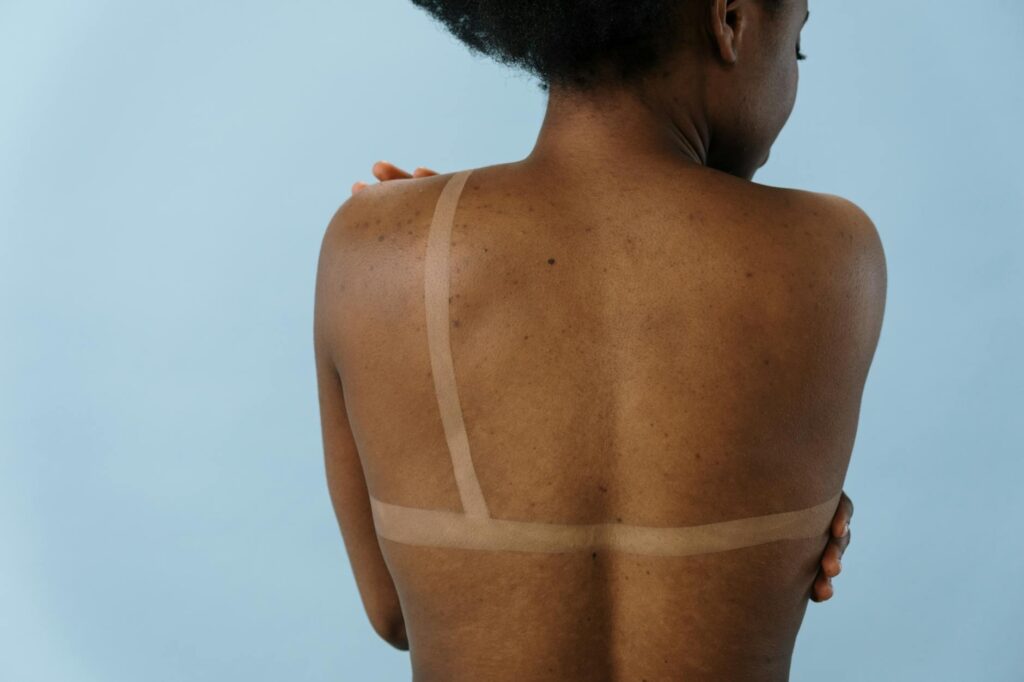
The primary reason darker skin tones experience elevated laser complication risk is fundamentally rooted in melanin’s light-absorbing properties. Melanin is a natural pigment that absorbs laser energy across multiple wavelengths. In individuals with Fitzpatrick skin types IV through VI (darker complexions), the concentration and distribution of melanin in the epidermis is significantly higher than in lighter skin types. This means when laser light penetrates the skin, it encounters far more melanin molecules that absorb that energy and convert it to heat. The research shows that darker skin absorbs approximately 40% more laser energy than lighter skin, a substantial difference that amplifies thermal injury risk.
This heightened energy absorption creates a dual problem. First, the dermis and surrounding tissues receive more thermal energy than intended, which can cause collateral damage to healthy tissue. Second, the increased heat stimulates a protective inflammatory response. The body perceives laser-induced injury as tissue damage and triggers the release of inflammatory mediators including arachidonic acid, prostaglandins, and leucotrienes. These mediators are signaling molecules that tell melanocytes to produce more melanin as a protective shield. In darker skin, this protective response is far more pronounced than in lighter skin, making hyperpigmentation more likely after even properly calibrated laser treatment.

Post-Inflammatory Hyperpigmentation—The Most Common Complication
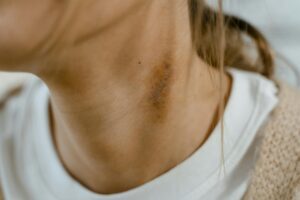
post-inflammatory hyperpigmentation (PIH) is the most frequent complication observed in patients with darker skin undergoing laser treatment, occurring in 11% to 17% of cases with repeated procedures. PIH develops when the inflammatory process triggered by laser injury stimulates melanocytes to overproduce melanin. Unlike temporary redness or swelling that resolves in days or weeks, PIH can persist for months. In one case study, a patient with Fitzpatrick type V skin underwent laser acne scar revision and experienced noticeable darkening of the treated area that lasted for four months before gradually fading. This complication is particularly frustrating because the laser successfully improved the underlying scar, but the temporary pigmentation darkening made the results less immediately satisfying.
The mechanism behind PIH is specific to how darker skin responds to injury. When laser energy damages cells in the basal layer, the skin’s inflammatory response is more robust in darker complexions. The melanocytes—cells that produce melanin—interpret this inflammation as a signal to synthesize protective pigment. In lighter skin, this response is muted, but in darker skin, it’s amplified. The inflammatory mediators persist longer and drive more sustained melanin production. However, if patients receive appropriate pre- and post-treatment care with hydroquinone cream, the risk of PIH drops considerably, as the medication inhibits melanin synthesis during the critical healing window.
Real-World Complication Rates Across Multiple Laser Procedures
A comprehensive study of 961 non-ablative laser procedures performed on 422 patients revealed the actual spectrum of complications that can occur. Beyond PIH, the study documented acne breakouts in 1.87% of patients, herpes simplex virus reactivation in 1.77%, and epidermal erosions in 1.35%. These statistics are particularly important because they show that while PIH is the leading concern for darker skin types, other complications do occur and must be anticipated. For a patient with darker skin undergoing multiple laser treatments for acne or scarring, the cumulative risk increases with each session.
Darker skin types also face elevated risk of hypopigmentation—where treated areas become lighter than surrounding skin—and keloid scarring, where excessive scar tissue forms in response to the injury. These complications are rarer than PIH but more serious when they occur, as hypopigmentation and keloids can be permanent or require invasive treatments to correct. A patient with Fitzpatrick type VI skin who underwent aggressive laser resurfacing at a clinic unfamiliar with treating darker complexions developed both patchy hypopigmentation and small keloids at the treatment margins—complications that took over a year and additional corrective treatments to improve. This example underscores why treating darker skin requires not just lower settings, but also different clinical judgment about whether more aggressive treatments are appropriate.
Which Laser Types Are Actually Safe for Darker Skin?
The most important determinant of safety for darker skin is laser wavelength. Longer-wavelength lasers penetrate deeper into the skin and are less likely to be absorbed by superficial melanin, sparing the epidermis from excess thermal damage. The three laser types most strongly supported for darker skin are the 810 nm diode laser, the 1064 nm Nd:YAG laser, and the 1550 nm erbium glass laser. These longer wavelengths pass through the melanin-rich epidermis and target deeper structures—hair follicles, water in the dermis, or subsurface blood vessels—without dumping excessive heat into the outer layers of skin where complications occur.
By contrast, shorter-wavelength lasers like the 532 nm KTP laser or 755 nm alexandrite laser are absorbed much more readily by superficial melanin, making them poor choices for darker skin. A clinic using a 532 nm laser on darker skin will experience dramatically higher complication rates because the energy gets trapped in the epidermis instead of reaching its intended target. The 1064 nm Nd:YAG laser has the strongest evidence base for safety in darker skin types; low-fluence 1064 nm treatment has been confirmed safe and effective for hair removal in Fitzpatrick types IV through VI, with markedly lower complication rates than shorter-wavelength alternatives. However, even with the correct laser type, the settings must be conservative.
Specific Parameter Adjustments Required for Darker Skin
Using the right laser type is necessary but not sufficient—the treatment parameters must be adjusted specifically for darker skin. This means using lower fluences (the amount of laser energy delivered per square centimeter) and longer pulse durations, which distribute the energy over a longer time window, reducing peak temperatures that cause thermal injury. For resurfacing treatments, practitioners may also reduce treatment density, covering fewer passes over the treatment area. These adjustments are not small tweaks; they represent a fundamentally different treatment approach than what is used for lighter skin.
According to 2025 clinical consensus, Fitzpatrick types IV through VI are not contraindicated from laser treatment entirely, meaning darker skin can be safely treated. However, the consensus is explicit: these skin types require conservative settings, rigorous sun protection both before and after treatment, and topical corticosteroids applied post-treatment to reduce inflammation. A patient with darker skin undergoing laser treatment at a clinic that uses the same settings as it uses for lighter skin patients is taking on substantially elevated risk. The clinic has essentially decided to ignore decades of clinical evidence about how darker skin responds to laser energy. Conservative settings do mean slightly slower results—hair removal may require more sessions, for example—but the tradeoff of safety for speed is the correct one in darker skin.

Preventing Complications with Pre- and Post-Treatment Care
Pre- and post-treatment with hydroquinone cream has been clinically shown to reduce PIH risk, particularly after laser resurfacing. Hydroquinone works by inhibiting tyrosinase, an enzyme essential for melanin synthesis, effectively suppressing the skin’s ability to mount the excessive pigment-producing response that causes PIH. Patients with darker skin should ideally begin hydroquinone cream one to two weeks before laser treatment and continue for at least two to four weeks afterward, the critical window when inflammatory mediators are driving melanin production.
Beyond hydroquinone, rigorous sun protection is non-negotiable. The treated skin is already inflamed and more sensitive to UV radiation, which can amplify the inflammatory response and trigger even more melanin synthesis. Patients should use broad-spectrum sunscreen of SPF 50 or higher, reapply frequently, and consider sun-protective clothing. The combination of hydroquinone cream, strict sun avoidance, and topical corticosteroids to dampen inflammation together significantly reduce PIH occurrence in darker skin types undergoing laser procedures.
2025 Clinical Evidence and the Current Safety Outlook
Recent clinical data from 2025 confirms that low-fluence 1064 nm Nd:YAG laser treatment is safe and effective for hair removal in darker skin types when proper protocols are followed. This represents a meaningful shift from older perspectives that classified darker skin as “high-risk” for laser treatment. The contemporary view is that darker skin requires different laser types and careful parameter adjustment, not avoidance of laser treatment altogether.
As more clinics have adopted evidence-based protocols specific to darker skin, complication rates have improved and patient satisfaction has increased. The field is moving toward specialized training and credentialing for providers treating darker skin with lasers. Dermatologists and cosmetic surgeons with expertise in treating darker skin types can now deliver results comparable to those achieved in lighter skin, with complication rates that are acceptable when patients are properly counseled on realistic timelines and the need for preventive care. This represents real progress in making advanced skin treatments equitably available across all skin tones.
Conclusion
Darker skin tones have higher laser complication risk fundamentally because melanin absorbs approximately 40% more laser energy, triggering more intense inflammatory responses and melanocyte activity that drives post-inflammatory hyperpigmentation in 11% to 17% of repeated procedures. However, this elevated risk is entirely manageable with the right approach: selecting longer-wavelength lasers (1064 nm Nd:YAG, 810 nm diode, or similar), using conservative fluences and longer pulse durations, and implementing rigorous preventive and post-treatment protocols including hydroquinone cream, sun protection, and topical corticosteroids. If you have darker skin and are considering laser treatment for acne, scars, hair removal, or other indications, the key is finding a provider with specific expertise and evidence-based protocols for darker skin types.
Ask whether your clinic uses longer-wavelength lasers, what fluence settings they plan to use, and whether they include pre- and post-treatment hydroquinone in their protocol. Darker skin is not contraindicated from laser treatment—it simply requires a different, more conservative approach than lighter skin. With proper treatment selection and parameter adjustment, you can safely access the same benefits from laser therapy that lighter-skinned patients enjoy.