Curcumin supplements help inflammatory acne because they directly reduce the inflammatory cytokines and bacterial overgrowth that fuel breakouts. A landmark 2025 clinical study found that curcumin combined with serratiopeptidase achieved 84% complete or near-complete improvement by week 2 when used alongside standard acne therapy, compared to just 28% improvement with standard treatment alone—a dramatic difference that reflects curcumin’s powerful anti-inflammatory action.
This isn’t marketing hype; it’s what the research consistently shows across multiple clinical trials and mechanistic studies. Curcumin works through several distinct pathways: it suppresses the inflammatory signaling molecules that trigger acne lesions, directly inhibits the Cutibacterium acnes bacteria responsible for infection and irritation, and reduces sebaceous gland activity that contributes to clogged pores. This article covers the science behind curcumin’s effectiveness, what the clinical evidence reveals about real-world results, practical considerations for using curcumin supplements, and why bioavailability remains the biggest barrier to its widespread adoption.
Table of Contents
- How Does Curcumin Target Inflammatory Acne at the Cellular Level?
- What Do Clinical Trials Actually Show About Curcumin’s Effectiveness?
- Why Is Curcumin’s Anti-Inflammatory Mechanism Particularly Suited to Acne?
- How Should You Use Curcumin Supplements for Acne Treatment?
- The Bioavailability Problem: Why Curcumin Supplements May Underperform in Real Life
- Can Curcumin Be Used Topically as Well as Orally?
- Where Is Curcumin Research Heading, and Will It Become Standard Acne Care?
- Conclusion
How Does Curcumin Target Inflammatory Acne at the Cellular Level?
Curcumin reduces inflammatory acne by blocking a critical signaling pathway called NF-κB, which acts like a master switch for inflammation in your skin. When this pathway is activated—whether by acne bacteria, excess sebum, or other triggers—your skin cells ramp up production of inflammatory molecules like IL-1β, IL-6, and TNF. Curcumin downregulates these cytokines, essentially turning down the inflammatory volume in acneic skin. This is why curcumin-treated breakouts often look visibly less red and swollen compared to untreated areas: the underlying inflammatory signal is being suppressed.
Beyond anti-inflammatory effects, curcumin also acts directly against Cutibacterium acnes, the bacteria colonizing sebaceous follicles that drives acne severity. It doesn’t just reduce inflammation from bacterial overgrowth; it suppresses the bacteria’s ability to trigger inflammation in the first place. Additionally, curcumin reduces sebaceous gland activity, addressing one of the root causes of acne by limiting excess sebum production. For inflammatory acne specifically—the type characterized by red, painful nodules and cysts rather than just blackheads—this multi-targeted approach is more effective than relying on single-mechanism treatments.
What Do Clinical Trials Actually Show About Curcumin’s Effectiveness?
The most striking recent evidence comes from a 2025 quasi-experimental study published in Drugs in Context. Researchers tested curcumin (500 mg daily) combined with serratiopeptidase (10 mg daily) as an adjunct to whatever standard acne therapy patients were already using—whether that was benzoyl peroxide, retinoids, or topical antibiotics. By week 2, 84% of patients achieved complete or near-complete improvement, compared to just 28% in the standard-therapy-only group. This wasn’t a marginal difference; it was statistically significant (p<0.001) and suggests that curcumin genuinely accelerates healing when combined with conventional approaches.
A separate split-face study examined curcumin applied topically in a photodynamic therapy format—1% curcumin masks combined with 445 nm LED light. Over two weeks of twice-weekly 20-minute applications at 36 J/cm², participants achieved 54.7% total lesion clearance, with particularly strong results for inflammatory lesions specifically (59.3% clearance). The light-only control group showed less improvement, indicating that curcumin itself, not just the light therapy, drove the results. However, it’s important to note that current curcumin research is still limited in scale. Most studies involve relatively small sample sizes, and larger randomized controlled trials are needed before curcumin can be considered a first-line acne treatment rather than a complementary option.
Why Is Curcumin’s Anti-Inflammatory Mechanism Particularly Suited to Acne?
Acne is fundamentally an inflammatory condition, even when bacteria are involved. The redness, swelling, and pus formation that characterize painful breakouts result from your immune system mounting an inflammatory response to follicular obstruction and bacterial colonization. Curcumin addresses this by working through the same immune pathways your dermatologist targets with prescription anti-inflammatories, but through a different chemical mechanism. Instead of blocking a single receptor or enzyme, curcumin modulates multiple signaling molecules simultaneously, which may explain why it appears effective across different acne presentations.
One practical advantage: curcumin’s effects on sebaceous gland activity mean it can help reduce the root cause of clogging, not just treat inflammation after it develops. Your skin’s natural sebum production is regulated by hormonal and inflammatory signals, and curcumin appears to dampen these signals. This is distinct from topical benzoyl peroxide, which primarily kills bacteria, or retinoids, which primarily unclog pores. In that sense, curcumin attacks inflammatory acne from multiple angles: reducing immune activation, suppressing bacterial virulence, and limiting excessive sebum production.
How Should You Use Curcumin Supplements for Acne Treatment?
Based on the clinical evidence, an effective curcumin dosage for acne appears to be 500 mg daily, paired with additional anti-inflammatory support like serratiopeptidase (10 mg daily) if tolerated. Most trials showing positive results used curcumin as an adjunct to existing acne therapy rather than as a standalone treatment, meaning it works best alongside whatever your dermatologist has already prescribed—retinoids, benzoyl peroxide, hormonal treatments, or antibiotics. You shouldn’t replace your current acne regimen with curcumin; instead, add it as a complementary approach.
Timing matters somewhat: taking curcumin consistently each day is more important than the exact time of day. Some people pair it with a meal containing fat (since curcumin is fat-soluble and absorbs better with dietary fat), while others find taking it with black pepper (which contains piperine) enhances absorption. The tradeoff is that curcumin supplements tend to be relatively expensive and require daily commitment, whereas topical retinoids or benzoyl peroxide are one-time applications. For someone already managing acne with prescription treatments, the additional cost and compliance burden may or may not be justified—that’s where the bioavailability issue becomes relevant, because poor absorption could mean you’re not getting the dose shown effective in clinical trials.
The Bioavailability Problem: Why Curcumin Supplements May Underperform in Real Life
Here’s the catch: curcumin has notoriously low bioavailability after oral administration. When you swallow a curcumin supplement, your body absorbs only a fraction of what the pill contains, with much of it being rapidly metabolized and excreted. This is why some manufacturers add black pepper extract (piperine) or create liposomal curcumin formulations designed to improve absorption. However, even optimized supplements may not deliver the full 500 mg dose actually reaching your bloodstream as shown effective in clinical trials. This limitation means that curcumin supplements work best as part of a broader acne management strategy, not as a magic fix.
The clinical study showing 84% improvement by week 2 used curcumin as an adjunct to standard therapy, not alone. If your acne isn’t controlled by your existing topical retinoid or benzoyl peroxide regimen, curcumin might provide meaningful additional improvement. But if you’re relying on curcumin supplements as a replacement for proven topical treatments, you’re likely to be disappointed. Additionally, individual response varies: some people notice clearer skin within days, while others see no change over weeks. This individual variability, combined with bioavailability challenges, is why more research is still needed to define curcumin’s exact role in acne treatment.
Can Curcumin Be Used Topically as Well as Orally?
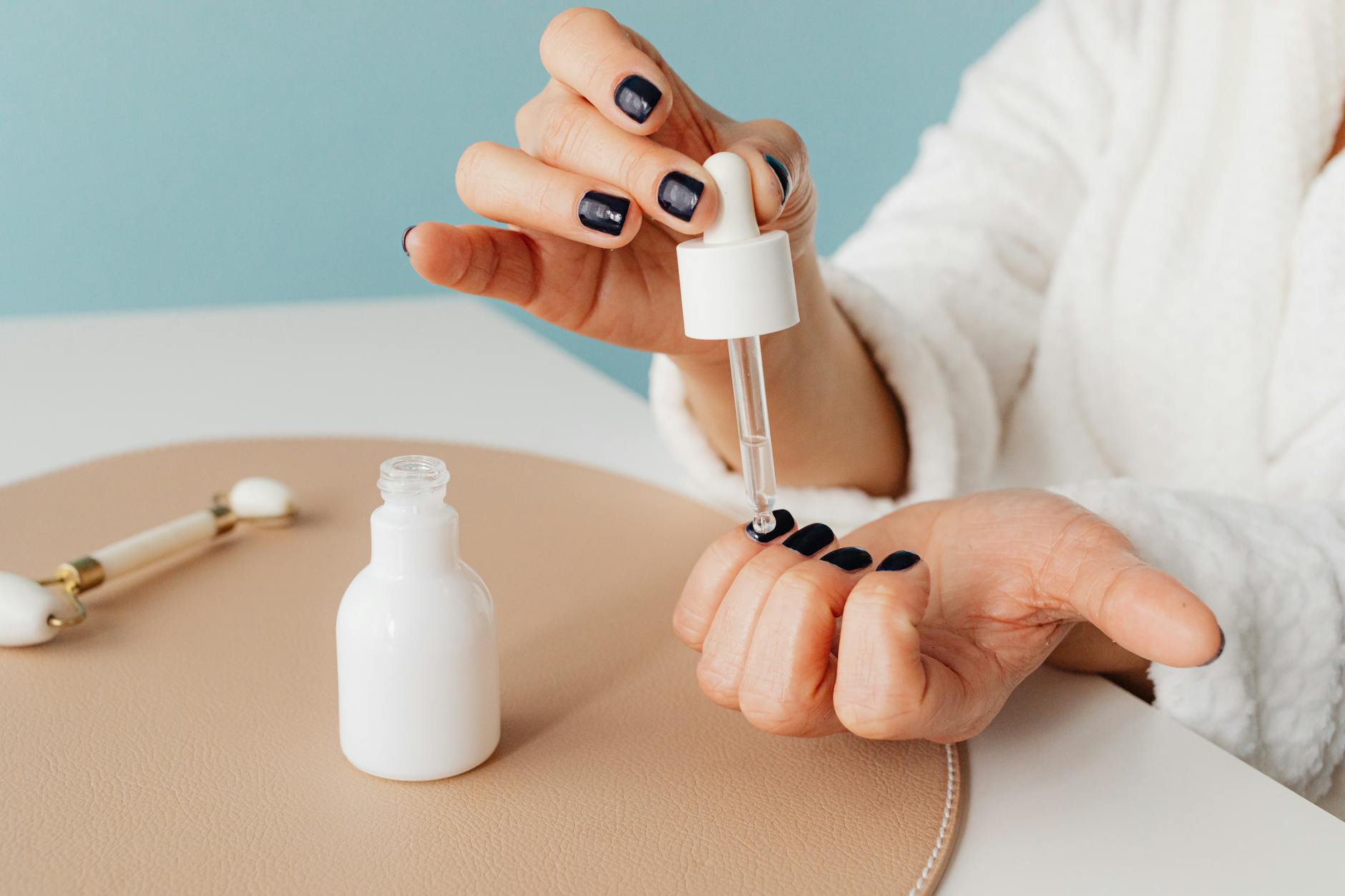
Yes, and the topical approach may actually be more effective for localized inflammatory acne lesions. Topical curcumin products—masks, serums, or creams—avoid the bioavailability problem entirely by delivering curcumin directly to the skin. The photodynamic therapy studies showing 54.7% lesion clearance used topical 1% curcumin masks with LED light, demonstrating that this approach can produce significant results within a two-week window.
For someone specifically treating a few stubborn cystic lesions, topical curcumin might be more practical than oral supplementation. The downside is that topical formulations are less widely available than oral supplements, and combining topical curcumin with other acne treatments (retinoids, benzoyl peroxide) requires careful sequencing to avoid irritation. The LED component of the photodynamic therapy studies also required specialized equipment, making it less accessible than simply taking a supplement. For most people, a combination approach—oral curcumin as an anti-inflammatory support plus topical retinoid or benzoyl peroxide—balances efficacy with practicality.
Where Is Curcumin Research Heading, and Will It Become Standard Acne Care?
Curcumin research in dermatology is advancing toward larger-scale clinical trials and optimized formulations addressing the bioavailability problem. The 2025 evidence showing 84% improvement by week 2 signals genuine clinical interest from researchers, and if larger trials replicate these results, curcumin could transition from experimental adjunct to recommended complementary therapy. The combination of anti-inflammatory, antibacterial, and sebum-regulating effects makes curcumin mechanistically appealing for acne treatment, especially for patients looking to minimize reliance on long-term antibiotics or for those who don’t tolerate other treatments well.
What remains unclear is whether curcumin will ever be potent enough to replace conventional acne treatments or remain primarily a supportive option. The current evidence suggests the latter: curcumin shines brightest as a complementary approach alongside proven topical retinoids and benzoyl peroxide. As bioavailability improvements develop—whether through liposomal delivery, new formulations, or combination strategies—curcumin’s practical utility for acne will likely increase. For now, it represents a evidence-backed natural option for patients seeking to enhance their existing acne regimen.
Conclusion
Curcumin supplements help inflammatory acne through proven anti-inflammatory mechanisms, direct antibacterial effects against acne-causing bacteria, and reduction of sebaceous gland activity. The clinical evidence, particularly the 2025 study showing 84% improvement by week 2 when combined with standard therapy, demonstrates real efficacy. However, curcumin works best as an adjunct to existing treatments—retinoids, benzoyl peroxide, or other dermatologist-recommended approaches—rather than as a standalone solution. Bioavailability challenges mean that not all of an oral curcumin supplement reaches your bloodstream, making consistency and appropriate dosing (500 mg daily) important.
If you’re dealing with persistent inflammatory acne despite using conventional treatments, adding curcumin could provide meaningful additional improvement. Start with a curcumin supplement containing optimized absorption (piperine, liposomal, or similar) at 500 mg daily, and give it at least 2-4 weeks to assess whether it helps your skin. Discuss this addition with your dermatologist to ensure it won’t interact with your current treatment plan. Curcumin isn’t a replacement for proven acne therapy, but the evidence suggests it can meaningfully accelerate clearing when used as complementary support.