
Bacteriophage therapy could replace acne antibiotics because phages kill Cutibacterium acnes with remarkable precision — reducing bacterial loads by up to 90% in clinical trials — without triggering the resistance spiral that has rendered many conventional antibiotics nearly useless. Unlike broad-spectrum antibiotics that carpet-bomb the entire skin microbiome, phages are biological snipers: they infect and destroy only C. acnes while leaving beneficial skin bacteria untouched. A 2026 study in Scientific Reports even found that when C. acnes develops partial resistance to phages, it simultaneously loses its antibiotic resistance and virulence factors — a trade-off that actually works in the patient’s favor. This matters now more than it would have a decade ago.
Antibiotic resistance among C. acnes strains has climbed roughly 40% between the 1980s and 2000s, with up to 60% of clinical isolates now resistant to commonly prescribed antibiotics. Dermatologists in the United States write approximately 8 to 9 million antibiotic prescriptions every year, and about 66% of antibiotic use in dermatology targets acne. Despite clinical guidelines recommending courses of three months or less, 64% of acne patients receive antibiotics for longer than three months, and 17% exceed six months. The system is overtreating with drugs that are losing their effectiveness. This article breaks down the specific science behind phage therapy for acne, what early clinical trials actually show, the products already on the market, and the honest limitations that stand between where we are now and a world where your dermatologist prescribes phages instead of doxycycline.
Table of Contents
- Why Are Acne Antibiotics Failing and Could Bacteriophage Therapy Be the Answer?
- What the Clinical Evidence Actually Shows About Phage Therapy for Acne
- The Evolutionary Trade-Off That Makes Phages Unique
- Phage Products on the Market Today and How They Compare to Prescription Options
- The Regulatory and Scientific Hurdles Still Ahead
- What the NIH and Research Institutions Are Signaling
- The Future of Phage Therapy in Dermatology
- Conclusion
- Frequently Asked Questions
Why Are Acne Antibiotics Failing and Could Bacteriophage Therapy Be the Answer?
The antibiotic resistance problem in acne treatment is not a distant hypothetical — it is a documented, accelerating crisis. Acne affects an estimated 9.4% of the global population, making it the eighth most prevalent disease worldwide. The global acne medication market was valued at 11.1 billion dollars in 2024 and is projected to reach 18.4 billion by 2034. That is an enormous amount of money flowing toward treatments that are becoming progressively less effective. When a patient takes doxycycline or minocycline for months on end, the surviving C. acnes bacteria are the resistant ones. They proliferate. They spread. And the next course of antibiotics works a little less well. Bacteriophages represent a fundamentally different approach to the problem. Phages are viruses that evolved over billions of years to infect and kill specific bacteria. C.
acnes phages show remarkably low genetic diversity — greater than 85% nucleotide identity across known isolates — combined with a broad host range. In practical terms, this means a small cocktail of just a few phage strains can target most C. acnes variants, including those that have already developed antibiotic resistance. Critically, these phages exhibit an inability to form stable lysogens, meaning they remain in a lytic (bacteria-killing) state rather than integrating into the bacterial genome and going dormant. Compare this to antibiotics, where resistance mechanisms can emerge within weeks of treatment, and the appeal is obvious. The contrast is sharpest when you consider the microbiome. A course of oral tetracycline does not just target C. acnes — it disrupts gut bacteria, skin commensals, and organisms that have nothing to do with acne. Phages, by their biological nature, are host-specific. They dock onto receptor proteins unique to C. acnes, inject their genetic material, hijack the cell’s machinery to produce more phages, and lyse the cell. Bacteria without those specific receptors are invisible to the phage. This selectivity is not engineered; it is how phages have operated for as long as bacteria have existed.
What the Clinical Evidence Actually Shows About Phage Therapy for Acne
The most significant human data comes from a Phase 1 clinical trial of BX001, a topical phage gel developed for acne. The double-blind, randomized, vehicle-controlled trial demonstrated that the phage cocktail reduced C. acnes bacterial burden by at least 90%, pushing counts below detection limits in treated skin. The treatment was safe and well-tolerated, with no adverse effects reported. Perhaps most important for the long-term viability of the approach: phage resistance did not increase during the trial. At baseline, 9% of isolates (4 out of 45) showed phage resistance, and that rate remained stable throughout treatment. This is a stark departure from antibiotic trials, where resistance rates typically climb during and after treatment courses. Animal studies have added mechanistic depth. A 2023 study published in Nature Communications tested topical phage therapy in a mouse model and found significantly superior clinical and histological scores compared to untreated controls.
Inflammation markers, including chemokine CXCL2 expression and neutrophil infiltration, were significantly reduced — meaning the phages were not just killing bacteria but measurably dampening the inflammatory cascade that causes acne’s redness, swelling, and scarring. A separate 2024 rat model study showed that phage φPaP11-13 attenuated C. acnes infection by promoting keratinocyte apoptosis through inhibition of the PI3K/Akt pathway, identifying a specific molecular mechanism beyond simple bacterial lysis. However, it is essential to be clear about what this evidence does and does not prove. No large-scale human clinical trials have been completed for phage therapy as a licensed acne drug. The research remains in early-phase clinical and preclinical stages. A Phase 1 trial establishes safety and provides preliminary efficacy signals, but it does not tell us how phage therapy performs across diverse skin types, in combination with other acne treatments, or over treatment courses lasting months. If you are someone with severe nodulocystic acne currently managed with isotretinoin, phage therapy is not yet a clinically validated alternative for your situation. The data is promising, but it is early data.
The Evolutionary Trade-Off That Makes Phages Unique
One of the most compelling arguments for phage therapy over antibiotics comes from a 2026 study published in Scientific Reports that examined what happens when C. acnes develops partial resistance to phages. The finding was counterintuitive and significant: pseudolysogeny-mediated evolutionary trade-offs actually favor the therapy. When C. acnes evolves partial phage resistance, it simultaneously loses antibiotic resistance genes and virulence factors. In other words, the bacteria that survive phage treatment become weaker and more susceptible to conventional antibiotics. This is the opposite of what happens with antibiotic treatment. When bacteria evolve resistance to one antibiotic, they frequently develop cross-resistance to others through mechanisms like efflux pumps and horizontal gene transfer. The selective pressure drives bacteria toward being more dangerous, not less.
With phage therapy, the selective pressure pushes C. acnes toward a less virulent state. Even if some bacteria survive the phage assault, they may lack the inflammatory factors that cause the worst acne symptoms in the first place. This creates a potential combination strategy: phage therapy first to kill the majority of C. acnes and weaken survivors, then targeted antibiotics to mop up what remains — a one-two punch that exploits the evolutionary trade-off. For a concrete illustration, consider a patient whose C. acnes strain is resistant to both erythromycin and clindamycin, two topical antibiotics commonly prescribed for acne. Under phage treatment, the surviving bacteria that develop partial phage resistance may lose that erythromycin and clindamycin resistance. A topical antibiotic that failed before treatment could theoretically work afterward. This kind of resistance reversal does not exist in any current antibiotic therapy paradigm.

Phage Products on the Market Today and How They Compare to Prescription Options
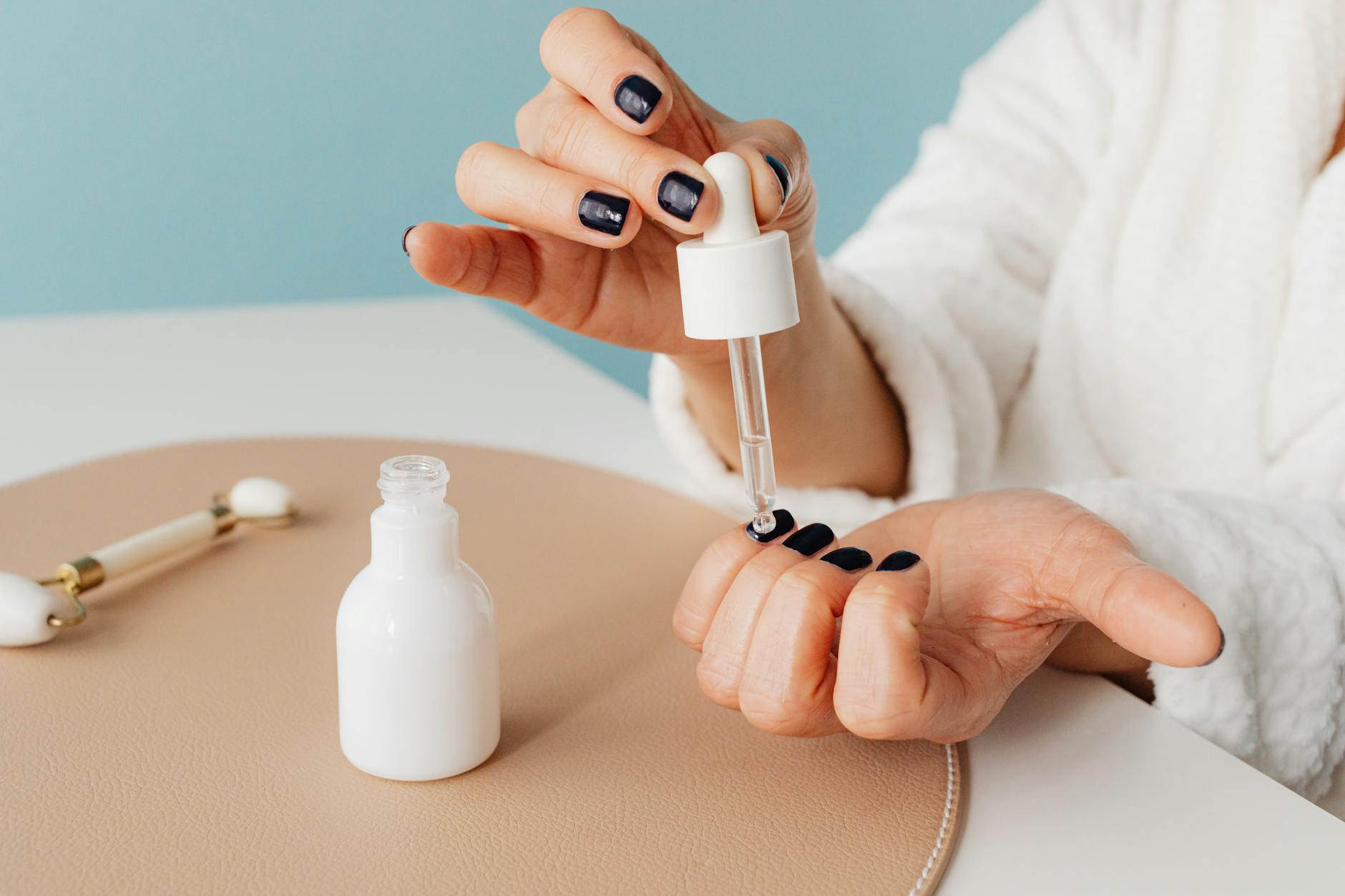
Despite the pharmaceutical pipeline being years from producing a licensed phage-based acne drug, at least one company has brought a phage product to consumers through the cosmetics route. Ellis Day Skin Science launched a Balancing Phage Serum containing their proprietary ingredient Cutiphage, with 300 billion bacteriophages per bottle that specifically target blemish-causing strains of C. acnes. It is marketed and sold as a skincare cosmetic, not a pharmaceutical, which means it did not undergo the same regulatory scrutiny as a prescription drug. The distinction matters: cosmetics must be safe for their intended use, but they are not required to demonstrate clinical efficacy through controlled trials the way drugs are. The trade-off for consumers is real. On one hand, this product gives access to phage-based skincare right now, without a prescription, without the side effects of oral antibiotics like gastrointestinal disruption or photosensitivity. On the other hand, there is no large-scale clinical trial proving that a 300-billion-phage serum applied topically achieves the same 90% bacterial reduction seen in the BX001 Phase 1 trial, which used a different formulation and delivery mechanism.
If your acne is mild to moderate and you are looking for alternatives to benzoyl peroxide or topical retinoids, a phage serum is worth investigating. If your acne is severe, inflammatory, or scarring, it would be premature to abandon proven treatments in favor of a cosmetic product — however biologically elegant the mechanism. Compared with the current standard of care, phage therapy occupies an unusual position. Benzoyl peroxide kills bacteria through oxidative damage and rarely produces resistance, but it dries and irritates skin. Topical retinoids address the root causes of comedone formation but take months to work and cause significant peeling. Oral antibiotics work faster but carry the resistance and microbiome risks described above. Phages, in theory, offer rapid bacterial reduction without resistance escalation or broad microbiome disruption. The catch is that “in theory” is doing a lot of heavy lifting until Phase 2 and Phase 3 trials deliver definitive human data.
The Regulatory and Scientific Hurdles Still Ahead
Phage therapy faces an unusual regulatory challenge. The existing pharmaceutical approval framework was designed for small-molecule drugs with fixed chemical compositions. Phages are living biological entities that replicate and evolve. A phage cocktail might need to be updated as bacterial strains shift in the population, raising questions about how to approve a product whose composition may change over time. The FDA has granted compassionate use authorizations for phage therapy in life-threatening infections, but no standardized pathway exists for phage-based dermatological products. Manufacturing consistency is another concern. Producing billions of phages in a sterile, stable formulation that maintains potency through shelf life and skin application is a biotechnology problem that has not been fully solved at commercial scale. The BX001 trial demonstrated that it can be done for a controlled study, but scaling to millions of units distributed through pharmacy supply chains introduces variables that early research does not address. A 2024 review in Archives of Dermatological Research confirmed that research remains in early-phase clinical and preclinical stages, and a 2025 review in Our Dermatology Online described phage therapy as a promising approach for addressing C.
acnes dysbiosis — the microbial imbalance underlying acne pathogenesis — but neither suggested that regulatory approval was imminent. There is also the question of patient-specific efficacy. While C. acnes phages have a broad host range, “broad” does not mean universal. Some patients may carry C. acnes strains with receptor mutations that reduce phage binding efficiency. Unlike antibiotics, where a clinician can prescribe based on a general sensitivity profile, phage therapy might eventually require phage-sensitivity testing — isolating the patient’s C. acnes strain and confirming that the phage cocktail is effective against it before treatment. This is not a dealbreaker, but it adds complexity and cost that would need to be addressed for widespread adoption.
What the NIH and Research Institutions Are Signaling
The National Institutes of Health has recognized phages as a “novel approach to combat antibiotic resistance,” signaling institutional willingness to fund and advance this research. This matters because drug development rarely succeeds without institutional backing, and the NIH’s endorsement means phage research is competing for the same grant dollars as other antibiotic alternatives. Several university labs are actively investigating engineered phage cocktails optimized for dermatological delivery, and the 2026 pseudolysogeny study out of Nature’s Scientific Reports is exactly the kind of mechanistic finding that attracts further funding.
For context, the transition from NIH interest to approved therapy is typically measured in years, not months. But the antibiotic resistance crisis provides an accelerating force. When 60% of C. acnes clinical isolates resist conventional antibiotics and the acne market is approaching 18.4 billion dollars, both the scientific urgency and the commercial incentive align in favor of phage development.
The Future of Phage Therapy in Dermatology
The most likely near-term scenario is not that phages wholesale replace antibiotics for acne, but that they enter clinical practice as an adjunct or first-line alternative for patients who have failed antibiotic therapy or who present with documented resistant strains. Combination protocols — phage therapy paired with retinoids, or phages followed by short antibiotic courses exploiting the resistance trade-off — may prove more effective than any single approach. The 2026 pseudolysogeny findings make this combination approach particularly compelling from both a scientific and a clinical standpoint.
Looking further ahead, the broader significance may be that acne becomes the proving ground for topical phage therapy across dermatology. If phages work for C. acnes, the same platform approach could target Staphylococcus aureus in atopic dermatitis, Pseudomonas in wound infections, or other skin-associated pathogens. Acne, with its massive patient population, well-characterized microbiology, and enormous market, is the most commercially viable entry point for a technology that could reshape how we treat bacterial skin disease entirely.
Conclusion
The case for bacteriophage therapy replacing acne antibiotics rests on converging evidence: a 90% bacterial reduction in Phase 1 human trials, host-specificity that preserves the skin microbiome, stable resistance profiles during treatment, and an evolutionary trade-off where partial phage resistance actually weakens bacteria. Set against a backdrop where 60% of C. acnes isolates resist conventional antibiotics and millions of patients receive extended antibiotic courses beyond clinical guidelines, the need for alternatives is not theoretical — it is present and worsening. The honest assessment is that phage therapy for acne is a matter of when, not if, but “when” still involves clearing significant regulatory, manufacturing, and clinical trial milestones.
No large-scale human efficacy trials have been completed. Products available today are marketed as cosmetics, not drugs. Patients currently managing acne with antibiotics should not abandon their treatment based on Phase 1 results. But they should be aware that the science behind phage therapy is substantive, the institutional interest is real, and the pipeline is moving. The next five years of clinical data will likely determine whether phages become a standard tool in acne treatment or remain confined to specialty use.
Frequently Asked Questions
Are bacteriophages for acne available to buy right now?
Yes, but only as cosmetic products, not as prescription medications. Ellis Day Skin Science sells a Balancing Phage Serum containing 300 billion bacteriophages targeting C. acnes. Because it is classified as a cosmetic rather than a pharmaceutical, it has not undergone the rigorous clinical trial process required for drug approval. It may be worth trying for mild acne, but it should not be treated as a substitute for medically supervised treatment of moderate to severe acne.
Can bacteria become resistant to phages the way they become resistant to antibiotics?
Bacteria can develop partial resistance to phages, but the consequences differ dramatically. A 2026 study found that when C. acnes evolves partial phage resistance, it loses antibiotic resistance and virulence factors simultaneously. In the Phase 1 BX001 trial, phage resistance rates remained stable at 9% throughout treatment, showing no escalation. This contrasts sharply with antibiotic resistance, which tends to increase during and after treatment.
Will phage therapy replace my current acne medication?
Not yet. No phage-based acne treatment has completed large-scale human clinical trials or received pharmaceutical approval. Research remains in early-phase clinical and preclinical stages. If your current treatment is working, there is no clinical basis to switch to phages at this time. Phage therapy is most likely to enter practice first as an option for patients whose acne has not responded to conventional antibiotics.
Do phages have side effects?
In the Phase 1 clinical trial of BX001 phage gel, the treatment was safe and well-tolerated with no adverse effects reported. Because phages are highly host-specific and target only C. acnes, they do not disrupt beneficial skin bacteria the way broad-spectrum antibiotics do. Long-term safety data from larger trials is still needed.
How do phages actually kill acne bacteria?
Phages attach to specific receptor proteins on the surface of C. acnes cells, inject their genetic material, hijack the cell’s replication machinery to produce more phages, and then lyse (burst) the bacterial cell. The newly released phages go on to infect additional C. acnes cells. A 2024 study also identified a specific molecular mechanism where phage φPaP11-13 promotes keratinocyte apoptosis by inhibiting the PI3K/Akt pathway, which helps clear infected tissue.