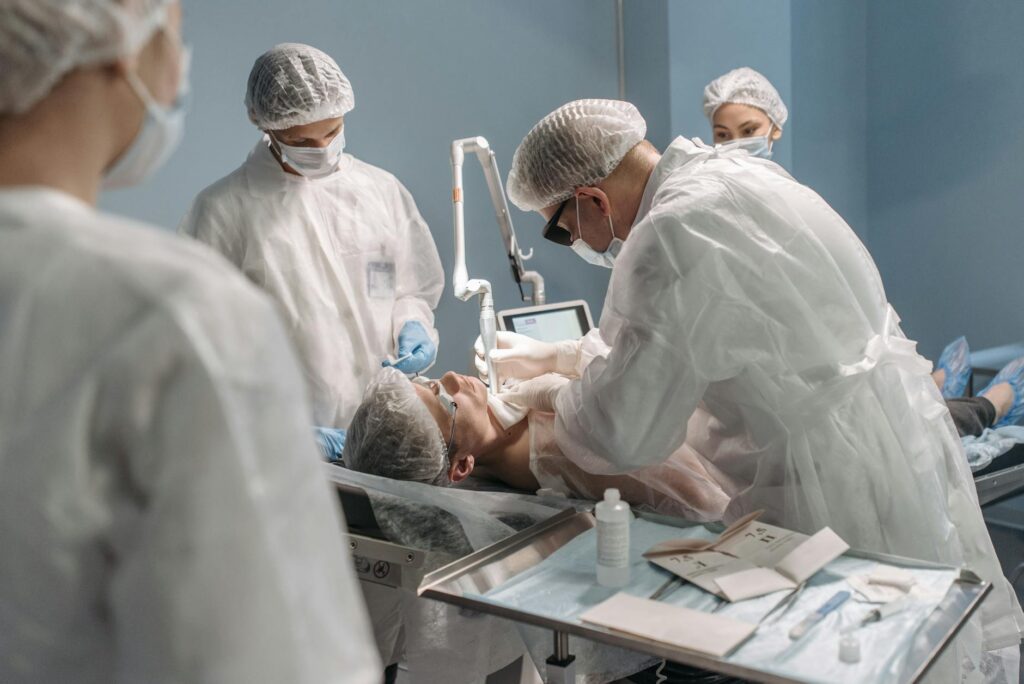
AviClear’s three-session protocol is gaining traction as a compelling alternative to Accutane because it delivers significant acne clearance without the harsh systemic side effects and rigorous monitoring that isotretinoin demands. Both treatments target the root causes of acne—AviClear uses photopneumatic technology to destroy sebaceous glands and reduce sebum production, while Accutane suppresses oil production and reduces acne-causing bacteria through powerful oral medication. For patients with moderate-to-severe acne who want results without the blood tests, pregnancy restrictions, and potential liver complications of Accutane, AviClear offers a localized, non-pharmaceutical path to clear skin that many dermatologists now recommend as a first-line option before considering isotretinoin.
The competition between these two approaches reflects a fundamental shift in how dermatologists treat stubborn acne. Where Accutane has been the default nuclear option for 30+ years, AviClear represents a paradigm shift toward laser-based, body-system-sparing treatments. This article examines why AviClear is increasingly chosen over Accutane, how their mechanisms differ, what trade-offs patients face, and which situations favor one approach over the other.
Table of Contents
- How Does AviClear’s Mechanism Compare to Accutane’s Approach?
- Efficacy and Clearance Rates: What the Data Shows
- Side Effects and Safety: Why AviClear Avoids Accutane’s Burden
- Treatment Timeline and Patient Experience
- Cost, Insurance, and Accessibility Barriers
- Who Should Choose Each Treatment?
- The Future of Acne Treatment and Long-Term Outlook
- Conclusion
- Frequently Asked Questions
How Does AviClear’s Mechanism Compare to Accutane’s Approach?
AviClear uses a proprietary photopneumatic technology that combines a 1,726-nanometer laser wavelength with pneumatic massage. The laser energy is absorbed by sebaceous glands in the skin, heating and disrupting their function to reduce sebum production and shrink the glands themselves. Unlike Accutane, which works systemically through the bloodstream to suppress sebum production throughout the entire body, AviClear targets only the sebaceous glands in the treatment area—typically the face. This localization is significant: while Accutane users often experience severe dry skin everywhere (lips, eyes, scalp, vaginal tissue), AviClear patients report manageable dryness concentrated only where treated. Accutane’s oral mechanism is potent but blunt.
Isotretinoin, the active ingredient, essentially forces the body to produce 80-90% less sebum and causes sebaceous gland atrophy as a side effect. The treatment works because it addresses the fundamental biology of acne-prone skin: excess oil production. However, this systemic suppression of sebum also dries out skin, lips, eyes, and mucous membranes across the entire body. AviClear achieves similar sebum reduction but through direct thermal disruption of the glands themselves, leaving the rest of the body’s oil production intact. A patient treated with AviClear can have normal moisture in their eyes and scalp while their face becomes less oily—whereas an Accutane user becomes dry everywhere.

Efficacy and Clearance Rates: What the Data Shows
Clinical trials show AviClear achieving approximately 75% acne clearance after three sessions (spaced 4 weeks apart), with many patients seeing sustained improvement up to one year post-treatment. Accutane achieves higher initial clearance rates—typically 80-90%—but with the critical caveat that it’s approved primarily for severe, treatment-resistant acne. The real question isn’t which is “more effective” in a vacuum; it’s which is appropriate for which patient. For moderate acne that hasn’t responded to multiple rounds of topical retinoids and oral antibiotics, AviClear’s three-session protocol often delivers adequate clearing in just 12 weeks, whereas Accutane typically requires 16-24 weeks of daily medication with frequent lab monitoring.
However, Accutane carries a significant advantage for cystic, nodular, or deeply scarring acne: it can achieve complete or near-complete clearing in a way AviClear hasn’t yet demonstrated. If a patient has 50+ cystic lesions across the face or deep nodules that leave severe scarring, Accutane remains the gold standard. But here’s where the comparison shifts: the severity bar for Accutane has dropped. Dermatologists now often recommend AviClear first, even for patients who might previously have gone straight to isotretinoin. If AviClear achieves 70-75% clearance, that may be sufficient; if not, the patient can always pursue Accutane later with a clearer baseline.
Side Effects and Safety: Why AviClear Avoids Accutane’s Burden
Accutane’s side effect profile is notoriously severe and requires constant monitoring. Users experience extreme dryness (lips, eyes, skin), potential liver enzyme elevation, lipid abnormalities, depression risk (still debated but noted), headaches, and birth defect risk (Category X pregnancy—meaning absolute contraindication for women of childbearing potential). Female patients on Accutane must enroll in iPLEDGE, a restricted distribution program requiring monthly pregnancy tests, two forms of contraception, and documented monthly lab work. The cumulative burden of 16-24 weeks of this regimen, plus 6+ months of follow-up monitoring, is substantial. AviClear’s side effect profile is dramatically lighter.
The most common effects are mild, temporary erythema (redness) for 24-48 hours post-treatment, minor heat sensations during the procedure, and localized dryness. There’s no lab monitoring, no systemic effects, no impact on liver function or lipids, and no pregnancy restrictions. Women can undergo AviClear while pregnant or breastfeeding, and men face no impact on fertility. The trade-off: AviClear achieves somewhat lower absolute clearance (75% vs. 90%), but the absence of serious side effects means more patients actually complete the three-session protocol and tolerate it well enough to reach that clearance plateau.

Treatment Timeline and Patient Experience
AviClear’s protocol is patient-friendly: three sessions spaced 4 weeks apart, each session lasting roughly 30 minutes. Total treatment time across 12 weeks is about 1.5 hours of actual procedure time. After each session, patients can return to normal activities immediately (sun protection advised). Most see visible improvement by session 2, with continued clearing over months 3-6 as the skin remodels and oil production remains suppressed. Accutane’s timeline is longer and more disruptive.
A typical course is 16-24 weeks (cumulative dose of 120-150 mg/kg). During this period, patients must visit their dermatologist monthly for monitoring, undergo bloodwork every 4-12 weeks, and adhere to strict contraception if female. The cumulative appointment burden easily reaches 8-12 visits plus lab draws. Many patients report the psychological weight of this monitoring—the message “your acne is so serious you need monthly lab work” can itself feel isolating. Additionally, Accutane’s side effects often worsen during months 2-4, meaning the patient experiences peak dryness and discomfort in the middle of treatment, not the beginning. AviClear’s three sessions are spaced across 12 weeks, so any discomfort is brief and non-cumulative.
Cost, Insurance, and Accessibility Barriers
AviClear’s cost typically ranges from $3,000 to $4,500 for the full three-session protocol, varying by geography and clinic. Most insurance plans do not cover laser acne treatments, classifying them as cosmetic. However, some plans have begun covering AviClear under the rubric of “medical necessity” if standard treatments have failed—this varies by insurer and requires prior authorization. For self-pay patients, the upfront cost is a barrier, but it’s a one-time expense for potentially multi-year results.
Accutane’s cost is lower on paper—generic isotretinoin runs roughly $100-200 per month—but the hidden costs add up. Monthly dermatology visits ($150-300 each), monthly or quarterly lab work ($200-400 per draw depending on insurance), pregnancy test fees (often $50-100 monthly for women), and the clinical burden of time off work for appointments, blood draws, and side effect management make Accutane’s true cost substantially higher than AviClear. Additionally, Accutane requires a specific prescription, enrolling in iPLEDGE (if female), and compatibility with the patient’s insurance formulary—not all insurance plans cover isotretinoin, or they require failed trials of other drugs first. AviClear, while out-of-pocket for most, bypasses insurance bureaucracy entirely.

Who Should Choose Each Treatment?
AviClear is ideal for patients with moderate acne, those seeking minimal side effects, women of childbearing age who want to avoid pregnancy restrictions, individuals with already-compromised liver function, or anyone who prioritizes convenience and quick return-to-normal-life. It’s also the logical choice for patients who’ve failed multiple rounds of topical retinoids, oral antibiotics (like doxycycline), and oral birth control (for women), but don’t yet have the severe scarring or nodular acne that signals Accutane. A typical candidate: a 22-year-old woman with persistent moderate comedonal and inflammatory acne across the cheeks and jawline despite 6+ months of adapalene (Differin) and minocycline.
Accutane remains the first choice for patients with severe cystic or nodular acne, deep-scarring lesions, acne fulminans (explosive acne), or those who’ve failed AviClear. It’s also appropriate for patients motivated by the certainty of near-complete clearing and willing to accept the monitoring burden. A typical candidate: a 19-year-old with dozens of cystic lesions, a strong family history of severe acne scarring, and failed trials of multiple antibiotics and topical treatments. Accutane offers a higher floor of clearance and a genuine “cure” potential (long-term remission after one course), whereas AviClear offers symptom management that often requires maintenance.
The Future of Acne Treatment and Long-Term Outlook
AviClear represents a broader trend in dermatology: moving away from systemic, side-effect-heavy drugs toward targeted, device-based treatments. As technology improves, newer iterations of photopneumatic and other laser-based acne treatments will likely become more effective, potentially closing the efficacy gap with Accutane further. Some dermatologists predict AviClear (or improved successor devices) will eventually become the standard first option for moderate acne, with Accutane reserved purely for severe, treatment-refractory cases.
Insurance coverage for laser treatments is gradually expanding, making AviClear more accessible to middle-income patients. Real-world data over the next 3-5 years will clarify which patients achieve the most durable remission: those treated with AviClear, those treated with Accutane, or those who undergo combination approaches (AviClear followed by low-dose isotretinoin if needed). For now, the practical outcome is clear: patients have genuine optionality, and the blanket recommendation of “Accutane for everyone with moderate-to-severe acne” is obsolete.
Conclusion
AviClear’s three-session laser protocol competes with Accutane because it delivers substantial acne clearance (approximately 75%) in a fraction of the time, without systemic side effects, lab monitoring, or the psychological and physical burden that isotretinoin demands. While Accutane remains superior for severe, cystic, or nodular acne—offering higher absolute clearance and potential long-term cure—many patients with moderate acne now achieve satisfactory results through AviClear, avoiding the need for isotretinoin entirely.
The choice between the two should center on severity (cystic acne favors Accutane; moderate acne favors AviClear), patient age and reproductive plans (AviClear preferred for women of childbearing age), and willingness to tolerate side effects and monitoring burden. For the first time in decades, patients with stubborn acne have a realistic non-Accutane path to clear skin, shifting dermatology away from a one-size-fits-all nuclear option toward precision, patient-centered care. Consult with a dermatologist to assess your acne severity, treatment history, and medical history to determine which approach aligns with your health and lifestyle.
Frequently Asked Questions
Can I do AviClear if I’ve already failed other treatments?
Yes. AviClear is typically recommended after failed topical retinoids (like tretinoin or adapalene) and/or oral antibiotics. If you’ve been on multiple rounds of these and still have significant acne, AviClear is a logical next step before considering Accutane.
Will AviClear prevent acne from coming back?
Not permanently. AviClear significantly reduces sebum production and acne incidence for months to years, but sebaceous gland function can gradually return. Some patients maintain results indefinitely; others see gradual recurrence after 12-24 months and may need maintenance sessions. Accutane, by contrast, can produce multi-year or even permanent remission in some patients.
Is AviClear safe during pregnancy?
Yes. AviClear’s localized laser treatment poses no known risk to a developing fetus, and many pregnant women with acne have undergone treatment safely. Accutane is absolutely contraindicated (teratogenic) in pregnancy.
Why isn’t AviClear covered by insurance?
Most insurance plans classify AviClear as cosmetic rather than medically necessary. Some newer policies cover it if standard treatments have failed, but prior authorization is required. Accutane is usually covered if dermatologic criteria are met, though coverage varies by insurer.
Can I combine AviClear and Accutane?
Unusual but possible. Some dermatologists recommend AviClear first, and if inadequate clearing occurs, transition to Accutane. However, combining them simultaneously is not standard practice.
How long do AviClear results last?
Most patients maintain 70-75% of their treatment results for 1-3 years post-treatment. Gradual recurrence of acne is common after this window, at which point some patients pursue maintenance sessions or alternative treatments.