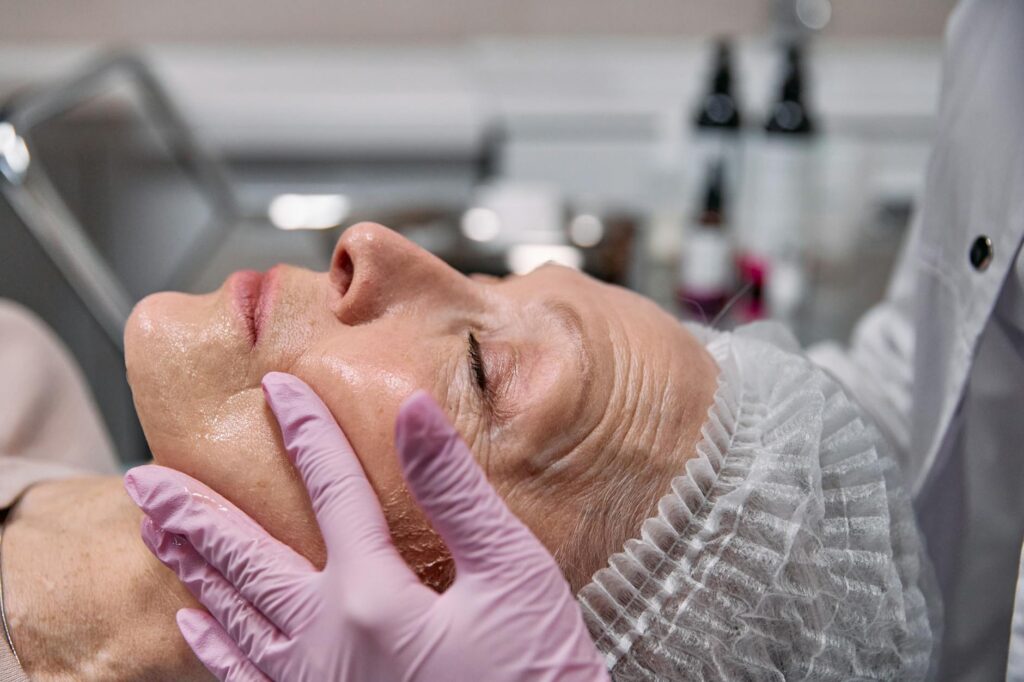
An OBGYN and dermatologist should work together for hormonal acne because the condition sits at the intersection of two medical specialties, and neither doctor alone sees the full picture. A dermatologist can identify acne type, severity, and skin-specific treatments, but hormonal acne is driven by internal fluctuations — androgens, estrogen, progesterone, cortisol — that fall squarely within an OBGYN’s expertise. When these two specialists coordinate care, patients get treatment plans that address both the visible skin damage and the underlying hormonal triggers simultaneously, rather than playing whack-a-mole with one side of the problem.
Consider someone prescribed spironolactone by their dermatologist for persistent jawline cystic acne — without input from an OBGYN, that prescription might conflict with a hormonal IUD they just started, or miss the fact that their acne flares are tied to a condition like polycystic ovary syndrome that needs its own management. This collaborative approach matters more than most patients realize. Hormonal acne is notoriously stubborn, and the reason many people cycle through topical treatments for years without lasting improvement is that topicals only manage symptoms on the surface. The rest of this article breaks down exactly how these two specialties complement each other, what each doctor brings to the diagnostic process, which treatment combinations tend to work best, how to practically coordinate care between two separate offices, and where this approach has real limitations.
Table of Contents
- Why Does Hormonal Acne Need Both an OBGYN and a Dermatologist?
- What Each Specialist Brings to the Hormonal Acne Diagnosis
- Treatment Combinations That Work Best With Coordinated Care
- How to Practically Coordinate Between Two Specialists
- When This Collaborative Approach Has Limitations
- The Role of Lab Work and When It Changes the Treatment Plan
- Where Hormonal Acne Care Is Heading
- Conclusion
- Frequently Asked Questions
Why Does Hormonal Acne Need Both an OBGYN and a Dermatologist?
hormonal acne is fundamentally different from the garden-variety breakouts most people deal with in their teens. It is driven by hormonal shifts — most commonly an excess of androgens or heightened sensitivity of oil glands to normal androgen levels — and it tends to appear along the jawline, chin, and lower cheeks in a pattern that dermatologists recognize on sight. But recognizing the pattern and treating the root cause are two different things. A dermatologist can prescribe retinoids, antibiotics, and topical treatments to manage the skin’s response, while an OBGYN can evaluate whether the hormonal environment itself needs correction through oral contraceptives, anti-androgen therapy, or treatment for an underlying endocrine condition. Without both perspectives, treatment tends to be incomplete. Here is a comparison that illustrates the gap: a dermatologist treating hormonal acne alone might prescribe a course of oral antibiotics and a topical retinoid.
That can reduce inflammation and bacterial load, but once the antibiotics are discontinued — and they should be, given concerns about long-term antibiotic resistance — the acne often returns because nothing changed hormonally. An OBGYN treating the same patient might start a combined oral contraceptive pill, which can reduce androgen levels and stabilize hormonal fluctuations. But without dermatological input, the OBGYN might not realize the patient also has significant post-inflammatory hyperpigmentation or scarring that needs targeted skincare. The two approaches are not interchangeable — they are complementary. One important caveat: not all acne that flares around a menstrual cycle is truly “hormonal” in the clinical sense that requires endocrine intervention. Some people have acne that worsens premenstrually due to normal, healthy hormonal shifts and responds well to topical treatment alone. A collaborative evaluation helps distinguish between patients who genuinely need systemic hormonal treatment and those who would do fine with a solid topical regimen and some patience.

What Each Specialist Brings to the Hormonal Acne Diagnosis
The diagnostic process looks different in each office, and that is exactly the point. A dermatologist evaluates acne by type (comedonal, inflammatory, cystic, nodulocystic), location, severity, scarring risk, and skin type. They also assess what treatments have already been tried and failed, which is critical for determining next steps. If someone has already cycled through multiple rounds of topical retinoids and antibiotics without improvement, that treatment history itself is diagnostic — it suggests the problem is not primarily at the skin level. Dermatologists also perform or order skin biopsies in rare cases where the diagnosis is unclear, and they manage the cosmetic aftermath of acne, including scarring and pigmentation. An OBGYN approaches the same patient from the inside out.
They may order bloodwork — typically a hormonal panel that includes testosterone (free and total), DHEA-S, androstenedione, and sometimes insulin and glucose levels — to look for measurable hormonal imbalances. They evaluate menstrual cycle regularity, which is one of the strongest clinical clues for conditions like PCOS. They also consider the patient’s reproductive goals, contraceptive preferences, and overall gynecological health, all of which directly affect which hormonal treatments are appropriate. For example, spironolactone — one of the most effective anti-androgen medications for acne — carries a risk of birth defects and requires reliable contraception, making the OBGYN’s input on birth control method essential. However, if a patient has already had a recent hormonal workup through an endocrinologist or primary care doctor, duplicating that testing through an OBGYN may be unnecessary and costly. The value of the OBGYN is not just the lab orders — it is the clinical interpretation of those results in the context of reproductive health. A slightly elevated testosterone level means something different in a patient with irregular periods and ovarian cysts than it does in a patient with perfectly regular cycles who just happens to have oily skin.
Treatment Combinations That Work Best With Coordinated Care
The real advantage of a coordinated approach shows up in treatment planning. Some of the most effective regimens for hormonal acne involve combining systemic hormonal therapy with targeted topical or procedural dermatological care, and getting the sequencing and dosing right requires input from both sides. A common and well-supported combination is a combined oral contraceptive pill (which suppresses ovarian androgen production) paired with a topical retinoid like tretinoin or adapalene (which normalizes skin cell turnover and prevents clogged pores). The contraceptive addresses the hormonal driver while the retinoid addresses the downstream effect on the skin. Spironolactone is another example where coordination matters. Prescribed off-label for acne at doses typically ranging from 50 to 200 milligrams daily, spironolactone blocks androgen receptors and reduces oil production.
A dermatologist may initiate the prescription, but an OBGYN should be involved to ensure the patient has reliable contraception in place and to monitor for side effects like potassium elevation or menstrual irregularities. In patients with PCOS, the OBGYN might also add metformin if insulin resistance is part of the picture — a metabolic intervention that can indirectly improve acne by lowering insulin-driven androgen production. One specific example of effective coordination: a patient with moderate cystic acne along the jawline, irregular periods, and elevated DHEA-S levels. The OBGYN diagnoses PCOS, starts a combined oral contraceptive, and refers to dermatology. The dermatologist adds a short course of oral antibiotics to get the active inflammation under control quickly, transitions to a topical retinoid for maintenance, and performs a series of chemical peels to address existing hyperpigmentation. Neither treatment plan alone would have been as effective or as efficient.

How to Practically Coordinate Between Two Specialists
Getting two specialists to actually communicate about a shared patient is harder than it sounds, and patients often end up being the go-between by default. The most practical approach is to ask each doctor explicitly to send visit notes and lab results to the other. Most electronic health record systems support this if both offices are within the same health network, but if they are not, you may need to sign release forms and follow up to make sure records were actually sent. Do not assume it happened automatically. There is a tradeoff between convenience and quality of coordination. Seeing an OBGYN and dermatologist within the same health system or practice group makes record-sharing easier, but it may mean compromising on the individual quality of each specialist.
A highly regarded dermatologist at a private practice and an OBGYN at a hospital-affiliated clinic may have more expertise individually but less seamless communication. In practice, many patients find that bringing a printed summary of their current medications, recent lab results, and the other doctor’s most recent assessment to each appointment is the most reliable way to keep both providers on the same page. It is low-tech, but it works. Timing also matters. Ideally, the hormonal evaluation should happen before or concurrently with dermatological treatment, not months later as a last resort. If you suspect your acne is hormonal — meaning it appears primarily on the lower face and neck, worsens cyclically, started or worsened in your twenties or later, or has not responded to standard topical treatments — request referrals to both specialists early rather than sequentially.
When This Collaborative Approach Has Limitations
Not every case of hormonal acne benefits equally from a two-specialist approach, and there are situations where it can actually slow things down. For mild hormonal acne that responds to a single intervention — say, starting a combined oral contraceptive that clears the skin within a few months — adding a dermatologist may be unnecessary. Similarly, patients who already know they cannot or do not want to take hormonal medications (due to a history of blood clots, migraines with aura, or personal preference) may not gain much from an OBGYN visit focused on hormonal therapy options. There is also a cost and access limitation that cannot be ignored. Seeing two specialists means two sets of copays, two sets of appointments to schedule during work hours, and potentially two sets of prior authorizations for medications. For patients without insurance or with high-deductible plans, this adds up quickly. In areas with limited specialist availability — rural regions in particular — getting appointments with both an OBGYN and a dermatologist within a reasonable timeframe can be a real barrier.
In those situations, a primary care provider who is comfortable prescribing both spironolactone and topical retinoids may be a more practical single point of care, even if it is not the theoretical ideal. A further warning: coordinated care does not guarantee faster results. Hormonal acne treatments work slowly. Combined oral contraceptives typically take three to six months to show meaningful improvement in acne. Spironolactone can take a similar timeframe. Topical retinoids often cause an initial purging phase that temporarily worsens breakouts. Patients who expect the involvement of two specialists to accelerate their timeline may become frustrated and discontinue treatment prematurely, which is the single most common reason hormonal acne treatment fails.
The Role of Lab Work and When It Changes the Treatment Plan
Blood work does not always change the treatment plan, and that is worth understanding before you go in expecting a clear hormonal smoking gun. Many patients with textbook hormonal acne have lab results that come back within normal ranges. This does not mean their acne is not hormonally driven — it often means their skin’s androgen receptors are more sensitive than average, which is not something a blood test can measure. An OBGYN who understands this will still consider anti-androgen therapy even with normal labs, rather than dismissing the hormonal component.
Where lab work becomes genuinely valuable is in identifying underlying conditions that change the treatment approach entirely. Elevated DHEA-S may point toward an adrenal source of excess androgens rather than an ovarian one. Markedly elevated testosterone could, in rare cases, warrant imaging to rule out an androgen-secreting tumor. Elevated insulin or glucose levels suggest insulin resistance, which is common in PCOS and responds to metabolic interventions that a purely dermatological approach would miss. In these cases, the lab results do not just confirm a diagnosis — they redirect the entire treatment strategy.
Where Hormonal Acne Care Is Heading
The trend in dermatology and gynecology, based on recent clinical discussions and published guidelines, is toward more integrated care models for conditions like hormonal acne that cross specialty boundaries. Some academic medical centers and larger practice groups have begun offering combined clinics or multidisciplinary consultations where a patient can see both specialists in a single visit, though this remains uncommon in community practice settings. Teledermatology and telehealth-based OBGYN visits have also made it somewhat easier for patients to coordinate care without the logistical burden of multiple in-person appointments.
Looking ahead, there is growing interest in more targeted hormonal therapies that could reduce the need for broad systemic treatments like oral contraceptives. Research into topical anti-androgens — medications that block androgen receptors directly at the skin without systemic hormonal effects — has produced some candidates in development, though none have fully replaced existing options as of recent reports. If these treatments mature, they could simplify the treatment landscape, but for now, the most reliable approach for moderate-to-severe hormonal acne remains the kind of inside-out, coordinated strategy that requires both an OBGYN and a dermatologist working from the same playbook.
Conclusion
Hormonal acne is a condition that lives in the overlap between two medical specialties, and treating it effectively usually means drawing on both. A dermatologist manages the skin — reducing inflammation, preventing scarring, clearing existing breakouts — while an OBGYN addresses the hormonal machinery driving the problem. When these two providers communicate and coordinate, patients get treatment plans that are more targeted, more efficient, and more likely to produce lasting results than either specialist working in isolation. The key takeaway is that neither topical treatments alone nor hormonal therapy alone is usually sufficient for moderate-to-severe hormonal acne — the combination is what works.
If you are dealing with acne that clusters along your jawline, flares with your cycle, or has not responded to standard topical treatments, the practical next step is to schedule appointments with both a dermatologist and an OBGYN and let each know you are seeing the other. Bring your medication list and any recent lab work to both appointments. Be prepared for a timeline of several months before you see significant improvement, and resist the urge to abandon a treatment plan before it has had time to work. Hormonal acne is frustrating precisely because it is slow to resolve, but a coordinated, two-specialist approach gives you the best odds of getting it under control for good.
Frequently Asked Questions
Can my primary care doctor treat hormonal acne instead of seeing two specialists?
In many cases, yes. Primary care providers can prescribe oral contraceptives, spironolactone, and topical retinoids. However, they may be less equipped to handle complex cases involving PCOS, treatment-resistant acne, or significant scarring. If your acne is mild to moderate and your primary care doctor is comfortable managing it, that is a reasonable starting point. Escalate to specialists if you are not seeing improvement after several months.
Will insurance cover seeing both an OBGYN and a dermatologist for acne?
Most insurance plans cover visits to both specialists, but acne treatment is sometimes subject to prior authorization requirements, especially for medications like spironolactone used off-label. Copays and deductibles vary widely. Call your insurance before scheduling to understand your out-of-pocket costs, and ask each office whether they require a referral from your primary care provider.
How long does it take for hormonal acne treatments to work?
Most hormonal treatments — including combined oral contraceptives and spironolactone — take three to six months to show significant improvement. Topical retinoids may cause a temporary worsening in the first four to eight weeks before improvement begins. Patients who discontinue treatment before the three-month mark are unlikely to see the full benefit.
Is hormonal acne only a problem for women?
Hormonal acne is far more commonly discussed in the context of female patients because of the role of menstrual cycle fluctuations, PCOS, and the availability of estrogen-based treatments. However, hormonal factors also contribute to acne in men, though the treatment options differ — spironolactone and oral contraceptives are not appropriate for male patients. Men with suspected hormonal acne should see a dermatologist and potentially an endocrinologist rather than an OBGYN.
Can I take spironolactone if I am not on birth control?
Spironolactone is classified as potentially harmful to a developing fetus, so prescribing guidelines strongly recommend reliable contraception while taking it. This does not necessarily mean oral contraceptives — an IUD or other non-hormonal method may be acceptable depending on your provider’s assessment. This is precisely the kind of decision where OBGYN input is valuable alongside dermatological care.