Acne that keeps returning to the same spot isn’t a coincidence—it’s the result of incomplete healing beneath the skin’s surface. When a pimple appears and seemingly disappears, the underlying pore or follicle often remains inflamed, damaged, or partially blocked. This allows oil, bacteria, and dead skin cells to re-accumulate in that exact location, creating a cycle where the same spot breaks out repeatedly over weeks or months.
For example, someone might clear a cluster of pimples on their chin only to have another one form in nearly the same location within days, then again a week later. Understanding why this happens—and what it reveals about your skin’s structure and biology—is essential to actually breaking the cycle rather than just treating each breakout individually. This article explores the interconnected reasons acne returns to the same spots, from the structural damage that makes certain pores prone to re-clogging, to the role of bacteria, hormonal patterns, and everyday habits that keep re-irritating already-vulnerable skin. We’ll also cover realistic timelines for healing and what professional treatments can actually change the trajectory.
Table of Contents
- How Damaged Pore Structure Creates Recurring Breakouts
- The Bacterial Persistence Problem
- Why Picking and Touching Make It Worse
- Professional Treatments That Actually Change Pore Behavior
- Hormonal Acne Targets Specific Zones Consistently
- The Recovery Timeline You’re Not Expecting
- What Recurring Acne Reveals About Your Skin Health
- Conclusion
How Damaged Pore Structure Creates Recurring Breakouts
When a pore becomes inflamed or clogged, the damage isn’t just on the surface. Incomplete healing beneath the skin is the primary mechanism driving acne that returns to the same spot. Even after a pimple visibly heals, the follicle wall may remain weakened, the surrounding tissue inflamed, or the pore partially obstructed—creating an ideal environment for the exact same sequence of clogging and bacterial growth to repeat. Excess oil production also tends to concentrate in specific areas of the face due to the natural distribution of sebaceous glands.
The T-zone (forehead, nose, bridge) is particularly common because oil glands are denser there, but everyone has their own pattern of oil-prone zones. When sebum mixes with dead skin cells and debris in a pore that’s already been through inflammation, it clogs the same pathway repeatedly. Follicles that have been inflamed before develop what dermatologists call memory patterns—they become more susceptible to re-inflammation than nearby pores that have never broken out. This is why someone might have clear skin almost everywhere except for one persistent trouble spot on their chin or one area of their cheek.
The Bacterial Persistence Problem
The problem intensifies when these bacteria-filled follicles rupture. When this happens, the rupture releases bacteria, keratin, and inflammatory lipids deeper into the dermis layer, exacerbating inflammation and creating conditions for the pimple to recur in the same exact spot.
This is why untreated bacterial buildup in one area prevents complete clearing—the pimple reappears within days to weeks because the underlying bacterial population and follicle blockage were never fully resolved. However, if a spot clears completely and stays clear for several weeks, it suggests the underlying bacterial and structural issues were resolved, at least temporarily. A pimple that returns to within millimeters of its previous location after only a few days almost certainly indicates incomplete healing of that specific follicle.
- Cutibacterium acnes* naturally lives on everyone’s skin without causing problems—until it becomes trapped inside a clogged pore. Once sealed in an anaerobic (oxygen-free) environment, the bacteria multiply rapidly and trigger an inflammatory response that manifests as redness, swelling, and tenderness. The body’s immune system works to clear the infection, but if the pore remains clogged, the bacteria simply repopulate after surface healing.
Why Picking and Touching Make It Worse
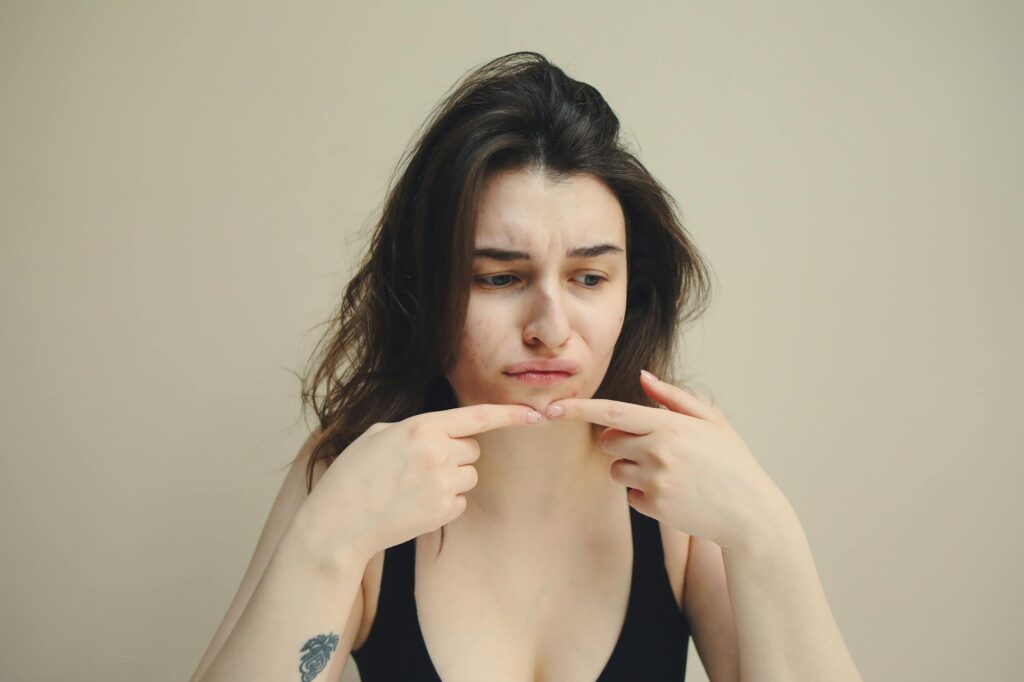
One of the most counterintuitive findings for acne sufferers is that picking, squeezing, or popping a pimple doesn’t clear out all the clogged material—it simply ruptures the pore at the surface while leaving behind bacterial buildup and damaged follicle walls. Within days to weeks, that pore becomes clogged again, often in exactly the same configuration, creating the appearance that the same pimple refuses to go away. Beyond picking, constant contact is equally problematic.
Touching a healing spot with your hands throughout the day, pressing your phone against your cheek, or sleeping on the same pillowcase night after night continuously re-irritates the site before full recovery can occur. The skin never gets the uninterrupted healing window it needs. Someone who touches a healing pimple 20 times a day or rests their face on their hand while working is essentially resetting the healing timeline every time they make contact. This explains why pimples in areas you unconsciously touch or rest against tend to be more persistent than those in areas you leave alone.

Professional Treatments That Actually Change Pore Behavior
At-home treatments like spot creams, salicylic acid, and benzoyl peroxide can help with mild acne, but they don’t address the root issue of a permanently altered or weakened follicle. For recurring acne in the same spot, dermatologist-recommended interventions work differently. Cortisone injections directly reduce inflammation in cystic acne by suppressing the immune response within the pimple itself, allowing actual healing to occur without the recurring inflammation cycle. Prescription-strength retinoids (like tretinoin) accelerate skin cell turnover, which helps clear blocked pores and prevents the same follicle from becoming clogged again, though this takes weeks to months of consistent use to show results.
The trade-off is that these stronger treatments require professional oversight and time. A cortisone injection provides relief within days but is temporary—the follicle may still be prone to future breakouts without addressing underlying oil production or clogging factors. Retinoids take 8-12 weeks to show meaningful improvement and require daily application, but they actually change how the skin sheds cells and may reduce the recurrence rate over time. Over-the-counter options are more accessible but less likely to prevent that same pimple from returning if the underlying structural problem persists.
Hormonal Acne Targets Specific Zones Consistently
For many people, acne doesn’t scatter randomly across the face—it appears predictably in the same zones, month after month. Period acne exemplifies this pattern, appearing consistently on the chin, lower cheeks, jawline, and neck due to cyclic androgen surges during menstrual cycles. This isn’t coincidence; hormonal fluctuations trigger increased sebum production in these specific regions because androgen receptors are more concentrated there. A person might have clear skin for two weeks, then reliably break out in the exact same spots 7-10 days before their period, then clear again after hormonal shifts.
Conditions like PCOS and other hormonal imbalances create even more persistent patterns, with acne appearing in the same zones month after month without the cyclical relief. Understanding this pattern is important because it signals that the recurring acne in that specific location is driven by something deeper than local pore clogging—it’s a systemic hormonal signal. This means topical treatments alone often won’t solve it; hormonal acne requires either hormonal intervention (like oral contraceptives), anti-androgen medications, or internal strategies like diet and stress management alongside topical care. A person treating hormonal acne with only salicylic acid spot cream will likely see the same pimples return right on schedule next cycle.

The Recovery Timeline You’re Not Expecting
Inflammatory acne, especially cystic breakouts, can take 3 or more months to fully clear, even with treatment. This extended timeline exists because the inflammation extends deep into the dermis, and the body’s healing process in that layer is slow. Many people see a pimple visibly flatten within 2 weeks and assume it’s healed, then are confused when redness persists for 6-8 more weeks or when a pimple forms in the exact same spot 3 weeks later.
The visible surface may appear clear, but subsurface inflammation and follicle damage are still resolving. For this reason, dermatologists recommend waiting at least 3-4 weeks after a breakout clears before considering that area truly healed. If a new pimple appears in that same location within 2-3 weeks, it’s almost certainly the same underlying follicle breaking out again rather than a separate breakout. This distinction matters because it tells you that topical spot treatments aren’t working for that location and something stronger—either professional treatment or a change in underlying factors like touching, hormones, or oil production—needs to intervene.
What Recurring Acne Reveals About Your Skin Health
When acne keeps returning to the same spot, your skin is essentially telling you something specific about that location or your overall skin biology. Repeated breakouts in the exact same place signal either a structurally vulnerable follicle, a localized behavioral trigger (like touching or pressure), or a systemic factor like hormones that targets that zone. This information is valuable because it allows you to move beyond generic “treat acne” approaches and address the actual root cause. The silver lining is that once you understand the pattern, you can intervene more effectively.
If a spot breaks out during your period every single month, hormonal approaches become relevant. If it’s always where you rest your phone, changing that behavior becomes the priority. If it’s a structurally weak pore, dermatologist-prescribed retinoids or professional treatments become worth considering. Recurring acne in the same spot is frustrating, but it’s also your skin’s clearest signal about what’s actually driving the problem.
Conclusion
Acne that returns to the same spot happens because the underlying healing is incomplete. The pore structure may be damaged, bacteria may repopulate, external contact may keep re-irritating the site, or hormonal fluctuations may consistently trigger breakouts in that exact zone. Understanding which of these factors applies to your recurring acne is essential to actually stopping the cycle rather than just treating each breakout as it appears. Breaking the cycle requires matching the treatment to the root cause.
If it’s structural or bacterial, professional treatments like cortisone injections or prescription retinoids can change the trajectory. If it’s behavioral, protecting the area from contact and picking is non-negotiable. If it’s hormonal, topical treatments alone likely won’t solve it. The timeline is also important to accept—full healing can take 3 or more months, and patience is as much a part of the treatment as the products or procedures themselves.