# Why Acne Is No Longer Treated as a Cosmetic Issue
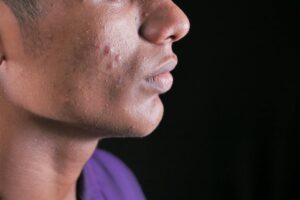
For decades, acne was dismissed as a minor skin problem that teenagers had to endure. Today, medical professionals recognize acne as a serious health condition that deserves proper clinical attention and research investment. This shift reflects growing evidence that acne affects far more than just appearance.
The scale of the problem has become impossible to ignore. In the United States alone, acne affects an estimated 40 to 50 million individuals and remains the most common dermatologic condition treated by dermatologists. More concerning, the global acne burden is increasing, particularly among young women, with greater increases expected by 2040. These numbers demonstrate that acne is not a minor issue affecting a small percentage of the population but rather a widespread health concern affecting millions.
Beyond the physical symptoms, acne carries significant psychological weight. Research shows that acne directly impacts quality of life, self-esteem, and mental health. Studies reveal strong correlations between acne severity and psychological distress, including anxiety, depression, and stress. The condition affects how people perceive themselves and their social interactions. For many patients, the emotional toll of acne can be as debilitating as the physical symptoms themselves.
The medical community has responded to this reality by investing in serious research and development. In 2025, dermatologists and pharmaceutical companies advanced multiple innovative treatment approaches. Sanofi launched clinical trials for the world’s first mRNA acne vaccine, which aims to revolutionize treatment by targeting the body’s inflammatory response rather than just treating symptoms. Biofrontera Inc. completed phase 2b studies for aminolevulinic acid hydrochloride gel to treat moderate to severe cases. Denifanstat emerged as a groundbreaking oral therapy that targets both sebum production and inflammation, offering safer and more effective options than previous treatments.
Researchers are also exploring entirely new mechanisms for treating acne. Scientists are investigating how beneficial bacteria in the skin microbiome can help reduce inflammation. Studies with live lactobacilli showed that applying a cream formulated with these beneficial bacteria twice daily reduced inflammation in all study participants. This approach represents a fundamental shift from simply killing acne-causing bacteria to actively promoting skin health through microbiome balance.
Natural and plant-based treatments are receiving serious scientific scrutiny as well. Medicinal plants including tea tree oil, lavender, licorice, turmeric, and heartsease have shown potential acne treatment properties. Combinations like tea tree and lavender oils demonstrated lesion-decreasing effects in clinical studies.
The recognition of acne as a medical issue rather than a cosmetic one has also changed how patients seek treatment. Research shows that despite social media’s influence on beauty standards, patients trust dermatologists more than online sources for acne treatment guidance. This indicates that people increasingly view acne as a condition requiring professional medical expertise rather than something to manage through consumer products alone.
Early treatment has become a priority in clinical practice because getting treatment early is the best means of avoiding scarring and other complications. For moderate to severe acne, doctors now recommend seeking medical evaluation rather than attempting self-treatment. Treatment goals have expanded beyond simply healing existing pimples to preventing scarring and minimizing long-term damage.
The shift in how acne is treated reflects a broader understanding that skin health is connected to overall health and wellbeing. Acne can affect mental health, social functioning, and quality of life. It can leave permanent physical scars. These realities have moved acne from the realm of cosmetic dermatology into mainstream medical practice, where it receives the research funding, clinical attention, and innovative treatment development it deserves.
Sources
https://www.dermatologytimes.com/view/dermatology-times-2025-year-in-review-acne
https://www.drugdiscoverynews.com/a-live-bacteria-treatment-for-acne-15924
https://sciety.org/articles/activity/10.21203/rs.3.rs-8217416/v1
https://www.pharmacytimes.com/view/the-educated-patient-clearing-up-acne
https://pmc.ncbi.nlm.nih.gov/articles/PMC12729506/
https://pubmed.ncbi.nlm.nih.gov/41439563/?fc=None&ff=20251229015632&v=2.18.0.post22+67771e2