Acne that appears or worsens in your 40s is almost always driven by hormonal changes, not by what you eat, how often you exercise, or how thoroughly you cleanse your face. This shift happens because hormone levels fluctuate significantly during perimenopause and menopause, triggering sebum production and inflammation in ways that lifestyle habits simply cannot control. A 45-year-old woman who suddenly develops cystic breakouts along her jawline and chin despite maintaining the same skincare routine she’s used for 20 years is experiencing hormonal acne, not the result of dietary changes or stress—even if stress may amplify the problem.
This article explains why hormones become the dominant driver of acne in midlife, how to distinguish hormonal acne from other types, and what treatment options actually target the root cause rather than just the symptoms. The confusion between hormonal and lifestyle-related acne persists because acne at any age can appear to improve with skincare improvements, leading people to assume their breakouts were lifestyle-related all along. In reality, hormonal acne responds inconsistently to topical treatments alone, which is why someone in their 40s might find that a skincare routine that worked perfectly in their 30s suddenly becomes ineffective. Understanding this distinction matters because it changes how you should approach treatment—focusing on systemic hormonal management rather than simply trying harder with cleansers and moisturizers.
Table of Contents
- Why Does Hormonal Acne Emerge or Intensify During Your 40s?
- How Hormonal Acne Differs from Lifestyle-Driven Breakouts
- The Role of Sebum Production and Skin Barrier Changes in Midlife Acne
- Treating Hormonal Acne: Why Typical Skincare Isn’t Enough
- Common Misconceptions and Warning Signs
- Testing and Diagnosis
- Looking Forward: Managing Hormonal Acne as You Progress Through Menopause
- Conclusion
- Frequently Asked Questions
Why Does Hormonal Acne Emerge or Intensify During Your 40s?
During perimenopause and menopause, estrogen and progesterone levels decline while androgen-to-estrogen ratios shift. These hormonal changes directly increase sebaceous gland activity and inflammation in the skin. The ovaries produce less estrogen, which would normally help regulate oil production and skin barrier function, while androgens (male hormones present in all bodies) become relatively more dominant. This hormonal environment is similar to what happens during puberty—which is why teenage acne and menopausal acne share many characteristics, including location patterns and resistance to topical-only treatments.
A 47-year-old might experience her first significant breakout since her 20s not because her environment changed, but because her endocrine system shifted. Her diet could be identical to what worked fine at 35, her exercise routine unchanged, and her stress levels even lower than before—yet the acne appears because the hormonal substrate has fundamentally changed. Studies show that acne presenting or worsening after age 40 occurs in approximately 15-20% of women, with the majority attributable to hormonal fluctuation rather than other factors. This is distinct from adult-onset acne in the 25-35 range, which often does respond to lifestyle adjustments because different hormonal drivers may be at play.

How Hormonal Acne Differs from Lifestyle-Driven Breakouts
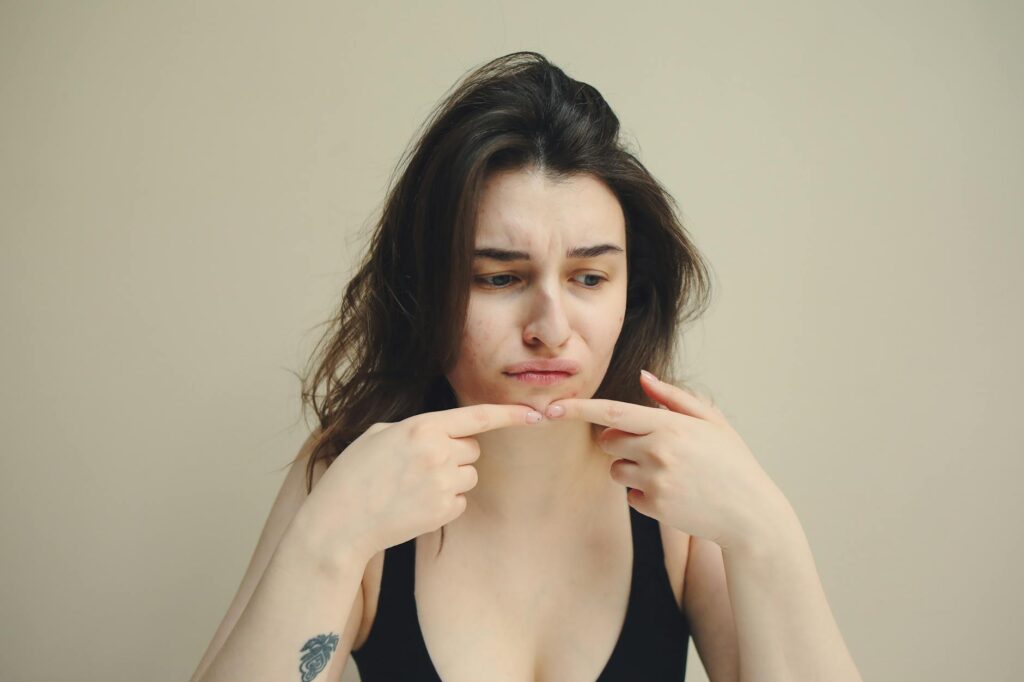
Hormonal acne has distinct characteristics that distinguish it from acne triggered by diet, hygiene, or environmental factors. It typically appears along the lower face—the jawline, chin, and sometimes the neck—rather than scattered across the forehead and cheeks where lifestyle-triggered acne tends to cluster. The lesions are often deeper, more inflamed, and take longer to resolve. They frequently appear in a cyclical pattern in people who menstruate, concentrating around the luteal phase when progesterone drops. Cystic or nodular acne (the most painful type) is far more common in hormonal acne than in acne caused by poor hygiene or dietary factors.
However, hormonal acne does not necessarily mean lifestyle factors are irrelevant. Someone with hormonal acne in their 40s will still benefit from a consistent skincare routine, and certain dietary approaches might provide modest improvements. The key limitation is that hormonal acne will not clear through lifestyle changes alone, no matter how rigorous. Someone might eliminate dairy, reduce sugar, exercise daily, and maintain flawless skincare—and still experience persistent cystic breakouts because the underlying hormonal drive hasn’t been addressed. This is a critical point because people often blame themselves for hormonal acne, assuming they’re “doing something wrong,” when the reality is that topical and lifestyle interventions simply cannot override systemic hormonal disruption.
The Role of Sebum Production and Skin Barrier Changes in Midlife Acne
Hormonal shifts in your 40s don’t just trigger acne; they also alter how your skin responds to inflammatory signals. Estrogen helps maintain the skin barrier by supporting ceramide production and regulating inflammation. As estrogen declines, the skin barrier becomes more compromised, allowing irritants and bacteria to penetrate more easily. Simultaneously, androgens stimulate the sebaceous glands to produce more oil, creating an environment where acne bacteria (Cutibacterium acnes) can thrive more readily.
This dual mechanism—compromised barrier plus increased sebum—is why even people with naturally dry skin can suddenly develop oily, acne-prone skin in their 40s. A woman who had combination or dry skin for decades might find that her skin becomes noticeably oilier starting in her early 40s, even before she experiences obvious menopausal symptoms like hot flashes. This oiliness often seems to appear overnight, and people frequently attribute it to a change in products or routine, when it’s actually a physiological shift triggered by hormonal fluctuation. The skin’s response to this environment is also more inflammatory during menopause because estrogen’s anti-inflammatory effects are reduced. This means that even bacteria present in normal skin can trigger a more dramatic inflammatory response, resulting in larger, more painful breakouts.
Treating Hormonal Acne: Why Typical Skincare Isn’t Enough
The most common mistake in treating acne in your 40s is approaching it with the same skincare-based strategy that works for younger people or for non-hormonal acne. While a good cleanser, retinoid, and SPF are foundational, they alone cannot address hormonal acne because they don’t influence the endocrine system. Topical treatments can help manage inflammation and prevent bacterial overgrowth, but they cannot reduce sebum production triggered by hormonal signals or suppress the hormonal environment that drives the condition. This is where people often get frustrated—they use prescription-strength retinoids and acne medications yet still break out, not because the products aren’t working, but because the products were never designed to address hormonal drivers.
Effective treatment for hormonal acne in your 40s typically requires systemic intervention, which might include hormonal birth control (if appropriate and not contraindicated), spironolactone (an androgen-blocking medication), or other hormonal management strategies. For those in menopause, hormone replacement therapy (HRT) sometimes improves acne by restoring estrogen balance, though individual responses vary. The tradeoff is that these systemic treatments require medical consultation and come with their own considerations and potential side effects that topical treatments don’t carry. However, for many people with moderate to severe hormonal acne in their 40s, these approaches are far more effective than doubling down on skincare products. A dermatologist or gynecologist can help evaluate whether systemic treatment is appropriate based on individual health history and other menopausal symptoms.
Common Misconceptions and Warning Signs
One of the most pervasive misconceptions is that hormonal acne should be treated the same way as teenage acne. While both are hormonal in origin, the underlying hormonal picture differs significantly. Teenage acne occurs in the context of rising androgen levels during puberty, while acne in your 40s occurs in the context of declining estrogen. This means some treatments effective for teenagers—such as certain birth control pills designed to block androgen effects—might work differently or less effectively in someone experiencing natural hormonal decline. Additionally, some androgens become more biologically active as estrogen declines, which can paradoxically make acne worse even if absolute androgen levels haven’t increased.
Watch for warning signs that your acne is not simply lifestyle-related. If acne appears suddenly after age 40 when you previously had clear skin, if it concentrates specifically on the lower face and jaw, if it’s predominantly cystic or severely inflammatory, or if it follows a cyclical pattern (in menstruating individuals), these are strong indicators of hormonal acne. Another critical warning: if you’re experiencing other menopausal symptoms—irregular periods, hot flashes, night sweats, mood changes—alongside new-onset acne, this is nearly certain evidence that hormonal changes are driving the breakouts. Do not assume that waiting it out, trying another expensive serum, or being more disciplined with skincare will resolve hormonal acne. These may provide modest improvement, but without addressing the hormonal substrate, the acne will likely persist.
Testing and Diagnosis
If you’re experiencing new or worsening acne in your 40s and suspect hormonal causes, request appropriate testing from your dermatologist or gynecologist. This might include hormone level testing (estrogen, progesterone, testosterone, DHEA-S) and an evaluation of your overall menopausal status. However, it’s important to understand that hormone levels fluctuate significantly throughout the menstrual cycle (in people who still menstruate) and throughout perimenopause. A single hormone test might not reveal the full picture.
Some people with acne have hormone levels that fall within “normal” ranges, but their skin’s sensitivity to those hormones is elevated, or the ratio between hormones is what matters most. This is why clinical evaluation and symptom correlation matter as much as lab results. Testing also helps rule out other hormonal conditions that can cause acne, such as polycystic ovary syndrome (PCOS), thyroid dysfunction, or other metabolic conditions. While these are less common in someone who’s had clear skin through their 30s and then develops acne in their 40s, they’re still worth investigating if acne is accompanied by other symptoms like irregular cycles, weight changes, or significant mood shifts.
Looking Forward: Managing Hormonal Acne as You Progress Through Menopause
Acne patterns often change as you move through perimenopause into menopause and eventually postmenopause. Some people find their acne gradually improves as hormone levels stabilize at lower levels, while others experience persistent acne even after menopause is complete. This variability means that managing hormonal acne in your 40s isn’t always a one-time fix but rather an evolving process that may require adjusting treatment approaches over time. For those considering or currently using HRT, acne may improve, worsen, or remain unchanged depending on the specific hormones used and individual skin biology.
This is another conversation to have with your healthcare provider—the decision to use HRT involves many factors, and managing acne as one consideration among many. Looking at the bigger picture, understanding that your acne in your 40s is hormonal rather than lifestyle-driven can actually be empowering. It removes self-blame, directs you toward more effective treatment strategies, and helps you have more informed conversations with healthcare providers about what approach makes sense for your specific situation. Rather than assuming you’ve somehow failed at skincare or lifestyle, you can focus on understanding your hormonal status and exploring the systemic treatments that actually address the root cause.
Conclusion
Acne in your 40s is predominantly a hormonal phenomenon, driven by declining estrogen and shifting androgen-to-estrogen ratios rather than by diet, exercise, or skincare habits. While lifestyle factors and a solid skincare routine provide a foundation for skin health, they cannot override systemic hormonal disruption—which is why someone can follow every piece of acne-fighting advice and still experience persistent breakouts. The key is recognizing hormonal acne’s distinct characteristics—its location on the lower face, its often-cystic nature, and its cyclical or persistent pattern despite skincare efforts—and seeking appropriate systemic treatment rather than continuing to invest in increasingly elaborate skincare routines.
If you’re experiencing new or worsening acne in your 40s, consult with a dermatologist or gynecologist who can evaluate your hormonal status and discuss treatment options suited to your health profile and goals. For many people, this conversation opens doors to treatments that actually work—whether that’s hormonal birth control, spironolactone, hormone replacement therapy, or another approach—rather than endlessly cycling through skincare products that cannot address the underlying driver. You’re not doing something wrong; your hormones have simply shifted in a way that requires a different approach.
Frequently Asked Questions
Can diet changes help with hormonal acne in my 40s?
Diet changes can provide modest support for overall skin health and may slightly reduce inflammation, but they cannot resolve acne driven by hormonal changes. Someone with hormonal acne will likely need systemic treatment in addition to a healthy diet, not instead of it.
Does hormonal acne in your 40s ever go away on its own?
Sometimes acne gradually improves as hormones stabilize postmenopause, but many people experience persistent acne even after menopause is complete. Waiting it out without treatment is typically not an effective strategy—most people benefit from active management.
Can retinoids or benzoyl peroxide treat hormonal acne?
These topical treatments can help manage inflammation and prevent bacterial overgrowth, making acne less severe, but they cannot address the hormonal drivers of acne. They work best as part of a comprehensive approach that includes systemic treatment for hormonal acne.
Is spironolactone safe to use in your 40s?
Spironolactone is a well-established treatment for hormonal acne and is safe for most people, but it requires medical supervision, regular monitoring, and isn’t appropriate for everyone depending on kidney function and other health factors. Discuss with your doctor whether it’s suitable for you.
Why did my acne appear suddenly even though nothing in my life changed?
This is the classic presentation of hormonal acne—your environment and habits remained constant, but your endocrine system shifted, triggering acne in response. This is normal during perimenopause and menopause.
Can I use birth control to treat hormonal acne in my 40s?
Some birth control formulations can help reduce hormonal acne by blocking androgen effects, but not all are equally effective, and some aren’t appropriate depending on age and health status. Your doctor can determine whether this approach makes sense for you.