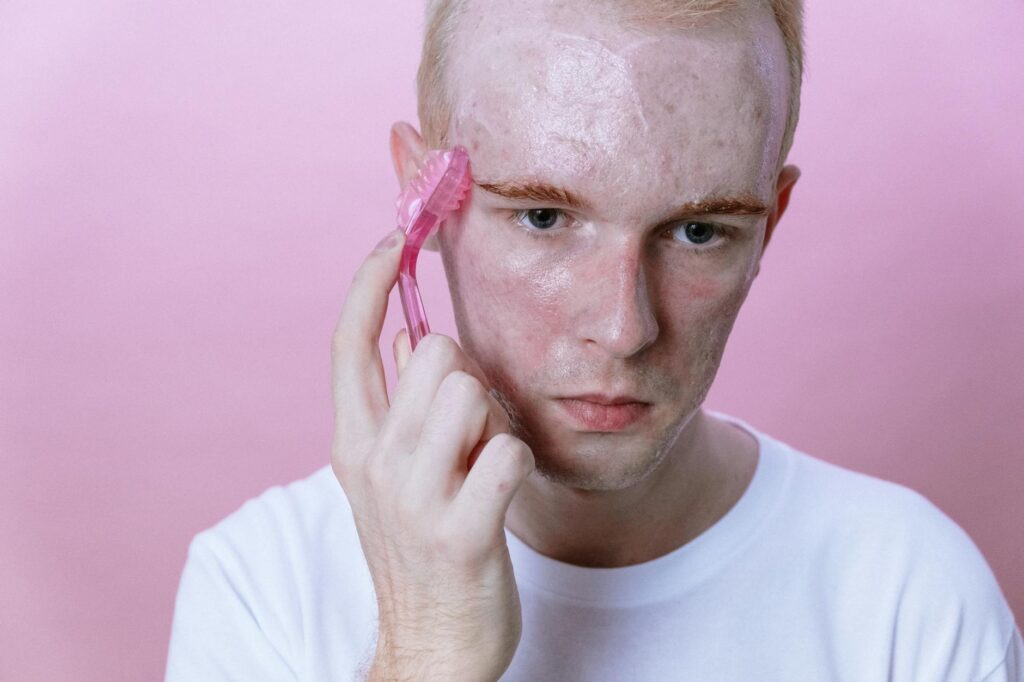
Acne face mapping is not scientifically valid because it relies on traditional Chinese medicine concepts about organ-skin connections that have never been confirmed through peer-reviewed clinical research. The idea that a breakout on your chin means you have a hormonal imbalance, or that forehead acne signals digestive problems, sounds appealingly logical, but no controlled study has ever demonstrated a reliable, causative link between specific facial zones and internal organ dysfunction. When dermatologists see acne on certain parts of the face, they look at evidence-based explanations like oil gland density, bacterial colonization, hormonal receptor distribution, and mechanical irritation, not liver health or kidney function. That does not mean the location of your acne is meaningless.
It means the reasons your acne clusters in certain areas are far more mundane and well-documented than ancient mapping systems suggest. Forehead acne is common because the T-zone has more sebaceous glands per square centimeter than almost anywhere else on the body. Jawline acne in adult women correlates strongly with androgen sensitivity, which is a hormonal and dermatological finding, not a traditional medicine one. This article breaks down why face mapping persists despite its lack of evidence, what dermatology actually says about acne location, where the original claims came from, and what you should do instead of diagnosing your organs through your skin.
Table of Contents
- Why Does Acne Face Mapping Lack Scientific Evidence?
- What Traditional Chinese Medicine Actually Claims About Facial Zones
- What Dermatology Actually Says About Acne Location
- How to Actually Diagnose the Cause of Your Acne
- The Real Risks of Relying on Face Mapping for Skin Health
- Why Face Mapping Persists in Skincare Culture
- Where Acne Research Is Actually Headed
- Conclusion
- Frequently Asked Questions
Why Does Acne Face Mapping Lack Scientific Evidence?
The core claim of acne face mapping is that each region of the face corresponds to a specific internal organ, and that breakouts in that region indicate dysfunction in that organ. This idea is rooted in traditional Chinese medicine’s concept of “mian xiang,” or face reading, which dates back thousands of years. While traditional medicine systems have contributed genuinely useful knowledge in other areas, this particular claim has never survived the demands of modern scientific testing. No randomized controlled trial has shown that people with liver disease break out more on a specific facial zone, or that kidney patients develop acne in a predictable pattern. A 2019 review in the Journal of Clinical and Aesthetic Dermatology found no clinical evidence supporting the organ-zone correlations that face mapping promotes. The problem is not just an absence of evidence. The claim is structurally difficult to test because acne is multifactorial. Genetics, hormones, skin microbiome composition, diet, stress, comedogenic products, and mechanical friction all contribute to where and how acne forms.
Isolating a single internal organ as the cause of acne in one facial zone requires controlling for all of those variables, and no study has managed to do so. Compare this to a well-established dermatological finding: the connection between hormonal fluctuations and jawline acne in women. That link has been demonstrated repeatedly through blood panels measuring androgen levels, clinical observation of acne patterns tied to menstrual cycles, and the documented efficacy of anti-androgen treatments like spironolactone. That is what scientific validity looks like. Face mapping has nothing comparable. One reason face mapping feels convincing is confirmation bias. If you read that cheek acne means respiratory issues and you happen to have allergies and cheek breakouts, the connection feels obvious. But millions of people have allergies without cheek acne, and millions have cheek acne without respiratory problems. Without accounting for base rates, coincidences look like patterns.

What Traditional Chinese Medicine Actually Claims About Facial Zones
To understand why face mapping spread so widely, it helps to understand what it actually claims and where those claims originated. In traditional Chinese medicine, the face is divided into zones linked to organs through a system of energy meridians, or “qi” pathways. The forehead is associated with the bladder and digestive system. The area between the eyebrows corresponds to the liver. The nose maps to the heart. Cheeks relate to the lungs and respiratory system. The chin and jawline connect to the reproductive organs and kidneys. These associations were developed through centuries of observational practice, not controlled experimentation.
Traditional Chinese medicine practitioners used facial appearance, including color, texture, and blemishes, as one of many diagnostic inputs. In that context, face reading was part of a holistic system that also included tongue diagnosis, pulse reading, and detailed patient history. Extracting just the face-mapping component and applying it to acne specifically is actually a distortion of the original practice. Most traditional Chinese medicine practitioners today would not diagnose organ disease based solely on a pimple’s location. However, the simplified version of face mapping has exploded online, stripped of its original context and presented as a standalone diagnostic tool. Skincare influencers and wellness blogs routinely post colorful face maps that assign organs to zones as if the connections were established medical facts. The problem is not that traditional medicine is inherently worthless. The problem is that an unverified component of a complex system has been cherry-picked, oversimplified, and marketed as science. If you are experiencing genuine symptoms of organ dysfunction, no face map will substitute for blood work, imaging, or a physician’s evaluation.
What Dermatology Actually Says About Acne Location
Dermatologists do pay attention to where acne appears on the face, but for entirely different reasons than face mapping suggests. The explanations are grounded in skin biology, not organ correspondence. The T-zone, which includes the forehead, nose, and chin, has the highest concentration of sebaceous glands on the face. More oil production means more opportunity for pores to clog, which is why this area is a common site for comedonal acne, especially in teenagers going through puberty. Cheek acne is frequently linked to external factors. Pressing a phone screen against your cheek transfers bacteria and oil. Pillowcases that are not washed regularly create a reservoir of dead skin cells and sebum.
Touching your face throughout the day, often unconsciously, introduces contaminants. A 2015 study published in the Indian Journal of Dermatology found that mobile phone surfaces harbor bacterial colonies capable of exacerbating acne, and that cheek and jawline breakouts correlated with phone usage patterns on the dominant hand side. That is a far more testable and actionable explanation than “your lungs are struggling.” Jawline and lower face acne in adult women is one of the most well-studied patterns in dermatology. It is strongly associated with hormonal fluctuations, specifically elevated androgens or heightened androgen receptor sensitivity. This is why acne along the jawline and chin often flares before menstruation, during polycystic ovary syndrome, or after discontinuing oral contraceptives. The mechanism involves androgens stimulating sebaceous glands in hormone-sensitive areas, which happen to be concentrated in the lower third of the face. Importantly, this is not the same as face mapping. Dermatology identifies the mechanism (androgen activity at specific receptor sites) rather than claiming the chin “represents” the reproductive system.

How to Actually Diagnose the Cause of Your Acne
If face mapping is unreliable, what should you do when you notice your acne consistently appears in the same area? The answer depends on the type of acne, its severity, and your overall health history. A practical first step is distinguishing between comedonal acne (blackheads and whiteheads), inflammatory acne (red papules and pustules), and cystic acne (deep, painful nodules). Each type has different primary drivers and responds to different treatments. For mild to moderate comedonal acne concentrated in the T-zone, a topical retinoid like adapalene is typically the first-line treatment. It works by increasing cell turnover and preventing the pore-clogging process, regardless of which organ a face map might implicate. For inflammatory acne on the cheeks, evaluating your hygiene habits, phone use, and skincare products for comedogenic ingredients is more productive than worrying about lung health.
Benzoyl peroxide or a topical antibiotic can address the bacterial component. For persistent jawline acne in women, the most effective path often involves a dermatologist evaluating hormonal factors, potentially through blood tests for testosterone, DHEA-S, and other androgens, followed by treatment options like spironolactone, combined oral contraceptives, or both. The tradeoff worth understanding is between topical and systemic treatment. Topical treatments are lower risk but address surface-level causes. Systemic treatments like oral antibiotics, hormonal therapy, or isotretinoin tackle deeper drivers but carry more significant side effects. A dermatologist can help weigh those options based on your specific situation. A face map cannot.
The Real Risks of Relying on Face Mapping for Skin Health
The most significant danger of face mapping is not that it is wrong in an abstract sense. It is that it delays effective treatment and encourages self-diagnosis of serious conditions. If someone believes their forehead acne signals a digestive disorder, they might spend months adjusting their diet, buying gut health supplements, or doing “detox” protocols instead of using a proven topical treatment. Meanwhile, untreated acne can worsen, scar, and cause lasting psychological harm. There is also a risk in the opposite direction.
If someone with actual organ dysfunction interprets their symptoms through a face map, they might minimize a serious health problem as “just acne.” Liver disease, kidney dysfunction, and hormonal disorders produce a wide range of symptoms that require medical evaluation. A face map that reduces these conditions to a pimple on the cheek is not just unscientific; it is irresponsible. Dermatologists have reported cases where patients delayed seeking care for conditions like polycystic ovary syndrome because they believed their acne was a superficial issue they could address through dietary changes mapped to facial zones. Another limitation is that face mapping gives the same advice to everyone. A teenager with oily skin and a 40-year-old woman with hormonal shifts will both be told that chin acne means “hormonal imbalance” or “kidney issues.” In reality, the causes, the appropriate diagnostic workup, and the treatment options are completely different for these two patients. Personalized medicine is the opposite of a one-size-fits-all chart.
Why Face Mapping Persists in Skincare Culture
Face mapping endures because it satisfies a deep psychological need for pattern recognition and control. Acne feels random and frustrating. A map that assigns meaning to every breakout transforms an unpredictable condition into something that seems understandable and manageable. You are not just breaking out. Your body is sending you a message, and now you can decode it.
That narrative is enormously appealing, especially to people who feel dismissed by conventional dermatology or who cannot afford to see a specialist. Social media amplifies this. A face-mapping infographic is visually engaging, easy to share, and feels empowering. A peer-reviewed study about sebaceous gland distribution is none of those things. The content economy rewards simplicity and shareability over accuracy, which is why face mapping reaches millions of people while the studies debunking it reach thousands.
Where Acne Research Is Actually Headed
The future of understanding acne location lies in the skin microbiome and genetic mapping, not organ correspondence charts. Researchers are increasingly studying how the bacterial, fungal, and viral communities on different parts of the face vary by zone and how those microbial differences influence acne development. A 2022 study in Nature Communications found that the ratio of Cutibacterium acnes strains differed significantly between the forehead, cheeks, and chin, and that certain strain profiles were more strongly associated with acne severity.
This line of research may eventually explain why some people consistently break out in the same spots, with far more precision than face mapping ever offered. Advances in hormonal profiling and genetic testing are also moving dermatology toward genuinely personalized acne treatment. Rather than mapping your face to your organs, future approaches may map your specific hormonal receptor sensitivity, your genetic predisposition to inflammation, and your unique skin microbiome to a tailored treatment protocol. That is the kind of individualized insight that face mapping promises but cannot deliver.
Conclusion
Acne face mapping is a compelling idea built on an unproven foundation. No clinical evidence supports the claim that pimples in specific facial zones reflect dysfunction in corresponding internal organs. The real reasons acne clusters in certain areas, including sebaceous gland density, hormonal receptor distribution, bacterial colonization patterns, and mechanical irritation, are well-documented in dermatological research and lead to treatments that actually work.
Traditional Chinese medicine contributed the original concept in a very different diagnostic context, but the simplified version circulating online is neither faithful to that tradition nor supported by modern science. If your acne is persistent, painful, or scarring, the most productive step is consulting a board-certified dermatologist who can evaluate your specific skin, your health history, and your treatment options. Skip the face maps. Ask for evidence.
Frequently Asked Questions
Is there any truth to the idea that chin acne is hormonal?
Yes, but not because of face mapping. Dermatological research has established that the lower face has a higher density of androgen receptors, making it more responsive to hormonal fluctuations. This is a biological finding about receptor distribution, not a validation of organ-zone mapping.
Can diet affect where acne appears on the face?
Diet can influence acne severity overall, with high-glycemic foods and dairy showing the strongest associations in research. However, no study has demonstrated that specific foods cause acne in specific facial zones. If dairy worsens your acne, it is likely to worsen it wherever you are prone to breakouts, not exclusively on your cheeks.
Should I completely ignore where my acne appears?
No. Acne location provides useful diagnostic clues when interpreted through evidence-based dermatology. Consistent jawline acne in an adult woman warrants hormonal evaluation. Acne only where a phone or helmet contacts skin suggests mechanical or bacterial causes. The location matters, but the interpretation should be medical, not mapped to organs.
Do dermatologists ever use face mapping?
Board-certified dermatologists do not use traditional face mapping in clinical practice. They do assess acne distribution patterns as part of diagnosis, but they interpret those patterns based on skin biology, hormonal factors, and patient history rather than organ correspondence.
Is acne face mapping the same as Ayurvedic face mapping?
They are different systems with some overlapping claims. Ayurvedic face mapping links facial zones to doshas and bodily functions within the Ayurvedic framework. Like Chinese medicine face mapping, it lacks clinical validation for acne diagnosis. Both systems have historical and cultural significance but should not replace evidence-based dermatological care.