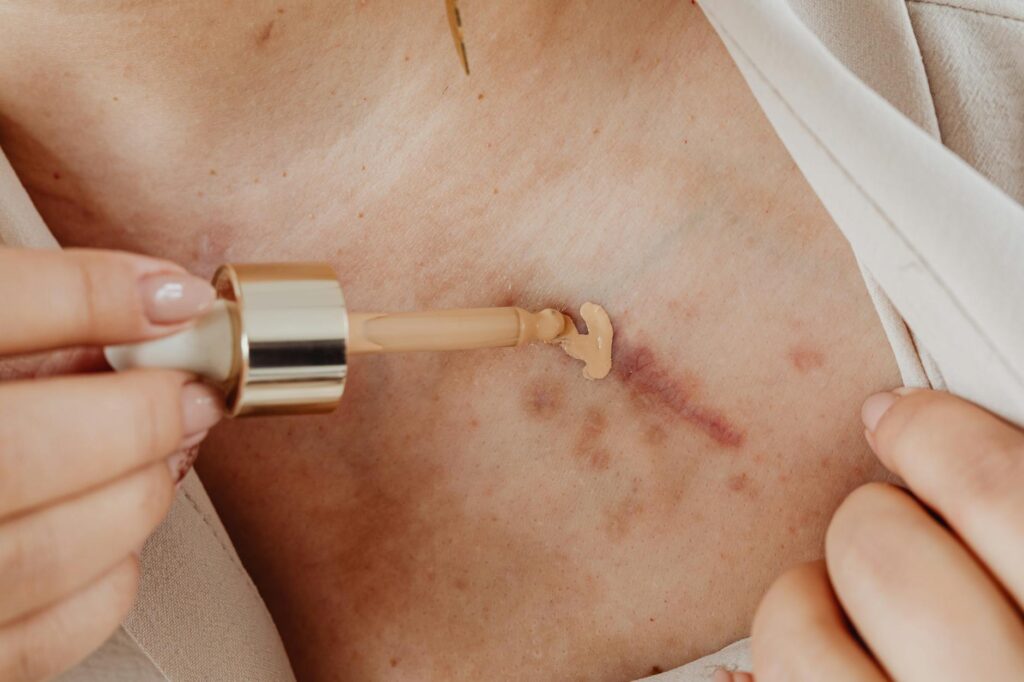
XoGlo exosomes work to remodel acne scars by stimulating the skin’s fibroblasts to produce new collagen while simultaneously shifting the biochemical environment toward the type of collagen and growth factor ratios found in normal, unscatred skin. When XoGlo’s mesenchymal stem cell-derived exosomes are introduced into scarred tissue—typically through intradermal injection or combined with microneedling—they trigger a remodeling cascade that literally reconstructs the damaged collagen matrix at the cellular level, reducing scar depth, thickness, and visibility. This article covers how XoGlo exosomes achieve this remodeling, the clinical evidence supporting their effectiveness, how they compare to other scar treatments, and what patients can realistically expect from the procedure.
The mechanism behind XoGlo is more sophisticated than simple collagen stimulation. Rather than just adding more collagen, these exosomes recalibrate the balance of collagen types (favoring type III over type I), growth factors, and matrix enzymes in a way that mimics what happens during healthy wound healing. This distinction is critical: it’s not just more scar tissue production—it’s actual scar tissue remodeling that can transform years-old acne scars into nearly invisible skin.
Table of Contents
- How Do XoGlo Exosomes Remodel Acne Scar Tissue?
- The Cellular Mechanism Behind Collagen Remodeling
- Clinical Evidence: What the Studies Actually Show
- How XoGlo Exosomes Are Administered for Acne Scars
- How XoGlo Compares to Traditional Acne Scar Treatments
- Safety and What Patients Actually Experience
- The Future of Exosome Therapy and Emerging Variations
- Conclusion
How Do XoGlo Exosomes Remodel Acne Scar Tissue?
XoGlo exosomes are tiny packages of cellular material derived from placental mesenchymal stem cells, manufactured by Kimera Labs in Miramar, Florida. Each milliliter contains 1 billion exosomes, with a typical size of 120–130 nanometers. These microscopic vehicles carry growth factors, proteins, and nucleic acids that communicate with the skin cells responsible for collagen production and breakdown. When injected into scarred skin, the exosomes bind to fibroblasts and other cells in the dermis, activating signaling pathways that shift the tissue from “fibrotic” mode (stiff, inflexible scarring) to “remodeling” mode (dynamic, healthy tissue reconstruction). The specific biochemical shifts triggered by XoGlo exosomes are well-documented in the scientific literature.
They promote favorable shifts in the collagen type III to type I ratio, increase TGF-β3 relative to TGF-β1, and improve the balance of matrix metalloproteinases to tissue inhibitors of metalloproteinases. In plain terms, this means the exosomes encourage the skin to produce the “younger,” more flexible type of collagen found in unwounded skin, while simultaneously activating enzymes that break down the abnormal cross-linked collagen that creates scar appearance. A 2024 case report documented this in action: a patient with severe nodular cystic acne and scarring showed an ECCA score (a standardized acne scar measurement) that dropped from 180 to 90 points after exosome treatment combined with platelet-rich plasma therapy. However, exosomes work differently than chemical peels or simple laser resurfacing, which only address the surface layer. Exosomes penetrate and activate change at the dermal level where scars actually form, making them particularly effective for deeper, more structurally complex scars like boxcar or rolling scars that resist laser-only approaches.
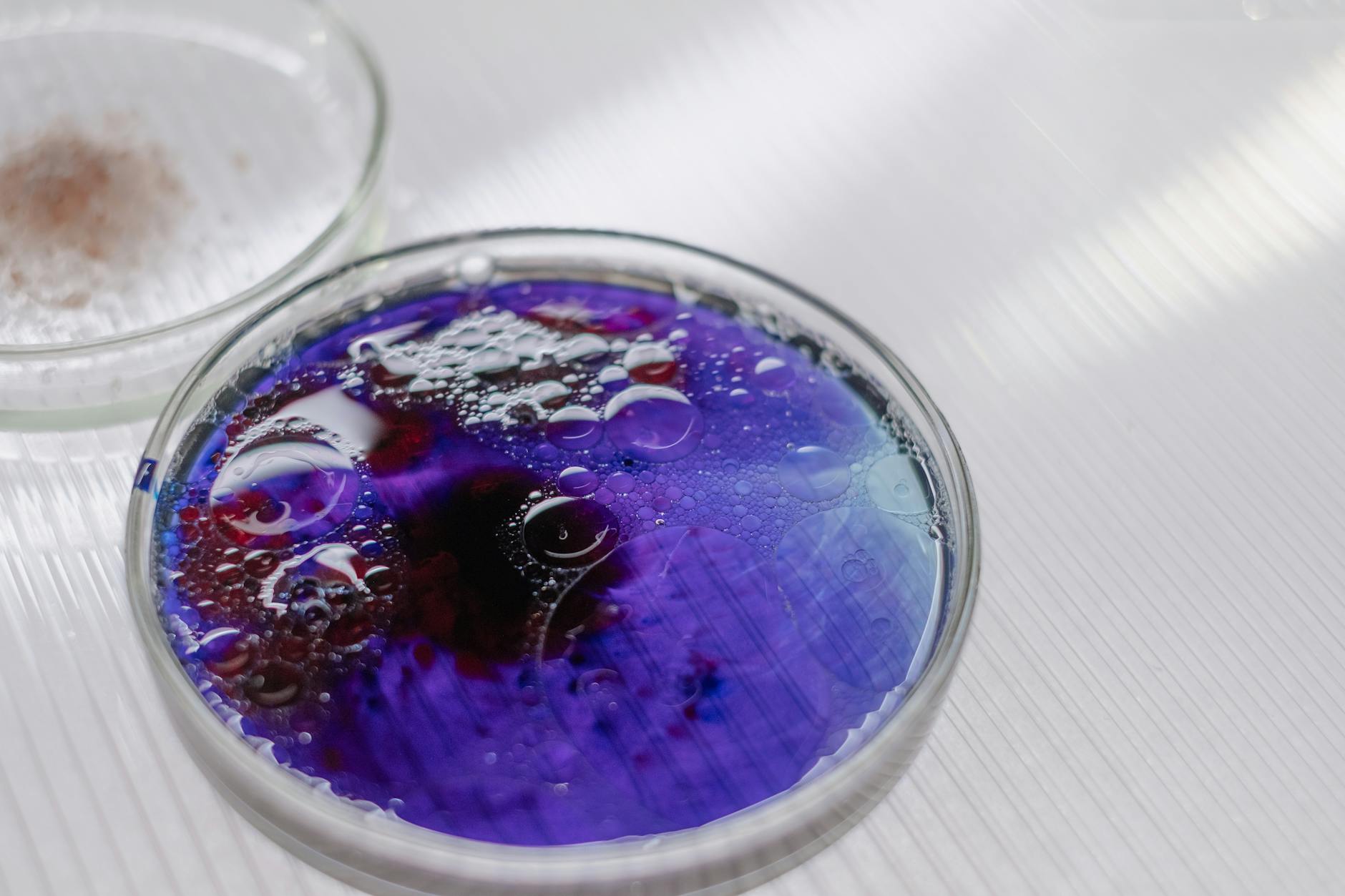
The Cellular Mechanism Behind Collagen Remodeling
Understanding how exosomes shift the collagen environment requires knowing that scar tissue isn’t simply “extra collagen”—it’s structurally disorganized, cross-linked collagen with an abnormal cellular environment around it. Normal skin maintains a balance: collagen is being continuously laid down and broken down in a coordinated way. In a scar, fibroblasts get “stuck” producing excessive type I collagen (the stiff kind) while suppressing type III collagen (the flexible kind), and the tissue becomes locked in an inflammatory state dominated by TGF-β1, which perpetuates fibrotic activity. XoGlo exosomes reset this balance. They deliver signals that reactivate the normal collagen turnover cycle, shift the TGF-β balance toward TGF-β3 (which promotes healing and flexibility), and increase the activity of matrix metalloproteinases that selectively break down abnormal scar collagen.
The result is that over weeks to months, the scar tissue gradually becomes thinner, softer, and less visible as new, healthier collagen replaces the rigid scar structure. A 2025 prospective study published in the Journal of Cosmetic Dermatology demonstrated this in 14 female patients who received four sessions of exosomes (2.5 billion units per session, spaced six weeks apart): three out of four patients with acne scarring experienced near-complete resolution of their scars. However, this remodeling process is not instantaneous and requires an intact blood supply and active fibroblast population to work. In cases of extreme atrophy or very thin skin, exosome monotherapy may need to be combined with other treatments to maximize results. Additionally, individual variation in fibroblast responsiveness means some patients see dramatic improvements while others see moderate improvements, even with identical treatment protocols.
Clinical Evidence: What the Studies Actually Show
The strongest clinical evidence for exosomes in acne scar remodeling comes from studies combining exosomes with other modalities like fractional CO₂ laser and microneedling. A split-face study of 25 patients using adipose-derived stem cell exosomes (similar mechanism to XoGlo, derived from fat rather than placental tissue) showed that the laser-plus-exosome side of the face showed more favorable scar responses, notably shorter recovery time, and fewer side effects compared to laser alone. The control side experienced typical post-laser redness and peeling lasting 7–10 days; the exosome side recovered to normal appearance in 3–5 days, suggesting exosomes accelerate skin healing alongside scar remodeling. Perhaps the most dramatic finding comes from the 2024 microneedling comparison study (42 patients): those receiving exosomes plus microneedling showed a 79% improvement in scar appearance after three sessions, compared to just 51% improvement in the microneedling-only control group.
That’s a measurable 28-percentage-point difference in outcome—substantial enough that adding exosomes literally doubled the efficacy of the microneedling procedure. The exosome-treated group also reported less post-procedure pain and faster return to normal skin appearance. The 2025 study with XoGlo specifically adds another layer of evidence: 14 patients received intradermal injection via a Hydrapen device (a type of advanced injection system) combined with platelet-rich plasma at midpoints between exosome injections. This protocol produced near-complete scar resolution in 75% of the acne scarring patients—a remarkably high success rate for a procedure that is non-ablative (doesn’t remove skin) and doesn’t require significant downtime.

How XoGlo Exosomes Are Administered for Acne Scars
XoGlo exosomes are delivered into the skin through intradermal injection, meaning they are injected directly into the dermis (the layer of skin where scars reside) rather than applied topically or injected into the bloodstream. The standard protocol from recent clinical use involves multiple sessions spaced several weeks apart to allow the remodeling cascade to initiate between treatments. The 2025 prospective study used four sessions of 2.5 billion units each, spaced six weeks apart—a timeline that allows fibroblasts to respond to the first round of exosome signaling, produce new collagen, and be ready for the next stimulus. Some practitioners combine XoGlo injection with microneedling in the same session, while others use it alone or pair it with platelet-rich plasma (PRP), which contains additional growth factors and creates a synergistic effect.
The Hydrapen device, used in the recent high-success-rate study, is a multi-needle pneumatic injection system that delivers exosomes at precise, controlled depths and intervals, which appears to optimize distribution within the scar tissue. Traditional syringe injection is also effective but less precise. The choice between XoGlo monotherapy, combination with microneedling, or combination with PRP depends on scar severity and skin type. Deeper scars and atrophic (indented) scars benefit more from combination approaches, whereas superficial or early-stage scars may respond adequately to exosomes alone. Recovery is minimal across all approaches: mild redness and possible bruising at injection sites resolve within 24–48 hours, allowing patients to return to normal activities immediately.
How XoGlo Compares to Traditional Acne Scar Treatments
The acne scar treatment landscape includes fractional CO₂ laser, subcision, dermal fillers, chemical peels, and microneedling. Each has different strengths and limitations. Fractional CO₂ laser is effective for surface irregularities and creates significant inflammation to stimulate collagen, but requires 5–10 days of visible redness and peeling, carries a small risk of post-inflammatory hyperpigmentation, and can be risky in darker skin types. Dermal fillers are temporary (lasting 6–12 months) and only fill indented scars without actually remodeling the underlying collagen structure—you’re essentially filling a hole rather than healing it. XoGlo exosomes address a fundamental limitation of these other modalities: they actually remodel the scar tissue at the cellular level rather than just resurfacing, filling, or burning it away.
This is why exosomes work particularly well when combined with laser or microneedling—the mechanical disruption of the scar (from laser or needling) provides an inflammatory signal that primes fibroblasts to respond to the exosome-derived growth factors, essentially creating a conversation between the treatment and the cells. Additionally, exosome-based treatments have minimal downtime and carry an excellent safety profile, unlike ablative lasers. However, exosomes come with a significant cost consideration. A single treatment session can range from $800 to $2,000 per session, and most protocols require multiple sessions. Compare this to a single microneedling session (typically $300–500) or fractional laser session (typically $1,000–2,000 once), and the cumulative cost of a four-session exosome protocol can reach $5,000+. The stronger clinical results may justify this for severe scarring, but for mild cases, less intensive options may be more cost-effective.

Safety and What Patients Actually Experience
XoGlo’s safety profile is excellent. A clinical trial of XoGlo Pro (the intravenous formulation) in 16 patients reported zero adverse events, with all patients reporting painless treatment and positive outcomes. For intradermal injection specifically, the risk of serious adverse events is extremely low—the primary sensations are mild pressure and brief discomfort during injection, resolved immediately upon completion. Injection sites may show mild bruising (especially if combined with PRP, which affects platelet aggregation) and temporary redness lasting a few hours to one day. The real-world experience across over 120,000 patients globally who have received XoGlo for various investigational indications shows excellent tolerability.
Patients report that the procedure is far less uncomfortable than fractional laser (which causes significant heat sensation) or aggressive microneedling. Most return to normal activities immediately, with the only restriction being avoiding intense heat exposure (saunas, hot yoga) and heavy sweating for 24–48 hours post-treatment. The one caveat is that results take time to manifest. Unlike laser resurfacing, which shows immediate surface improvement, exosome-mediated remodeling is a gradual process unfolding over 8–12 weeks as collagen is remodeled and reorganized. Patients seeking instant visible improvement should understand they are committing to a timeline measured in months, not days. Additionally, results are contingent on fibroblast responsiveness—some individuals show excellent response while others see moderate improvement, likely due to genetic variation in how their skin cells respond to growth factor signaling.
The Future of Exosome Therapy and Emerging Variations
Exosome therapy for acne scars is still relatively new in mainstream dermatology, but the clinical evidence is rapidly accumulating. Researchers are investigating optimizations such as different exosome sources (placental versus adipose versus umbilical cord-derived), varying concentrations, and novel delivery mechanisms.
Some emerging research suggests that combining exosomes with other biologics—such as serum-derived exosomes customized to each patient, or exosomes loaded with specific growth factors—may further enhance results, though these remain largely investigational. The trajectory is clear: exosomes represent a meaningful shift toward regenerative approaches to scarring, where the goal is not to damage the scar tissue (as with ablative laser) or fill the void (as with fillers), but to intelligently reprogram the damaged tissue back toward normalcy. As more clinical data accumulates and awareness spreads among dermatologists and aestheticians, exosome treatments are likely to become standard in combination protocols for moderate-to-severe acne scarring, potentially moving from a specialized treatment to a mainstream option within the next few years.
Conclusion
XoGlo exosomes achieve acne scar remodeling through a sophisticated cellular mechanism: they deliver signals that shift fibroblast behavior from perpetual scar-producing mode to active tissue remodeling mode, favorably adjusting collagen types, growth factor ratios, and enzyme activity. The clinical evidence from multiple studies—particularly the 79% improvement rate when combined with microneedling and the 75% near-complete resolution rate in recent prospective trials—demonstrates that exosomes are a meaningful advance for treating scars that have resisted other modalities.
If you have moderate-to-severe acne scars and are considering treatment options, XoGlo exosomes (potentially combined with microneedling or laser, depending on scar type) deserve serious consideration. Expect multiple treatment sessions spaced weeks apart, a higher upfront cost than some alternatives, and results that develop gradually over weeks to months rather than appearing immediately. The payoff is tissue that is actually remodeled rather than merely resurfaced or filled—a genuine improvement in skin health, not just appearance.