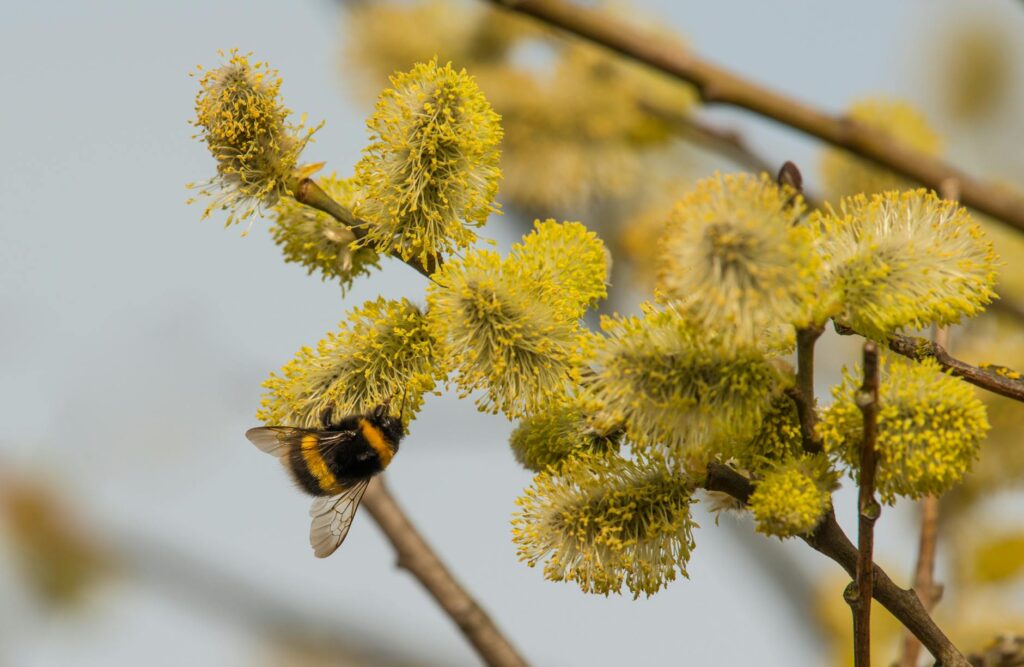
White willow bark works for acne through anti-inflammatory and antimicrobial properties rather than direct salicylic acid conversion. A clinical trial comparing 1.5% willow bark extract to 1% salicylic acid found that both reduced acne lesions at similar rates—willow bark achieved 59% improvement versus salicylic acid’s 62%—but willow bark caused significantly less dryness and irritation (47% less than synthetic salicylic acid). This makes white willow bark a gentler natural alternative for people with sensitive skin or those seeking to minimize irritation from acne treatment.
While white willow bark contains salicin (roughly 1% of the extract), the skin itself cannot enzymatically convert salicin into salicylic acid. This chemical limitation means its acne-fighting benefits come from different mechanisms entirely: its natural anti-inflammatory compounds and proven antimicrobial activity against the bacteria that cause breakouts. Understanding how white willow bark actually works—rather than assuming it functions like synthetic salicylic acid—is essential for using it effectively. This article explores the chemistry of white willow bark, clinical evidence for its efficacy, how it compares to conventional acne treatments, and practical guidance for incorporating it into a skincare routine.
Table of Contents
- How Does White Willow Bark Actually Fight Acne?
- Clinical Evidence: What Research Actually Shows About Efficacy
- Willow Bark vs. Salicylic Acid—Understanding the Real Differences
- How to Use White Willow Bark for Acne
- The Enzymatic Limitation—Why Salicin Doesn’t Become Salicylic Acid
- Willow Bark in Acne Patches and Other Formulations
- The Future of Natural Actives in Acne Care
- Conclusion
How Does White Willow Bark Actually Fight Acne?
White willow bark’s acne-fighting power comes primarily from its anti-inflammatory and antimicrobial properties, not from salicylic acid conversion as many people assume. Research has confirmed that the extract demonstrates measurable activity against Staphylococcus aureus and Propionibacterium acnes—two bacterial species directly implicated in acne formation. When bacteria proliferate in pores and trigger inflammation, these antimicrobial compounds help suppress that microbial activity at the source.
The compound salicin, which makes up approximately 1% of white willow bark extract (with another 12% consisting of other beneficial glycosides), was historically the reason people believed white willow bark would work like salicylic acid. However, the skin lacks the specific enzymes needed to break down salicin into salicylic acid. Instead, these compounds and the broader phytochemical profile of willow bark work synergistically to reduce inflammation and fight acne-causing bacteria. This distinction matters: it means white willow bark shouldn’t be expected to deliver the exact same exfoliating action as salicylic acid, but it can deliver meaningful acne improvement through a different biological pathway.

Clinical Evidence: What Research Actually Shows About Efficacy
A controlled split-face clinical trial published in 2024 (Journal of Cosmetic Dermatology) tracked 30 participants with mild-to-moderate acne over eight weeks, directly comparing 1.5% willow bark extract against 1% salicylic acid. The willow bark formulation achieved a 59% reduction in acne lesion count, compared to 62% for salicylic acid—a difference so small it’s clinically insignificant. What made the difference meaningful was tolerance: participants using willow bark experienced 47% less dryness and irritation compared to those using salicylic acid.
Beyond this single trial, an international meta-analysis published in the International Journal of Cosmetic Science reviewed 24 separate studies on topical willow bark preparations and confirmed consistent exfoliating efficacy paired with a favorable irritation profile. However, there’s an important limitation to note: most clinical research on willow bark for acne focuses on mild-to-moderate cases. Data on severe cystic acne or resistant acne is sparse, meaning willow bark’s effectiveness for those conditions remains unclear. For people with sensitivity, rosacea tendencies, or those currently using other actives like retinoids, the lower irritation profile of willow bark becomes a meaningful advantage.
Willow Bark vs. Salicylic Acid—Understanding the Real Differences
The comparison between white willow bark and salicylic acid often gets oversimplified. Salicylic acid is a Beta-Hydroxy Acid (BHA) that works by dissolving the lipids binding skin cells together, creating a direct exfoliating and pore-clearing action. It’s fast-acting and potent, but that potency comes with a cost: irritation, dryness, and a risk of compromised skin barrier with overuse. White willow bark doesn’t exfoliate in that mechanical sense; instead, it reduces acne through gentler anti-inflammatory and antimicrobial pathways.
For practical comparison, consider someone with inflamed acne and sensitive skin. Salicylic acid might clear lesions faster but trigger redness, peeling, and compromised barrier function—potentially worsening sensitivity long-term. White willow bark would address the same lesions more slowly but with less collateral damage to skin health. However, if someone has very stubborn, deep cystic acne resistant to gentle treatments, salicylic acid’s stronger exfoliating action might ultimately be necessary. The choice depends on your skin type, acne severity, and tolerance for irritation rather than one option being universally superior.
How to Use White Willow Bark for Acne
White willow bark appears in several skincare formats: serums, toners, acne patches, spot treatments, and creams. In clinical studies, it was delivered as part of a topical emulsion applied directly to acne-prone areas, which is how most modern products formulate it. If you’re adding willow bark to a routine, start conservatively—perhaps 2-3 times weekly if using a concentrated product—and increase frequency as your skin adapts.
Because it’s gentler than salicylic acid, it’s generally safe to layer with other treatments, though combining with multiple exfoliating actives is still unnecessary. A practical example: someone using a willow bark toner in the morning and a retinoid at night could potentially do so without excessive irritation, whereas combining retinoid with salicylic acid often triggers barrier compromise and sensitivity. The lower irritation profile makes willow bark a good “bridge” option if you’re introducing actives to your routine or if you want consistent treatment without compromising skin health. However, if you’re not seeing improvement after 6-8 weeks of consistent use, it may be time to try a stronger active or consult a dermatologist, since white willow bark won’t be the answer for every acne case.
The Enzymatic Limitation—Why Salicin Doesn’t Become Salicylic Acid
Many marketing claims suggest that white willow bark “provides natural salicylic acid” because it contains salicin. This is misleading. While salicin is structurally similar to salicylic acid, the human skin lacks the specific enzyme (beta-glucosidase) necessary to split salicin into its active components. This enzymatic gap is not a minor detail—it’s a fundamental limitation that explains why willow bark behaves differently than synthesized salicylic acid, and why it doesn’t cause the same exfoliating intensity or irritation.
Understanding this limitation protects you from false expectations. If you use white willow bark expecting it to work exactly like salicylic acid, you’ll likely be disappointed because it simply cannot replicate that exfoliating mechanism. The benefit is that it achieves meaningful acne reduction through other proven pathways—antimicrobial and anti-inflammatory—without triggering the same potential for barrier damage. This is why it’s most useful for people with acne plus sensitive skin, rather than as a replacement for salicylic acid in cases where stronger exfoliation is truly needed.
Willow Bark in Acne Patches and Other Formulations
Beyond traditional serums and creams, white willow bark has found its way into acne patches—those small, medicated stickers designed to target individual pimples overnight. In patch form, the willow bark extract sits in direct contact with the lesion, potentially allowing for more concentrated antimicrobial and anti-inflammatory action.
Some acne patch formulations combine willow bark with other ingredients like salicylic acid (creating a dual-action product) or with niacinamide (to calm inflammation while fighting bacteria). A specific example: an overnight acne patch using 1-2% willow bark extract combined with azelaic acid would theoretically provide both the antimicrobial benefits of willow bark plus the additional antibacterial strength of azelaic acid, potentially outperforming either ingredient alone. Acne patches in general are most effective on whiteheads and surface pustules rather than deep cystic lesions, and that limitation applies equally to willow bark patches.
The Future of Natural Actives in Acne Care
As consumer demand for gentler, natural skincare ingredients grows, white willow bark research is expanding. The existing body of evidence—24 studies analyzed in the meta-analysis, the rigorous 2024 clinical trial—suggests willow bark has moved beyond “traditional folk remedy” into evidence-based skincare ingredient territory.
Future research will likely explore combination formulations (willow bark paired with other natural antimicrobial compounds) and applications for specific acne types (hormonal acne, fungal acne, post-inflammatory hyperpigmentation). The broader shift in dermatology recognizes that not every skin condition requires the strongest possible active. For acne that’s mild-to-moderate and accompanied by sensitivity, natural actives like white willow bark offer a genuinely useful middle ground between “do nothing” and “aggressive chemical exfoliation.” As more dermatologists acknowledge the skin barrier’s role in long-term skin health, gentler antimicrobial and anti-inflammatory approaches gain legitimacy.
Conclusion
White willow bark addresses acne through anti-inflammatory and antimicrobial mechanisms rather than salicylic acid conversion, achieving similar lesion reduction to synthetic salicylic acid (59% vs. 62% in clinical trials) while causing significantly less irritation. It’s most valuable for people with acne and sensitive skin, those prone to irritation from harsher actives, or anyone seeking a gentler, consistent acne treatment that won’t compromise the skin barrier. The evidence base is solid—clinical trials and meta-analyses confirm efficacy—but realistic expectations matter.
White willow bark won’t work for everyone, particularly those with severe cystic acne or acne resistant to anti-inflammatory and antimicrobial approaches. Start with a product containing willow bark, use it consistently for 6-8 weeks, and combine it with other acne fundamentals (gentle cleansing, moisturizing, sun protection). If you see improvement, you’ve found an effective natural option. If not, consult a dermatologist about stronger actives or prescription treatments.