Yes, weight loss can make indented acne scars more prominent. When you lose weight, your face loses fat volume that had been providing underlying support to your skin. Indented scars, particularly rolling scars that sit below the skin surface, become more noticeable as this supportive volume disappears—the skin essentially “sinks” further into these depressions, creating deeper shadows and making the scars appear larger and more visible than they were before weight loss.
If you’ve lost a significant amount of weight and suddenly noticed your acne scars looking worse, this is a common and well-documented phenomenon, not a new development of scarring itself. This article explores why weight loss affects acne scar appearance, which types of scars are most vulnerable, how age amplifies the problem, and what treatment options can restore facial volume to minimize scar visibility. Understanding this relationship is especially important if you’re considering a weight loss journey or already experiencing this change.
Table of Contents
- How Weight Loss Makes Indented Acne Scars More Visible
- The Role of Facial Volume in Scar Appearance and the Shadow Effect
- Which Acne Scars Are Most Affected by Weight Loss
- Professional Treatment Options to Restore Volume and Minimize Scar Appearance
- Laser and Advanced Treatments Enhanced by Platelet-Rich Plasma
- Timing Considerations When Weight Loss and Scar Treatment Coincide
- Preventing Scar Prominence: Integrated Approach to Weight Loss and Skin Health
- Conclusion
How Weight Loss Makes Indented Acne Scars More Visible
The mechanism is straightforward: facial fat acts as scaffolding beneath the skin. When you lose weight, you lose fat throughout your body, including in the face. Indented acne scars—which sit below the surrounding skin surface—were somewhat camouflaged by the presence of this facial fat. As fat volume decreases, the skin loses that supportive cushioning, and the scars appear to deepen and become more pronounced. This effect is most dramatic with rolling scars, those gentle wave-like depressions that span wider areas of the skin. Rolling scars are especially vulnerable to weight-related changes because they depend on surrounding facial volume for their appearance.
When that volume diminishes, the scars sink further relative to the surrounding skin, creating more visible shadows and depth. In contrast, some other scar types—like boxcar scars with sharper vertical walls—may be less dramatically affected by volume loss alone, though they still appear more defined as skin elasticity changes. To illustrate: imagine a bowl of Play-Doh slightly indented. When the surrounding Play-Doh is thick and full, the indentation is subtle. But if you flatten and compress the entire mass, that same indentation now appears deeper relative to the flattened surface. Your facial scars work similarly—the scar itself hasn’t changed, but the loss of support makes it visually more prominent.

The Role of Facial Volume in Scar Appearance and the Shadow Effect
Dermatologists recognize that acne scars become visually apparent largely due to the shadows they cast. When your face is fuller with adequate fat volume, light reflects across the skin surface more evenly, and the shadow cast by an indented scar is subtle. As you lose weight and your facial contours become more defined with less fat padding, those indentations cast longer, sharper shadows. The scar itself may not be deeper, but it appears deeper because of how light now interacts with the skin surface. However, this effect is not universal—if you have primarily hypertrophic scars (raised, thickened scars) or atrophic scars that are very shallow, weight loss may have a minimal visual impact.
The most noticeable worsening occurs in people with moderate to severe atrophic scars, particularly rolling scars on the cheeks or chin where facial volume loss is most apparent. Age compounds this problem significantly. As you enter your 40s and 50s, you naturally lose collagen and dermal volume with aging—a process entirely separate from weight loss. If you’re simultaneously losing weight during this period, you’re experiencing a double loss of facial volume, which can make acne scars dramatically more visible than they were in your younger years. This is why some people report their scars looking much worse later in life, even if weight remained stable.
Which Acne Scars Are Most Affected by Weight Loss
Rolling scars are the primary victims of weight loss-related visibility changes. These scars, characterized by their sloped, wave-like appearance across the skin, depend heavily on surrounding facial volume to appear less noticeable. As fat volume decreases, rolling scars become increasingly visible—sometimes dramatically so. Boxcar scars, with their sharp vertical edges and defined borders, are somewhat less affected because their appearance is determined more by their structural shape than by surrounding volume.
That said, weight loss can still make boxcar scars appear more pronounced, particularly around the edges where shadows now cast more sharply. Ice pick scars—deep, narrow pits—may actually become more noticeable with weight loss as well, though the effect is typically less dramatic than with rolling scars. A critical limitation to remember: weight loss will not improve the appearance of any acne scar type. If you’re losing weight hoping your scars will improve, they won’t. Instead, you may need to pursue active treatment during or after weight loss to address scars that have become more visible.
Professional Treatment Options to Restore Volume and Minimize Scar Appearance
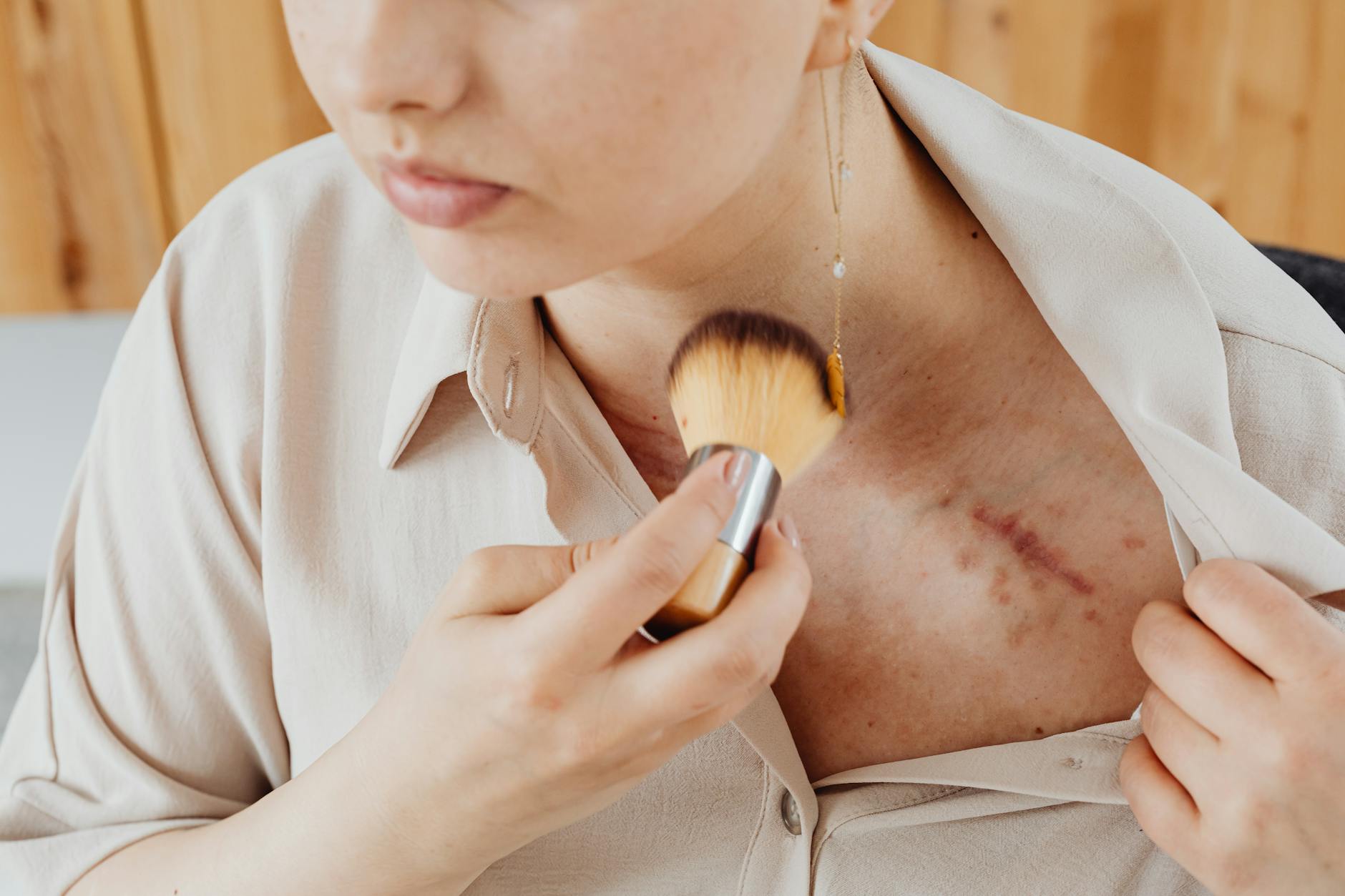
Once you’ve lost weight and noticed your scars are more prominent, several dermatological options can restore facial volume to reduce their appearance. Dermal fillers—particularly hyaluronic acid-based fillers like Restylane or Juvéderm—can be injected directly into indented scars or across broader areas of the face to restore lost volume. Results are temporary, typically lasting 6-12 months, requiring regular maintenance treatments. Collagen bio-stimulators offer a more long-term approach. Products like AestheFill, Ellanse, and Radiesse stimulate your own collagen production rather than simply filling space.
Over time, these materials integrate into your skin and can provide sustained volume restoration lasting 18-24 months or longer. The tradeoff: they require patience, as results develop gradually over weeks to months, and they’re more expensive than traditional fillers. However, they produce more natural-looking results since they’re rebuilding your own collagen rather than relying on temporary injectable material. Fat transfer (autologous fat grafting) is another option—your surgeon harvests fat from elsewhere on your body and injects it into your face to restore lost volume. This approach can produce excellent long-term results, with some transplanted fat remaining permanent, though a portion is reabsorbed. The limitation is that fat transfer is more invasive than injectable options and requires surgical recovery time.
Laser and Advanced Treatments Enhanced by Platelet-Rich Plasma
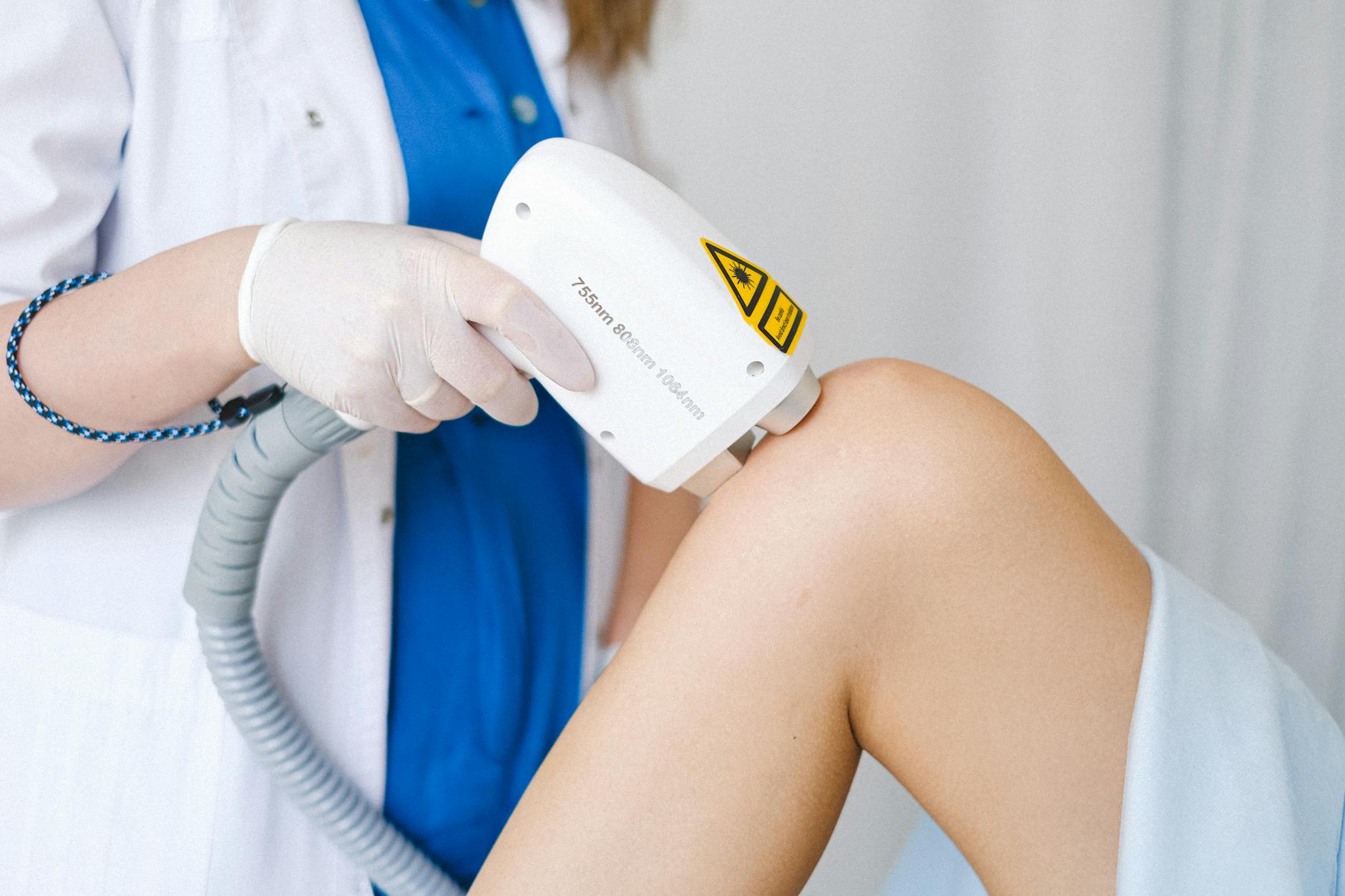
For acne scars themselves, dermatological lasers are the gold standard. CO2 and Er:YAG lasers achieve efficacy rates up to 90% in treating atrophic acne scars. These work by removing damaged skin and stimulating collagen remodeling, gradually filling in indented scars from within. However, a critical limitation: laser treatments are most effective when your face has adequate volume. If you’ve lost significant weight and your face is now quite thin, laser treatments alone may not produce optimal results because there’s less dermal support to rebuild. This is where platelet-rich plasma (PRP) becomes valuable.
PRP—derived from your own blood—contains growth factors that enhance collagen synthesis and hyaluronic acid production when combined with laser or microneedling treatments. Studies show that using PRP alongside laser or microneedling improves outcomes by promoting deeper skin rejuvenation and volume restoration. When combined with dermal fillers to address immediate volume loss, and then followed by laser with PRP to address the scars themselves, you can achieve substantially better results than any single treatment alone. A warning: some people pursue laser treatment immediately after significant weight loss, expecting dramatic scar improvement. But if your facial volume loss is severe, the scars may still appear relatively deep even after successful laser treatment. For optimal results, many dermatologists recommend combining volume restoration (fillers or fat transfer) with scar-targeting treatments (laser, microneedling) in a coordinated approach.
Timing Considerations When Weight Loss and Scar Treatment Coincide
If you’re planning weight loss and concerned about your acne scars becoming more visible, timing matters. Dermatologists generally recommend waiting until you’ve stabilized at your target weight before pursuing major scar treatments. The reason: if you treat your scars with fillers or other volume-restoration procedures while actively losing weight, your face will continue to deflate, potentially negating those treatments.
Pursuing laser treatment during active weight loss is less problematic, but combining volume restoration with ongoing weight loss often leads to disappointing results. A practical approach: complete your weight loss, maintain your new weight for at least a few months to allow your face to stabilize, and then reassess your scar appearance. At that point, you’ll have a clear picture of how much your scars have been affected and can pursue targeted treatment with confidence that your facial volume won’t continue changing.
Preventing Scar Prominence: Integrated Approach to Weight Loss and Skin Health
While you cannot prevent acne scars from becoming more visible during weight loss—the anatomical changes are inevitable—you can take steps to minimize the impact. Maintaining adequate hydration and ensuring sufficient protein intake supports skin elasticity and collagen production during weight loss. Some evidence suggests that retinoids, vitamin C, and other topical antioxidants may help preserve skin quality and collagen density during periods of volume loss, though they won’t reverse the visibility changes caused by loss of facial fat.
Looking forward, the intersection of weight management and aesthetics is becoming increasingly sophisticated. Some dermatologists now recommend preemptive volume restoration for patients planning significant weight loss, particularly those with existing acne scarring. As techniques improve, combination approaches that address both volume loss and scar structure simultaneously will likely become more standard, offering better results for people navigating weight changes while managing visible acne scars.
Conclusion
Weight loss makes indented acne scars—especially rolling scars—more visible because it removes the facial fat volume that provided underlying support. Your scars haven’t deepened; the loss of surrounding volume simply makes them appear more prominent. This effect is particularly dramatic if you’re also aging, as age compounds volume loss, and it’s irreversible through weight gain alone.
Your options are clear: dermal fillers for immediate volume restoration, collagen bio-stimulators for longer-term collagen rebuilding, fat transfer for surgical volume restoration, and laser treatments (potentially enhanced with PRP) to address the scars themselves. The most effective approach combines volume restoration with scar-targeting treatments. If you’re planning weight loss and concerned about acne scars, complete your weight loss first, allow your face to stabilize, and then consult a dermatologist about integrated treatment options tailored to your specific scar types and facial anatomy.